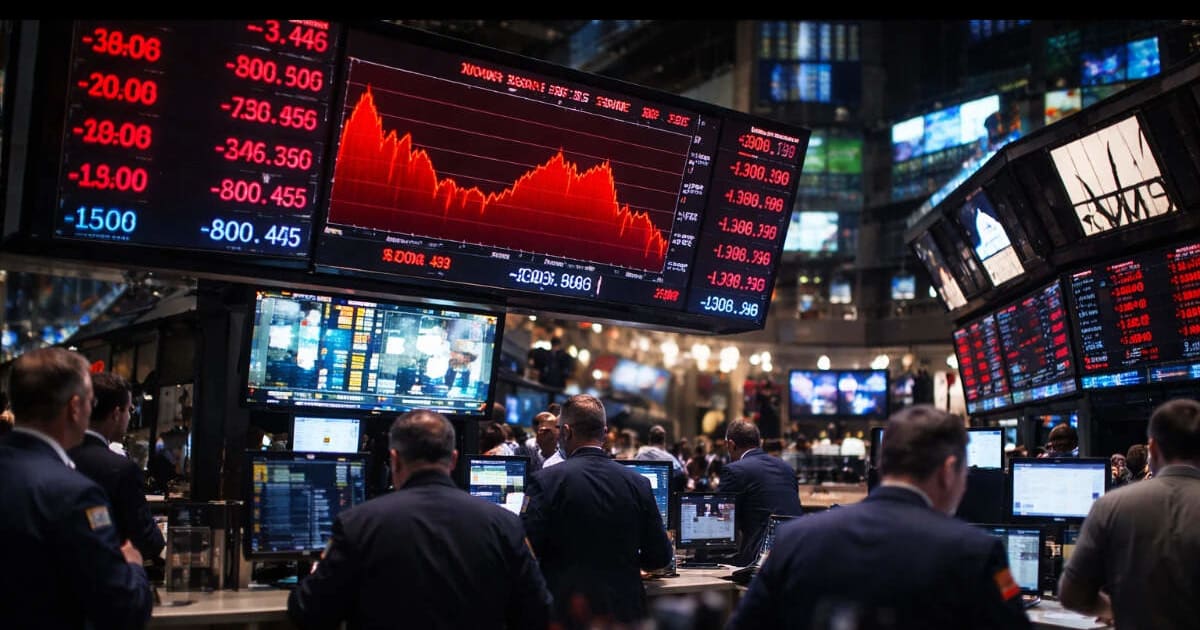
Key Takeaway
The Federal Reserve's anticipated interest rate hike, while largely priced in, signals a sustained period of global monetary tightening. Investors should prepare for a stronger dollar, potential foreign institutional investor (FII) outflows from India, and increased pressure on growth-oriented sectors and highly leveraged companies.
As the US Federal Reserve gears up for another interest rate hike, the global financial landscape is set for significant shifts. This analysis delves into the profound implications for the Indian stock market, examining currency fluctuations, FII sentiment, and the performance of key sectors and individual stocks.
Fed's Next Move: Navigating the Global Monetary Tightening Wave and Its Impact on Indian Equities
The global financial markets are squarely focused on the upcoming Federal Reserve meeting, where an interest rate hike is widely expected. While consensus suggests this move is already factored into current valuations, its mere execution serves as a potent signal of sustained monetary tightening by the world's most influential central bank. This development carries significant weight for economies worldwide, particularly emerging markets like India, where capital flows and currency dynamics are highly sensitive to shifts in US monetary policy. The reverberations of this hike will likely extend beyond immediate market reactions, shaping investment strategies and risk appetites for the foreseeable future.
The Looming Fed Hike: Why This Expected Event Matters Now
The Federal Reserve’s decision to increase its benchmark interest rate, a move anticipated by a substantial majority of market participants, is more than just a routine policy adjustment. It represents a deliberate step in the Fed's ongoing battle against persistent inflation, signaling a commitment to higher borrowing costs as a tool to cool an overheated economy. This commitment has far-reaching consequences. For businesses, it translates into increased costs of capital, potentially impacting investment decisions and profitability. For consumers, it means higher interest rates on loans, mortgages, and credit cards, which can dampen spending and slow economic expansion. Crucially, for international investors, particularly those in emerging markets, a Fed rate hike often correlates with a strengthening US Dollar. This 'King Dollar' phenomenon can trigger significant capital outflows from riskier assets in developing economies as investors seek the perceived safety and higher yields of US assets. The Indian stock market, heavily reliant on foreign institutional investment (FII), is particularly vulnerable to such shifts in global capital allocation. The historical trend has shown that periods of aggressive Fed tightening often coincide with periods of FII retrenchment from Indian equities, leading to increased volatility and downward pressure on the Nifty and Sensex.
The current economic backdrop amplifies the significance of this impending hike. Inflationary pressures, though showing signs of easing in some regions, remain a primary concern for policymakers. The Fed's mandate includes price stability, and any deviation from this objective would be met with swift action. Therefore, even a widely predicted rate increase is a confirmation of the Fed's hawkish stance, reinforcing the narrative of a higher-for-longer interest rate environment. This narrative is critical for understanding the subsequent market impacts. It implies that the cost of borrowing will remain elevated for an extended period, influencing corporate earnings, valuation multiples, and overall investor sentiment. The market’s reaction will not solely depend on the hike itself, but also on the accompanying commentary from the Federal Reserve, which will provide crucial forward guidance on the pace and magnitude of future rate adjustments.
Deep Market Impact Analysis: Connecting Fed Policy to Indian Equities
The immediate and most palpable consequence of a Fed rate hike for the Indian market is its impact on the US Dollar. As the Fed tightens monetary policy, demand for the dollar typically increases, driving its value higher against other currencies, including the Indian Rupee. A stronger dollar presents a double-edged sword for India. On one hand, it makes Indian exports more expensive for foreign buyers, potentially hurting the competitiveness of sectors like information technology (IT), textiles, and pharmaceuticals. On the other hand, it makes imports cheaper, which can provide some relief on imported inflation for certain goods. However, the net effect on the trade balance and corporate profitability is often negative, especially for companies with significant import bills or export revenues denominated in foreign currencies.
Perhaps the most significant transmission channel of Fed policy to Indian markets is through foreign institutional investor (FII) flows. Historically, periods of rising US interest rates have been associated with capital outflows from emerging markets as investors reallocate their portfolios towards safer, higher-yielding US assets. For instance, during the Fed's tightening cycle in 2022, Indian equities experienced substantial FII outflows, contributing to the market's volatility and the Nifty's correction. The Nifty 50, which had reached record highs in late 2021, saw significant drawdowns in the subsequent year, partly driven by global macro headwinds including Fed rate hikes. A sustained outflow of FII capital can lead to a de-rating of Indian equities, as the demand for stocks diminishes. This impact is often more pronounced on growth stocks, particularly in the technology sector, which are typically valued on future earnings potential and are more sensitive to changes in discount rates (influenced by interest rates) and investor risk appetite.
The banking sector in India, while often seen as a beneficiary of rising interest rates through improved net interest margins (NIMs), faces its own set of challenges. While higher lending rates can boost profitability for banks like HDFC Bank and ICICI Bank, a significant slowdown in economic growth, precipitated by higher borrowing costs globally and domestically, could lead to an uptick in non-performing assets (NPAs). Furthermore, increased competition for deposits to fund lending activities could also put pressure on margins if deposit rates rise faster than lending rates. Companies with high debt levels are particularly vulnerable. Higher interest expenses can erode profitability, strain cash flows, and increase the risk of financial distress. This creates a challenging environment for highly leveraged businesses, forcing them to reassess their capital structures and potentially postpone expansion plans.
How Will the Fed Rate Hike Affect Indian IT Stocks and Growth Companies?
The Indian IT sector, a cornerstone of the Indian stock market and a significant contributor to its market capitalization, is often at the forefront of the impact of Fed policy. Companies like Infosys, Tata Consultancy Services (TCS), and Wipro derive a substantial portion of their revenue from clients in the United States. A stronger dollar can initially appear beneficial, as it translates foreign currency earnings into more rupees. However, the underlying economic reality is more complex. As US corporations face higher borrowing costs and a potential slowdown in their domestic economies, their IT spending budgets may come under pressure. This could lead to slower revenue growth, reduced deal wins, and potentially a softening of pricing power for Indian IT service providers. Moreover, many IT companies themselves carry debt, and higher interest rates increase their servicing costs, impacting their bottom lines. The P/E multiples of these growth-oriented companies are also susceptible to contraction as risk-free rates rise, making their future earnings less attractive in a discounted cash flow analysis.
Beyond the IT sector, other growth-oriented businesses, including those in e-commerce, fintech, and specialized manufacturing, are likely to feel the pinch. These companies often operate with thinner margins and rely on continued access to capital for expansion. A tightening global liquidity environment and a higher cost of capital can significantly impede their growth trajectories. Investors often rotate away from high-growth, high-valuation stocks during periods of monetary tightening, favoring more defensive sectors or companies with strong balance sheets and predictable cash flows.
Stock-by-Stock Breakdown: Navigating the Winners and Losers in the Indian Market
The Federal Reserve's imminent rate hike will likely create distinct winners and losers within the Indian stock market. Understanding these nuances is critical for strategic portfolio positioning.
- Infosys (NSE: INFY) & TCS (NSE: TCS): As titans of the Indian IT services sector, these companies are directly exposed to US economic conditions and currency fluctuations. While their strong order books and diversified client base offer some resilience, a slowdown in US corporate spending and the potential for clients to defer discretionary IT projects pose a significant risk. A stronger dollar can also impact their reported revenue growth in dollar terms if it outpaces volume growth. Their high P/E multiples make them susceptible to valuation compression in a rising rate environment.
- Wipro (NSE: WIPRO): Similar to Infosys and TCS, Wipro's fortunes are closely tied to the US market. Its recent strategic acquisitions and focus on digital transformation provide avenues for growth, but the macro headwinds remain a concern. Investors will be watching its ability to maintain pricing power and manage its debt levels in this environment.
- HDFC Bank (NSE: HDFCBANK) & ICICI Bank (NSE: ICICIBANK): Large-cap private sector banks are often considered relatively safe havens. They can benefit from widening Net Interest Margins (NIMs) as lending rates rise, potentially boosting profitability. However, they are not immune to broader economic slowdowns. An increase in Non-Performing Assets (NPAs) due to economic stress or a significant withdrawal of foreign capital could temper their performance. Their robust balance sheets and strong deposit franchises provide a degree of insulation compared to smaller or public sector banks.
- Reliance Industries (NSE: RELIANCE): Reliance Industries, with its diverse business segments ranging from petrochemicals and refining to retail and telecom, presents a complex picture. Its energy businesses might benefit from higher commodity prices, but its retail and telecom arms are sensitive to consumer spending and economic growth. The company's substantial debt, though managed, will also be a factor to monitor as borrowing costs rise. Its strong market position and diversified revenue streams offer a degree of resilience, but it is not entirely insulated from global macro trends.
Expert Perspective: Bulls vs. Bears on the Fed's Tightening Path
The impending Fed rate hike ignites a familiar debate between market bulls and bears. Bullish sentiment often hinges on the belief that the market has already fully priced in the rate hike and any accompanying hawkish commentary. Proponents of this view argue that the Fed's actions, while restrictive, are necessary to ensure long-term economic stability and control inflation, ultimately paving the way for sustainable growth. They might point to the resilience of certain sectors, like financials, or the potential for companies with strong balance sheets to navigate a higher interest rate environment effectively. Some bulls also believe that any potential FII outflows will be temporary, and that attractive valuations in emerging markets will eventually draw capital back.
Conversely, bears emphasize the inherent risks of monetary tightening. They argue that the Fed might be underestimating the stickiness of inflation or overestimating the economy's ability to withstand higher borrowing costs without tipping into a recession. The risk of a policy error – tightening too much or too fast – is a central tenet of the bearish argument. Bears also highlight the potential for a more aggressive Fed trajectory than currently anticipated, which could trigger renewed market volatility and a more significant exodus of foreign capital from emerging markets. They might point to the historical precedent of past tightening cycles leading to significant market corrections. The impact on corporate earnings, particularly for highly leveraged companies and growth stocks, is a key concern for bears, who predict a de-rating of equity valuations across the board.
Actionable Investor Playbook: Navigating the Current Market Environment
In light of the Federal Reserve's anticipated rate hike and its implications for the Indian market, investors should consider a strategic approach:
- Focus on Quality and Value: Prioritize companies with strong balance sheets, consistent profitability, low debt levels, and robust cash flow generation. These businesses are better positioned to weather economic downturns and higher borrowing costs. Look for companies with pricing power that can pass on increased costs to consumers.
- Rebalance Growth Exposure: Consider trimming positions in highly valued growth stocks, especially in sectors like IT and tech, which are more sensitive to rising interest rates and potential slowdowns in client spending. Reallocate capital towards more defensive sectors or value-oriented equities.
- Monitor FII Flows Closely: Stay attuned to FII investment patterns. Significant outflows can signal increased risk aversion and contribute to market declines. A sustained reversal in FII flows would be a positive sign.
- Consider Currency Hedging: For investors with significant exposure to US dollar-denominated assets or those concerned about the impact of a stronger dollar on their portfolio, exploring currency hedging strategies might be prudent.
- Bonds as an Alternative: With rising interest rates, fixed-income instruments, particularly those offering attractive yields, could become more appealing for capital preservation and income generation.
- Long-Term Perspective: Maintain a long-term investment horizon. Market volatility is often a feature of global monetary policy shifts. Focus on fundamentally sound companies that can deliver value over several years.
Specific Watchpoints:
- Entry Points for Quality Stocks: While avoiding aggressive new buying into potentially overvalued growth stocks, look for attractive entry points in fundamentally strong companies that may experience temporary pullbacks due to broader market sentiment. For instance, if HDFC Bank or ICICI Bank were to correct by 5-7% on broad market fears, it could present a buying opportunity for long-term investors.
- Time Horizon: The impact of Fed rate hikes can be protracted. Investors should be prepared for a period of elevated volatility and potentially subdued equity market performance over the next 6-12 months, depending on the Fed's subsequent actions and economic data.
Risk Matrix: Potential Pitfalls in the Fed's Policy Path
While the market anticipates a Fed rate hike, several risks could alter the trajectory and impact:
- More Hawkish Commentary (Probability: Medium): The primary risk lies in the Federal Reserve's forward guidance. If the accompanying statement and press conference signal a more aggressive path for future rate hikes or a longer period of high rates than currently priced in, it could trigger renewed market selling and a significant strengthening of the US Dollar, leading to sharp FII outflows.
- Inflationary Persistence (Probability: Medium): If incoming US economic data continues to show stubborn inflation, the Fed may be forced to hike rates more aggressively than anticipated or keep them higher for longer. This scenario would intensify the pressure on global liquidity and risk assets.
- Unexpected US Economic Weakness (Probability: Low-to-Medium): Conversely, a sudden and sharp deterioration in US economic data could lead to a reassessment of the Fed's tightening path. While this might be positive for risk assets in the short term, it could also signal a looming global recession, which would have its own set of negative implications for emerging markets.
- Geopolitical Shocks (Probability: Low): Unforeseen geopolitical events can introduce significant uncertainty and volatility, potentially overshadowing the impact of Fed policy and leading to unpredictable market movements.
What to Watch Next: Upcoming Catalysts and Data Releases
The narrative around the Federal Reserve and its impact on global markets is dynamic and will be shaped by several upcoming catalysts:
- Federal Reserve Meeting Minutes: Following the rate decision, the release of the FOMC meeting minutes will offer deeper insights into the deliberations and dissents among Fed officials, providing clues about future policy direction.
- US Inflation Data (CPI/PPI): Key inflation reports will be closely scrutinized for signs of whether price pressures are abating or persisting, directly influencing the Fed's future rate decisions.
- US Employment Data (Non-Farm Payrolls): Robust job growth can be seen as a sign of economic strength, potentially supporting further Fed tightening, while weak numbers could signal a slowdown.
- Indian Economic Data: Domestic factors such as India's inflation rates, GDP growth figures, and the Reserve Bank of India's (RBI) policy stance will also play a crucial role in how the Indian market reacts to global macro trends. The RBI's own monetary policy decisions will be critical in managing domestic liquidity and currency pressures.
By staying informed about these developments and understanding their potential ramifications, investors can better navigate the complexities of the current global monetary policy landscape and position their portfolios for resilience and growth.
See Infosys's AI Score
Our algorithmic screener scores Infosys on fundamentals, momentum, and risk — free to try, no card needed.
Try the AI Screener →Have questions about this story?
Ask Welth, our finance-focused AI research assistant, for a deeper breakdown — free trial included.
Chat with Welth AI →Disclaimer: This content is generated by WelthWest Research Desk based on publicly available reports and is for informational purposes only. It does not constitute financial advice, investment recommendations, or an offer to buy or sell securities. Always consult a qualified financial advisor before making investment decisions.