Key Takeaway
The US Federal Reserve's unwavering focus on inflation signals a prolonged period of tighter monetary policy, threatening a significant recalibration of global risk assets. Indian equities, particularly growth-oriented and highly leveraged sectors, face considerable headwinds, while the Rupee is poised for further depreciation.
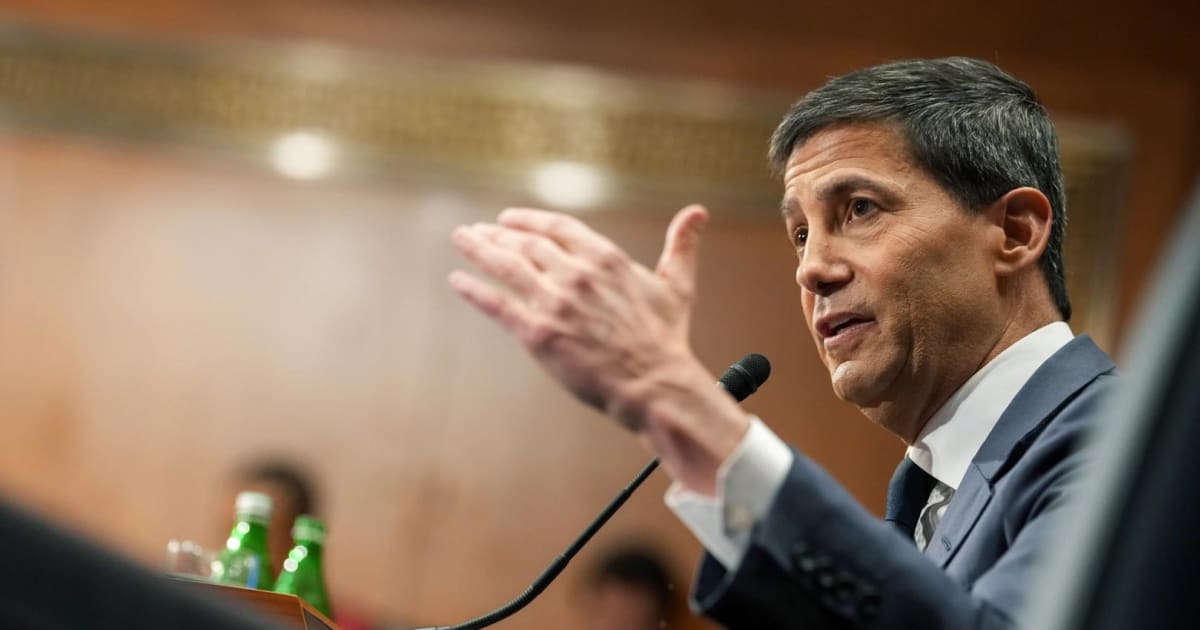
Recent hawkish signals from the US Federal Reserve underscore a resolute commitment to taming inflation, even at the expense of growth. This stance has profound implications for global capital markets, with India's equity landscape and currency particularly vulnerable. Our deep dive unpacks the direct and indirect consequences for investors, offering a strategic playbook to navigate the impending volatility.
Fed's Inflation Battle: A Global Ripple Effect on Indian Equities and the Rupee
The global financial landscape is bracing for a sustained period of monetary tightening following recent unequivocal statements from the US Federal Reserve Chair, emphasizing an unwavering commitment to combating elevated inflation. This isn't merely a commentary on domestic US economic conditions; it represents a tectonic shift in global liquidity and risk appetite, with profound and immediate consequences for emerging markets like India. At WelthWest Research Desk, we've meticulously analyzed the underlying dynamics to provide investors with a definitive guide to navigating this complex environment.
The core of the matter lies in the Fed's prioritization: inflation control now definitively supersedes growth support. Historically, such a hawkish pivot by the world's most influential central bank triggers a cascade of reactions across asset classes. For India, this translates into a heightened risk of capital outflows, a depreciating Rupee, and a re-evaluation of equity valuations, particularly for sectors highly sensitive to interest rates and global liquidity. This moment demands a strategic recalibration of investment portfolios, moving beyond superficial headlines to understand the granular impact.
Why Does US Fed Policy Matter So Much for Indian Investors?
The interconnectedness of global financial markets means that US monetary policy decisions act as a gravitational pull on capital flows worldwide. When the US Fed signals tighter policy – typically through higher interest rates – the yield on US dollar-denominated assets becomes more attractive relative to riskier emerging market assets. This phenomenon, often termed the 'pull factor,' incentivizes global institutional investors to reallocate capital from developing economies, including India, back into US treasuries and other dollar-denominated instruments.
Consider the 'carry trade' dynamics: a higher US interest rate differential reduces the incentive to borrow in USD and invest in higher-yielding, but riskier, Indian assets. This directly impacts the Indian Rupee (INR). As foreign institutional investors (FIIs) pull funds, they convert their Rupee holdings back into dollars, increasing demand for USD and weakening the INR. A weaker Rupee, in turn, makes imports more expensive, potentially fueling domestic inflation, and negatively impacts companies with significant unhedged foreign currency debt. The last major tightening cycle in 2022 saw FIIs withdraw over $28 billion from Indian equities, leading to a significant correction in the Nifty 50 and a near 10% depreciation of the Rupee against the USD. The current scenario suggests a similar, if not more pronounced, trajectory given the Fed's emphatic stance.
Deep Market Impact Analysis: Navigating the Indian Equity Landscape
The implications for the Indian stock market are multi-faceted, extending beyond mere FII outflows. The cost of capital for Indian companies will inevitably rise, impacting profitability, investment plans, and ultimately, equity valuations. Growth stocks, which rely heavily on future earnings discounted at a lower rate, are particularly vulnerable.
Which Indian Sectors and Stocks Will Be Most Affected by US Rate Hikes?
The current environment creates distinct winners and losers within the Indian equity market. Our analysis points to specific sectors and companies that will bear the brunt of this hawkish shift:
- Growth Stocks (Especially IT and Startups): These companies often trade at high price-to-earnings (P/E) multiples, justified by strong future growth prospects. Higher discount rates, a direct consequence of rising interest rates, erode the present value of those future earnings, leading to P/E multiple compression. The NIFTY IT index, which has enjoyed a stellar run on the back of robust global demand and favorable liquidity conditions, faces significant headwinds. Many IT companies derive a substantial portion of their revenue from the US, making them sensitive to US economic slowdowns and corporate spending cuts that could accompany tighter monetary policy.
- Companies with High Debt: Businesses carrying substantial debt burdens will face increased interest expenses as borrowing costs rise. This directly impacts their net profitability and cash flows, making them less attractive to investors. Sectors like Infrastructure, Capital Goods, and certain segments of Real Estate, known for their capital-intensive nature and reliance on debt financing, warrant careful scrutiny.
- Emerging Market Equities: As a broader asset class, Indian equities become less appealing compared to US assets offering competitive risk-adjusted returns. This general shift in investor preference can lead to sustained selling pressure.
- Indian Rupee (INR): The Rupee is poised for further depreciation. As the interest rate differential between the US and India narrows, and capital flows reverse, the demand for USD strengthens, pushing the Rupee lower. A weaker Rupee makes imports more expensive and can fuel imported inflation, creating a challenging environment for the Reserve Bank of India (RBI).
Stock-by-Stock Breakdown: Identifying Vulnerable Indian Companies
Based on our proprietary screening for debt levels, valuation multiples, and sector sensitivity, here are specific Indian stocks likely to be significantly impacted:
- Infosys Ltd. (NSE: INFY): As a bellwether for the NIFTY IT index, Infosys, despite its strong fundamentals, is vulnerable to global growth slowdowns and a re-rating of the IT sector's premium valuations. With a significant portion of its revenue from North America, any slowdown in US corporate spending or tech budget cuts could directly impact its order book and revenue growth. Its current P/E of ~25x, while lower than its pandemic highs, still faces pressure in a rising rate environment. Peers like Tata Consultancy Services (TCS) and Wipro (WIPRO) face similar pressures.
- Larsen & Toubro Ltd. (NSE: LT): While fundamentally strong, L&T operates in a highly capital-intensive sector with large project financing needs. Rising interest rates increase the cost of borrowing for both L&T and its clients, potentially impacting project viability, order deferrals, and overall profitability. The company's significant debt load, though well-managed, will see increased servicing costs. Its sector peers like NCC Ltd. (NCC) and Dilip Buildcon (DBL) are even more exposed due to higher leverage ratios.
- Zomato Ltd. (NSE: ZOMATO): As a prominent new-age tech stock, Zomato trades on the promise of future profitability. High-growth, loss-making companies are particularly sensitive to higher discount rates, as their distant future earnings are devalued more significantly. Investor appetite for 'story stocks' diminishes in a risk-off environment, leading to sharper corrections from already stretched valuations. Competitors like PB Fintech (PBFINTECH) and Nykaa (FSN E-Commerce Ventures Ltd. - NYKAA) are in a similar boat, as the market pivots from 'growth at any cost' to 'profitable growth'.
- Adani Green Energy Ltd. (NSE: ADANIGREEN): Companies in the renewable energy sector, while benefiting from long-term tailwinds, are highly capital-intensive and often rely on substantial debt financing for project development. Adani Green, with its ambitious expansion plans and significant debt-equity ratio, faces higher interest costs on its borrowing, which could impact project Internal Rates of Return (IRRs) and overall profitability. This applies broadly to other infrastructure developers with large project pipelines.
- HDFC Bank Ltd. (NSE: HDFCBANK): While banks generally benefit from higher interest rates (improving Net Interest Margins), the context here is crucial. If higher rates lead to a significant economic slowdown, it could result in increased non-performing assets (NPAs) and slower credit growth. Furthermore, a weaker Rupee can impact the bank's foreign currency denominated assets and liabilities, although well-hedged. The broader market sentiment shift could also weigh on its valuation.
Expert Perspective: Bulls vs. Bears on India's Economic Resilience
The current market sentiment, while predominantly bearish, isn't without its nuances. A robust debate is unfolding among market participants:
"The Fed's actions are a necessary evil to restore price stability. While short-term pain is inevitable, a return to sustainable inflation rates is ultimately bullish for long-term growth and asset valuations. India's domestic consumption story and ongoing government reforms provide a strong counter-narrative to global headwinds, making any sharp correction a buying opportunity for fundamentally strong companies." - Bullish Argument
"The market is underestimating the stickiness of inflation and the Fed's resolve. We are entering a prolonged period of elevated rates, which will inevitably lead to a global slowdown, if not a recession. India, despite its domestic strengths, cannot decouple entirely. The Rupee will face sustained pressure, and corporate earnings will come under significant strain, leading to further multiple de-rating across the board." - Bearish Argument
Our assessment leans towards a more cautious outlook. While India's long-term growth story remains compelling, the immediate impact of global monetary tightening and potential capital flight cannot be understated. The 'decoupling' narrative often proves overly optimistic during periods of significant global financial stress.
Actionable Investor Playbook: Navigating Volatility and Seizing Opportunities
In this environment, a proactive and disciplined approach is paramount. Investors should prioritize capital preservation while strategically positioning for eventual recovery.
- Reduce Exposure to High-Beta Growth Stocks: Consider trimming positions in companies with stretched valuations and high P/E multiples, especially in the IT and new-age tech sectors. Reallocate towards value-oriented stocks.
- Focus on Quality and Low Debt: Prioritize companies with strong balance sheets, healthy cash flows, and low debt-to-equity ratios. These businesses are better equipped to weather rising interest costs and economic slowdowns. Look for market leaders with sustainable competitive advantages.
- Consider Defensive Sectors: Sectors like Pharmaceuticals (e.g., Sun Pharmaceutical Industries - SUNPHARMA, Cipla - CIPLA) and select Fast-Moving Consumer Goods (FMCG) companies (e.g., Hindustan Unilever - HUL, Nestle India - NESTLEIND) tend to be more resilient during economic downturns due to non-discretionary demand for their products.
- Hedge Currency Risk: For investors with significant foreign exposure or those holding Rupee-denominated assets but with USD liabilities, consider hedging strategies to mitigate Rupee depreciation risk.
- Staggered Entry for Long-Term Plays: For long-term investors, market corrections present opportunities. Rather than attempting to time the bottom, consider a systematic investment plan (SIP) or staggered purchases into fundamentally strong companies over the next 6-12 months. Focus on companies with robust domestic demand drivers and less reliance on global capital.
- Time Horizon: This is not a short-term trade. The impact of the Fed's policy could unfold over several quarters, potentially extending into 2025. Investors should adopt a medium-to-long-term perspective (1-3 years) for significant capital appreciation.
Risk Matrix: Assessing Potential Headwinds
The path forward is fraught with uncertainties. Here are key risks to monitor:
- Faster-than-Expected US Rate Hikes (High Probability): The Fed could be forced to accelerate its rate hike trajectory if inflation proves more persistent than anticipated, leading to sharper market corrections and increased capital outflows from India.
- Global Economic Recession (Medium Probability): Aggressive monetary tightening by major central banks globally significantly increases the risk of a worldwide economic slowdown or outright recession, which would severely impact export-oriented Indian sectors and overall demand.
- Escalation of Geopolitical Tensions (Medium Probability): Unforeseen geopolitical events, such as an expansion of existing conflicts or new crises, could trigger renewed risk-off sentiment, higher commodity prices, and further supply chain disruptions, exacerbating inflationary pressures and market volatility.
- Domestic Policy Missteps (Low Probability): While currently low, any unexpected adverse domestic policy decisions or regulatory changes in India could amplify existing global headwinds, impacting investor confidence and capital flows.
What to Watch Next: Key Catalysts and Data Releases
Investors must remain vigilant and monitor key economic indicators and central bank communications to gauge the evolving landscape:
- US Inflation Data (CPI, PCE): Upcoming Consumer Price Index (CPI) and Personal Consumption Expenditures (PCE) reports will be crucial. Any signs of inflation easing could temper the Fed's hawkishness, while persistent high inflation will reinforce it. (Next CPI release: Mid-month; PCE: End of month).
- US Job Market Reports: Strong employment data could give the Fed more room to continue tightening without immediately fearing a recession, while weakening numbers might prompt a more cautious approach. (Monthly Non-Farm Payrolls: First Friday of each month).
- US Fed Speeches and FOMC Minutes: Official statements and minutes from Federal Open Market Committee (FOMC) meetings provide direct insights into the Fed's thinking and future policy path.
- RBI Monetary Policy Committee (MPC) Meetings: The Reserve Bank of India's response to global tightening and domestic inflation will be critical. Any divergence or alignment in policy will impact the Rupee and domestic liquidity. (Next MPC meeting: Bi-monthly).
- FII Flow Data: Daily and monthly data on Foreign Institutional Investor (FII) equity and debt flows into India will serve as a real-time indicator of capital movement and investor sentiment.
The current environment demands prudence and a deep understanding of macro-micro linkages. While the short-term outlook presents challenges, strategic positioning based on fundamental analysis remains the cornerstone of long-term wealth creation. WelthWest Research Desk will continue to provide timely and in-depth analysis to guide your investment decisions.
See NIFTY IT's AI Score
Our algorithmic screener scores NIFTY IT on fundamentals, momentum, and risk — free to try, no card needed.
Try the AI Screener →Have questions about this story?
Ask Welth, our finance-focused AI research assistant, for a deeper breakdown — free trial included.
Chat with Welth AI →Disclaimer: This content is generated by WelthWest Research Desk based on publicly available reports and is for informational purposes only. It does not constitute financial advice, investment recommendations, or an offer to buy or sell securities. Always consult a qualified financial advisor before making investment decisions.