Key Takeaway
The US Federal Reserve's renewed hawkishness signals a potential tightening of global liquidity, posing significant headwinds for the Indian market through increased capital costs, FII outflows, and Rupee depreciation. Investors must recalibrate portfolios for a higher-for-longer rate environment.
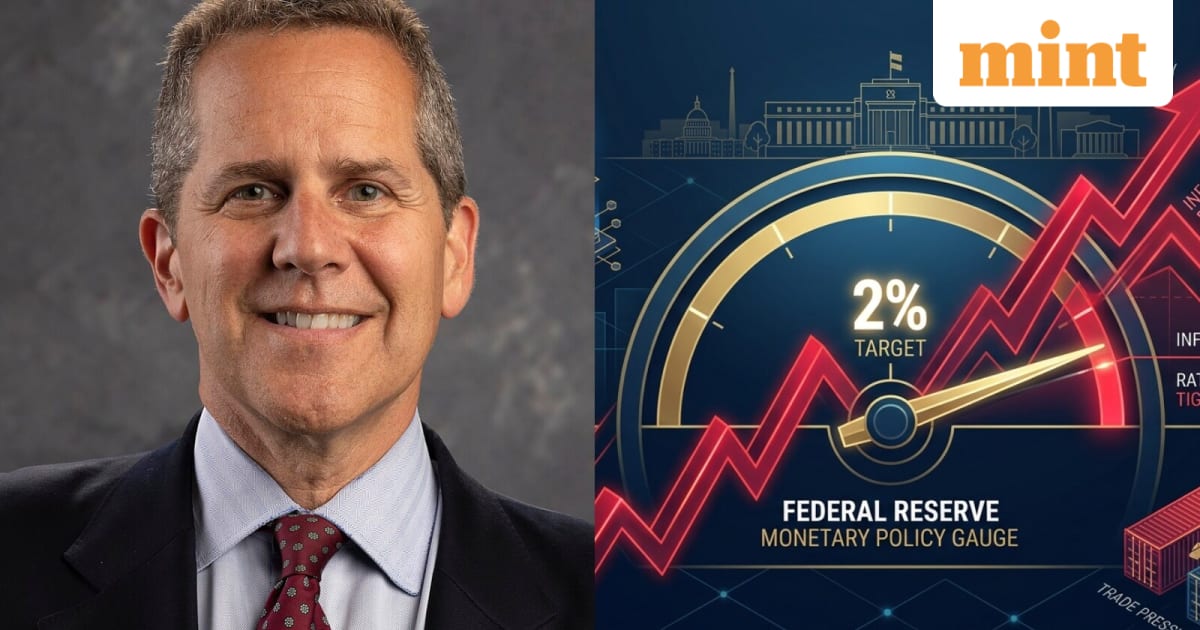
The US Federal Reserve has signaled a potential for further interest rate hikes if inflation persists, sending ripples across global financial markets. This hawkish shift by the world's most influential central bank directly impacts India, threatening to raise borrowing costs for companies, trigger FII capital flight, and weaken the Rupee. Our deep dive explores the granular effects on key Indian sectors and offers an actionable investor playbook to navigate these turbulent waters.
Fed's Hawkish Turn: Why India Faces Renewed Headwinds on Rates & Rupee
The global financial landscape is once again bracing for impact as the US Federal Reserve signals a potential return to its aggressive monetary tightening cycle. Recent pronouncements from senior Fed officials indicate a firm resolve to combat persistent inflation, even if it necessitates further interest rate hikes. This hawkish pivot, a stark reminder of the 'higher-for-longer' narrative, carries profound implications for emerging markets like India, threatening to disrupt capital flows, elevate borrowing costs, and exert downward pressure on the Indian Rupee.
For investors tracking the Indian equity market, understanding the nuances of the Fed's stance is paramount. Unlike a domestic policy shift, a move by the US central bank reverberates globally, influencing everything from commodity prices to currency valuations and corporate financing strategies. The core event — the Fed's explicit warning of potential rate hikes if price pressures don't abate — isn't merely a rhetorical flourish; it's a strategic signal that could redefine investment theses for the foreseeable future. This matters now because the market had largely priced in a plateau, if not a pivot, in US rates, making this renewed hawkishness a significant recalibration event.
How Will US Fed Rate Hikes Impact Indian Stock Market Liquidity and Valuations?
The immediate and most palpable consequence for the Indian market from a hawkish Fed is a tightening of liquidity. As US bond yields climb in anticipation of further rate increases, the allure of dollar-denominated assets grows stronger. This creates a significant pull for Foreign Institutional Investor (FII) capital, which often seeks arbitrage opportunities between developed and emerging markets. Historically, periods of rising US rates have coincided with FII outflows from India. For instance, in 2022, when the Fed aggressively hiked rates, FIIs withdrew over $28 billion from Indian equities, contributing to a period of heightened volatility and Nifty 50 correcting by approximately 15% from its peak before recovering. While the Nifty 50 has shown resilience recently, a sustained FII exodus could test its resolve, particularly for large-cap stocks with significant foreign ownership.
Beyond capital flight, the cost of capital for Indian companies is set to rise. With global interest rates trending upwards, Indian banks and corporates face higher borrowing costs, both domestically and internationally. For companies with significant outstanding USD-denominated debt, the burden intensifies not only due to higher interest rates but also from a potentially depreciating Rupee, which inflates the Rupee equivalent of their foreign debt servicing. This dual squeeze on profitability can lead to reduced capital expenditure, slower growth, and compressed margins across various sectors.
Growth stocks, often valued on the promise of future earnings, are particularly vulnerable in a rising rate environment. Higher discount rates diminish the present value of those distant earnings, making their valuations appear stretched. Companies with high P/E multiples and limited current profitability might see significant de-rating. Conversely, value stocks or those with strong immediate cash flows and lower debt could fare relatively better.
Which Indian Sectors and Stocks Are Most Vulnerable to a Hawkish US Fed?
The ripple effect of a hawkish Fed is not uniform across the Indian market; certain sectors and specific stocks are inherently more exposed. Here's a granular breakdown:
- Indian IT Services: This sector, heavily reliant on export revenues from the US and Europe, faces a double whammy. Firstly, higher borrowing costs in the US could lead to a slowdown in tech spending by their key clients, impacting order books and revenue growth. Secondly, a stronger US dollar, while seemingly beneficial for dollar earners, can be offset by increased operational costs if a significant portion of their expenses are dollar-denominated or if clients demand pricing concessions due to currency advantages. Major players like Infosys (NSE: INFY), with a market capitalization of over ₹5.8 lakh crore and a significant portion of revenue from North America (around 60%), will be closely watched. Its P/E ratio, currently around 25x, could face pressure if growth outlooks dim. Similarly, Tata Consultancy Services (NSE: TCS), a behemoth with a market cap exceeding ₹13.5 lakh crore, and Wipro (NSE: WIPRO), at ₹2.5 lakh crore, will experience similar headwinds, albeit with varying degrees of resilience based on their deal pipelines and client diversification. These companies are sensitive to global economic health, and a US slowdown directly impacts their top line.
- Indian Corporates with Significant USD Debt: Any Indian company that has borrowed substantially in US dollars stands to lose. As the Rupee depreciates against the dollar, the cost of servicing and repaying this debt in Rupee terms escalates. This can erode profitability and strain balance sheets. While specific debt structures vary, large conglomerates with international operations and significant foreign currency borrowings are exposed. Reliance Industries (NSE: RELIANCE), while diversified and with strong cash flows, has substantial foreign currency debt on its books. While its robust refining and petrochemical segments provide natural hedges, a sharp Rupee depreciation could still impact its consolidated financial statements. Investors should scrutinize the foreign currency debt exposure of mid-cap companies as well, where the impact could be more pronounced.
- Growth Stocks and High-Beta Stocks: As discussed, companies whose valuations are heavily predicated on future growth prospects are more sensitive to changes in discount rates. Stocks with high P/E ratios or those in nascent, high-growth sectors could see a significant re-rating as investors demand higher returns for future uncertainty. This category is broad, encompassing various segments from certain new-age tech companies to some manufacturing firms with aggressive expansion plans.
- Indian Banking Sector (Indirect Impact): While Indian banks primarily lend in Rupees, they are not immune. Higher interest rates globally can lead to increased funding costs for banks that rely on external borrowings. More critically, a slowdown in corporate growth due to higher borrowing costs can translate into slower credit growth domestically and potentially increased non-performing assets (NPAs) if corporate profitability deteriorates. Banks like HDFC Bank (NSE: HDFCBANK) and ICICI Bank (NSE: ICICIBANK), while fundamentally strong, could see their growth trajectories moderated. HDFC Bank, with a market cap of over ₹12 lakh crore, is a bellwether for the financial sector, and any broad economic slowdown will eventually reflect in its credit metrics.
Navigating the Hawkish Fed: Expert Perspectives and Contrarian Views
The prevailing sentiment among many analysts is undeniably bearish, anticipating a challenging period for Indian equities. Bears argue that the 'higher-for-longer' narrative for US rates is now firmly entrenched, implying persistent FII outflows, a weaker Rupee, and a measurable slowdown in corporate earnings growth. They point to historical correlations where Nifty performance has often struggled during periods of significant US rate hikes, particularly when coupled with a strong dollar.
However, a contrarian view, albeit less dominant, suggests that the Indian market's domestic resilience might offer some insulation. Bulls would highlight India's strong consumption story, robust government capital expenditure, and ongoing structural reforms as mitigating factors. They might argue that India's decoupling from global trends, seen during certain periods, could limit the extent of the impact. Furthermore, they might contend that a potential slowdown in the US could lead to lower crude oil prices, a significant positive for India as a net oil importer, thereby providing a counterbalancing force. Some also believe that the Indian central bank (RBI) has enough tools to manage domestic liquidity and currency volatility, preventing a severe crisis. The argument here is that the market has already absorbed much of the rate hike fears, and any further hikes might be marginal, with the economy strong enough to absorb them.
The truth likely lies somewhere in the middle. While India's domestic strengths are undeniable, the sheer gravitational pull of global capital flows and the cost of capital cannot be entirely ignored. The extent of the impact will depend on the duration and magnitude of the Fed's hawkish stance.
Actionable Investor Playbook: Strategies for a Higher Rate Environment
In light of the potential headwinds, investors need a well-defined strategy. Here are concrete steps for navigating the current environment:
- De-risk and Rebalance: Consider reducing exposure to high-beta, growth-oriented stocks with stretched valuations. Reallocate towards quality businesses with strong balance sheets, consistent cash flows, and proven pricing power. Focus on companies with low debt-to-equity ratios and less reliance on external funding.
- Focus on Domestic-Oriented Sectors: While IT services face headwinds, certain domestically focused sectors might offer relative safety. These include select pockets of the consumer staples sector (e.g., Hindustan Unilever, Nestle India) which are less susceptible to global demand fluctuations, and infrastructure plays benefiting from government spending.
- Consider Interest Rate Sensitivity: Evaluate the interest rate sensitivity of your portfolio. Financials with strong CASA (Current Account Savings Account) ratios and diversified loan books might prove resilient, but those heavily reliant on wholesale funding could face margin pressure.
- Allocate to Defensive Assets: A small allocation to gold can act as a hedge against currency depreciation and market volatility. Short-duration debt funds could also be considered for capital preservation, though returns might be modest.
- Staggered Entry/Exit: Avoid making large, single-point investment decisions. If you anticipate a market correction, consider a Systematic Investment Plan (SIP) or staggered buying strategy to average out your entry price. Similarly, if reducing exposure, use a phased approach.
- Monitor USD Debt Exposure: For direct equity investors, scrutinize the foreign currency debt of companies in your portfolio. Companies with natural hedges or a strong ability to pass on costs will be better positioned.
- Time Horizons: For long-term investors (5+ years), market corrections driven by global macro factors often present buying opportunities in fundamentally strong companies. Short-term traders, however, should be prepared for increased volatility and potential downside.
Risk Matrix: Assessing Potential Outcomes
The actual impact hinges on several variables. Here's a risk matrix to assess potential scenarios:
- Risk 1: Persistent US Inflation (Probability: Medium-High): If US inflation remains stubbornly high, forcing the Fed to implement multiple, aggressive rate hikes. This would lead to sustained FII outflows, significant Rupee depreciation (potentially breaching 84-85 levels against USD), and a notable contraction in Indian corporate earnings. Nifty could correct by 8-12% from current levels.
- Risk 2: Unexpected US Inflation Cool-down (Probability: Medium): If US inflation cools faster than anticipated, the Fed's hawkish tone might soften quickly. This would alleviate pressure on global liquidity, potentially reversing FII outflows and stabilizing the Rupee. Nifty could see a quick relief rally of 5-7%.
- Risk 3: Global Recessionary Fears Intensify (Probability: Medium): If aggressive Fed action triggers a deeper global economic slowdown or recession. This would impact Indian exports, reduce global demand for Indian IT services, and create broader market fear, leading to a more severe and prolonged market downturn, potentially a 15%+ Nifty correction.
- Risk 4: RBI Intervention & Domestic Resilience (Probability: High): The Reserve Bank of India (RBI) could intervene to manage Rupee volatility and liquidity. While it cannot entirely counteract global forces, its actions could cushion the blow. India's domestic growth drivers could also provide a floor, preventing a free fall, but not necessarily preventing a correction.
What to Watch Next: Key Catalysts and Data Releases
Investors should closely monitor the following to gauge the unfolding situation:
- US Inflation Data (CPI & PCE): The monthly Consumer Price Index (CPI) and Personal Consumption Expenditures (PCE) data releases are critical. Any signs of persistent high inflation will reinforce the Fed's hawkish stance. The next major CPI release is due mid-October for September data.
- US Federal Reserve Meetings: The outcomes of upcoming Federal Open Market Committee (FOMC) meetings, particularly the statements and dot plot projections, will provide direct insight into the Fed's future rate path. The next FOMC meeting is scheduled for early November.
- FII Flow Data: Daily and weekly FII flow data from NSDL will indicate the pace and direction of foreign capital movement in and out of Indian equities. Sustained outflows will signal continued pressure.
- Indian Rupee Movement: Monitor the USD/INR exchange rate. A sharp depreciation beyond 83.5-84 levels could signal increased stress and potentially trigger more aggressive RBI intervention.
- Corporate Earnings Season: The upcoming Q2 FY24 earnings season for Indian companies will provide insights into how rising costs and global uncertainties are impacting profitability and future guidance. Pay close attention to IT services companies' commentary on deal wins and client spending.
The US Federal Reserve's hawkish signal is a potent reminder of the interconnectedness of global financial markets. While India possesses robust domestic fundamentals, it is not immune to the gravitational pull of global capital. Prudent investors will recalibrate their strategies, focusing on quality, resilience, and a keen eye on the evolving macro landscape to navigate these challenging but potentially opportunistic times.
See Infosys's AI Score
Our algorithmic screener scores Infosys on fundamentals, momentum, and risk — free to try, no card needed.
Try the AI Screener →Have questions about this story?
Ask Welth, our finance-focused AI research assistant, for a deeper breakdown — free trial included.
Chat with Welth AI →Disclaimer: This content is generated by WelthWest Research Desk based on publicly available reports and is for informational purposes only. It does not constitute financial advice, investment recommendations, or an offer to buy or sell securities. Always consult a qualified financial advisor before making investment decisions.