Key Takeaway
Anticipation of the Federal Reserve Chair's Jackson Hole address is casting a long shadow over global risk assets, particularly cryptocurrencies. Investors in India should brace for potential volatility as global liquidity signals dictate FII flows and currency valuations, impacting sectors from tech to speculative digital assets.
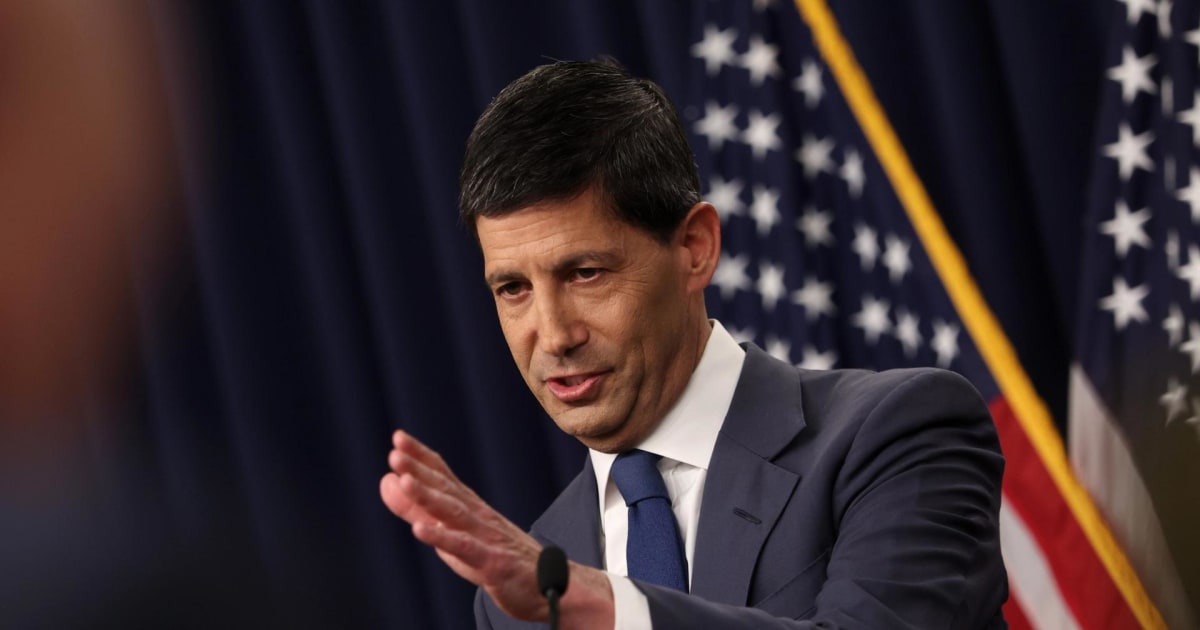
The annual Jackson Hole Symposium is a critical juncture for global monetary policy signals. This year, the Federal Reserve Chair's speech is poised to influence cryptocurrency markets and Indian equities by shaping risk appetite and foreign capital flows. Our in-depth analysis dissects the potential winners and losers, with a specific focus on Indian crypto exchanges and related entities.
Fed's Jackson Hole Summit: A Cryptic Signal for Crypto and Indian Equities
The global financial stage is once again set for the annual Jackson Hole Economic Policy Symposium, an event synonymous with pivotal pronouncements from central bankers, chief among them the Chair of the U.S. Federal Reserve. This year, the market's gaze is intensely fixed on the Fed Chair's every word, as the subtle nuances of monetary policy signaling can send ripples across the globe, profoundly impacting speculative assets like cryptocurrencies and, by extension, the Indian stock market. The symposium, hosted by the Federal Reserve Bank of Kansas City, has historically served as a platform for articulating long-term economic strategies and potential shifts in interest rate trajectories. For Indian investors, understanding the Fed's posture is not merely an academic exercise; it directly translates into potential adjustments in Foreign Institutional Investor (FII) flows, currency fluctuations, and overall market sentiment.
Why the Jackson Hole Speech Matters Now: Navigating Global Liquidity Tides
The current economic juncture is characterized by a delicate balancing act. Inflationary pressures, though potentially moderating in some economies, remain a persistent concern, prompting central banks worldwide to consider the trajectory of their tightening cycles. The Federal Reserve, as the world's most influential central bank, plays a crucial role in setting the tone for global liquidity. A hawkish stance – suggesting continued or prolonged higher interest rates and a commitment to quantitative tightening – typically leads to a contraction in liquidity, dampening risk appetite. Conversely, dovish commentary, hinting at a pause or even a pivot towards easing, injects liquidity and encourages investment in riskier assets. For cryptocurrencies, which thrive on abundant, low-cost capital, any indication of tighter monetary conditions can trigger significant sell-offs. Similarly, emerging markets like India, which rely on foreign capital inflows for growth and stability, are highly sensitive to shifts in global risk sentiment signaled at Jackson Hole. The recent performance of the Nifty 50, for instance, has shown a correlation with global risk-on/risk-off sentiment, underscoring the interconnectedness of these markets.
Historically, significant market movements have been observed following Jackson Hole addresses. For example, in August 2022, the Fed Chair's remarks on the persistent nature of inflation and the commitment to aggressive rate hikes led to a notable downturn in global equity markets, including a correction in Indian equities and a sharp decline in cryptocurrency valuations. This year, the context is different, with markets attempting to price in the terminal rate of the Fed's hiking cycle and the potential for a soft landing. Any deviation from these expectations, whether more hawkish or unexpectedly dovish, could trigger sharp, unpredictable price action.
Deep Market Impact Analysis: Crypto's Sensitivity and the Indian Equity Landscape
The cryptocurrency market, often described as the ultimate speculative asset class, is particularly vulnerable to shifts in monetary policy. A hawkish Fed speech can trigger a flight to safety, away from assets perceived as high-risk, such as Bitcoin (BTC) and Ethereum (ETH). This can manifest as rapid price depreciations, cascading liquidations, and a general deleveraging across the crypto ecosystem. The correlation between Bitcoin's price movements and the NASDAQ Composite index, for instance, has been a prominent feature in recent market cycles, highlighting its sensitivity to broader tech and growth stock sentiment, which is itself influenced by interest rate expectations.
For the Indian stock market, the impact is multifaceted. A hawkish Fed can lead to increased outflows from FIIs, as global investors seek higher yields in safer jurisdictions or reduce their overall exposure to emerging markets. This can put downward pressure on the Indian Rupee (INR) and, consequently, on Indian equities. Sectors that are heavily reliant on FII inflows or are sensitive to global growth prospects, such as technology services and highly valued growth stocks, are particularly exposed. Conversely, a dovish tone might encourage renewed FII interest, bolstering the Nifty and Sensex. Companies with strong balance sheets, low debt levels, and robust domestic demand are generally better positioned to weather periods of global uncertainty, irrespective of the Fed's immediate pronouncements.
Consider the historical precedent: during periods of aggressive Fed tightening, the Indian Rupee has often weakened against the US Dollar. For example, between Q1 2022 and Q4 2022, as the Fed embarked on its most aggressive rate-hiking cycle in decades, the INR depreciated by approximately 8-10% against the USD. This depreciation can increase the cost of imported goods for Indian companies and make foreign debt more expensive to service, impacting profitability. The Nifty 50, during this period, experienced significant volatility, with periods of sharp declines following hawkish commentary from the Fed.
How will the Fed's tone affect Indian IT stocks?
Indian Information Technology (IT) services companies, many of which derive a significant portion of their revenue from the U.S., are indirectly impacted by the Fed's monetary policy. A hawkish Fed can signal a slowdown in the U.S. economy, potentially leading to reduced IT spending by American corporations. This could translate into slower revenue growth and margin pressures for Indian IT firms. For instance, companies like Tata Consultancy Services (TCS) and Infosys, which have substantial U.S. client bases, could see their growth outlook tempered if the U.S. economy faces a sharper downturn due to prolonged high interest rates. Their valuations, often benchmarked against global tech peers, could also come under scrutiny. A dovish Fed, on the other hand, could signal continued economic expansion, boosting corporate IT budgets and benefiting these Indian giants.
Will emerging market debt be impacted by Jackson Hole?
Emerging market debt, including Indian sovereign and corporate bonds, is highly sensitive to U.S. monetary policy. When U.S. interest rates rise, the yield differential between U.S. Treasury bonds and emerging market debt can narrow, making emerging market assets less attractive to global investors. This can lead to capital outflows from emerging markets, driving up borrowing costs and potentially creating financial stress. Indian government bonds (G-secs) and corporate bonds, with yields influenced by global benchmarks, can see their prices fall (yields rise) if the Fed adopts a hawkish stance. Conversely, a dovish Fed could see renewed interest in higher-yielding emerging market debt, potentially lowering borrowing costs for Indian entities.
Stock-by-Stock Breakdown: Potential Impacts on Indian Exchanges
While the direct impact of the Fed Chair's speech is most pronounced on global macro trends and speculative assets, several Indian companies and sectors are indirectly affected. The most immediate, albeit indirect, beneficiaries of a volatile crypto market are the Indian cryptocurrency exchanges, which operate in a nascent but growing regulatory environment.
- WazirX (Indirectly Affected): As one of India's prominent cryptocurrency exchanges, WazirX's fortunes are intrinsically linked to the trading volumes and sentiment within the crypto market. A hawkish Fed, leading to a crypto downturn, would likely reduce trading activity, impacting commission-based revenue. Conversely, periods of high volatility, even if negative, can sometimes spur short-term trading spikes. However, sustained bear markets are detrimental. Its operational scale and regulatory hurdles mean it is not directly listed, but its business model is a barometer for the Indian crypto ecosystem.
- CoinDCX (Indirectly Affected): Similar to WazirX, CoinDCX, another major Indian crypto exchange, would experience a direct correlation with the broader cryptocurrency market's performance. Increased regulatory scrutiny or investor hesitancy stemming from global macro uncertainty could dampen user acquisition and transaction volumes. CoinDCX, also privately held, serves as a key indicator for the health of India's digital asset trading landscape.
- Other Crypto-Related Entities (Indirectly Affected): While specific listed entities with direct crypto operations are rare on Indian exchanges, companies involved in blockchain technology development or digital asset infrastructure could see their valuations influenced by overall market sentiment. The broader adoption and perceived legitimacy of cryptocurrencies, which are indirectly affected by global monetary policy signals, play a role.
- Select Technology & Growth Stocks (e.g., Zomato Ltd. - NSE: ZOMATO): High-growth companies with significant cash burn and reliance on future profitability, like Zomato, are sensitive to interest rate environments. A hawkish Fed can increase the cost of capital for such companies, making their future earnings less valuable in present terms. While Zomato is not directly a tech stock in the same vein as U.S. tech giants, its high valuation multiples mean it falls into the category of risk-sensitive growth assets.
- Select Financial Services (e.g., HDFC Bank Ltd. - NSE: HDFCBANK): Large, well-capitalized banks like HDFC Bank, with strong deposit bases and diversified lending portfolios, are generally more resilient. However, prolonged periods of high interest rates and potential economic slowdown could impact loan growth and asset quality. Conversely, in a scenario of stable or falling rates, their profitability could benefit from a lower cost of funds. Their performance is a bellwether for the broader Indian financial sector.
- Gold and Precious Metals (Indirect Impact): While not a stock, the sentiment surrounding the Fed's speech often influences gold prices. In anticipation of hawkishness and potential economic uncertainty, gold often acts as a safe-haven asset, with its price potentially rising. This could indirectly benefit mining companies or companies with significant gold reserves if any were listed and impacted by such trends.
Expert Perspective: Bulls vs. Bears on the Fed's Next Move
The market sentiment surrounding the Fed's Jackson Hole address is typically divided. Bulls might argue that the Fed has already priced in most of the necessary tightening and that the Chair's speech will be more balanced, perhaps acknowledging improving inflation data and signaling a data-dependent approach that leans towards a pause. They would point to resilient economic indicators and corporate earnings as evidence that the market can absorb current interest rate levels, leading to a potential recovery in risk assets and a continuation of positive trends in Indian equities. For crypto, bulls would highlight the underlying technological adoption and the long-term disruptive potential, suggesting that short-term macro headwinds are temporary.
Conversely, Bears will emphasize the lingering inflation risks and the Fed's commitment to its mandate of price stability. They might predict a hawkish tone, warning of the possibility of further rate hikes or a commitment to keeping rates higher for longer than currently anticipated. This perspective suggests a risk of further downside for cryptocurrencies and a potential correction in the Indian stock market, particularly in growth-oriented sectors. Bears would argue that the market has been overly optimistic and that the Fed is prepared to tolerate a significant economic slowdown to bring inflation under control, leading to a “hard landing” scenario.
Actionable Investor Playbook: Navigating the Jackson Hole Uncertainty
Given the inherent uncertainty, a prudent approach is recommended:
- For Crypto Investors: Maintain a defensive posture. Avoid aggressive new long positions. Consider dollar-cost averaging (DCA) into established cryptocurrencies like Bitcoin and Ethereum if significant dips occur, but with a long-term time horizon (1-3 years). Focus on risk management, potentially setting stop-losses to protect capital. For those looking for short-term opportunities, volatility trading strategies might be considered, but with extreme caution and deep understanding of the risks.
- For Indian Equity Investors: Prioritize quality and defensiveness. Focus on companies with strong balance sheets, consistent profitability, and significant domestic demand. Consider sectors like consumer staples, select financials (well-capitalized banks), and utilities. For growth-oriented investors, look for established tech companies with proven business models and clear paths to profitability rather than speculative ventures. Consider reducing exposure to highly leveraged companies or those heavily reliant on foreign capital.
- Safe Havens: If a hawkish tone is anticipated, consider allocating a small portion of the portfolio to traditional safe-haven assets like gold or potentially the U.S. Dollar.
- Watchlist: Keep a close eye on FII flows into Indian equities and bonds. Monitor the INR/USD exchange rate for signs of significant depreciation. Track the performance of global technology indices as a proxy for risk appetite.
- Entry Points: For equities, consider building positions on dips rather than chasing rallies. For crypto, if adopting a DCA strategy, consistent small investments are key, regardless of short-term price movements.
Risk Matrix: Potential Pitfalls of the Fed's Jackson Hole Address
- Speech Deviation from Expectations (High Probability, High Impact): The most significant risk is that the Fed Chair's actual remarks deviate sharply from what the market has priced in. A surprisingly hawkish tone could trigger panic selling in risk assets, while an unexpectedly dovish tone could lead to a rapid surge, catching many off guard.
- Uncertainty Persists (Medium Probability, Medium Impact): Even a carefully worded speech may leave room for interpretation, prolonging market uncertainty. This can lead to choppy trading and a lack of clear direction, making it difficult for investors to make decisive moves.
- Geopolitical Factors Intersecting (Low Probability, High Impact): Unforeseen geopolitical events occurring concurrently with or shortly after the speech could amplify market reactions, creating a confluence of negative catalysts.
What to Watch Next: Catalysts Beyond Jackson Hole
Following the Jackson Hole Symposium, investors should monitor several key upcoming catalysts:
- U.S. Inflation Data (CPI, PPI): Upcoming consumer and producer price index reports will be crucial in determining the Fed's future policy path. Any signs of persistent inflation will likely reinforce hawkish expectations.
- U.S. Employment Data (Non-Farm Payrolls): Labor market strength is a key indicator for the Fed. Strong job growth could give the Fed room to maintain tighter policy, while a significant slowdown might prompt a reassessment.
- Federal Open Market Committee (FOMC) Meeting Minutes and Statements: Future FOMC meeting minutes and subsequent policy statements will provide further clarity on the Fed's deliberations and forward guidance.
- Indian Economic Indicators: For Indian equities, domestic data such as GDP growth, inflation, and manufacturing PMIs will be critical in assessing the resilience of the Indian economy independent of global factors.
- Corporate Earnings Season: The ongoing and upcoming corporate earnings seasons for both U.S. and Indian companies will provide ground-level insights into the health of businesses and their ability to navigate the prevailing economic conditions.
The Jackson Hole Symposium is more than just a speech; it's a critical inflection point that can redefine market sentiment and investment strategies for months to come. Investors must approach this period with a clear understanding of the potential risks and opportunities, armed with data-driven insights and a disciplined approach to portfolio management.
See WazirX (Indirectly, as a crypto exchange)'s AI Score
Our algorithmic screener scores WazirX (Indirectly, as a crypto exchange) on fundamentals, momentum, and risk — free to try, no card needed.
Try the AI Screener →Have questions about this story?
Ask Welth, our finance-focused AI research assistant, for a deeper breakdown — free trial included.
Chat with Welth AI →Disclaimer: This content is generated by WelthWest Research Desk based on publicly available reports and is for informational purposes only. It does not constitute financial advice, investment recommendations, or an offer to buy or sell securities. Always consult a qualified financial advisor before making investment decisions.
