Key Takeaway
The FedEx Freight spinoff sell-off signals a global valuation reset for integrated logistics; Indian LTL specialists face immediate sentiment pressure as markets demand higher margins over sheer volume.
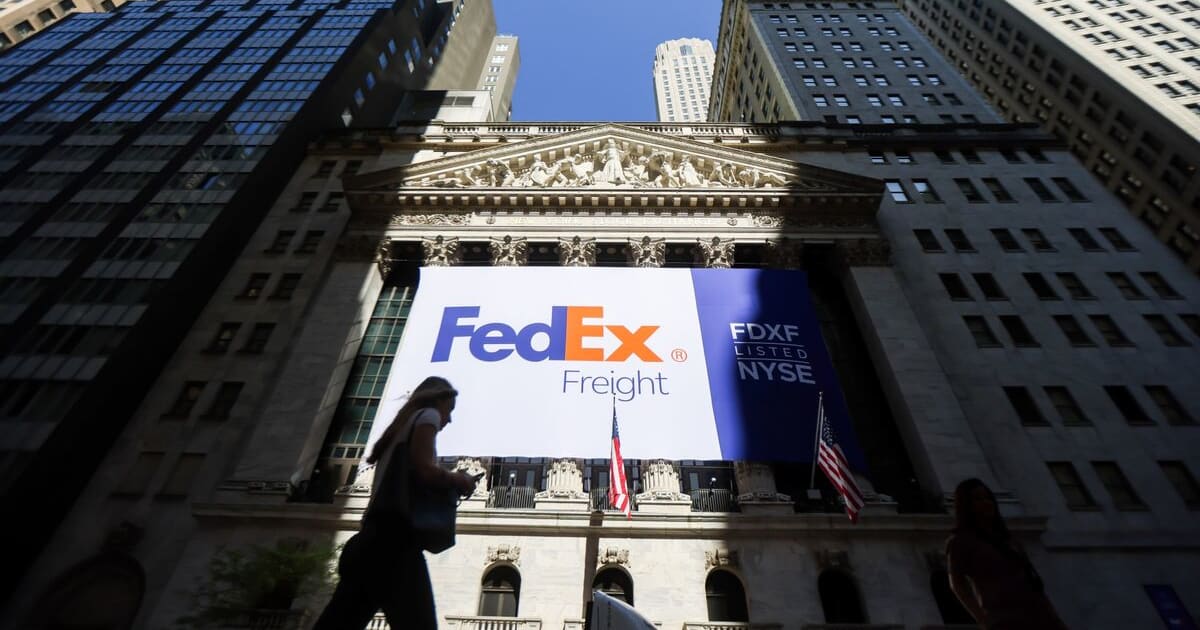
FedEx's strategic unbundling of its Freight division has met with initial market skepticism, causing a ripple effect across the global logistics sector. This deep dive explores why this restructuring matters for the Indian market and provides a detailed outlook for major NSE-listed logistics players. Investors must now navigate a landscape where specialized efficiency is being repriced against integrated scale.
The Memphis Ripple: Why the FedEx Freight Spinoff Triggered a Global Sell-Off
In a move designed to unlock shareholder value, FedEx Corp recently executed the spinoff of its crown jewel—the Freight division. However, the market's reaction was far from the celebratory 'unlocking' management had anticipated. On its debut, the newly independent entity faced a sharp sell-off, a move that reverberated through the global logistics ecosystem. This isn't just a corporate restructuring in the United States; it is a fundamental re-evaluation of how the world prizes Less-than-Truckload (LTL) services versus integrated express delivery.
The spinoff was intended to separate the high-margin, capital-intensive Freight business from the broader, more volatile Express and Ground segments. Historically, FedEx traded at a conglomerate discount compared to pure-play rivals like Old Dominion Freight Line. By unbundling, FedEx hoped to achieve a 'sum-of-the-parts' valuation that would bridge this gap. The initial sell-off suggests that investors are currently more concerned with the standalone entity's ability to maintain margins in a high-interest-rate environment and a cooling global trade landscape than they are with the theoretical benefits of corporate agility.
Why is the FedEx Spinoff happening now?
The timing of this move is critical. We are currently witnessing a structural shift in global supply chains. As 'China Plus One' strategies take hold and near-shoring becomes the norm, the traditional hubs of integrated logistics are being challenged. FedEx’s decision to spin off its freight arm is a defensive-offensive maneuver: defensive against activist investor pressure to improve ROIC (Return on Invested Capital), and offensive in its attempt to let the Freight division compete more aggressively in the specialized LTL market without the baggage of the struggling Express division.
The Indian Connection: Why Nifty Logistics is Watching Memphis
For the Indian investor, a sell-off in Memphis might seem distant, but the correlation between global logistics bellwethers and the Nifty Logistics Index is historically significant. When FedEx or UPS signals a margin squeeze, it typically precedes a similar sentiment shift in the Indian domestic market. This is because the valuation of Indian firms like Delhivery (DELHIVERY) and Blue Dart (BLUEDART) is often pegged to global peer multiples.
Historically, when the global logistics sector saw a 10% correction in 2022 due to rising fuel costs and demand normalization, the Indian logistics basket followed with a 12-15% drawdown within the subsequent quarter. The current FedEx spinoff sell-off serves as a 'canary in the coal mine' for Indian firms that are currently trading at premium P/E ratios compared to their global counterparts. If the market is de-rating the world’s most efficient LTL provider, Indian LTL specialists like TCI Express may find their current valuations under intense scrutiny.
How will global freight demand affect Indian exports?
Logistics is the circulatory system of the economy. A bearish sentiment on FedEx suggests a cooling outlook for global trade volumes. For India, which is aiming for $1 trillion in exports by 2030, any sign of a global freight slowdown is a headwind. Indian logistics companies are not just local players; they are the final-mile connectors for global trade. If the 'integrated' model is losing favor in the West, we might see a shift in India toward more specialized, asset-light logistics models that can pivot faster to changing trade routes.
Stock-by-Stock Breakdown: The NSE Logistics Landscape
The following analysis breaks down how specific Indian stocks are positioned in the wake of this global sentiment shift.
1. Blue Dart Express (BLUEDART)
Ticker: NSE: BLUEDART | Market Cap: ~₹18,000 Cr | P/E Ratio: ~48x
Blue Dart is the closest proxy to the FedEx Express model in India. With a significant portion of its revenue coming from time-sensitive air express, it is highly sensitive to global aviation fuel prices and trade sentiment. The FedEx sell-off is a net negative for Blue Dart's sentiment. Why? Because the market is signaling that integrated, high-capex models are currently out of favor. However, Blue Dart’s dominant market share in the premium segment provides a moat that many global peers lack. Investors should watch for a potential re-rating if margins dip below the 15% threshold.
2. Delhivery Ltd (DELHIVERY)
Ticker: NSE: DELHIVERY | Market Cap: ~₹30,000 Cr
Delhivery is the 'growth' play in the Indian logistics space. Unlike the mature FedEx, Delhivery is still in its scale-up phase. The FedEx spinoff highlights the difficulty of managing diverse logistics streams (B2B, B2C, Freight) under one roof. Delhivery’s integrated model is its biggest strength and its biggest vulnerability. If the global trend moves toward specialization, Delhivery’s 'one-stop-shop' approach might face valuation pressure. Currently, the stock is sensitive to 'path-to-profitability' metrics rather than just revenue growth. A global sell-off in logistics usually leads to FII (Foreign Institutional Investor) outflows from high-beta stocks like Delhivery.
3. TCI Express (TCIEXP)
Ticker: NSE: TCIEXP | Market Cap: ~₹4,500 Cr
TCI Express is the pure-play LTL specialist of India. In theory, if FedEx Freight was spun off to capture a higher multiple as a specialist, TCI Express should be a beneficiary of this trend. However, the initial sell-off of FedEx Freight suggests that even specialists are not immune to macro headwinds. TCI Express maintains an asset-light model with impressive ROCE (Return on Capital Employed) exceeding 25%. It remains the 'quality' pick in the sector, but its stock price will likely remain range-bound until the global freight outlook stabilizes.
4. Mahindra Logistics (MAHLOG)
Ticker: NSE: MAHLOG | Market Cap: ~₹3,200 Cr
Mahindra Logistics operates heavily in the 3PL (Third Party Logistics) space, with a strong focus on the automotive sector. It is less sensitive to the specific 'LTL vs. Express' debate but highly sensitive to domestic industrial production. The FedEx news is a secondary concern for MAHLOG compared to the health of the Indian rural economy and the monsoon's impact on auto sales. However, as an integrated player, any sector-wide de-rating will drag its price down in the short term.
Expert Perspective: The Bull vs. Bear Case
"The FedEx spinoff is a classic case of 'right move, wrong time.' While the structural separation is logical, the market is currently punishing any entity that carries significant debt or faces cyclical demand uncertainty. Indian logistics firms with high debt-to-equity ratios need to be extremely cautious." — Senior Analyst, WelthWest Research
The Bear Case: Bears argue that the logistics sector is entering a prolonged 'winter.' With global interest rates remaining 'higher for longer,' the cost of maintaining vast fleets and warehouses is rising while consumer demand is softening. In India, the aggressive expansion of e-commerce logistics has led to overcapacity, which will inevitably lead to a price war and margin erosion.
The Bull Case: Contrarians suggest that the sell-off is a localized reaction to the mechanics of the spinoff rather than a verdict on the sector. India's Gati Shakti Yojna and the National Logistics Policy are structural tailwinds that global peers don't enjoy. Bulls believe that the 'unbundling' trend will eventually reach India, leading to high-value exits or spinoffs for companies like Allcargo or TCI, creating significant shareholder wealth.
Actionable Investor Playbook
How should you position your portfolio in this 'bearish' but 'low impact' environment?
- For the Conservative Investor: Focus on Blue Dart. Despite the global sentiment, its domestic monopoly in air-express is unmatched. Look for entry points near the ₹7,000-₹7,200 support levels.
- For the Value Hunter: Keep a close eye on TCI Express. If the stock overcorrects due to the FedEx news, it offers a rare opportunity to buy a high-ROCE, asset-light business at a discount. A P/E below 35x would be a compelling entry point.
- For the Aggressive Trader: Delhivery will remain volatile. Short-term trades should be played on the back of quarterly volume data rather than global news. The key resistance remains at ₹450.
- Time Horizon: 12-18 months. The logistics sector is cyclical; we are currently in the 'trough' of the sentiment cycle. Patience will be rewarded as the festive season (Q3) in India usually provides a volume boost.
Risk Matrix: Assessing the Downside
- Global Trade War (Probability: High | Impact: High): Any escalation in trade barriers between the US and China, or India and its neighbors, directly reduces freight volumes.
- Crude Oil Volatility (Probability: Medium | Impact: Very High): Logistics is a fuel-intensive business. A spike in Brent crude above $90/barrel would immediately crush margins for Indian transporters.
- Interest Rate Lag (Probability: High | Impact: Medium): If the RBI delays rate cuts while the Fed starts cutting, the Indian Rupee could strengthen, making Indian exports less competitive and reducing outbound logistics demand.
What to Watch Next
The story doesn't end with the spinoff debut. Investors should mark their calendars for these upcoming catalysts:
- FedEx Freight First Quarter Standalone Results: This will be the true test of whether the spinoff can maintain its margins without the parent company's umbrella.
- Monthly GST E-Way Bill Data: In India, this is the most accurate real-time indicator of domestic freight movement. Any dip below 90 million bills per month would be a sell signal for the sector.
- Q2 Earnings Season (October): Watch the management commentary of Delhivery and Blue Dart regarding 'yield improvement'—this is the new buzzword replacing 'volume growth.'
See Blue Dart Express's AI Score
Our algorithmic screener scores Blue Dart Express on fundamentals, momentum, and risk — free to try, no card needed.
Try the AI Screener →Have questions about this story?
Ask Welth, our finance-focused AI research assistant, for a deeper breakdown — free trial included.
Chat with Welth AI →Disclaimer: This content is generated by WelthWest Research Desk based on publicly available reports and is for informational purposes only. It does not constitute financial advice, investment recommendations, or an offer to buy or sell securities. Always consult a qualified financial advisor before making investment decisions.
