Key Takeaway
The sustained freeze in retail fuel prices acts as a synthetic inflation anchor, protecting consumer discretionary spending while quietly eroding the balance sheets of state-run OMCs. Investors must pivot from energy-heavy portfolios toward sectors benefiting from suppressed input cost inflation.
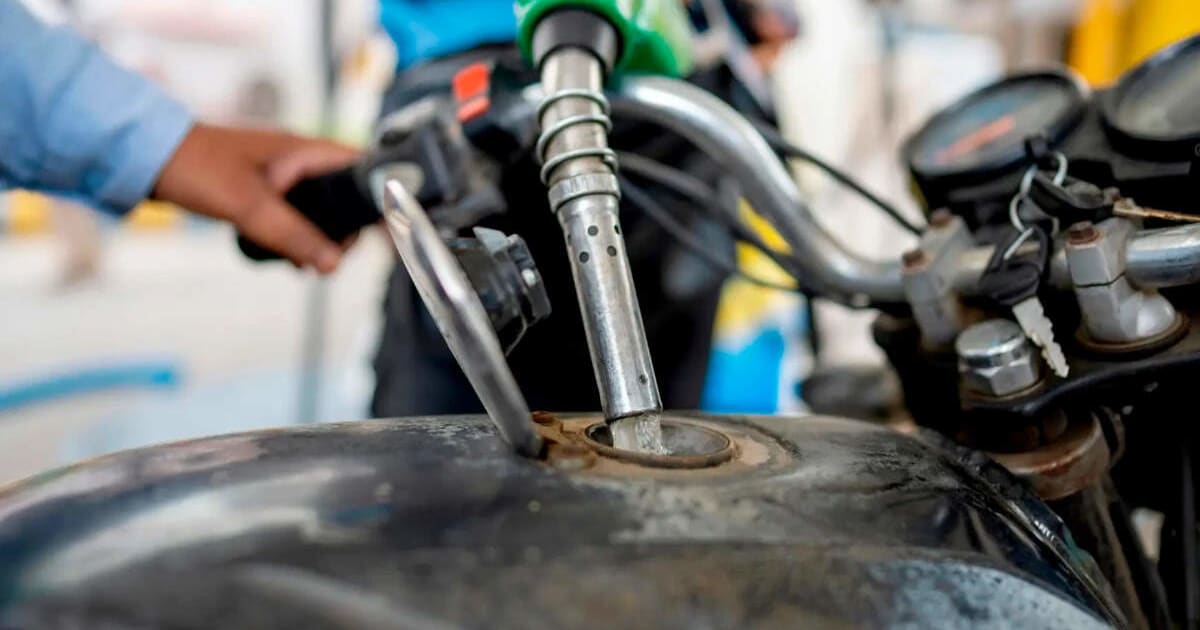
While global crude oil markets remain in a state of high-beta flux, Indian retail fuel prices have reached a period of unusual stasis. This report dissects the underlying financial mechanics, the structural risk to Oil Marketing Companies (OMCs), and the resulting tactical opportunities for investors in the FMCG and logistics sectors.
The Anatomy of the Fuel Price Stagnation
For the past several quarters, the Indian energy landscape has defied the traditional correlation between the Indian Basket of crude oil and retail pump prices. While the Brent crude benchmark continues to oscillate based on geopolitical tensions in the Middle East and OPEC+ production mandates, domestic petrol and diesel prices have remained effectively decoupled. This 'synthetic stability' is not merely an administrative choice; it is a critical macroeconomic lever used to suppress headline inflation and protect the nascent recovery in consumer discretionary spending.
Why does the fuel price freeze matter for the Indian stock market?
The current policy of price suppression functions as a tax on the upstream and midstream energy sectors to subsidize the broader economy. When retail prices remain static despite rising landed costs of crude, the 'under-recovery' burden is absorbed entirely by the Oil Marketing Companies (OMCs). For the Indian equity market, this creates a bifurcated reality: downstream companies face significant margin compression, while sectors like FMCG, logistics, and automobile manufacturing enjoy a predictable input cost environment that bolsters their bottom lines.
The Historical Parallel: Learning from 2022
To understand the current cycle, we must look back to the 2022 inflationary spike. During that period, the Nifty 50 experienced heightened volatility as the government wrestled with excise duty cuts to mitigate the impact of $120/barrel crude. Today, the situation is more nuanced; rather than direct fiscal intervention, we are seeing a 'margin-absorption' model. If the current stagnation persists while crude trends toward the $90/barrel mark, we risk a repeat of the 2022 earnings downgrades for OMCs, which saw profitability drop by over 40% in a single fiscal year.
Stock-by-Stock Breakdown: Winners and Losers
The divergence in stock performance is becoming increasingly stark. Investors must distinguish between companies with high operating leverage to crude costs and those that benefit from the secondary effects of price stability.
- IOCL (Indian Oil Corporation): Trading at a P/E of ~7x, IOCL bears the brunt of the price freeze. As the market leader in retail distribution, its marketing margins are highly sensitive to price controls. Watch for a contraction in EBITDA margins if the crude-to-retail spread remains inverted.
- BPCL (Bharat Petroleum) & HPCL (Hindustan Petroleum): These firms are currently in a 'wait-and-see' mode. Their high debt-to-equity ratios make them vulnerable to prolonged under-recoveries. Investors should monitor their gross refining margins (GRMs) as a proxy for operational efficiency.
- ONGC & OIL (Oil India Ltd): As upstream producers, these companies are currently the 'silent winners' of the current regime. They benefit from global price realizations without having to share the retail-level burden. Their strong cash flow generation makes them defensive plays in an otherwise volatile energy sector.
- FMCG & Logistics (e.g., Tata Motors, Ashok Leyland, Asian Paints): These sectors are the indirect beneficiaries. When diesel prices remain frozen, the logistics cost component of these companies remains stable, allowing for better operating leverage and margin expansion in their quarterly filings.
Expert Perspective: The Bull vs. Bear Debate
The Bear Case: Analysts argue that the current price freeze is unsustainable. If global crude spikes due to a supply-side shock, the government will be forced to either raise prices—triggering an inflation spike—or provide massive subsidies, which would widen the fiscal deficit and hurt the INR/USD exchange rate.
The Bull Case: Contrarians point to the 'Election-Cycle Stability' theory. They argue that the government has enough buffer in the form of windfall taxes on domestic crude production to subsidize the OMCs, keeping retail prices stable until global volatility subsides. From this view, the current OMC margin compression is a temporary, manageable cost of maintaining macroeconomic stability.
Actionable Investor Playbook
For the tactical investor, the current environment suggests a rotation strategy:
- Reduce exposure to OMCs: If you hold IOCL, BPCL, or HPCL, consider trimming positions if the Brent crude price sustains above $85/barrel for more than 15 trading days.
- Increase exposure to logistics-heavy sectors: Companies with high transport costs as a percentage of COGS (Cost of Goods Sold) will see immediate margin improvements due to the fuel price freeze.
- Monitor the 'Windfall Tax' updates: Keep a close eye on the fortnightly updates to the Special Additional Excise Duty (SAED). This is the government's primary mechanism for balancing the books between upstream producers and the exchequer.
Risk Matrix
| Risk Factor | Probability | Impact |
|---|---|---|
| Global Supply Chain Disruption | Medium | High |
| Government-Mandated Under-recovery | High | High |
| INR Depreciation vs USD | Medium | Medium |
What to watch next?
The critical data points to track over the next 30 days include the monthly Consumer Price Index (CPI) print, which will dictate the RBI's stance on interest rates. Furthermore, the upcoming OPEC+ ministerial meetings will serve as the primary catalyst for global crude price movements. A decision to extend production cuts would likely force the Indian government to reconsider its retail fuel strategy, potentially ending the freeze and triggering a significant re-rating of OMC stocks.
See IOCL's AI Score
Our algorithmic screener scores IOCL on fundamentals, momentum, and risk — free to try, no card needed.
Try the AI Screener →Have questions about this story?
Ask Welth, our finance-focused AI research assistant, for a deeper breakdown — free trial included.
Chat with Welth AI →Disclaimer: This content is generated by WelthWest Research Desk based on publicly available reports and is for informational purposes only. It does not constitute financial advice, investment recommendations, or an offer to buy or sell securities. Always consult a qualified financial advisor before making investment decisions.
