Key Takeaway
The return to dynamic fuel pricing signals a structural shift in corporate margins and RBI policy. Investors must rotate out of transport-heavy sectors into energy-upstream plays to hedge against persistent core inflation.
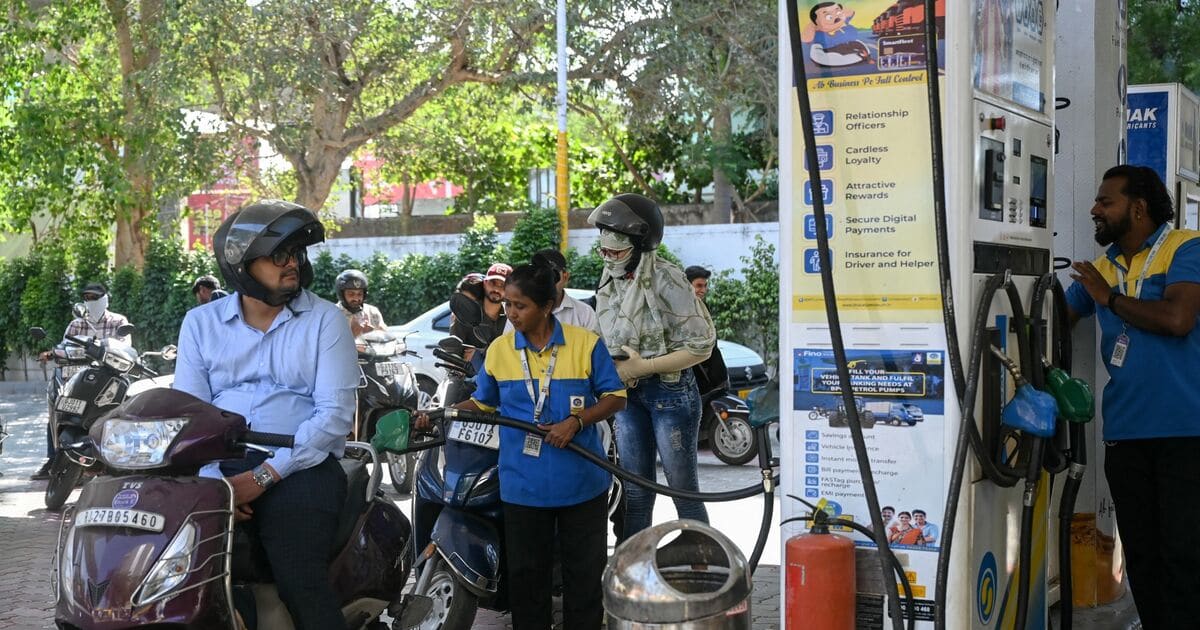
Oil Marketing Companies have resumed serial fuel price hikes, ending a period of suppressed volatility. This move signals a major shift in India's inflation trajectory, forcing a re-evaluation of sector-specific margins and RBI interest rate expectations.
The End of Price Suppression: What the New Fuel Regime Means for Investors
For months, the Indian equity market operated under the assumption that retail fuel prices would remain insulated from the volatility of Brent crude. That era has officially ended. The resumption of serial fuel price hikes—averaging nearly 90 paise per liter in recent windows—is not merely a budgetary adjustment; it is a calculated response by Oil Marketing Companies (OMCs) to mitigate mounting under-recoveries. For the astute investor, this marks the return of 'cost-push' inflation as a primary driver of market sentiment.
When fuel prices rise in a high-growth economy like India, the impact propagates through the supply chain with mathematical precision. We are moving from a regime of 'subsidized stability' to 'market-linked volatility,' a transition that historically correlates with a contraction in discretionary spending and a pivot in monetary policy.
Why are fuel prices rising now and why does it matter?
The decision to pass global crude volatility to the end consumer is a structural necessity for state-run refiners. When the gap between the Indian Basket of crude and retail pump prices widens, OMCs suffer severe margin compression. By initiating these hikes, OMCs are prioritizing balance sheet health over political optics. However, the macro-consequence is immediate: the Consumer Price Index (CPI) is highly sensitive to fuel, and a sustained increase will likely force the Reserve Bank of India (RBI) to adopt a more hawkish stance, potentially delaying any pivot toward rate cuts.
Deep Market Impact: Connecting Oil to the Nifty
Historical parallels are instructive. During the 2022 inflationary spike, the Nifty 50 saw a significant correction as the market priced in higher input costs for the manufacturing sector. Today, the leverage is higher. With the Indian economy currently seeing a robust demand recovery, the sudden imposition of higher logistics costs acts as a 'stealth tax' on corporate India.
Sectoral Impact Matrix:
- Energy (Winners): OMCs and Upstream producers see immediate relief. OMCs recover marketing margins, while upstream firms benefit from higher realization prices.
- Logistics & FMCG (Losers): Transport costs currently account for 12-15% of total operating expenses for large FMCG players. These firms face a binary choice: absorb the cost and see EPS (Earnings Per Share) drop, or pass it on and risk volume decline.
- Aviation (Losers): ATF (Aviation Turbine Fuel) prices are intrinsically linked to these hikes. Airlines like InterGlobe Aviation already operate on razor-thin margins; fuel hikes here are a direct hit to bottom-line profitability.
Stock-by-Stock Breakdown: Who Wins and Who Wanes?
The Energy Giants
IOCL (Indian Oil Corporation) & BPCL (Bharat Petroleum): Both are primary beneficiaries. As OMCs, their marketing margins were under siege. A return to market-linked pricing improves their P/E compression outlook. With market caps in the range of ₹2.2T and ₹1.4T respectively, these stocks are currently trading at attractive multiples compared to their 5-year averages.
ONGC (Oil and Natural Gas Corp): As an upstream player, ONGC benefits from the 'windfall' effect. Their realizations remain tied to global benchmarks, and higher crude prices directly bolster their top-line revenue without the retail overheads.
The Industrial & Transport Heavyweights
Tata Motors & Ashok Leyland: These firms face a dual headwind. Not only does the cost of raw material transport rise, but the demand for commercial vehicles often cools when fuel prices make fleet operations less profitable. Watch for margin guidance updates in the upcoming quarterly results.
Expert Perspective: The Bull vs. Bear Debate
The Bulls argue that the Indian economy is resilient enough to absorb these costs, and that the OMCs' recovery will provide a boost to the dividend yield of PSUs, keeping the broader market afloat. The Bears, conversely, point to the 'second-order effects'—higher fuel costs lead to higher transportation costs, which lead to higher food prices, which eventually kills the consumer's ability to spend on non-essentials.
In our view, the truth lies in the persistence of the hikes. If this is a temporary adjustment to clear a backlog, the market will shrug it off. If this is a permanent shift to higher retail price floors, expect a rotation away from consumer cyclicals.
Actionable Investor Playbook
1. The Defensive Shift: Reduce exposure to high-beta transport and logistics stocks. If you hold positions in mid-cap logistics players, consider trailing stop-losses tighter.
2. The Energy Hedge: Maintain or increase overweight positions in integrated energy players (ONGC, OIL) that offer both dividend safety and upside realization from crude volatility.
3. Monitor the RBI: Watch the next MPC (Monetary Policy Committee) meeting minutes. If the committee shifts focus from 'growth' to 'inflation control,' it is time to move toward defensive sectors like IT and Pharma.
Risk Matrix
| Risk Factor | Impact | Probability |
|---|---|---|
| Sustained CPI spike > 6% | High | Moderate |
| Geopolitical crude supply shock | Extreme | Moderate |
| Discretionary spending slump | High | High |
What to Watch Next
Investors must keep a close eye on the WPI (Wholesale Price Index) data release for the upcoming month. A sharp uptick in WPI will confirm that fuel costs are being successfully passed through the supply chain, signaling that the 'inflationary fire' is spreading from the pump to the factory floor. Additionally, monitor the Brent Crude benchmark; if it sustains above $90/bbl, the current price hikes are only the beginning of a much longer cycle.
See IOCL's AI Score
Our algorithmic screener scores IOCL on fundamentals, momentum, and risk — free to try, no card needed.
Try the AI Screener →Have questions about this story?
Ask Welth, our finance-focused AI research assistant, for a deeper breakdown — free trial included.
Chat with Welth AI →Disclaimer: This content is generated by WelthWest Research Desk based on publicly available reports and is for informational purposes only. It does not constitute financial advice, investment recommendations, or an offer to buy or sell securities. Always consult a qualified financial advisor before making investment decisions.
