Key Takeaway
The government's decision to maintain retail fuel price stability serves as a massive subsidy for the broader economy at the direct expense of OMCs' marketing margins. Investors must weigh the benefits of lower logistics costs against the earnings volatility inherent in state-run energy firms.
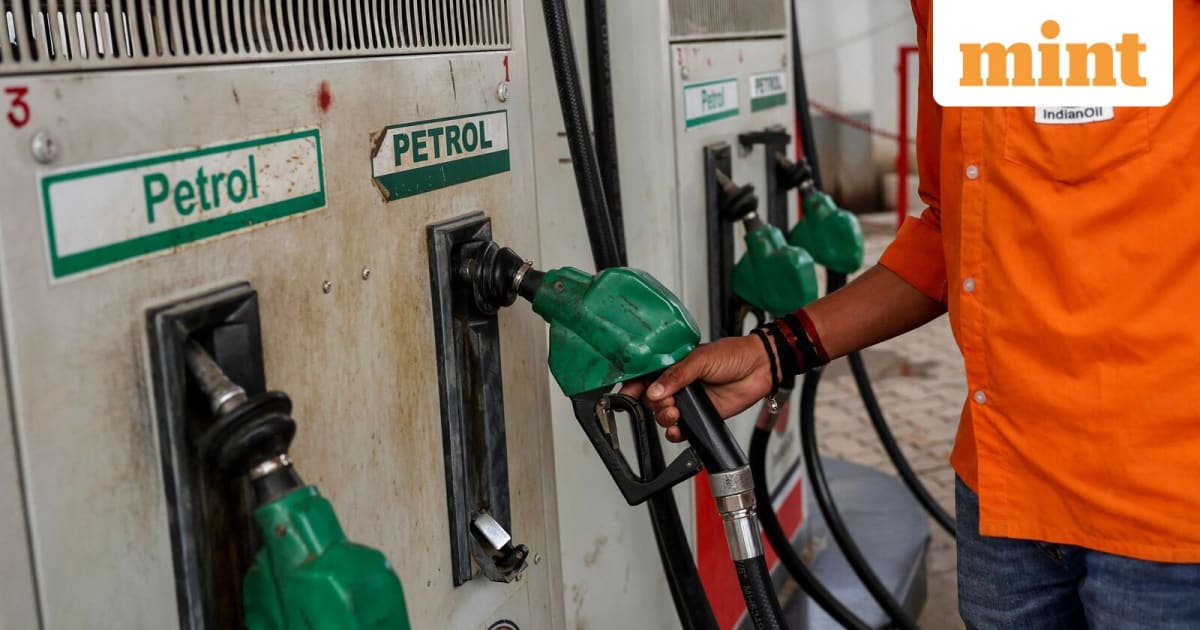
While global crude oil prices remain volatile, India’s state-owned retailers have kept domestic fuel and LPG rates unchanged. This strategic move acts as a buffer for inflation but places significant pressure on the balance sheets of OMCs. We analyze the resulting ripple effects across the Indian equity markets.
The Great Price Freeze: Navigating India's Energy Paradox
In an era of heightened geopolitical instability, the Indian government’s decision to maintain static fuel and LPG prices is a masterclass in macroeconomic stabilization. By insulating the Indian consumer from the erratic swings of the Brent crude market, the authorities have effectively contained domestic inflationary pressures. However, for the astute investor, this stability masks a growing structural tension within the energy sector—a trade-off between retail price parity and the profitability of state-owned Oil Marketing Companies (OMCs).
How does fuel price stability impact the Indian stock market?
The secondary effects of static fuel pricing are far-reaching. When pump prices remain unchanged despite surging global inputs, the immediate beneficiary is the bottom line of the logistics, aviation, and FMCG sectors. By suppressing operational expenditure (OPEX) related to transport and distribution, the government is essentially creating a tailwind for corporate margins. Historically, during the 2022 crude spike, we observed that sectors with high fuel-intensity exposure—like trucking and aviation—saw a sharp compression in EBITDA margins. Today, the inverse is true; the current price freeze acts as a de-facto margin expansion tool for these sectors.
The OMC Margin Squeeze: A Silent Drag
While the broader market celebrates, the OMCs are navigating a precarious fiscal environment. Marketing margins, which represent the profit earned on every liter of fuel sold, are currently under pressure. When the cost of the Indian Basket of crude oil exceeds the retail price realization, OMCs must absorb the delta. For companies like BPCL and IOCL, this represents a cyclical headwind that complicates their P/E valuation models. We are currently seeing OMCs trade at P/E ratios that reflect this uncertainty, as investors remain wary of a potential 'catch-up' price hike that could induce a sharp, albeit temporary, inflation spike.
Stock-by-Stock Analysis: Who Wins and Who Loses?
The impact of fuel price stagnation is not uniform. We categorize the market reaction into two distinct camps:
- The Beneficiaries (Logistics & Aviation): InterGlobe Aviation (INDIGO) and VRL Logistics (VRLLOG). Fuel accounts for nearly 35-40% of an airline's operating cost. Stagnant prices allow for better capacity utilization and margin protection, shielding them from the volatility seen in 2022 when Nifty energy indices tumbled.
- The Margin-Compressed (OMCs): Bharat Petroleum (BPCL), Hindustan Petroleum (HPCL), and Indian Oil (IOCL). These firms face a paradox: higher sales volumes are offset by thinner margins. Their market caps are currently tethered to government policy rather than pure market-driven pricing mechanisms.
- The Defensive Play (Automobile): Maruti Suzuki (MARUTI). Lower logistics and distribution costs, combined with stable fuel sentiment, support consumer demand for entry-level and mid-segment passenger vehicles, which are highly sensitive to the total cost of ownership.
Expert Perspective: The Contrarian View
The 'Bull' case argues that the government will eventually allow for a price correction once global crude stabilizes, enabling OMCs to recover their losses through 'under-recovery' compensation or gradual price hikes. The 'Bear' case, however, focuses on the election-year fiscal prudence model, suggesting that the government will prioritize low inflation over OMC profitability, leading to sustained margin erosion for the energy majors. Investors should note that the last time we saw a prolonged freeze, OMCs underwent a significant de-rating, trading at a 20-30% discount to their 5-year average P/B ratios.
The Investor Playbook: Strategic Moves
For the long-term investor, the current environment necessitates a nuanced approach:
- Watch the Under-Recovery Data: Monitor the fortnightly trade data released by the Petroleum Planning & Analysis Cell (PPAC). If the under-recovery starts to climb, it is a signal to trim exposure to OMCs.
- Leverage the Logistics Tailwind: Companies with high asset turnover in the logistics space are currently undervalued relative to their margin-expansion potential. Look for entry points during broad market dips.
- Hedge with Upstream: If you are concerned about crude volatility, hedge your portfolio by increasing exposure to upstream producers like ONGC, which benefit from higher global prices regardless of the retail price freeze.
Risk Matrix
| Risk Factor | Probability | Impact |
|---|---|---|
| Sharp Crude Spike (> $95/bbl) | Medium | High |
| Sudden Govt. Deregulation | Low | High |
| Logistic Cost Inflation (Non-Fuel) | High | Medium |
What to Watch Next
Investors should keep a close watch on the upcoming RBI Monetary Policy Committee (MPC) meetings. Any change in the repo rate will influence the cost of capital for these debt-heavy OMCs. Furthermore, watch for the Q1 and Q2 earnings reports for HPCL and BPCL; pay specific attention to the 'marketing margin' line item in their management commentary. This is the single most important metric to determine whether the current fuel price strategy is sustainable or if a structural shift is imminent.
See BPCL's AI Score
Our algorithmic screener scores BPCL on fundamentals, momentum, and risk — free to try, no card needed.
Try the AI Screener →Have questions about this story?
Ask Welth, our finance-focused AI research assistant, for a deeper breakdown — free trial included.
Chat with Welth AI →Disclaimer: This content is generated by WelthWest Research Desk based on publicly available reports and is for informational purposes only. It does not constitute financial advice, investment recommendations, or an offer to buy or sell securities. Always consult a qualified financial advisor before making investment decisions.
