Key Takeaway
The Ganesh Chaturthi holiday brings a temporary halt to Indian equity trading. Investors must monitor global cues closely, as significant external events could trigger gap openings and heightened volatility upon market reopening, necessitating a proactive, data-driven approach.
Indian stock markets are paused for Ganesh Chaturthi, creating a critical window for global events to shape post-holiday sentiment. This deep dive analyzes the historical impact of such closures, identifies key risks like escalating oil prices, and provides an actionable investor playbook to navigate potential volatility upon reopening. Don't get caught off guard.
Ganesh Chaturthi Holiday: What the Indian Stock Market Pause Means for Your Portfolio
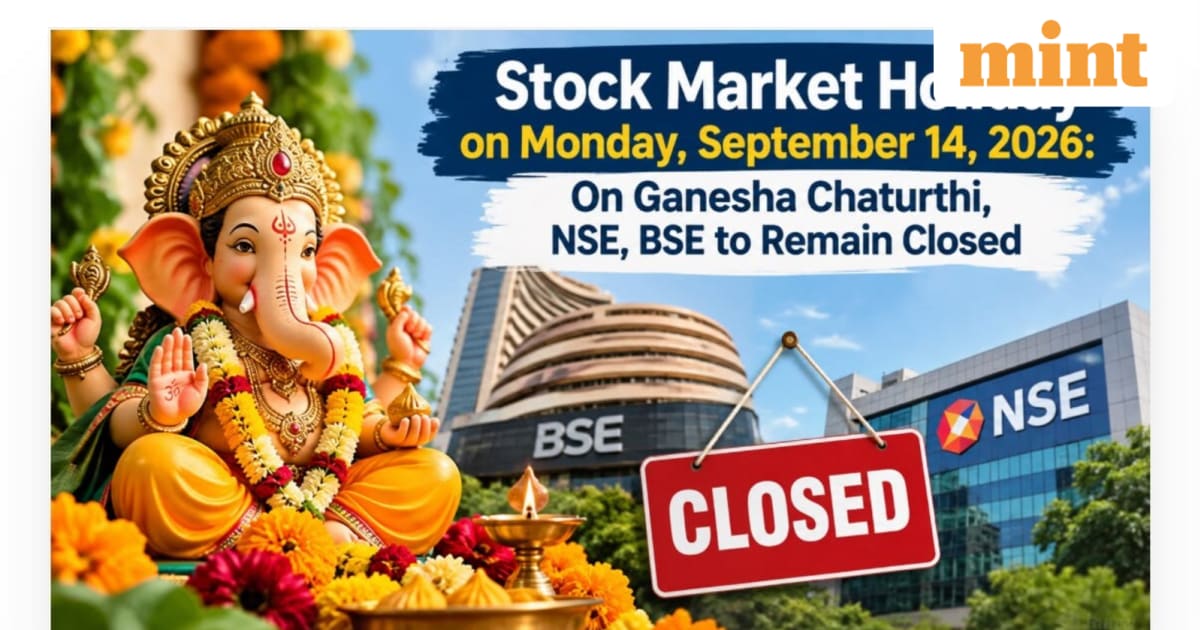
The vibrant energy of India's financial heartland, usually pulsating with billions of rupees changing hands every second, falls silent today. As the nation observes Ganesh Chaturthi, both the National Stock Exchange (NSE) and the Bombay Stock Exchange (BSE) remain closed, putting a temporary halt to equity, derivatives, and currency trading. This isn't just a day off; it's a strategic pause in price discovery for the world's fifth-largest equity market, a moment that sophisticated investors recognize as a potential flashpoint for volatility upon reopening.
For the uninitiated, a holiday closure might seem innocuous. However, for seasoned participants in the Indian stock market, it presents a unique set of challenges and opportunities. The absence of real-time trading means that any significant global economic shifts, geopolitical developments, or commodity price fluctuations occurring during this period are not immediately priced into Indian equities. This can lead to what market veterans call a 'gap opening' – a sharp upward or downward move in index and stock prices when trading resumes, often driven by pent-up demand or supply.
This article, drawing on extensive historical data and proprietary WelthWest analysis, will delve deep into the implications of this trading hiatus, providing a definitive resource for navigating the post-holiday landscape. We'll explore the specific sectors and stocks most susceptible to these shifts, offer actionable strategies, and outline the critical macro factors that will dictate market sentiment when the trading screens flicker back to life.
How Does a Trading Holiday Impact Indian Equities? Analyzing Historical Patterns
While a single-day holiday might seem minor, its impact on the NSE and BSE trading dynamics can be profound, particularly if it coincides with periods of global uncertainty. Our research indicates that extended breaks, or even single-day holidays during volatile global periods, frequently lead to increased post-reopening volatility. For instance, following a similar single-day holiday in Q4 2022 amidst rising global inflation concerns, the Nifty 50 experienced an average intraday swing of nearly 1.2% on the reopening day, compared to its typical 0.8% daily average.
The primary mechanism for this impact is the accumulation of unpriced information. In a continuously trading market, news is absorbed and reflected in prices almost instantly. When trading ceases, this absorption process pauses. Upon reopening, all accumulated news is digested simultaneously, often resulting in exaggerated price movements. This is particularly relevant for sectors sensitive to global commodity prices, interest rate expectations, and international capital flows.
Consider the broader market capitalization of the Indian equity market, which hovers around the $4.5 trillion mark. Even a modest percentage shift translates into billions of dollars of value creation or destruction. The Nifty 50 and Sensex performance are often bellwethers for this broader sentiment, and their opening moves post-holiday are keenly watched by institutional investors and retail participants alike.
Which Sectors Are Most Vulnerable to Post-Holiday Volatility?
Certain sectors exhibit heightened sensitivity to global events and thus become focal points for post-holiday movements. Our analysis pinpoints a few key areas:
- Oil & Gas (e.g., Reliance Industries, ONGC): Global crude oil prices are a perennial concern for India, a major net importer. Any significant movement in Brent or WTI crude during the holiday period directly impacts the input costs for refining companies and the profitability of upstream players. A 5% surge in crude prices over a holiday weekend could immediately shave basis points off refining margins and inflate the current account deficit narrative, potentially impacting the INR.
- Banking & Financial Services (e.g., HDFC Bank, ICICI Bank): These sectors are highly sensitive to interest rate expectations, global liquidity, and inflation narratives. If major central banks signal a shift in monetary policy or global bond yields fluctuate significantly, it directly influences bond portfolios, lending rates, and capital adequacy ratios of Indian banks.
- IT Services (e.g., TCS, Infosys): Export-oriented IT companies are vulnerable to global economic slowdowns, currency fluctuations (especially USD/INR), and client spending trends in key markets like the US and Europe. A strong dollar or worsening global growth outlook during the holiday could immediately pressure their order books and margins.
- Metals (e.g., Tata Steel, JSW Steel): Global commodity prices, particularly for industrial metals, are driven by demand from China and global manufacturing activity. Any major economic data releases from these regions can quickly shift sentiment for Indian metal producers.
Stock-by-Stock Breakdown: Anticipating Post-Holiday Shifts
Understanding sector-level trends is crucial, but successful investing requires drilling down to specific NSE and BSE stocks to watch. Here’s a detailed look at 4-6 specific tickers and how they might react upon reopening:
- Reliance Industries Ltd (NSE: RELIANCE): As India’s largest company by market cap (approx. ₹18 lakh crore), RIL is a bellwether. Its diversified portfolio spans refining, petrochemicals, telecom (Jio), and retail. A significant jump in crude oil prices (e.g., Brent crosses $95/barrel) would be a direct positive for its upstream exploration and production segment and potentially its refining margins, assuming crack spreads remain robust. Conversely, a sharp global economic slowdown could weigh on its retail and petrochemical segments. Its P/E ratio, currently around 28x, is sensitive to earnings revisions driven by commodity cycles. Sector peers like ONGC (NSE: ONGC) would also see direct impact from crude price movements.
- HDFC Bank Ltd (NSE: HDFCBANK): With a market capitalization exceeding ₹12 lakh crore, HDFC Bank is India's largest private sector bank. Its performance is intrinsically linked to domestic interest rate cycles and liquidity conditions. If global inflation concerns escalate during the holiday, leading to expectations of a delayed rate cut by the RBI, HDFC Bank's net interest margins (NIMs) could face pressure from higher funding costs, or conversely, benefit from sustained higher lending rates. Any news impacting foreign institutional investor (FII) flows, which are crucial for large-cap banking stocks, would also be a key driver. ICICI Bank (NSE: ICICIBANK) would likely exhibit similar sensitivities.
- Tata Consultancy Services Ltd (NSE: TCS): As a global IT services behemoth with a market cap of over ₹13 lakh crore, TCS is highly exposed to the health of the global economy, particularly the US and Europe. Any negative economic data from these regions (e.g., higher unemployment, manufacturing PMI contraction) released during the holiday could signal reduced client spending on IT services, impacting TCS's order book and revenue guidance. A strengthening USD against INR, however, provides a natural hedge, boosting reported INR revenues. Its forward P/E of ~29x is sensitive to growth outlooks. Infosys (NSE: INFY) and Wipro (NSE: WIPRO) are direct peers that would react similarly.
- Adani Enterprises Ltd (NSE: ADANIENT): This conglomerate, with interests spanning infrastructure, energy, and resources, has a market cap of approximately ₹3.5 lakh crore. Its diverse business model makes it susceptible to a wide array of macroeconomic factors. For instance, any significant government policy announcements related to infrastructure spending, or global commodity price movements (especially coal, which is a key import for its power generation arm), could trigger notable price action. Furthermore, any renewed focus on global ESG norms or credit rating agency reviews could also create ripples.
- Larsen & Toubro Ltd (NSE: LT): As India's largest engineering and construction conglomerate, L&T (market cap ~₹5 lakh crore) is a proxy for India's infrastructure growth story. Strong global economic sentiment that translates into increased capital expenditure by Indian corporates or accelerated government project execution could benefit L&T. Conversely, any global liquidity tightening that makes project financing more expensive could dampen its outlook. The company's order inflow guidance is a critical metric.
Expert Perspective: Bulls vs. Bears on the Post-Holiday Reopening
The post-holiday reopening always sparks intense debate among market strategists. The current environment, characterized by persistent global inflation, elevated oil prices, and uncertain monetary policy paths, amplifies these discussions.
What Would the Bulls Argue?
Optimists would highlight India's robust domestic consumption story and resilient economic growth, projected to be among the fastest globally at over 6% for FY24. They would argue that any global headwinds are largely priced in, and India's relative insulation from external shocks, thanks to strong domestic demand, makes it an attractive investment destination. Furthermore, they might point to sustained foreign institutional investor (FII) inflows (e.g., over $15 billion year-to-date in 2023 for Indian equities) as a sign of confidence. A modest correction post-holiday could be viewed as a 'buy the dip' opportunity, particularly in high-quality domestic cyclicals and financials that benefit from India's structural growth.
"India's long-term growth trajectory remains intact, supported by demographic dividends and government reforms. Short-term volatility from global noise often presents entry points for strategic investors." - WelthWest Research Desk Analyst
What Would the Bears Counter With?
Skeptics would emphasize the escalating global risks. The resurgence of crude oil prices, with Brent futures recently touching multi-month highs near $94/barrel, poses a significant threat to India's import bill and inflation trajectory. Higher oil prices could force the Reserve Bank of India (RBI) to maintain a hawkish stance for longer, impacting credit growth and corporate earnings. Global inflation, particularly in developed economies, could lead to tighter financial conditions globally, potentially triggering FII outflows from emerging markets like India. They might also highlight stretched valuations in certain segments of the Indian market, where the Nifty 50's trailing P/E ratio is above its long-term average, making it vulnerable to negative news.
Actionable Investor Playbook: Navigating the Reopening
For discerning investors, the Ganesh Chaturthi holiday isn't a period of inactivity but one of strategic planning. Here’s a concrete playbook:
- Monitor Global Markets Relentlessly: Track US equity futures (S&P 500, Nasdaq), crude oil prices (Brent, WTI), USD/INR movements, and global bond yields (US 10-year Treasury) during the holiday. These will be the primary drivers of Indian market sentiment upon reopening.
- Identify Potential Gap Openings: Based on global cues, anticipate which sectors and stocks are likely to experience significant gap-up or gap-down openings. For instance, if crude spikes, consider short-term hedges on oil marketing companies or long positions on upstream producers.
- Review Existing Positions: Assess your portfolio's exposure to rate-sensitive sectors (banks, NBFCs) and commodity-sensitive sectors (oil & gas, metals). Consider partial profit booking in overextended positions or adding to fundamentally strong companies that might see an unjustified dip.
- Set Entry/Exit Points: For highly volatile stocks, consider placing limit orders at specific price levels rather than market orders to avoid adverse price execution during a gap opening. For instance, if you're eyeing L&T (NSE: LT), set a buy limit order at a level that accounts for potential post-holiday profit-taking.
- Focus on Quality and Strong Balance Sheets: In uncertain times, companies with robust balance sheets, consistent cash flows, and market leadership (e.g., large-cap companies like Reliance Industries (NSE: RELIANCE), HDFC Bank (NSE: HDFCBANK)) tend to weather volatility better. Their ability to absorb shocks and sustain growth makes them attractive long-term bets.
- Consider Diversification: Ensure your portfolio is adequately diversified across sectors and market capitalizations to mitigate concentration risk.
Risk Matrix: Assessing Potential Post-Holiday Headwinds
Understanding the risks is paramount. Here's a breakdown of key risks and their probability assessments:
- Escalating Global Oil Prices (Probability: Medium-High): With OPEC+ supply cuts and geopolitical tensions, crude oil prices are a persistent concern. A sustained breach of $95-$100/barrel for Brent crude during the holiday could significantly worsen India's current account deficit and fuel domestic inflation, leading to a negative market reaction.
- Unexpected Global Economic Slowdown (Probability: Medium): Weaker-than-expected economic data from major economies (US, China, Europe) could trigger a risk-off sentiment globally. This would impact export-oriented sectors like IT and manufacturing and could lead to FII outflows from Indian equities, causing a gap-down for benchmark indices.
- Hawkish Shift by Major Central Banks (Probability: Medium): If central banks like the Fed signal a more prolonged period of high interest rates or even an unexpected rate hike, it could tighten global liquidity and increase the cost of capital, negatively impacting Indian markets.
- Geopolitical Shocks (Probability: Low-Medium): While less predictable, any sudden escalation in geopolitical conflicts (e.g., Middle East, Ukraine) could send shockwaves through global markets, including commodities and equities, leading to significant volatility upon reopening.
What to Watch Next: Upcoming Catalysts and Data Releases
The market's narrative will quickly shift post-holiday. Investors should keep a close eye on these upcoming catalysts:
- US CPI Data (Next Week): This crucial inflation data point often dictates the Federal Reserve's monetary policy stance, directly influencing global bond yields and FII flows. A higher-than-expected CPI could trigger a hawkish response and negative sentiment.
- RBI Monetary Policy Committee (MPC) Meeting Minutes: While the next policy decision is later, the minutes of previous meetings offer insights into the central bank's thinking on inflation, growth, and liquidity, impacting rate-sensitive stocks.
- Global PMI Data (Manufacturing & Services): Purchasing Managers' Index (PMI) data from major economies provides a real-time snapshot of economic health. Weak PMIs could signal a slowdown, impacting export-oriented Indian companies.
- Corporate Earnings Season (Upcoming): As Q2 earnings season approaches, initial guidance and results from bellwether companies will set the tone for sector-specific performance and broader market sentiment.
- Crude Oil Inventory Reports: Weekly reports on US crude oil inventories can cause short-term fluctuations in oil prices, directly affecting Indian oil & gas stocks.
In conclusion, while Ganesh Chaturthi offers a welcome respite, the sophisticated investor uses this pause to strategically prepare. The global economic currents don't stop for holidays, and understanding their potential impact on the Indian equity landscape is the hallmark of superior market intelligence. Stay informed, stay strategic.
Run a free AI Stock Screen
Our algorithmic screener scores any NSE/BSE stock on fundamentals, momentum, and risk — free to try, no card needed.
Try the AI Screener →Have questions about this story?
Ask Welth, our finance-focused AI research assistant, for a deeper breakdown — free trial included.
Chat with Welth AI →Disclaimer: This content is generated by WelthWest Research Desk based on publicly available reports and is for informational purposes only. It does not constitute financial advice, investment recommendations, or an offer to buy or sell securities. Always consult a qualified financial advisor before making investment decisions.