Key Takeaway
The era of 'Gold at any price' is hitting a wall as global banks pivot toward a stronger US Dollar. For Indian investors, this isn't just a commodity story; it's a structural risk for gold-loan NBFCs and a valuation reset for premium jewelry retailers.
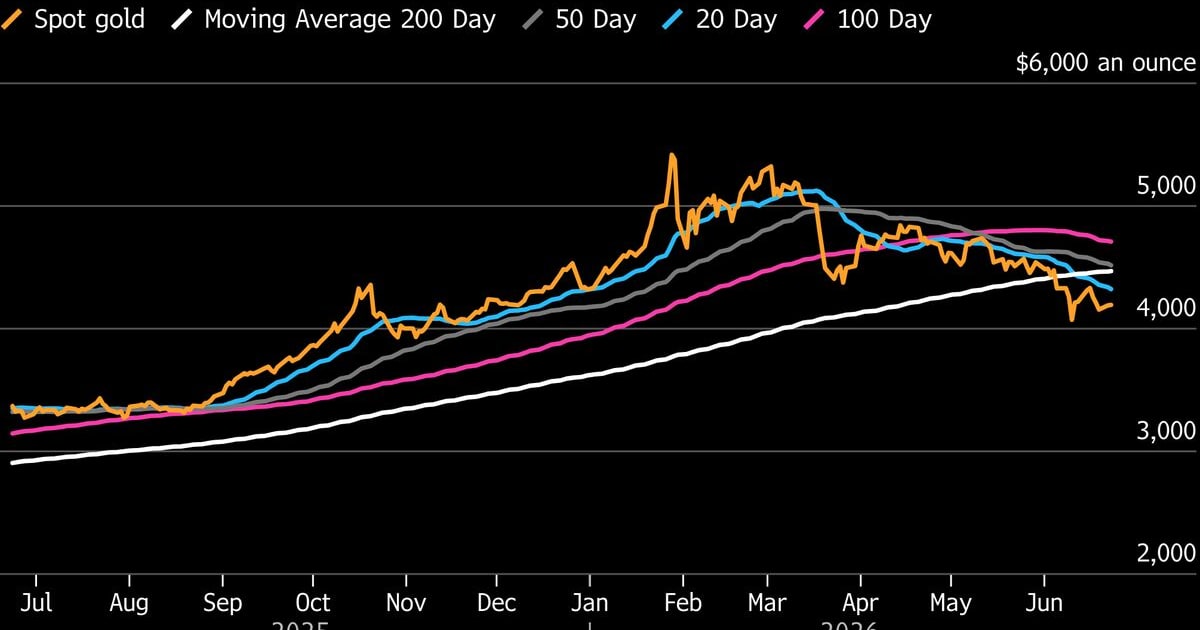
Major investment banks including Goldman Sachs and Deutsche Bank have downgraded their gold price outlooks, citing sustained high US interest rates. This shift threatens the collateral safety nets of Indian gold-loan providers like Muthoot and Manappuram while creating a complex inventory valuation challenge for retail giants like Titan. Our analysis explores the ripple effects across the NSE and BSE, identifying the specific risks and opportunities in the metals and finance sectors.
The Great Gold Re-Rating: Why the Bull Run is Stalling
For the past eighteen months, gold has enjoyed a privileged position in the global portfolio, bolstered by geopolitical uncertainty and the anticipation of a dovish pivot by the US Federal Reserve. However, the narrative has shifted. In a series of research notes that have sent ripples through the commodities desks of London and New York, Goldman Sachs and Deutsche Bank have officially trimmed their gold price forecasts. This isn't merely a minor adjustment; it is a fundamental reassessment of the 'higher-for-longer' interest rate environment and the resilience of the US Dollar Index (DXY).
As the DXY gains strength, gold—a non-yielding asset—loses its luster. When the cost of holding gold (the opportunity cost) rises alongside Treasury yields, institutional capital rotates back into fixed income and equities. For the Indian market, which accounts for nearly 25% of global physical gold demand, this global recalibration has immediate and profound consequences for domestic equity valuations, particularly in the NBFC and retail jewelry sectors.
Why is Gold Falling Now? The Macro Context
The primary driver is the surprising resilience of the US economy. Despite aggressive rate hikes, the US labor market remains tight, and inflation, while cooling, is not yet at the Fed's 2% target. Consequently, the 'pivot' that gold bulls were betting on has been delayed. When Deutsche Bank follows Goldman in cutting targets, it signals a consensus that the US Dollar will remain the dominant safe-haven play for the remainder of the year. This creates a 'double-whammy' for gold: higher carrying costs and a stronger currency denominator.
Deep Market Impact: The Indian Connection
While global analysts focus on the COMEX and LBMA, the real-world impact is arguably most visible on the National Stock Exchange (NSE). India's relationship with gold is unique; it is both a consumer good and a financial collateral. A sustained dip in gold prices creates a ripple effect through three distinct channels:
- Collateral Erosion: Gold-loan NBFCs lend money against gold ornaments. If the price of gold drops by 10-15%, the Loan-to-Value (LTV) ratio increases, potentially exceeding the regulatory cap of 75%. This forces lenders to either demand more collateral or initiate auctions, which can lead to credit losses.
- Inventory Devaluation: Large retailers like Titan Company (TITAN) and Kalyan Jewellers (KALYANKJIL) maintain massive inventories. A sharp drop in gold prices leads to 'mark-to-market' losses on unsold stock, impacting EBITDA margins in the short term.
- The Trade Deficit Advantage: On a macro level, the Indian Government stands to win. Lower gold prices reduce the import bill, helping to narrow the Current Account Deficit (CAD) and providing a tailwind for the Indian Rupee (INR).
Historical Parallel: The 2013 Taper Tantrum
Investors should look back at the 2013 'Taper Tantrum.' When the Fed hinted at slowing its bond-buying program, gold prices plummeted. In India, gold-loan stocks like Manappuram Finance saw their valuations compressed significantly as they struggled with auctioning collateral in a falling market. Today, while risk management systems are more robust, the sensitivity to price volatility remains high.
Stock-by-Stock Breakdown: Who Wins and Who Loses?
1. Muthoot Finance (MUTHOOTFIN)
As the leader in the gold loan space with a market cap exceeding ₹70,000 crore, Muthoot is the most direct proxy for gold prices. Impact: Bearish. While their average LTV is conservative (around 65-70%), a sharp price drop reduces the 'buffer' they enjoy. If gold prices fall below the ₹58,000/10g mark, expect increased volatility in the stock as investors price in potential auction risks and slower AUM (Assets Under Management) growth.
2. Titan Company (TITAN)
Titan operates with a sophisticated hedging mechanism, but it is not immune. Impact: Neutral to Bearish. While lower prices might eventually stimulate volume growth (more grams sold), the immediate impact is a valuation reset of their inventory. With a P/E ratio often hovering above 80, Titan is priced for perfection. Any contraction in margins due to gold price volatility could lead to a significant price correction in the stock.
3. Kalyan Jewellers (KALYANKJIL)
Unlike Titan, Kalyan has a higher debt-to-equity ratio and is in an aggressive expansion phase. Impact: Bearish. Lower gold prices can disrupt the cash flow cycles needed to service expansion debt. However, if they can pivot to high-margin studded jewelry, they may offset the bullion-related losses. Watch for their quarterly 'same-store sales growth' (SSSG) metrics.
4. Manappuram Finance (MANAPPURAM)
Manappuram has diversified into microfinance and vehicle loans, but gold remains its core. Impact: High Sensitivity. With a lower P/E (around 7-8) compared to Muthoot, it is often viewed as a value play. However, its customer profile is more sensitive to price fluctuations, making the risk of default higher during gold price corrections.
5. Multi Commodity Exchange of India (MCX)
Impact: Mixed. MCX thrives on volatility. As gold prices fluctuate, trading volumes in gold futures and options typically spike, which is positive for transaction revenue. However, a prolonged bearish trend can lead to a decline in open interest as retail participants exit the market.
Expert Perspective: The Bull vs. Bear Case
"The correction we are seeing is a healthy recalibration. Gold was overextended on geopolitical fumes. Now, the market is returning to the reality of the US Treasury curve." — Senior Commodity Strategist, WelthWest Research
The Bear Argument: Bears argue that with US real rates remaining positive, gold has no fundamental reason to trade above $1,950/oz. They see the current environment as a structural shift where digital assets (Bitcoin) and high-yield credit are siphoning away the 'store of value' premium that gold once held exclusively.
The Bull Argument: Contrarians point to central bank buying. The RBI and the People's Bank of China have been consistent accumulators of gold. They argue that any dip below $2,000/oz will be met with aggressive institutional buying, providing a hard floor for the market. Furthermore, any escalation in Middle Eastern tensions could instantly reverse the bearish sentiment.
Actionable Investor Playbook
- For Gold-Loan Stocks: Avoid fresh entries until gold prices stabilize. If you hold Muthoot or Manappuram, monitor the LTV disclosures in their quarterly filings. A rise in 'auctions' is a red flag to exit.
- For Jewelry Stocks: Use the dip to accumulate Titan, but only at a P/E closer to its 5-year average (approx. 65-70). Kalyan Jewellers remains a high-risk, high-reward play best suited for aggressive portfolios.
- For Sovereign Gold Bonds (SGB): Continue to hold. SGBs offer a 2.5% annual interest which cushions the blow of price depreciation, unlike physical gold or ETFs.
- Time Horizon: 6-12 months. Expect a sideways-to-downward trend until the Fed provides a definitive timeline for the first-rate cut.
Risk Matrix: What Could Go Wrong?
| Risk Factor | Probability | Impact on Gold |
|---|---|---|
| Geopolitical Escalation (Middle East/Ukraine) | High | Sharp Spike (Bullish) |
| US Fed Pivot (Earlier than expected) | Medium | Moderate Rise (Bullish) |
| Indian Import Duty Hike | Low | Domestic Price Rise (Bullish for Retailers) |
| Global Recession (Hard Landing) | Medium | Deflationary Drop (Bearish) |
How will a US rate cut affect Indian bank stocks?
While seemingly unrelated, a US rate cut often leads to a weaker Dollar, which strengthens the Indian Rupee. This allows the RBI more room to cut domestic rates. For Indian banks (HDFC, ICICI, SBI), this lowers the cost of funds and improves Net Interest Margins (NIMs). Paradoxically, what is bad for gold (sustained high rates) is often a 'wait-and-watch' period for Indian banking stocks as they navigate global liquidity shifts.
What to Watch Next: The Catalyst Calendar
Investors should mark their calendars for the following data releases which will dictate the next leg of this story:
- US CPI Data (Monthly): Any surprise to the upside will further strengthen the USD and hurt gold.
- RBI Monetary Policy Committee (MPC) Minutes: To see if the Indian central bank is worried about gold-loan systemic risk.
- Akshaya Tritiya Sales Figures: A key indicator of whether lower prices are stimulating physical demand in India.
- US 10-Year Treasury Yield: If this crosses 4.5%, expect another round of downgrades for gold targets.
See Muthoot Finance's AI Score
Our algorithmic screener scores Muthoot Finance on fundamentals, momentum, and risk — free to try, no card needed.
Try the AI Screener →Have questions about this story?
Ask Welth, our finance-focused AI research assistant, for a deeper breakdown — free trial included.
Chat with Welth AI →Disclaimer: This content is generated by WelthWest Research Desk based on publicly available reports and is for informational purposes only. It does not constitute financial advice, investment recommendations, or an offer to buy or sell securities. Always consult a qualified financial advisor before making investment decisions.
