Key Takeaway
The era of 'order-book euphoria' is ending as HAL faces a 4.4% revenue contraction; investors must now pivot from tracking contract wins to auditing execution timelines and supply chain resilience.
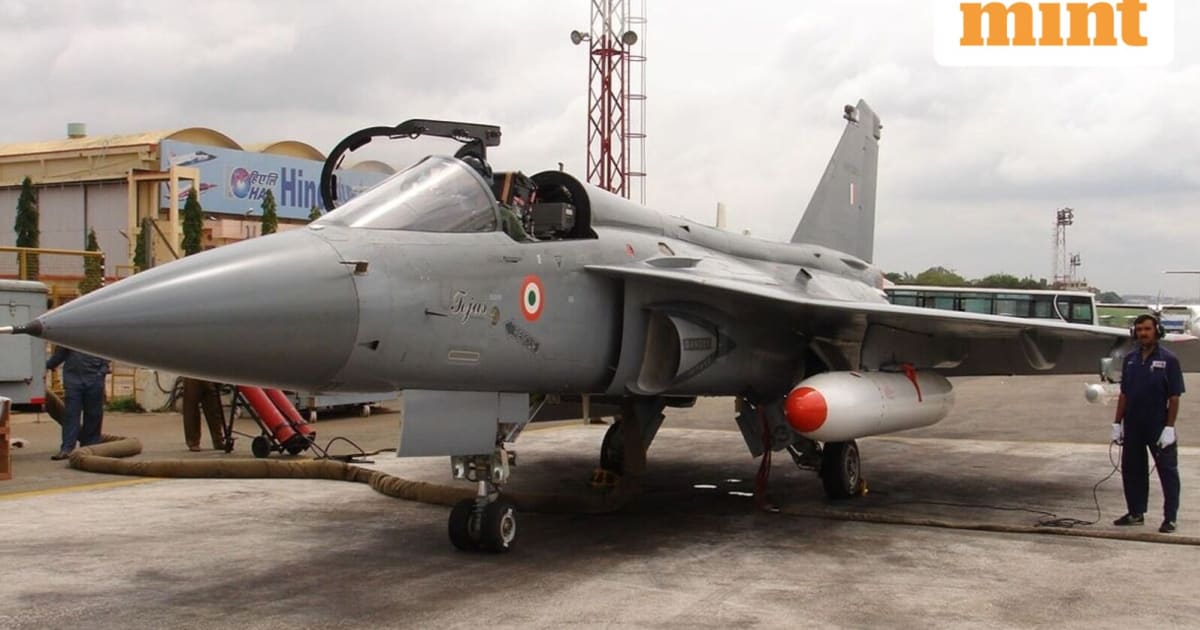
Hindustan Aeronautics Limited (HAL) is bracing for a challenging Q4 FY26, with a projected revenue dip highlighting systemic execution bottlenecks in the LCA-Tejas and HTT-40 programs. This analysis explores why the market is shifting its gaze from massive order books to actual delivery schedules, potentially triggering a valuation reset across the defense PSU landscape.
The Execution Trap: Why HAL’s Q4 FY26 Numbers Signal a Shift in Defense Investing
For the past three years, the Indian defense sector has been the darling of Dalal Street. Fueled by the 'Atmanirbhar Bharat' narrative and a staggering ₹80,000 crore+ order book, Hindustan Aeronautics Limited (HAL) saw its valuation multiples expand to levels previously reserved for high-growth SaaS companies. However, as we approach the Q4 FY26 earnings announcement, the narrative is shifting from 'what is signed' to 'what is delivered.'
Early projections suggest a 4.4% year-on-year revenue decline for HAL in the final quarter of the fiscal year. This isn't merely a seasonal blip; it is a fundamental signal of execution friction. When a monopoly player like HAL—the backbone of the Indian Air Force’s modernization—misses delivery targets for flagship projects like the LCA-Tejas Mk1A and the HTT-40 basic trainer, the ripple effects extend far beyond its own balance sheet. It calls into question the aggressive 'buy-on-dips' strategy that has dominated the defense PSU (Public Sector Undertaking) space.
How will LCA Tejas delays affect HAL share price in the long term?
The primary antagonist in HAL’s current story is the supply chain, specifically the delay in F404-IN20 engines from GE Aerospace. While HAL has the capacity to roll out 16-24 aircraft annually, an airframe without an engine is not a deliverable asset. In Q4 FY26, the inability to recognize revenue from several airframes that are essentially 'waiting for hearts' is expected to weigh heavily on the top line.
Historically, when HAL faced similar bottlenecks in 2021-22, the stock traded at a Price-to-Earnings (P/E) ratio of 12x to 15x. Today, even after recent corrections, HAL trades at a significant premium (upwards of 35x-40x TTM earnings). A revenue dip in a high-valuation environment is a recipe for a sharp de-rating. We are likely to see a transition where the market stops rewarding HAL for its ₹94,000 crore order backlog and starts punishing it for every month a delivery is pushed back.
Deep Market Impact: From Order-Book Euphoria to Execution Reality
The projected revenue contraction for HAL (NSE: HAL) serves as a cold shower for the broader Nifty India Defence Index. For years, investors have used the 'order book-to-bill' ratio as the gold standard for valuation. However, the Q4 FY26 preview suggests that this metric is becoming decoupled from reality. If the lead integrator (HAL) cannot deliver, the entire ecosystem of sub-vendors and component manufacturers faces a deferred payment cycle.
Specific Data Points to Consider:
- Revenue Projection: Estimated at ₹11,200 Cr for Q4 FY26, down from ₹11,700 Cr in the corresponding previous period.
- Operating Margins: Potential contraction of 150-200 bps due to higher inventory carrying costs of undelivered airframes.
- Historical Parallel: In mid-2023, when BEL faced minor electronic component shortages, the stock stagnated for two quarters despite a record order book. HAL is facing a more systemic version of this 'execution gap.'
Is the Defense PSU sector overvalued ahead of FY27?
The broader defense sector, including Bharat Electronics (BEL) and Mazagon Dock (MAZDOCK), has seen a parabolic rise. When the sector leader, HAL, reports a revenue dip, it often acts as a catalyst for sector-wide profit booking. Institutional investors (DIIs) who have been sitting on 300% gains in defense stocks since 2022 are now looking for reasons to rotate capital into underperforming sectors like Private Banks or FMCG. HAL’s Q4 results might provide that very reason.
Stock-by-Stock Breakdown: Who Wins and Who Loses?
The impact of HAL's slowdown is not uniform. Here is how specific NSE/BSE listed entities are positioned:
1. Hindustan Aeronautics Ltd (NSE: HAL)
Impact: Negative. The stock is the epicenter of the delivery delay narrative. Investors should watch the management commentary on the GE engine delivery schedule. If the timeline for the next batch of 20 engines is pushed to H2 FY27, the stock could test its 200-day moving average.
2. Bharat Electronics Ltd (NSE: BEL)
Impact: Moderately Negative. As the primary provider of avionics and radar systems for the Tejas and HTT-40, BEL’s revenue recognition is partially tied to HAL’s delivery milestones. While BEL has a more diversified portfolio (missiles, naval systems), a slowdown in aerospace hurts its high-margin electronics segment.
3. Data Patterns (India) Ltd (NSE: DATAPATTNS)
Impact: Bearish. As a specialized tier-2 supplier, Data Patterns is highly sensitive to the production rate of indigenous platforms. A delay at the HAL level means a buildup of inventory at the component level, squeezing working capital for smaller players.
4. Astra Microwave Products (NSE: ASTRAMICRO)
Impact: Neutral to Bearish. While Astra has exposure to the Tejas program, its increasing footprint in export markets and space programs provides a buffer that HAL lacks. However, in a sector-wide sell-off, high-beta stocks like Astra are often the first to be offloaded.
5. Mazagon Dock Shipbuilders (NSE: MAZDOCK)
Impact: Neutral. Interestingly, the naval cycle is currently decoupled from the aerospace cycle. While HAL struggles with engines, MAZDOCK is entering a peak delivery phase for its submarine and destroyer programs. Investors may pivot from 'Air' to 'Sea' within the defense basket.
Expert Perspective: The Bull vs. Bear Case
"The market is currently confusing a supply chain hiccup with a structural decline. HAL’s monopoly status and the sovereign nature of its contracts mean this revenue is not lost, only deferred. For a long-term investor, a 10-15% correction based on delivery delays is a generational entry point."
— Senior Portfolio Manager, WelthWest Research
The Bear Argument: Bears argue that HAL's current valuation assumes a seamless execution that the company has historically struggled to achieve. They point to the rising cost of materials and the potential for liquidated damages (penalties) if delivery timelines to the IAF are breached, which could erode margins significantly.
The Bull Argument: Bulls emphasize the 'Service and Maintenance' (MRO) revenue, which remains steady regardless of new aircraft deliveries. They argue that the transition to Mk1A is a complex technological leap and that early-stage delays are par for the course in global aerospace, much like the early days of the F-35 program.
Actionable Investor Playbook: Navigating the Volatility
Given the bearish sentiment surrounding the Q4 FY26 preview, here is a strategic roadmap for investors:
- For Short-term Traders: Avoid catching the falling knife. The stock has broken below its 50-DMA, and the 4.4% revenue dip is likely not fully priced in. Look for a base formation around the ₹3,800-₹4,000 levels (post-split equivalent).
- For Long-term Investors: Use the post-earnings volatility to 'SIP' into HAL. The structural story of Indian defense indigenization is a decade-long play. Focus on the FY27-28 outlook where the engine issues are expected to resolve.
- Sector Rotation: Consider trimming exposure to pure-play aerospace and moving into diversified defense players like Solar Industries (NSE: SOLARINDS), which benefits from the munitions cycle rather than the aircraft delivery cycle.
Risk Matrix: Assessing the Downside
1. Geopolitical Supply Chain Risk (Probability: High): Continued reliance on US-made engines (GE) and Israeli electronics makes HAL vulnerable to external diplomatic shifts or global logistics bottlenecks.
2. Margin Erosion (Probability: Medium): If HAL has to expedite deliveries in FY27 to catch up, overtime costs and expedited shipping of components could eat into the 25%+ EBITDA margins investors have grown accustomed to.
3. Budgetary Reallocation (Probability: Low): While unlikely given the current border situation, any shift in government spending toward social schemes over defense capital expenditure would be a 'black swan' event for the sector.
What to Watch Next: The Catalysts
Keep a close eye on these dates and data points to gauge the next move in HAL and the defense sector:
- May 2026: HAL Q4 Earnings Call. Listen specifically for the "delivery guidance for FY27." Any number below 18 Tejas aircraft will be seen as a disappointment.
- GE Aerospace Quarterly Updates: Watch for comments on the F404 engine production ramp-up in the US.
- MoD Contract Signings: Watch for the formal signing of the 97 additional LCA Tejas Mk1A order, which could provide a sentiment floor even if current earnings are weak.
The HAL story in Q4 FY26 is a reminder that in the world of industrial manufacturing, the ledger is only as good as the loading dock. For investors, the lesson is clear: the 'Defense Gold Rush' has entered its second phase—the phase of operational excellence.
See HAL's AI Score
Our algorithmic screener scores HAL on fundamentals, momentum, and risk — free to try, no card needed.
Try the AI Screener →Have questions about this story?
Ask Welth, our finance-focused AI research assistant, for a deeper breakdown — free trial included.
Chat with Welth AI →Disclaimer: This content is generated by WelthWest Research Desk based on publicly available reports and is for informational purposes only. It does not constitute financial advice, investment recommendations, or an offer to buy or sell securities. Always consult a qualified financial advisor before making investment decisions.