Key Takeaway
Hanwha’s disruption of Western defense monopolies validates the 'High-Quality, Low-Cost' Asian model, positioning Indian partners like L&T and Bharat Forge for a multi-year export-led re-rating.
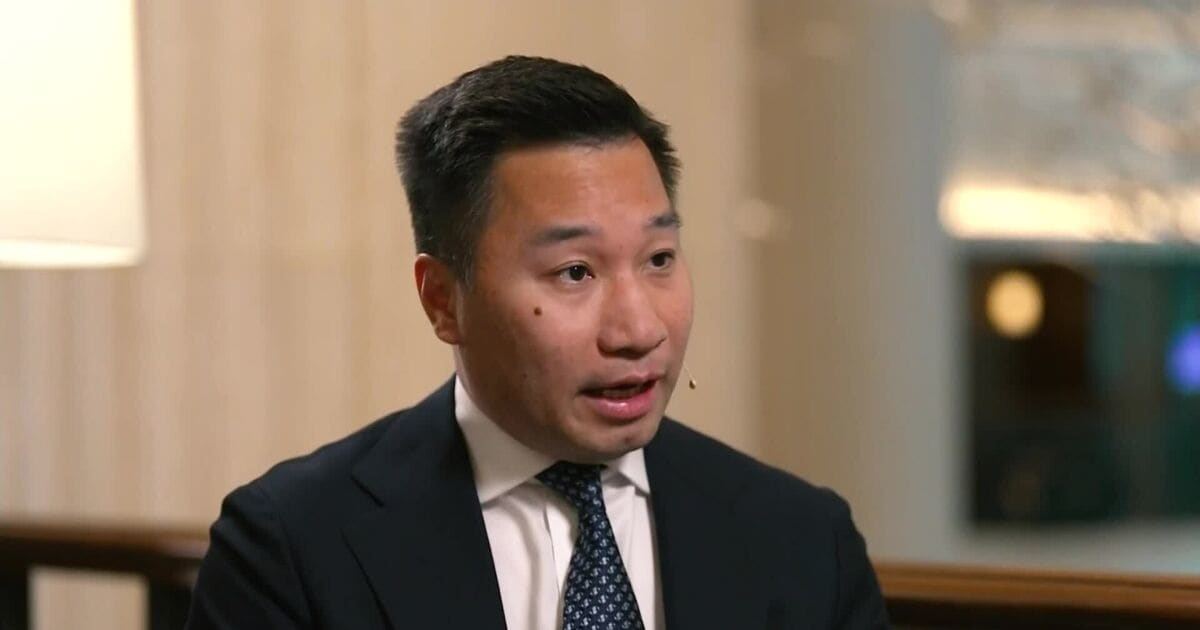
As South Korea's Hanwha Aerospace aggressively captures market share in NATO territories, the global arms procurement map is being redrawn. This deep dive explores how this shift directly benefits the Indian defense ecosystem, specifically through existing joint ventures and the validation of non-Western supply chains.
The Great Rearmament: How Hanwha Aerospace is Redrawing the Global Arms Map
The global defense landscape is witnessing a tectonic shift that hasn't been seen since the height of the Cold War. At the center of this transformation is Hanwha Aerospace, South Korea's defense champion, which is currently outmaneuvering traditional Western giants like Lockheed Martin and Rheinmetall. By securing massive deals in Poland, Romania, and now eyeing the UK and US markets, Hanwha has proven that the 'Asian Arsenal' is no longer a second-tier option—it is the preferred choice for speed, scale, and cost-efficiency.
For the Indian investor, this isn't just a story about a foreign company. It is a fundamental validation of the Indian defense sector's trajectory. The same logic driving Hanwha’s success—rapid delivery timelines and robust technology at a fraction of Western prices—is the core engine behind the 'Make in India' initiative. When Hanwha wins in Europe, it creates a spillover effect for its Indian partners, most notably Larsen & Toubro (LT), and sets a benchmark for what Bharat Forge (BHARATFORG) can achieve in the export market.
Why is the Global Defense Super-Cycle Happening Now?
The urgency is driven by a 'triple threat' to global security: the protracted conflict in Ukraine, escalating tensions in the Middle East, and the systemic need for NATO members to replenish depleted stockpiles. Western defense contractors are currently hamstrung by decades of underinvestment in manufacturing capacity and 'just-in-time' supply chains that were never designed for high-intensity attrition warfare.
Hanwha’s advantage lies in its 'hot' production lines. While a German Leopard 2 tank might take years to deliver, Hanwha can deliver K2 Black Panther tanks and K9 Thunder howitzers in months. This 'speed-to-market' is exactly what the Indian Ministry of Defence (MoD) and global buyers are now prioritizing. As Hanwha scales, the L&T-Hanwha partnership for the K9 Vajra-T becomes a strategic blueprint for future Indo-Korean collaborations, potentially expanding into armored vehicles and naval systems.
Deep Market Impact: Connecting Seoul to Dalal Street
The aggressive expansion of South Korean defense players signals a shift in global procurement away from traditional Western monopolies. Historically, when a new global leader emerges in a capital-intensive sector, its local partners and regional peers undergo a significant valuation re-rating. We saw this in the early 2000s with Japanese electronics and the 2010s with Chinese solar energy. Now, it is the turn of the Asian defense complex.
In the Indian context, the Nifty India Defence Index has already outperformed the broader Nifty 50 by over 150% in the last two years. However, the Hanwha expansion suggests that the 'export phase' of this rally is only beginning. We are moving from an era of 'import substitution' to 'global dominance.' The historical parallel here is the 2022 post-invasion spike where defense stocks moved 30-40% in a single quarter; the current move is more structural, driven by order book visibility that extends to 2030.
How will Hanwha’s entry into the US/UK impact Indian exports?
This is the most frequent question from institutional investors. If Hanwha penetrates the US market, it breaks the 'Buy American' psychological barrier. This paves the way for Indian firms like Bharat Forge and Tata Advanced Systems to enter the global supply chain as Tier-1 and Tier-2 suppliers. As Western OEMs look to de-risk from China and find cost-effective alternatives to their own high-cost bases, India’s specialty steel and precision engineering sectors stand to gain billions in outsourced contracts.
Stock-by-Stock Breakdown: The Winners of the New Defense Order
1. Larsen & Toubro (LT) – The Strategic Proxy
L&T is the primary beneficiary of the Hanwha relationship. The K9 Vajra-T, a localized version of Hanwha’s K9 Thunder, has been a flagship success for the Indian Army. With Hanwha eyeing a larger slice of the European market, L&T’s Hazira facility could potentially become a regional hub for components or maintenance, repair, and overhaul (MRO) services. L&T’s defense segment currently contributes roughly 2-3% of its total revenue, but its margins (EBITDA at 15-18%) are significantly higher than its traditional infrastructure business.
Ticker: LT | View: Bullish | Key Data: Order book at ₹4.7 lakh crore.
2. Bharat Forge (BHARATFORG) – The Artillery Disruptor
While not a direct partner of Hanwha, Bharat Forge is the 'Hanwha of India.' Their success in exporting the ATAGS and the Kalyani M4 to countries like Armenia mirrors Hanwha’s strategy of capturing emerging markets. As Hanwha moves 'up-market' to the US and UK, it leaves a vacuum in the 'Value Defense' segment (Africa, SE Asia, Eastern Europe) that Bharat Forge is perfectly positioned to fill. Their focus on specialty steel and forging gives them a cost advantage that is nearly impossible for European firms to match.
Ticker: BHARATFORG | View: Bullish | Key Data: Defense revenue expected to hit ₹2,000 crore by FY25.
3. Bharat Electronics Limited (BEL) – The Brain of the Machine
Every K9 howitzer or armored vehicle sold by Hanwha or L&T requires advanced electronics, sensors, and fire control systems. BEL is the default partner for the electronic backbone of Indian defense platforms. As Indian platforms become more 'export-ready,' BEL’s addressable market expands from the Indian Army to any nation buying Indo-Korean hardware.
Ticker: BEL | View: Long-term Accumulate | P/E Ratio: ~45x (reflecting high growth expectations).
4. Hindustan Aeronautics Limited (HAL) – The Aerospace Angle
Though Hanwha is primarily land and sea-focused, their expansion coincides with South Korea’s KF-21 fighter jet program. This mirrors India’s LCA Tejas Mk1A and Mk2 programs. The global appetite for 'non-aligned' fighter jets is surging. HAL’s ability to scale production will determine if it can replicate Hanwha’s success in the aerospace domain.
Ticker: HAL | View: Bullish | Key Data: Recent MoD approval for 240 AL-31FP engines worth ₹26,000 crore.
Expert Perspective: The Bull vs. Bear Case
"The 'K-Defense' model is a direct threat to the high-margin, low-volume business model of European contractors. India is following this exact playbook. The next decade will see a massive transfer of defense manufacturing wealth from the North Atlantic to the Indo-Pacific." — Senior Geopolitical Strategist at WelthWest
The Contrarian View (The Bear Case): Skeptics argue that the defense sector is currently 'priced for perfection.' With P/E ratios for BEL and HAL significantly above their 10-year averages, any delay in order execution or a sudden de-escalation in Ukraine could lead to a sharp correction. Furthermore, protectionist policies in the US (e.g., a return to 'America First' under certain political scenarios) could stifle the global expansion plans of both Hanwha and its Indian counterparts.
Actionable Investor Playbook
- For the Conservative Investor: Focus on Larsen & Toubro. You get exposure to the defense boom with the safety net of a massive diversified infrastructure business. Entry point: Look for dips toward the 200-day EMA.
- For the Growth Seeker: Bharat Forge offers the best 'pure play' on defense exports. Watch for new contract announcements from the Middle East or Eastern Europe as immediate catalysts.
- Time Horizon: 3-5 years. Defense cycles are long; don't trade the noise of quarterly earnings. Focus on the Order-to-Bill ratio.
- Sector Weighting: Overweight defense, but ensure diversification into specialty chemicals or electronics to hedge against specific platform delays.
Risk Matrix: What Could Go Wrong?
- Geopolitical De-escalation (Probability: Low): A sudden peace treaty in Ukraine would lead to an immediate inventory destocking, hitting order books globally.
- Supply Chain Bottlenecks (Probability: Medium): Shortages in high-grade titanium or specialized semiconductors could delay deliveries, leading to penalty clauses.
- Valuation Compression (Probability: High): If earnings growth doesn't keep pace with the 50x+ P/E multiples, the sector could see a 'time correction' where prices remain flat for 12-18 months.
What to watch next?
Keep a close eye on the DAC (Defence Acquisition Council) meetings in India for the next batch of K9 Vajra orders. Additionally, monitor Hanwha’s progress in the UK’s Mobile Fires Platform (MFP) program. If Hanwha wins in the UK, expect a sympathy rally in L&T and Bharat Forge as the market prices in the 'Global Asian Defense' era. The next major data release will be the Q3 FY25 export figures from the Ministry of Commerce, which will show if the 'export surge' is manifesting in hard currency.
See LT's AI Score
Our algorithmic screener scores LT on fundamentals, momentum, and risk — free to try, no card needed.
Try the AI Screener →Have questions about this story?
Ask Welth, our finance-focused AI research assistant, for a deeper breakdown — free trial included.
Chat with Welth AI →Disclaimer: This content is generated by WelthWest Research Desk based on publicly available reports and is for informational purposes only. It does not constitute financial advice, investment recommendations, or an offer to buy or sell securities. Always consult a qualified financial advisor before making investment decisions.
