Key Takeaway
Anup Bagchi's ascent to HDFC Bank's top leadership signals a pivotal moment for India's largest private lender. Investors must analyze this transition for strategic continuity, potential shifts in growth drivers, and its ripple effect across the Nifty Bank index and broader financial sector.
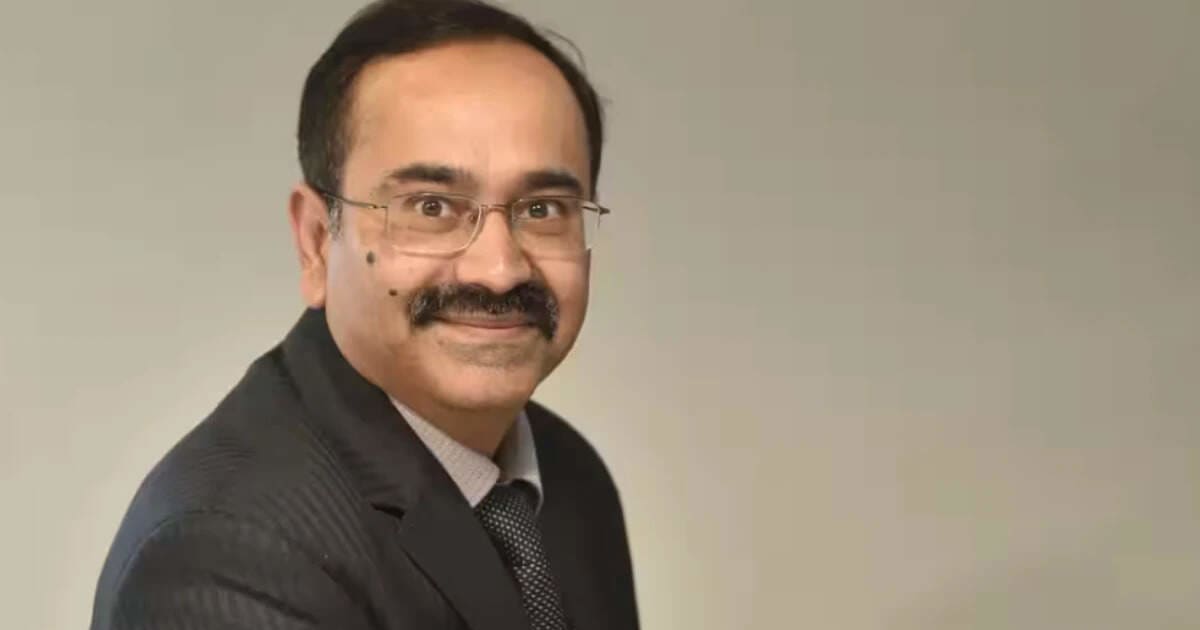
The recent announcement of Anup Bagchi as HDFC Bank's next MD & CEO marks a significant leadership transition for a financial behemoth. This WelthWest exclusive delves into the strategic implications, potential market ramifications, and offers an actionable playbook for investors navigating this critical juncture in Indian banking. Understand how this move could reshape competitive dynamics and investor sentiment.
HDFC Bank's Leadership Transition: Anup Bagchi's Appointment and Its Far-Reaching Market Implications
The Indian banking landscape is bracing for a significant shift following the appointment of Anup Bagchi as the next Managing Director and Chief Executive Officer of HDFC Bank (NSE: HDFCBANK), succeeding the highly successful Sashidhar Jagdishan. This move, more than just a routine change at the helm, represents a pivotal moment for India's largest private sector lender by market capitalization, a titan currently valued at over INR 12.5 trillion. WelthWest Research Desk’s deep dive reveals why this leadership transition at such a critical institution is not merely a corporate announcement but a fundamental catalyst for re-evaluating investment theses across the entire Indian financial sector.
HDFC Bank, often considered a bellwether for the Indian banking industry due to its robust asset quality, consistent growth, and dominant market share, has set a high bar under its previous leadership. The institution's integration with HDFC Ltd. has further amplified its systemic importance, creating a financial powerhouse with unparalleled scale. Therefore, the selection of a new leader is under intense scrutiny. Investors are not just looking for a new face; they are scrutinizing the potential for strategic continuity or, conversely, a departure from the proven playbook that has delivered stellar shareholder returns for decades. This decision, announced in late 2024, is now front and center, demanding a comprehensive analysis of its implications for HDFCBANK and its peers.
What Does Anup Bagchi's Appointment Mean for HDFC Bank's Future Growth?
The appointment of Anup Bagchi, a seasoned veteran with a deep understanding of retail banking and digital transformation, signals a potential emphasis on leveraging technology for customer acquisition and operational efficiency. His background, particularly within a competitive private banking environment, suggests a pragmatic approach to navigating the increasingly complex regulatory landscape and intensifying competition from fintechs. While specific strategic blueprints are yet to be unveiled, the market will be keenly watching for cues regarding deposit growth acceleration, credit expansion in high-growth segments, and the continued integration synergies post-merger. The bank's ability to maintain its industry-leading Net Interest Margin (NIM) and asset quality under new leadership will be paramount. Any perceived deviation from its stringent risk management practices, which have historically been a cornerstone of its success, could trigger investor apprehension.
Historically, leadership changes at major Indian banks have often been accompanied by short-term volatility, followed by a re-rating once the new CEO's vision becomes clear. For instance, the transition at ICICI Bank in 2018 saw initial uncertainty, but a renewed focus on retail growth and asset quality eventually propelled the stock to new highs. Similarly, when Chanda Kochhar took over as CEO of ICICI Bank in 2009, the market initially reacted cautiously, but her focus on retail expansion and digital initiatives proved to be a long-term growth driver. HDFC Bank, with its current market capitalization representing approximately 20% of the Nifty Bank index, holds immense sway. A strategic misstep or even a perceived slowdown in its aggressive growth trajectory could have a disproportionate impact on the broader banking sector's performance.
Deep Market Impact Analysis: Unpacking the Ripple Effect on Indian Banking Stocks
The appointment of a new CEO at HDFC Bank is not an isolated event; it sends reverberations across the entire Indian financial ecosystem. Given HDFC Bank's dominant position, with a loan book exceeding INR 25 trillion and a deposit base approaching INR 28 trillion, any strategic recalibration could alter competitive dynamics for every other major lender. The immediate market reaction saw HDFC Bank ADRs jump over 5% post-announcement, reflecting initial investor optimism regarding the continuity and a fresh perspective. However, the true impact unfolds over quarters, not days.
A key area of focus will be HDFC Bank's approach to retail credit and digital transformation. If Bagchi prioritizes aggressive digital lending initiatives, it could intensify competition for customer acquisition and potentially impact the Net Interest Margins (NIMs) of smaller, agile fintech lenders and even larger private banks that have built their growth story on digital-first strategies. Conversely, a continued focus on large corporate lending, while potentially enhancing asset quality stability, might signal a deceleration in the high-growth retail segment, which could be seized upon by competitors like ICICI Bank (NSE: ICICIBANK) and Axis Bank (NSE: AXISBANK).
The Nifty Bank index, which HDFC Bank significantly influences, will be a critical barometer. Any sustained positive momentum in HDFCBANK due to renewed strategic clarity could lift the entire index. Conversely, if there's a period of strategic uncertainty or a perceived slowdown in growth, the Nifty Bank could experience headwinds. Historically, periods of leadership transition at major banks have seen shifts in investor preference towards peers perceived to offer greater stability or clearer growth trajectories. For instance, during periods of uncertainty at one large private bank, investors have often rotated into others, seeking relative safety. This phenomenon was observed during the 2020-2021 period, where certain private banks gained market share due to perceived stability during the pandemic's economic uncertainty.
Stock-by-Stock Breakdown: Who Wins and Who Watches?
The HDFC Bank CEO transition creates distinct implications for specific stocks within the Indian financial landscape.
- HDFC Bank (NSE: HDFCBANK): The primary affected entity. Investors will closely monitor Bagchi's initial public statements and subsequent quarterly results for indications of strategic direction. A continued focus on digital scaling, cross-selling synergies with the erstwhile HDFC Ltd., and maintaining superior asset quality will be critical. The stock, currently trading at a P/E ratio of approximately 19x (trailing twelve months), offers a compelling valuation relative to its historical premium, but clarity on growth drivers is essential for a re-rating. A successful transition could see its P/E multiple expand towards its historical average of 22-25x, driven by sustained earnings per share (EPS) growth.
- ICICI Bank (NSE: ICICIBANK): As HDFC Bank's closest competitor in the private sector, ICICI Bank stands to gain if HDFC Bank experiences any short-term strategic drift or slowdown in retail growth. ICICI Bank's robust digital initiatives and strong retail franchise make it a direct beneficiary of any perceived weakness. Currently trading at a P/E of around 17x, a strong performance from ICICI Bank could see it narrow the valuation gap with HDFC Bank if the latter faces transitional challenges.
- Axis Bank (NSE: AXISBANK): Positioned as a strong challenger, Axis Bank has been aggressively expanding its retail and digital offerings. If HDFC Bank's new leadership prioritizes consolidation over aggressive market share expansion in certain segments, Axis Bank could find more room to grow, particularly in mid-market corporate and semi-urban retail segments. Its current P/E of roughly 15x suggests room for upside if it can capitalize on competitive shifts.
- Kotak Mahindra Bank (NSE: KOTAKBANK): Known for its conservative approach and strong asset quality, Kotak Mahindra Bank could be seen as a 'flight to safety' option if the market perceives increased risk in HDFC Bank's growth strategy. However, its slower growth trajectory compared to HDFC Bank means it may not capture significant market share unless HDFC Bank's strategy significantly falters. Kotak Bank's premium valuation (P/E of ~25x) reflects its asset quality and capital efficiency, which could be attractive during periods of industry uncertainty.
- State Bank of India (NSE: SBIN): While a public sector behemoth, SBIN competes with HDFC Bank in certain segments, particularly corporate lending and government-backed initiatives. A shift in HDFC Bank's corporate lending strategy could create opportunities or challenges for SBIN, depending on the specifics. SBIN's valuation, typically lower due to government ownership (P/E of ~10x), offers a different risk-reward profile but remains impacted by overall banking sector sentiment.
Expert Perspective: Navigating the Bull vs. Bear Divide
The appointment of Anup Bagchi presents a classic bull-bear debate for HDFC Bank and the broader banking sector.
The Bull Case: Proponents argue that Bagchi's extensive experience, particularly his background in retail banking and digital transformation at a major competitor, brings fresh perspectives while ensuring strategic continuity. They believe his focus will be on accelerating the synergies post-HDFC Ltd. merger, driving digital adoption to new heights, and further cementing HDFC Bank's market leadership. Bulls point to HDFC Bank's robust fundamentals – low NPAs, strong capital adequacy, and a vast distribution network – as reasons for continued outperformance. They would argue that any dip in the stock post-announcement due to initial uncertainty is a buying opportunity, expecting the stock to regain its premium valuation as Bagchi's strategy unfolds and delivers results. The argument is that HDFC Bank's institutional strength is greater than any individual leader, ensuring continued excellence.
The Bear Case: Skeptics, on the other hand, highlight the immense shoes Bagchi has to fill and the challenge of maintaining HDFC Bank's phenomenal growth trajectory on an ever-larger base. They might argue that a new leader, especially one from a competitor, could introduce a period of strategic re-evaluation, potentially slowing down critical decision-making or altering the bank's famously conservative risk appetite. Bears might also point to the intensifying competition from aggressive public sector banks and nimble fintechs, suggesting that HDFC Bank's growth story might face structural headwinds regardless of leadership. They would caution against immediate optimism, advocating for a 'wait and watch' approach until concrete strategic shifts and their impact on profitability become evident. Any perceived slowdown in deposit accretion or an uptick in non-performing assets (NPAs) would validate their concerns.
Actionable Investor Playbook: Strategic Moves for the Savvy Investor
For investors seeking to capitalize on or mitigate risks associated with this significant transition, a multi-pronged strategy is advisable:
- Watch HDFC Bank (NSE: HDFCBANK) Closely: Do not rush to make immediate large moves. Monitor Bagchi's initial interviews, investor calls, and the next two quarterly earnings reports for strategic cues. Look for commentary on digital initiatives, retail credit growth, and post-merger integration progress. A sustained upward trend in deposit growth and a stable NIM would be positive signals. Consider accumulating on dips, particularly if the stock trades below its 1-year forward P/E average, with a long-term horizon (3-5 years) for capital appreciation. Entry points around the INR 1,500-1,600 level could offer a compelling risk-reward.
- Evaluate Peers for Relative Strength: Consider increasing exposure to ICICI Bank (NSE: ICICIBANK) or Axis Bank (NSE: AXISBANK) if HDFC Bank's transition creates short-term uncertainty or if these banks demonstrate superior execution in high-growth segments. These could act as 'diversifiers' within your banking portfolio, capturing market share that HDFC Bank might temporarily cede. Look for ICICI Bank's retail loan book growth and Axis Bank's digital customer acquisition metrics as key indicators.
- Focus on Quality and Asset Quality: In a period of leadership transition, banks with strong asset quality and robust capital buffers are better positioned to weather any potential operational or strategic changes. Prioritize banks with consistently low Gross NPAs (GNPA) and Net NPAs (NNPA) ratios.
- Consider Financial Services ETFs: For diversified exposure without individual stock picking risk, an ETF tracking the Nifty Financial Services Index (e.g., Nifty Financial Services ETF) could be an option. This offers exposure to HDFC Bank while diversifying across other financial institutions, mitigating specific stock volatility.
- Time Horizon: This is a medium to long-term play. While immediate reactions may occur, the true impact of this leadership change will unfold over the next 12-24 months as Bagchi implements his vision.
Risk Matrix: Assessing Potential Headwinds
While the HDFC Bank leadership transition holds promise, several risks warrant close monitoring:
- Execution Risk (Moderate Probability): The challenge of integrating HDFC Ltd. and maintaining HDFC Bank's growth trajectory is immense. Any missteps in execution, particularly in leveraging digital capabilities or managing asset quality in a competitive environment, could impact profitability. Probability: 5/10.
- Investor Sentiment Shift (Moderate Probability): If Bagchi's initial strategic pronouncements lack clarity or if the bank's performance metrics (e.g., deposit growth, NIM) show signs of weakening in the initial quarters, investor confidence could wane, leading to stock underperformance. Probability: 6/10.
- Intensified Competition (High Probability): India's banking sector is fiercely competitive. Aggressive moves by peers like ICICI Bank, Axis Bank, or even new-age fintechs could put pressure on HDFC Bank's market share and margins, regardless of leadership. Probability: 8/10.
- Macroeconomic Headwinds (External Risk): Broader economic slowdown, persistent inflation, or unexpected RBI policy shifts could impact the entire banking sector, including HDFC Bank, regardless of its leadership. This is an overarching risk for all financial institutions. Probability: 7/10.
What to Watch Next: Catalysts and Key Data Releases
Investors should closely monitor the following developments to gauge the ongoing impact of this leadership transition:
- Q3 and Q4 FY2025 Earnings Calls: Anup Bagchi's commentary during these calls will provide crucial insights into his strategic priorities, particularly regarding retail growth, digital transformation, and asset quality outlook. Look for specific targets or initiatives.
- RBI's Monetary Policy Decisions: Any changes in interest rates or liquidity measures by the Reserve Bank of India (RBI) will directly impact bank NIMs and credit growth, influencing HDFC Bank's operational environment.
- Industry Reports on Credit Growth and Deposit Trends: Data releases from the RBI and other financial institutions on overall credit growth and deposit accretion across the banking sector will indicate whether HDFC Bank is gaining, maintaining, or losing market share.
- Competitor Earnings and Strategic Updates: Keep an eye on the earnings calls and investor presentations of ICICI Bank, Axis Bank, and Kotak Mahindra Bank. Their commentary on competitive landscape and growth strategies will offer a comparative perspective on HDFC Bank's performance.
- Regulatory Updates: Any new regulations concerning digital lending, data privacy, or capital adequacy from the RBI or government could impact HDFC Bank's operational framework and strategic choices.
The appointment of Anup Bagchi as HDFC Bank's new MD & CEO is a watershed moment for Indian finance. WelthWest Research Desk will continue to provide in-depth analysis as this story unfolds, offering investors the clarity and insight needed to navigate the evolving landscape.
See HDFCBANK's AI Score
Our algorithmic screener scores HDFCBANK on fundamentals, momentum, and risk — free to try, no card needed.
Try the AI Screener →Have questions about this story?
Ask Welth, our finance-focused AI research assistant, for a deeper breakdown — free trial included.
Chat with Welth AI →Disclaimer: This content is generated by WelthWest Research Desk based on publicly available reports and is for informational purposes only. It does not constitute financial advice, investment recommendations, or an offer to buy or sell securities. Always consult a qualified financial advisor before making investment decisions.