Key Takeaway
The ₹45 crore irregular payment to MSRDC is financially immaterial but symbolically catastrophic, potentially eroding the 'governance premium' HDFC Bank has enjoyed for decades. Investors should brace for heightened regulatory scrutiny and a shift in institutional sentiment toward peer banks.
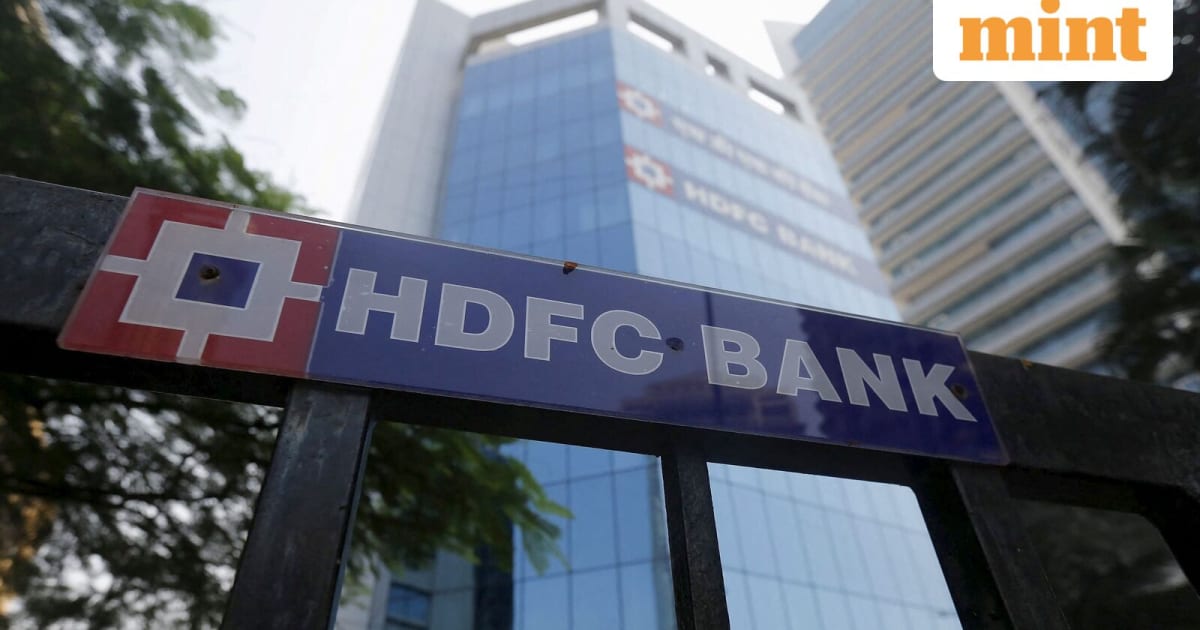
HDFC Bank is currently navigating an internal investigation into alleged irregular interest payments made to the Maharashtra State Road Development Corporation (MSRDC). While the amount involved is a fraction of the bank's massive balance sheet, the potential involvement of senior management raises systemic questions about internal controls post-merger. This report analyzes the ripple effects on the Nifty Bank index and provides an actionable playbook for shareholders.
The Institutional Crack: Why a ₹45 Crore Probe Matters for a ₹14 Lakh Crore Giant
In the high-stakes world of Indian banking, HDFC Bank (HDFCBANK) has long been the gold standard for conservative lending and impeccable corporate governance. However, the recent revelation of an internal probe into an alleged ₹45 crore irregular interest payment to the Maharashtra State Road Development Corporation (MSRDC) has sent tremors through the Dalal Street ecosystem. While a ₹45 crore figure is a mere rounding error for a bank with a market capitalization exceeding ₹14 lakh crore, the optics are devastating. The investigation focuses on whether these payments were made outside of standard operating procedures to retain high-value government deposits, potentially involving senior executives.
This development comes at a sensitive time. HDFC Bank is still in the throes of a massive integration exercise following its merger with HDFC Ltd. Historically, when the 'Big Elephant' of the Indian banking sector stumbles, the entire Nifty Bank index feels the impact. The core concern for institutional investors is not the capital loss—which is negligible—but the potential for the Reserve Bank of India (RBI) to intervene. In the past, the RBI has shown it has a low tolerance for governance lapses at Systemically Important Financial Institutions (D-SIBs), as seen with the temporary ban on HDFC Bank's digital launches and credit card issuances in 2020 due to technical glitches.
How Will the Internal Probe Affect HDFC Bank's Governance Premium?
For over two decades, HDFC Bank has traded at a significant premium to its peers like ICICI Bank and Axis Bank based on its 'clean' image. This 'governance premium' is reflected in its Price-to-Book (P/B) and Price-to-Earnings (P/E) multiples. Currently trading at a trailing P/E of approximately 19x, the stock is already at its lowest valuation decile in ten years. A probe involving senior management threatens to prolong this valuation de-rating. If the investigation reveals a systemic failure in internal audits, the market will likely shift its focus from 'growth recovery' to 'risk mitigation.'
The MSRDC incident highlights a potential vulnerability in the bank's liability franchise. With competition for deposits intensifying across the Indian banking sector, banks are under immense pressure to offer competitive rates. If HDFC Bank resorted to irregular interest payments to secure or retain MSRDC funds, it suggests a desperation for liquidity that contradicts its public narrative of stable, organic deposit growth. This raises a critical question: Are there other similar arrangements hidden within the bank's massive ₹23 trillion deposit base?
Deep Market Impact Analysis: Connecting the Dots to Nifty Bank
The immediate reaction in the stock market—a 2% slide in HDFC Bank shares—wiped out billions in shareholder wealth in a single session. However, the secondary impact is more nuanced. HDFC Bank carries a weightage of nearly 25-29% in the Nifty Bank Index and roughly 10-12% in the Nifty 50. Any sustained selling pressure by Foreign Institutional Investors (FIIs) in HDFC Bank creates a mechanical drag on the broader indices.
Historical parallels are instructive. In 2020, when reports emerged regarding a probe into the bank's vehicle finance division over the forced sale of GPS devices, the stock underperformed the Nifty Bank for several quarters. While that issue was eventually resolved, it served as a precursor to a period of intense regulatory oversight. Investors should note that the Indian banking sector is currently facing a 'liquidity crunch' where the Credit-to-Deposit (C/D) ratio is at a multi-year high. In such an environment, any news suggesting irregularities in deposit procurement is treated with extreme caution by the markets.
Stock-by-Stock Breakdown: The Winners and Losers
1. HDFC Bank (NSE: HDFCBANK)
The primary loser. The stock is likely to remain range-bound between ₹1,600 and ₹1,750 as the market waits for the probe's conclusion. The key metric to watch is the Net Interest Margin (NIM); if irregular payments were widespread, the reported NIMs might have been artificially inflated. A breach of the ₹1,580 support level could trigger a technical sell-off toward ₹1,450.
2. ICICI Bank (NSE: ICICIBANK)
The primary beneficiary of portfolio rotation. Institutional investors looking for exposure to Indian private banks without the current 'governance overhang' of HDFC Bank are likely to increase their weightage in ICICI Bank. With a robust ROE of ~18% and a cleaner post-merger trajectory, ICICI is the 'safe haven' within the sector.
3. Kotak Mahindra Bank (NSE: KOTAKBANK)
Kotak faces its own regulatory challenges regarding its IT systems, but the HDFC Bank probe makes Kotak's current valuation (trading near historical lows) look relatively more attractive for long-term value pickers. However, it remains a 'neutral' play until its own RBI issues are fully resolved.
4. Axis Bank (NSE: AXISBANK)
Axis Bank has been aggressive in the government banking space. If HDFC Bank's relationship with state entities like MSRDC sours due to this probe, Axis Bank stands to gain market share in the lucrative 'government business' segment, which provides low-cost CASA deposits.
5. State Bank of India (NSE: SBIN)
As the largest public sector lender, SBI often gains 'flight to safety' deposits when private sector governance is questioned. While not a direct competitor in the same sense as ICICI, SBI’s stock often sees a minor uptick in relative strength when HDFC Bank faces headwinds.
Expert Perspective: The Bull vs. Bear Case
"The market is overreacting to a localized operational lapse. ₹45 crore is a drop in the bucket for a bank that generates ₹16,000 crore in quarterly profits. This is a classic 'buy the dip' opportunity for those with a 3-year horizon." — Bullish View
"It's never just one cockroach. If senior management bypassed controls for a state-owned entity, it suggests a culture shift post-merger that prioritizes targets over compliance. The RBI will not take this lightly, and we expect a 'time correction' for the stock." — Bearish View
Actionable Investor Playbook: How to Position Your Portfolio
- For Short-term Traders: Avoid catching the falling knife. The stock has broken its 50-day moving average (DMA). Wait for a consolidation phase near the 200-DMA before attempting a mean-reversion trade.
- For Long-term Investors: Use this volatility to accumulate, but cap your exposure. Do not let HDFC Bank exceed 15% of your total equity portfolio. The fundamental story of India's credit growth remains intact, but the 'execution risk' has increased.
- The Pair Trade: Go Long on ICICI Bank and Short on HDFC Bank (Futures) to hedge against sector-wide volatility while betting on ICICI's relative outperformance.
- Entry Points: The ₹1,620 - ₹1,640 zone is a historical demand area. Incremental buying at these levels offers a favorable risk-reward ratio.
Risk Matrix: Assessing the Fallout
| Risk Factor | Probability | Impact |
|---|---|---|
| RBI Monetary Penalty | High | Low (Financials) / High (Sentiment) |
| Management Reshuffle | Medium | High (Institutional Trust) |
| Expansion Ban (Digital/Branches) | Low | Very High (Growth Outlook) |
What to Watch Next: The Catalysts
Investors must keep a close eye on the following dates and data points:
- Internal Probe Report: Any leak or official statement regarding the findings of the internal committee will be the immediate price driver.
- RBI Commentary: Look for any 'observation' in the RBI’s annual inspection report or a sudden audit of the bank's government business department.
- Quarterly Earnings Call: Management's tone during the Q&A session regarding 'compliance costs' and 'governance frameworks' will be scrutinized by every major brokerage from Goldman Sachs to Morgan Stanley.
- FII Flow Data: HDFC Bank is the most widely held stock by foreign funds. If the 'Governance Risk' flag is raised, expect sustained selling pressure throughout the month.
See HDFCBANK's AI Score
Our algorithmic screener scores HDFCBANK on fundamentals, momentum, and risk — free to try, no card needed.
Try the AI Screener →Have questions about this story?
Ask Welth, our finance-focused AI research assistant, for a deeper breakdown — free trial included.
Chat with Welth AI →Disclaimer: This content is generated by WelthWest Research Desk based on publicly available reports and is for informational purposes only. It does not constitute financial advice, investment recommendations, or an offer to buy or sell securities. Always consult a qualified financial advisor before making investment decisions.