Key Takeaway
While the humanitarian tragedy in Honduras is significant, its direct footprint on Indian equity markets is non-existent. Investors should view this as a reminder of geopolitical volatility rather than a catalyst for portfolio reallocation.
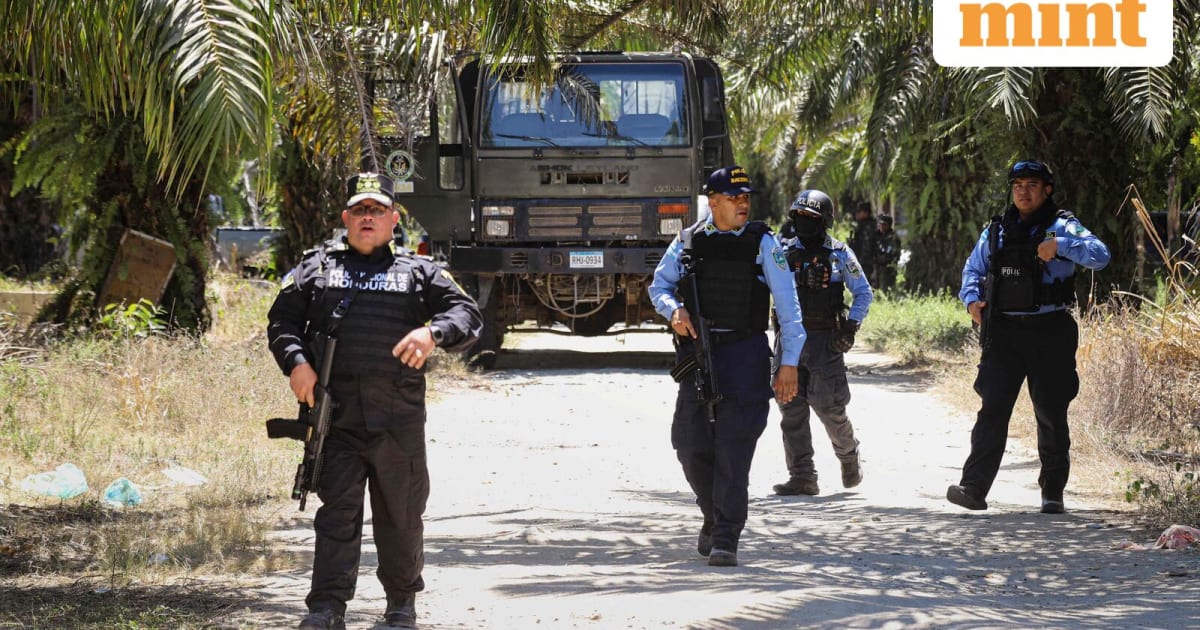
Escalating civil violence in Honduras has triggered global headlines, yet the economic fallout remains strictly regional. We analyze why Indian trade flows, currency dynamics, and sectoral indices remain insulated from this Central American instability.
The Geopolitical Backdrop: Assessing the Honduras Security Crisis
The recent surge in civil violence in Honduras, resulting in the loss of 25 lives including law enforcement personnel, represents a critical breakdown in regional governance. For global observers, these events underscore the persistent fragility of security in the 'Northern Triangle.' However, for the astute investor monitoring the NSE (National Stock Exchange) and BSE (Bombay Stock Exchange), the critical task is decoupling humanitarian tragedy from macroeconomic risk.
Historically, shocks in Latin America have only permeated Indian markets when they involve systemic commodity supply chain disruptions or global oil price volatility. As of May 2026, the Honduras crisis does not meet the threshold of a global systemic threat. The country’s contribution to global trade, particularly regarding exports to India, is statistically marginal, rendering the direct economic impact negligible.
How Do Regional Conflicts Influence Indian Equity Indices?
Investors often conflate 'global news' with 'market-moving events.' To understand why the Honduras situation is a non-event for the Nifty 50, one must look at trade data. India’s bilateral trade with Honduras is minimal, primarily revolving around non-critical agricultural imports. Unlike crises in the Middle East—which directly impact the Brent Crude pricing that dictates the health of oil marketing companies like IOC (NSE: IOC) or BPCL (NSE: BPCL)—Honduras lacks the geopolitical leverage to shift the global energy or financial dial.
Looking at historical parallels, such as the regional unrest in Nicaragua in 2022, the Nifty 50 displayed zero correlation to Central American security metrics. During that period, Indian markets were governed by RBI interest rate trajectories and domestic inflation prints, rather than peripheral geopolitical noise.
Is there a hidden supply chain risk for Indian exporters?
While the risk is low, analysts must monitor the 'ripple effect' on commodity prices. If regional instability were to spread, it could theoretically impact the cost of specific agricultural inputs or specialty chemical precursors. However, companies like UPL Ltd (NSE: UPL) or Tata Chemicals (NSE: TATACHEM) maintain highly diversified supply chains that have historically demonstrated resilience against localized disruptions in the Americas.
Stock-by-Stock Breakdown: Why These Tickers Remain Unaffected
While the Honduras crisis does not trigger a 'sell' signal, it is vital to understand why certain stocks often cited in global risk reports are fundamentally safe from this specific event:
- Reliance Industries (NSE: RELIANCE): With a market cap exceeding ₹20 lakh crore, RIL’s exposure to Central American political risk is effectively zero. Its O2C (Oil to Chemicals) segment is tethered to global benchmarks, not regional security in Tegucigalpa.
- State Bank of India (NSE: SBIN): As a domestic-focused lender with a P/E ratio hovering around 10-12x, SBIN’s asset quality is tied to Indian corporate credit cycles and RBI repo rates, not the stability of the Honduran Lempira.
- Infosys (NSE: INFY): Global IT giants have zero operational footprint in Honduras. Their revenue growth is determined by US and European enterprise tech spending, making them immune to this specific event.
- Hindustan Unilever (NSE: HINDUNILVR): FMCG giants operate on local supply chains in India. The security situation in Honduras provides no headwind to their domestic distribution or input costs.
Expert Perspective: The Bull vs. Bear Argument
The Bear Case: A contrarian might argue that global instability, regardless of location, increases the 'risk-off' sentiment in emerging markets (EMs). If international institutional investors (FIIs) become jittery about EMs as a broad asset class, we could see a temporary outflow from the Nifty 50. This is a psychological reaction, not a fundamental one.
The Bull Case: The bull argument is far more grounded: Indian markets are currently driven by strong domestic GDP growth (projected at 6.5-7% for FY26) and robust corporate earnings. The Honduras crisis is a localized event that will be forgotten by the markets within 48 hours, providing an opportunity to buy the dip in high-quality stocks during any irrational, sentiment-driven market volatility.
Actionable Investor Playbook: Navigating the Noise
For the disciplined investor, the strategy is clear:
- Ignore the noise: Do not adjust your long-term portfolio based on this event. The correlation between the Honduras tragedy and Indian equity indices is statistically insignificant.
- Watch the USD/INR pair: If global 'risk-off' sentiment strengthens the US Dollar, monitor the USD/INR exchange rate. A sharp depreciation in the Rupee may affect import-heavy companies, but this would be due to global currency dynamics, not the crisis in Honduras itself.
- Focus on Domestic Catalysts: Redirect your attention to upcoming RBI Monetary Policy Committee (MPC) meetings and Q1 earnings results. These are the primary drivers of Indian market valuations, not Central American security updates.
Risk Matrix: Assessing Global Volatility
| Risk Factor | Probability | Impact on India |
|---|---|---|
| Spillover to regional commodity prices | Low | Negligible |
| FII Capital Outflow (Broad EM fear) | Low | Minimal/Transient |
| Disruption to global shipping lanes | Extremely Low | None |
What to Watch Next
Investors should pivot their attention toward the US Federal Reserve’s upcoming interest rate commentary and India’s CPI inflation data release. These metrics will dictate liquidity flows into the Indian market far more than any geopolitical shift in Central America. Keep your focus on domestic macro-fundamentals; in the current global climate, the Indian growth story remains the most compelling narrative for long-term capital allocation.
Run a free AI Stock Screen
Our algorithmic screener scores any NSE/BSE stock on fundamentals, momentum, and risk — free to try, no card needed.
Try the AI Screener →Have questions about this story?
Ask Welth, our finance-focused AI research assistant, for a deeper breakdown — free trial included.
Chat with Welth AI →Disclaimer: This content is generated by WelthWest Research Desk based on publicly available reports and is for informational purposes only. It does not constitute financial advice, investment recommendations, or an offer to buy or sell securities. Always consult a qualified financial advisor before making investment decisions.