Key Takeaway
Escalating US-Iran tensions around the Strait of Hormuz present a critical inflection point for Indian markets. Investors must brace for potential crude oil shocks, Rupee depreciation, and significant sector-specific shifts, demanding a proactive portfolio rebalancing strategy.
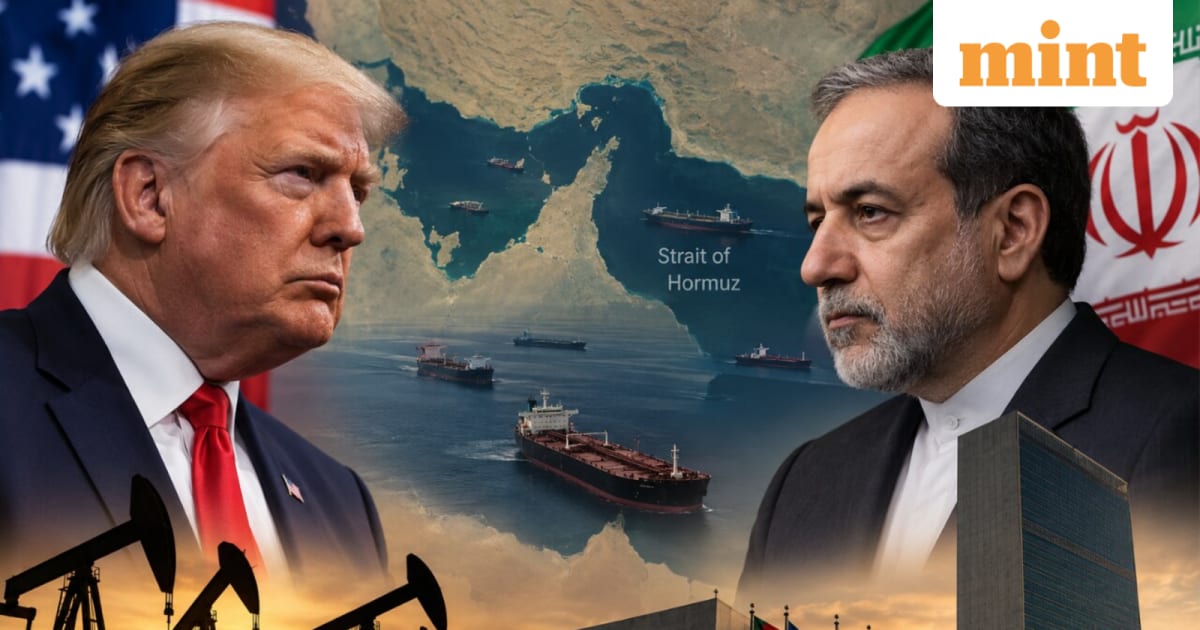
Geopolitical friction in the Middle East, particularly concerning the Strait of Hormuz, is casting a long shadow over global oil markets and, by extension, the Indian economy. Our in-depth analysis unpacks the direct and indirect pathways through which these tensions could reshape corporate profitability, inflation trajectories, and the valuation of key Indian equities, offering a strategic guide for navigating this volatile landscape.
Hormuz on the Brink: Unpacking the Geopolitical Chessboard and Its Indian Market Reverberations
The Strait of Hormuz, a narrow maritime chokepoint connecting the Persian Gulf to the open ocean, has once again become the epicenter of escalating geopolitical friction between the United States and Iran. With daily threats, counter-threats, and conditional negotiation overtures dominating headlines, the global energy complex finds itself on a knife-edge. For India, a nation heavily reliant on imported crude oil, the stakes could not be higher. This comprehensive analysis from WelthWest Research Desk delves into the intricate web of cause and effect, dissecting how potential disruptions in this vital waterway could ripple through the Indian economy, influencing everything from household budgets to corporate balance sheets and the trajectory of the Nifty 50.
The Strait of Hormuz is not merely a shipping lane; it is the world's most critical oil transit chokepoint. Approximately 20% of global petroleum liquids consumption, or about 21 million barrels per day (b/d) in 2023, passes through this strategic bottleneck. Any meaningful disruption, whether through direct conflict, increased shipping costs, or even heightened perceived risk, sends immediate shockwaves through crude oil prices. India, importing over 85% of its crude oil requirements, is particularly vulnerable. A $10 per barrel increase in crude oil prices can expand India's current account deficit by an estimated $14-15 billion, add 0.3-0.4% to inflation, and exert significant depreciating pressure on the Indian Rupee (INR) against the US Dollar (USD).
How Will Rising Crude Oil Prices Impact India's Economy and Stock Market?
The immediate and most direct impact of escalating Hormuz tensions is on crude oil prices. A sustained surge in Brent crude above the $90-$100 per barrel mark, which is a plausible scenario under heightened conflict risk, would trigger a cascade of economic challenges for India. The last significant geopolitical oil shock in early 2022, following the Russia-Ukraine conflict, saw Brent crude briefly touch $139 per barrel. While the Nifty 50 demonstrated resilience, recovering after an initial dip, the underlying macroeconomic pressures were substantial, leading to aggressive interest rate hikes by the Reserve Bank of India (RBI) to combat inflation. This time, with global growth already showing signs of deceleration and a high-interest rate environment persisting, India's capacity to absorb such a shock might be more constrained.
Inflationary pressures would intensify, forcing the RBI into a difficult policy dilemma: prioritizing growth or price stability. Higher fuel costs directly impact transportation, manufacturing, and food prices, eroding consumer purchasing power and potentially dampening demand across various sectors, from automobiles to fast-moving consumer goods (FMCG). Furthermore, a widening current account deficit, driven by a larger oil import bill, would put significant downward pressure on the Indian Rupee. A weaker Rupee makes imports more expensive, creating a self-reinforcing inflationary loop and increasing the cost of foreign debt servicing for Indian corporates. This scenario typically correlates with FII (Foreign Institutional Investor) outflows, adding further pressure on equity markets.
Historically, periods of significant crude oil price volatility have created clear winners and losers within the Indian stock market. Companies involved in upstream oil and gas exploration and production (E&P) tend to benefit immensely from higher realizations, while sectors with high fuel consumption face margin compression. Gold, often seen as a safe-haven asset during times of geopolitical uncertainty and currency depreciation, also typically sees increased demand.
Deep Market Impact Analysis: Unpacking Sectoral Shifts in the Indian Stock Market
The ripple effect of Hormuz tensions will not be uniform across the Indian equity landscape. A detailed sectoral breakdown reveals distinct beneficiaries and casualties, demanding a nuanced approach from investors.
Winners: Riding the Wave of Crude and Uncertainty
- Oil & Gas Exploration & Production (E&P): These companies are direct beneficiaries of elevated crude oil prices. Higher global benchmarks translate into improved revenue and profitability, especially for those with significant domestic production. Their financial performance is intrinsically linked to international crude movements.
- Defence Sector: Increased geopolitical instability globally often leads to higher defence spending and modernization drives. Indian defence companies, particularly those with strong order books and indigenization focus, could see sustained tailwinds.
- Gold & Jewellery: Gold historically acts as a safe haven during economic and geopolitical turmoil. As investors seek refuge from market volatility and potential currency devaluation, demand for gold and related assets typically rises. Companies with significant gold exposure, like jewellery retailers, often see their stock prices appreciate.
Losers: Facing the Headwinds of Higher Costs and Reduced Demand
- Oil Marketing Companies (OMCs): Indian OMCs like HPCL, BPCL, and IOC operate under a complex pricing mechanism, often absorbing a portion of crude price volatility to protect consumers. Higher input costs without proportional increases in retail prices severely compress their marketing margins, impacting profitability. Even with some pricing freedom, maintaining market share against private players becomes challenging.
- Airlines: Aviation Turbine Fuel (ATF) constitutes a significant portion (30-40%) of an airline's operating costs. A sharp rise in crude oil prices directly translates to higher ATF costs, eroding already thin profit margins. This can force airlines to either raise fares, potentially impacting demand, or absorb the cost, leading to losses.
- Logistics & Shipping: Fuel is a primary cost component for trucking, rail, and shipping companies. Higher crude prices mean increased operational expenses, which can be difficult to pass on entirely to customers, especially in competitive markets. Potential disruptions in global shipping lanes, even if indirect, could also lead to higher insurance premiums and operational inefficiencies.
- Automobile Sector: Higher fuel prices deter potential car buyers, particularly in the mass-market segments where fuel efficiency is a key purchasing criterion. This can lead to a slowdown in demand for both passenger vehicles and commercial vehicles, impacting sales volumes and profitability.
- Indian Rupee (INR): As a net oil importer, India's trade deficit widens with higher crude prices, putting depreciating pressure on the Rupee against the US Dollar. This directly impacts the cost of imports for all sectors and can trigger FII outflows from equity and debt markets.
Stock-by-Stock Breakdown: Navigating the Geopolitical Crosscurrents
Let's examine specific Indian equities and their anticipated responses to the evolving situation:
- ONGC (Oil and Natural Gas Corporation Ltd.): As India's largest E&P company, ONGC (NSE: ONGC) is a primary beneficiary of rising crude prices. For every $1 per barrel increase in crude oil prices, ONGC's standalone EBITDA can see an uplift of approximately 3-4%. With a market capitalization exceeding ₹2.8 trillion, its robust production profile (around 600,000 barrels of oil equivalent per day) positions it strongly. In a scenario where Brent crude sustains above $90, ONGC's profitability metrics, including its P/E ratio (currently around 7-8x trailing earnings), could see significant re-rating potential. Its peer, Oil India (NSE: OIL), also stands to gain proportionally, given its similar E&P business model.
- Reliance Industries Ltd. (RIL): While RIL (NSE: RELIANCE) has diversified into retail and telecom, its core Oil-to-Chemicals (O2C) segment remains sensitive to crude oil prices. Higher crude prices generally benefit its upstream E&P assets (like KG-D6 basin gas) but can squeeze refining margins if product prices don't rise commensurately, especially for its export-oriented refining operations. However, the overall impact is often complex, with the upstream gains potentially offsetting downstream pressures. Its massive market cap of over ₹20 trillion and integrated nature provide some insulation, but investors should watch refining crack spreads closely.
- Hindustan Petroleum Corporation Ltd. (HPCL), Bharat Petroleum Corporation Ltd. (BPCL), Indian Oil Corporation Ltd. (IOC): These three OMCs (NSE: HINDPETRO, NSE: BPCL, NSE: IOC) are the most vulnerable. Their primary business involves refining crude and marketing petroleum products. When crude prices surge, their inventory holding losses can mount, and their marketing margins get squeezed if retail prices are not fully adjusted. For instance, in Q1FY23, when crude prices were elevated, these OMCs reported significant losses, with HPCL reporting a net loss of ₹10,197 crore. While government support or price freedom can mitigate this, sustained high crude prices are a structural headwind.
- InterGlobe Aviation Ltd. (IndiGo): As India's largest airline, IndiGo (NSE: INDIGO) is highly sensitive to ATF prices. For every 10% increase in ATF prices, IndiGo's operating costs could rise by 3-4%. Despite its strong domestic market share (over 60%), a prolonged period of high fuel costs will inevitably pressure its profitability, impacting its P/E multiple (currently around 20-25x forward earnings). Its competitor, SpiceJet (NSE: SPICEJET), with its already precarious financial health, would face even more severe challenges.
- Titan Company Ltd.: Titan (NSE: TITAN), with its significant jewellery division, offers a partial hedge. As a proxy for gold demand, its jewellery sales and valuations often benefit from safe-haven buying during geopolitical crises and Rupee depreciation. While discretionary spending might be impacted by inflation, the inherent value of gold as an asset class provides a counter-cyclical uplift. Its strong brand and retail presence make it a key play in this segment.
Expert Perspective: The Bull-Bear Debate on Hormuz and Beyond
The current geopolitical landscape naturally sparks a robust debate among market participants.
The Bears' Argument: The bearish camp emphasizes the fragility of global supply chains and the potential for a severe economic downturn. They argue that a full-blown conflict in the Strait of Hormuz could send crude prices soaring above $150, triggering a global recession. For India, this would mean runaway inflation, a deeply depreciated Rupee (possibly crossing ₹85-90 against the USD), and significant interest rate hikes, severely impacting corporate earnings and consumer demand. They point to the 1973 oil crisis and the early 1990s Gulf War as historical precedents where oil shocks led to economic instability, suggesting that the current valuations of many Indian growth stocks are not pricing in such a 'black swan' event adequately.
The Bulls' Argument: Conversely, the bulls maintain that a full-scale military conflict is highly improbable due to the catastrophic global economic consequences for all parties involved. They believe that both the US and Iran have strong incentives to de-escalate, eventually settling for conditional negotiations. They highlight the global strategic oil reserves and the potential for increased production from other OPEC+ nations, which could cushion any price spikes. For India, they argue that the economy has demonstrated resilience in past shocks, and the government's fiscal measures, coupled with the RBI's proactive stance, can absorb much of the impact. They also point to the long-term structural growth story of India, which they believe will ultimately overshadow short-term geopolitical volatilities, making any dips a buying opportunity for quality stocks.
Actionable Investor Playbook: Navigating the Volatility
Given the high impact and uncertain trajectory of Hormuz tensions, investors need a clear strategy:
- Rebalance Towards E&P and Defence: Consider increasing exposure to upstream oil & gas companies like ONGC and Oil India. For defence, look at companies with strong order books and indigenization focus, as geopolitical instability often translates into higher defence budgets globally. This is a tactical play with a medium-term horizon (6-12 months) as long as tensions persist.
- Hedge with Gold: Allocate a portion of your portfolio to gold, either through physical gold, gold ETFs (e.g., Nippon India ETF Gold BeES - NSE: GOLD BEES), or quality jewellery retailers like Titan Company. Gold acts as a crucial portfolio diversifier and inflation hedge during such periods. This is a defensive move with a short-to-medium term horizon.
- Reduce Exposure to Vulnerable Sectors: Trim positions in OMCs (HPCL, BPCL, IOC) and airlines (IndiGo, SpiceJet). For OMCs, entry points might emerge only if crude prices materially retreat or if government subsidies fully insulate them. For airlines, the risk-reward remains unfavorable under high crude. This is a sell/reduce strategy with an immediate to medium-term horizon.
- Monitor Automobile & Logistics: Watch the automobile and logistics sectors closely. While not direct 'sells' immediately, sustained high crude prices will inevitably impact demand and margins. Consider reducing exposure if earnings forecasts begin to deteriorate significantly.
- Currency Hedging for Global Investors: Foreign investors with exposure to Indian equities should consider currency hedging strategies to mitigate Rupee depreciation risk.
- Focus on Quality and Strong Balance Sheets: In times of uncertainty, companies with strong balance sheets, low debt, and consistent cash flows are better positioned to weather economic headwinds. Avoid highly leveraged companies in sectors susceptible to input cost pressures.
Risk Matrix: Assessing Probabilities and Impacts
- Risk 1: Full-Blown Military Conflict in Hormuz (Probability: Low-Medium, Impact: Very High)
A direct military confrontation leading to a closure or significant disruption of the Strait of Hormuz. This could send Brent crude prices above $150-$200 per barrel, trigger a global recession, and cause a sharp, sustained sell-off in Indian equities (Nifty could correct by 15-20% rapidly). Rupee could breach ₹90/USD. - Risk 2: Prolonged Stand-off & Conditional Negotiations (Probability: Medium-High, Impact: High)
Continued threats and counter-threats without direct conflict, leading to sustained crude prices in the $90-$110 range. This would result in persistent inflationary pressure, gradual Rupee depreciation (towards ₹84-₹86/USD), and a drag on corporate profitability for import-dependent sectors. Indian market sentiment would remain bearish, with sector rotation continuing. - Risk 3: Diplomatic Resolution & De-escalation (Probability: Medium, Impact: Medium)
A breakthrough in negotiations leading to a significant easing of tensions and a commitment to maintaining free passage through Hormuz. This would likely cause crude prices to retreat towards $75-$85 per barrel, providing relief to OMCs, airlines, and the broader economy. However, it would negatively impact E&P companies, leading to profit booking in stocks like ONGC. - Risk 4: Escalation to Cyber Warfare/Proxy Attacks (Probability: Medium, Impact: Medium)
Instead of direct military conflict, an increase in cyberattacks on critical infrastructure or proxy attacks in the region. While not directly disrupting oil flow, it would maintain elevated risk premiums on crude and keep geopolitical uncertainty high, preventing a significant market rally.
What to Watch Next: Catalysts and Data Points
Investors should closely monitor the following developments:
- Statements from US and Iranian Leadership: Any shift in rhetoric, particularly regarding negotiations or red lines, will be a primary market mover. Specific dates related to potential diplomatic meetings or ultimatums are critical.
- Weekly Crude Oil Inventory Data (EIA, API): These reports provide insights into global supply and demand dynamics. Any unexpected draws or builds can influence crude prices.
- Shipping Insurance Premiums: A significant spike in insurance costs for vessels transiting the Strait of Hormuz would signal heightened risk perception, even without direct conflict.
- Indian Macroeconomic Data: Keep an eye on India's CPI (inflation), IIP (industrial production), and trade deficit figures. Any worsening of these indicators, particularly alongside high crude, will amplify market concerns.
- RBI Monetary Policy Statements: The RBI's commentary on inflation, growth, and its forward guidance on interest rates will be crucial, especially if crude prices remain elevated.
- Q2/Q3 FY25 Corporate Earnings: The upcoming earnings seasons will reveal the actual impact of any sustained crude price increases on corporate profitability, especially for OMCs, airlines, and auto manufacturers.
See ONGC's AI Score
Our algorithmic screener scores ONGC on fundamentals, momentum, and risk — free to try, no card needed.
Try the AI Screener →Have questions about this story?
Ask Welth, our finance-focused AI research assistant, for a deeper breakdown — free trial included.
Chat with Welth AI →Disclaimer: This content is generated by WelthWest Research Desk based on publicly available reports and is for informational purposes only. It does not constitute financial advice, investment recommendations, or an offer to buy or sell securities. Always consult a qualified financial advisor before making investment decisions.