Key Takeaway
India's equity markets face a challenging period as elevated global crude oil prices exert pressure on corporate margins and national finances. Investors should brace for continued volatility, prioritize defensive plays, and strategically re-evaluate growth-oriented sectors sensitive to inflation and interest rate hikes.
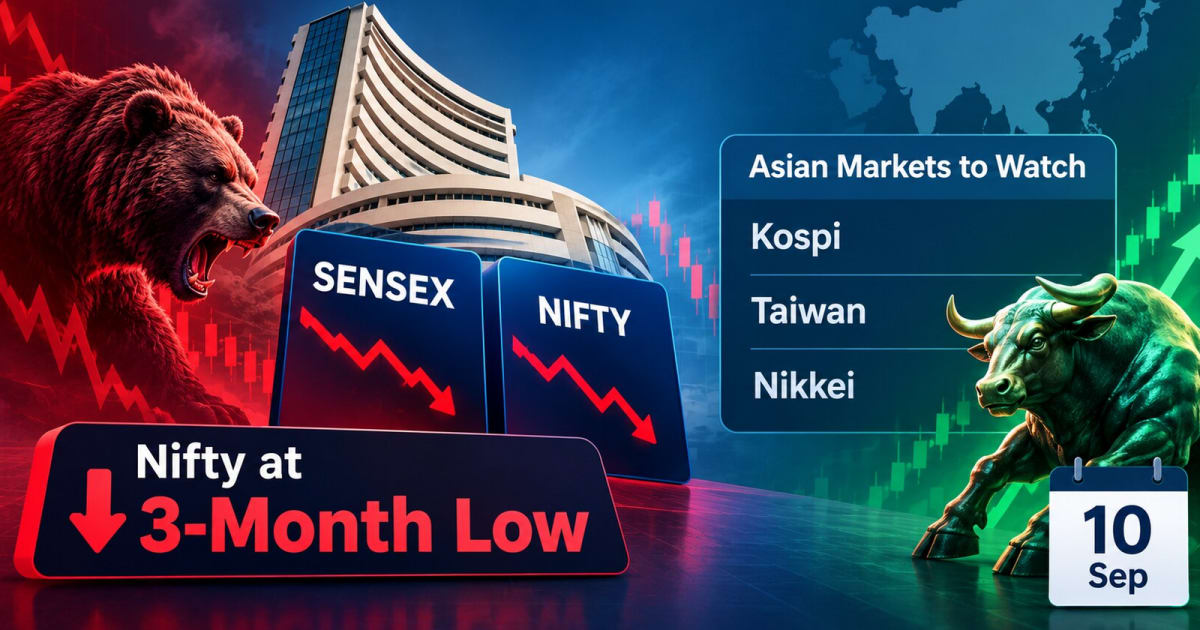
India's stock market is currently navigating a turbulent phase, primarily driven by the twin headwinds of rising global crude oil prices and pervasive weak investor sentiment. This confluence of factors is exacerbating India's current account deficit and inflationary pressures, prompting a hawkish stance from the RBI and impacting corporate profitability across various sectors. Our deep dive analyzes the profound implications for Indian equities, identifying both vulnerable sectors and potential safe havens.
India's Market Correction: How Surging Oil Prices and Weak Sentiment Are Reshaping Portfolios
The Indian equity market is currently grappling with a significant downturn, a consequence of escalating global crude oil prices and a palpable weakening of investor sentiment. This isn't merely a cyclical blip; it represents a fundamental shift in the macroeconomic landscape that directly impacts India's economic stability and corporate earnings. As a major net importer of crude oil, India's vulnerability to price shocks is profound, translating directly into a widening current account deficit and intensified inflationary pressures. This intricate interplay necessitates a comprehensive understanding for any investor navigating the Indian markets.
The immediate consequence of higher oil prices is a surge in input costs for a vast array of industries, from manufacturing to logistics. This directly erodes profit margins, even for companies with robust revenue growth. Furthermore, the inflationary impulse generated by expensive oil forces the Reserve Bank of India (RBI) to maintain a hawkish monetary policy stance, translating into higher interest rates. Elevated borrowing costs, in turn, dampen corporate investment, consumer spending, and ultimately, economic growth. Weak investor sentiment, fueled by these macroeconomic anxieties and global uncertainties, amplifies the selling pressure, leading to significant Foreign Institutional Investor (FII) outflows and broad market corrections across the Nifty 50 and Sensex.
What is Driving India's Stock Market Downturn Now?
The current market weakness is rooted in a confluence of interconnected factors, with crude oil acting as the primary accelerant. Global benchmark Brent crude recently surged past the $90 per barrel mark, a level not seen consistently since late 2022. For India, every $10 increase in crude oil prices typically adds approximately $15 billion to the import bill and can shave off 0.3-0.5% from GDP growth, while adding 0.4-0.5% to CPI inflation. This direct impact on the national balance sheet and household budgets is undeniable.
The last significant oil price shock in 2022, following geopolitical events, saw the Nifty 50 correct by nearly 15% from its peak over a few months, with sectors like airlines and chemicals experiencing even steeper declines. We are witnessing a similar pattern emerge, albeit with different underlying catalysts. This time, supply concerns from major producers coupled with resilient global demand are pushing prices higher. This persistent inflationary threat limits the RBI's room for maneuver, making rate cuts less likely and potentially even necessitating further hikes to anchor inflation expectations. The market, therefore, is repricing future earnings growth with a higher discount rate, leading to lower valuations.
Deep Market Impact Analysis: Unpacking Sectoral Vulnerabilities
The impact of rising oil prices and dampened sentiment is not uniform across the Indian stock market. Certain sectors bear the brunt more acutely, while others might demonstrate relative resilience or even benefit from the shift. Understanding these dynamics is crucial for strategic portfolio positioning.
Losers: Oil-Importing & Consumption-Driven Sectors
- Airlines: Fuel costs constitute 35-40% of an airline's operating expenses. A sustained rise in crude oil prices directly impacts profitability. While airlines can pass on some costs through higher fares, this often dampens demand, creating a double-whammy. The sector's already razor-thin margins become even more precarious.
- Chemicals & Paints: Crude oil derivatives are key raw materials for a wide range of chemical products, including specialty chemicals, polymers, and pigments used in paints. Companies in these sectors face significant input cost inflation, which is challenging to pass on entirely in a competitive market. Margins are squeezed, and pricing power diminishes.
- Logistics & Transportation: Diesel prices, directly linked to crude, are a major cost component for logistics companies. Higher fuel expenses lead to increased operational costs, potentially impacting freight rates and overall profitability.
- Consumption-Driven Sectors (FMCG, Consumer Discretionary): While not directly impacted by oil as a raw material, these sectors suffer indirectly from inflationary pressures. Higher fuel and food prices reduce disposable income for households, leading to a slowdown in discretionary spending. Furthermore, higher interest rates make consumer loans more expensive, impacting big-ticket purchases.
- Technology Stocks (IT Services): While not directly exposed to oil prices, the IT sector is highly sensitive to global economic sentiment and FII flows. As global economic growth forecasts are trimmed due to inflation and higher rates, IT spending by international clients can slow. Additionally, a strong dollar (often a consequence of global risk-off sentiment) can be a double-edged sword; while it boosts rupee revenues, it also reflects broader risk aversion that can lead to FII selling pressure.
Historical Context: During the 2008 financial crisis and the 2013 'Taper Tantrum,' sectors heavily reliant on imports or discretionary spending experienced significant corrections, often exceeding the broader market decline. For instance, in 2013, when the rupee depreciated sharply and crude prices remained elevated, the Nifty FMCG index underperformed the Nifty 50 by over 5% in a three-month period, while airline stocks saw declines exceeding 20%.
Stock-by-Stock Breakdown: Vulnerabilities and Resilience
Let's examine how specific NSE/BSE listed companies are feeling the heat and what investors should watch for.
- IndiGo (InterGlobe Aviation Ltd - NSE: INDIGO): As India's largest airline, IndiGo is critically exposed to jet fuel prices. Fuel typically accounts for 35-40% of its operating costs. A sustained $5 increase in crude oil can reduce its quarterly EBITDA by 5-7% if not fully passed on. The stock has a trailing P/E of around 25x, which could come under pressure if profitability is squeezed. Investors should monitor crude oil price trends and the company's ability to maintain healthy passenger load factors (PLFs) and yield management. Sector peer SpiceJet (BSE: 500285) faces even greater financial stress under these conditions.
- Asian Paints Ltd (NSE: ASIANPAINT): A leading paint manufacturer, Asian Paints relies heavily on crude oil derivatives like titanium dioxide, monomers, and solvents. These raw materials constitute 50-60% of its cost of goods sold. While Asian Paints has strong brand equity and some pricing power, continuous input cost inflation can erode its industry-leading EBITDA margins, which currently hover around 18-20%. The stock trades at a premium P/E of over 60x, making it highly susceptible to any margin contraction. Berger Paints (NSE: BERGERPAINT) faces similar headwinds.
- Reliance Industries Ltd (NSE: RELIANCE): This is a more nuanced case. While Reliance's oil-to-chemicals (O2C) segment benefits from higher refining margins when crude prices are volatile (especially if product prices rise faster than crude input costs), its consumer-facing businesses (Jio, Retail) are indirectly impacted by inflation's drag on discretionary spending. Furthermore, the company is a net importer of crude for its refining operations. The overall impact depends on the spread between crude and refined products. Reliance's diversified portfolio offers some hedge, but sustained high crude could pressure its O2C margins if product demand falters. Its market cap of over ₹18 lakh crore means its movement influences the broader market significantly.
- Hindustan Unilever Ltd (NSE: HINDUNILVR): As a dominant FMCG player, HUL is a proxy for Indian consumption. While its direct exposure to crude as a raw material is limited, higher fuel and freight costs impact its supply chain. More significantly, persistent inflation erodes consumer purchasing power, leading to downtrading (consumers opting for cheaper alternatives) or reduced consumption volumes. HUL's premium valuation (P/E ~55x) relies on consistent volume growth, which becomes challenging in an inflationary environment. Britannia Industries (NSE: BRITANNIA) and Nestle India (NSE: NESTLEIND) face similar consumption headwinds.
- Tata Consultancy Services Ltd (NSE: TCS): As a bellwether for the Indian IT sector, TCS is primarily exposed to global macroeconomic conditions. While a weakening rupee against the dollar can boost its reported rupee revenues, sustained FII outflows from emerging markets due to global risk aversion can lead to selling pressure on large-cap IT stocks. Furthermore, a global slowdown driven by inflation and higher interest rates could temper IT spending by clients, impacting deal wins and revenue growth. The stock's P/E of around 30x reflects its stable growth profile, but any significant slowdown in global IT spending could lead to a de-rating. Infosys (NSE: INFY) and Wipro (NSE: WIPRO) are similarly exposed.
Expert Perspective: Bulls vs. Bears on India's Market Outlook
The current market environment presents a classic battleground for differing investment philosophies. Bears argue that the confluence of rising oil, persistent inflation, and a hawkish RBI creates a potent cocktail for a deeper correction. Their argument rests on several pillars:
"The structural challenges posed by India's energy import dependence cannot be wished away. Every $10 rise in crude oil is a direct tax on the Indian economy, hitting corporate margins and household budgets. We expect FII outflows to persist as global risk appetite wanes, leading to further rupee depreciation and a challenging environment for equity valuations." – Bearish Analyst, Global Macro Fund.
They point to the potential for the Nifty 50 to retest critical support levels, possibly falling another 5-7% from current levels if crude oil sustains above $95/barrel and global central banks remain aggressive. Their focus is on preserving capital and identifying defensive sectors like pharmaceuticals and utilities that are less exposed to these cyclical headwinds.
Conversely, the bulls acknowledge the near-term headwinds but maintain a more optimistic long-term view on India's growth story. They argue that:
"While crude oil is a concern, India's domestic consumption story remains robust, driven by a young demographic and increasing urbanization. Corporate balance sheets are healthier than in previous cycles, and the government's focus on infrastructure spending provides a foundational support. Any significant correction offers a compelling entry point for long-term investors in quality businesses." – Bullish Portfolio Manager, Domestic Equity Fund.
Bulls emphasize India's structural reforms, demographic dividend, and potential for earnings recovery once global commodity prices stabilize. They might suggest that the current FII outflows are tactical and will reverse as global growth prospects improve, leading to a re-rating of Indian equities. Their focus is on accumulating fundamentally strong companies at attractive valuations, viewing the current downturn as a temporary blip in India's multi-year growth trajectory.
Actionable Investor Playbook: Navigating the Volatility
In this challenging market, a well-defined strategy is paramount. Investors should consider the following concrete steps:
- Reduce Exposure to High-Beta, Oil-Sensitive Sectors: Consider trimming positions in airlines (INDIGO), paints (ASIANPAINT, BERGERPAINT), and certain chemical companies. For those with a higher risk appetite, short-term tactical trades on these sectors could be considered during periods of crude oil price dips, but the overall bias should be cautious.
- Prioritize Defensive Plays: Shift towards sectors known for their stability during economic downturns. This includes Pharmaceuticals (e.g., Sun Pharma - NSE: SUNPHARMA, Dr. Reddy's - NSE: DRREDDY), Utilities (e.g., NTPC - NSE: NTPC, Power Grid Corp - NSE: POWERGRID), and select Consumer Staples (e.g., ITC - NSE: ITC, Marico - NSE: MARICO) that have strong pricing power and less exposure to discretionary spending cuts. These typically offer lower volatility and stable dividend yields.
- Re-evaluate Growth Stocks: Technology stocks, while offering long-term growth, can be sensitive to higher discount rates and global sentiment. Re-assess valuations for large-cap IT (TCS, INFY) and mid-cap tech, ensuring their growth prospects justify their current P/E multiples. Consider a 'watch' strategy for these, looking for clearer signs of global economic stability before adding aggressively.
- Focus on Quality and Strong Balance Sheets: Companies with low debt, strong cash flows, and proven management teams are better positioned to weather economic storms. Look for companies with high Return on Equity (ROE) and Return on Capital Employed (ROCE).
- Consider Tactical Allocation to Oil & Gas Upstream: Companies like Oil and Natural Gas Corporation (ONGC - NSE: ONGC) and Oil India (NSE: OIL) could see improved profitability from higher crude prices, although they also carry regulatory risks. This can act as a partial hedge against the broader market's oil-induced pain.
- Staggered Entry Strategy: Avoid 'all-in' approaches. For long-term investors, use a systematic investment plan (SIP) or a staggered buying strategy to average down costs during corrections. Identify key support levels for the Nifty 50 (e.g., 19,200, 18,800) as potential entry points for quality stocks.
- Time Horizon: For near-term (3-6 months), expect continued volatility and potential for further downside. For medium-term (6-12 months), a recovery is possible if crude stabilizes and inflation moderates. Long-term (3+ years) investors should maintain conviction in India's structural growth story, using corrections to accumulate.
Risk Matrix: Potential Headwinds for Indian Equities
Several risks could exacerbate the current market downturn and should be closely monitored by investors:
- Continued Escalation in Global Crude Oil Prices (Probability: Medium-High): A sustained rally above $95-$100/barrel, potentially due to further geopolitical tensions or unexpected supply disruptions, would significantly worsen India's current account deficit and inflation, leading to more aggressive RBI action and deeper market corrections.
- Persistent Weak Investor Sentiment & FII Outflows (Probability: Medium): If global risk aversion intensifies, or if India's macroeconomic indicators deteriorate further, FIIs could continue to pull capital, putting sustained pressure on the rupee and equity valuations. This could lead to a 'de-rating' of the broader Indian market.
- Global Economic Slowdown/Recession (Probability: Medium): A sharper-than-expected slowdown in major global economies (US, Europe, China) could dampen demand for Indian exports, impact IT services spending, and further reduce global risk appetite, compounding the challenges for Indian equities.
- Domestic Policy Missteps or Political Instability (Probability: Low-Medium): While currently not a primary concern, any unexpected domestic policy changes that deter investment or significant political instability could add another layer of uncertainty, though this is less likely to be the primary driver of the current oil-induced downturn.
What to Watch Next: Catalysts and Data Points
Investors should closely monitor the following upcoming events and data releases for signals that could shift the market's trajectory:
- Crude Oil Inventories & Geopolitical Developments: Weekly EIA (US Energy Information Administration) reports and any news related to OPEC+ production decisions or geopolitical tensions in oil-producing regions will directly influence crude prices.
- RBI Monetary Policy Committee (MPC) Meetings: The next MPC meeting and subsequent statements will provide crucial insights into the RBI's stance on inflation and interest rates. Any hawkish surprises could further dampen sentiment.
- India's CPI Inflation Data: Monthly Consumer Price Index (CPI) releases will indicate whether inflationary pressures are moderating or intensifying. A sustained rise above the RBI's comfort zone (2-6%) would be a negative signal.
- India's Balance of Trade and Current Account Deficit (CAD) Data: Quarterly CAD figures will reveal the extent of the impact from higher oil imports and FII flows, providing a key health check on India's external finances.
- Global Central Bank Announcements: Statements and rate decisions from the US Federal Reserve (Fed) and European Central Bank (ECB) will influence global liquidity and FII sentiment towards emerging markets like India.
- Corporate Earnings Season: Upcoming quarterly earnings reports will reveal the actual impact of higher input costs and inflation on corporate profitability across various sectors. Pay close attention to management commentary on demand outlook and margin pressures.
The current market environment demands vigilance and a clear understanding of macroeconomic headwinds. While India's long-term growth story remains compelling, the near-term path is fraught with challenges, primarily driven by the relentless march of crude oil prices and its cascading effects on inflation and investor confidence. Strategic positioning, informed by deep analysis, will be key to navigating these turbulent waters.
Run a free AI Stock Screen
Our algorithmic screener scores any NSE/BSE stock on fundamentals, momentum, and risk — free to try, no card needed.
Try the AI Screener →Have questions about this story?
Ask Welth, our finance-focused AI research assistant, for a deeper breakdown — free trial included.
Chat with Welth AI →Disclaimer: This content is generated by WelthWest Research Desk based on publicly available reports and is for informational purposes only. It does not constitute financial advice, investment recommendations, or an offer to buy or sell securities. Always consult a qualified financial advisor before making investment decisions.