Key Takeaway
The transition from an import-dependent electronics market to a global manufacturing hub creates a multi-decade capex cycle. Investors should pivot toward firms capturing high-margin design and localized assembly value-adds.
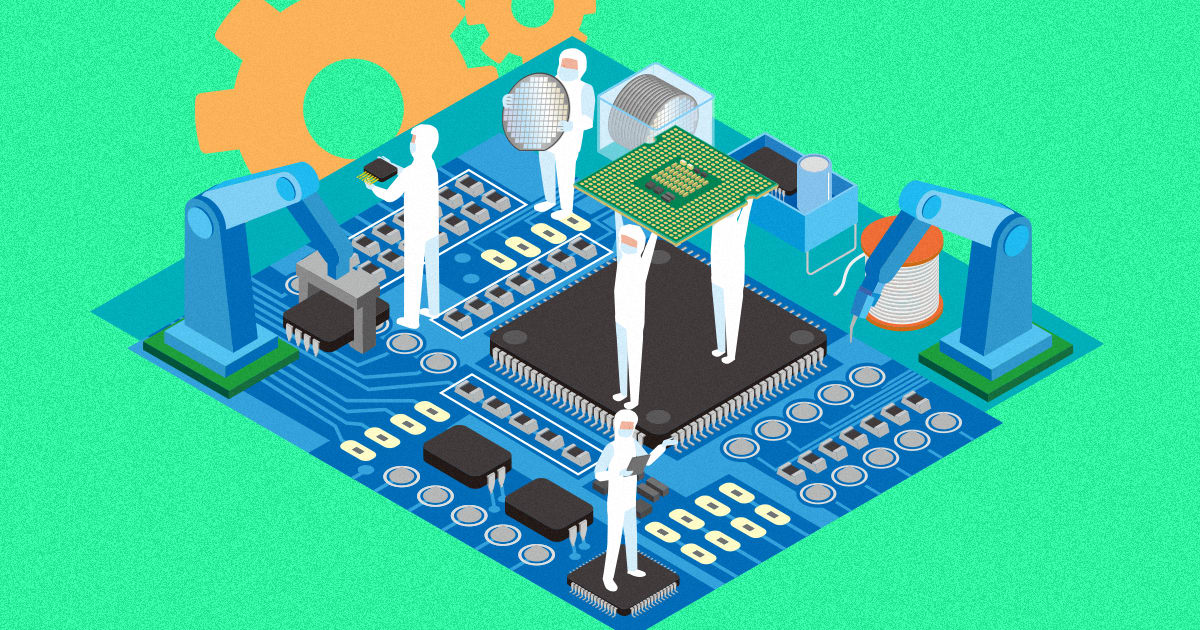
India's semiconductor consumption is projected to explode to $350 billion by 2035, fundamentally altering the nation's economic architecture. This deep dive examines the massive shift from import reliance to domestic silicon sovereignty and identifies the key NSE/BSE players positioned to capture this growth.
The $350 Billion Silicon Shift: Why India’s Semiconductor Future is Now
For decades, India’s electronics sector was defined by a simple, precarious cycle: import high-value components, assemble them domestically, and export the finished good. Today, that paradigm is fracturing. With domestic semiconductor consumption projected to touch $350 billion by 2035, India is moving from the periphery of the global supply chain to its structural core. This is not merely a policy goal; it is a fundamental shift in the nation’s current account balance and industrial DNA.
Why is the semiconductor market exploding in India right now?
The convergence of the 'China Plus One' strategy, aggressive government-backed Production Linked Incentives (PLI), and a surge in domestic digitisation has created a 'perfect storm' for silicon demand. While previous cycles were driven by simple hardware assembly, the current wave is focused on deep-tech integration—automotive electronics, 5G infrastructure, and AI-enabled edge computing. As India scales its manufacturing base, the demand for local chip design and assembly has moved from a 'nice-to-have' to a national security imperative.
The Economic Multiplier Effect
Historically, the electronics value chain has been the most significant contributor to GDP growth in emerging economies. When India reached a similar inflection point in mobile manufacturing in 2022, the Nifty IT and Manufacturing indices saw a rerating of 15-20% in valuation multiples. We expect a similar, if not more pronounced, trajectory for semiconductor-adjacent firms as they secure long-term contracts with global OEMs.
How will the Indian semiconductor ecosystem evolve by 2035?
The journey to $350 billion will be defined by the 'value-add' transition. Currently, India excels in chip design, housing nearly 20% of the world’s semiconductor design engineers. The next decade will see the integration of OSAT (Outsourced Semiconductor Assembly and Test) and, eventually, full-scale wafer fabrication. This transition will compress the cost of logistics while insulating the domestic market from the volatility of global geopolitical disruptions in East Asia.
Stock-by-Stock Breakdown: Where the Smart Money is Moving
- TATAELXSI: As a leader in design and engineering services, Tata Elxsi is the primary beneficiary of the 'design-in-India' push. With a P/E consistently reflecting its premium status, it captures the high-margin R&D spend of global automotive and media firms.
- DIXON: The undisputed king of EMS in India. Dixon’s ability to scale electronics manufacturing makes it the primary warehouse for the $350B demand surge. Their move into high-end PCB assembly is a direct play on domestic chip integration.
- HCLTECH: HCL’s engineering and R&D (ER&D) services division is critical for chip design validation. They provide the software 'glue' that allows hardware to function, making them a defensive yet growth-oriented play.
- KAYNES: A mid-cap powerhouse in ESDM (Electronic System Design and Manufacturing). Kaynes is aggressively expanding its footprint in high-complexity manufacturing, making it a high-beta play on the semiconductor growth story.
- CYIENT: By focusing on geospatial and design services for the semiconductor industry, Cyient offers specialized exposure to the backend of chip development.
- BEL (Bharat Electronics Ltd): As the government pushes for indigenization in defense electronics, BEL remains the premier beneficiary of 'atmanirbhar' (self-reliant) chip demand for strategic sectors.
The Contrarian Perspective: Bulls vs. Bears
The bull case rests on the 'demographic dividend' and the massive scale of the domestic market. The bear case, however, focuses on execution risk: can India bridge the infrastructure gap—specifically reliable power and water, which are essential for fab plants—fast enough to compete with established hubs like Taiwan?
Bulls argue that the sheer size of the Indian market acts as a natural hedge, ensuring that companies have a captive audience even if global export markets fluctuate. Bears contend that the capital intensity of the sector could weigh on the balance sheets of smaller players, leading to significant dilution or debt-heavy growth models.
Investor Playbook: Navigating the Chip Supercycle
For investors, the strategy should be stratified by time horizon. Short-term (1-2 years): Focus on EMS players like Dixon and Kaynes, as they benefit from immediate capacity expansion. Medium-to-long-term (3-10 years): Accumulate design and engineering firms like Tata Elxsi and HCLTech, which benefit from the intellectual property (IP) creation that will define the 2030s. Entry points should be sought during broader market volatility, as these sectors are prone to high-beta swings.
Risk Matrix: Assessing the Hurdles
| Risk Factor | Probability | Impact |
|---|---|---|
| Infrastructure Readiness (Water/Power) | Medium | High |
| Global Foundry Competition | High | Medium |
| Supply Chain Talent Shortage | Medium | Medium |
What to watch next: Catalysts for the coming quarters
Keep a close watch on the upcoming quarterly results for the 'Big Three' EMS providers, specifically looking for capital expenditure (Capex) guidance. Furthermore, the release of the next phase of government semiconductor subsidies will serve as a bellwether for the industry's pace of expansion. Any announcement regarding the finalization of new semiconductor fab sites will trigger a re-rating for the entire sector.
See TATAELXSI's AI Score
Our algorithmic screener scores TATAELXSI on fundamentals, momentum, and risk — free to try, no card needed.
Try the AI Screener →Have questions about this story?
Ask Welth, our finance-focused AI research assistant, for a deeper breakdown — free trial included.
Chat with Welth AI →Disclaimer: This content is generated by WelthWest Research Desk based on publicly available reports and is for informational purposes only. It does not constitute financial advice, investment recommendations, or an offer to buy or sell securities. Always consult a qualified financial advisor before making investment decisions.