Key Takeaway
The 8.33 GW data center expansion is not merely a tech upgrade; it is a structural industrial pivot. Investors should rotate capital toward the 'Power-Cooling-Connectivity' trifecta to capture the next decade of infrastructure growth.
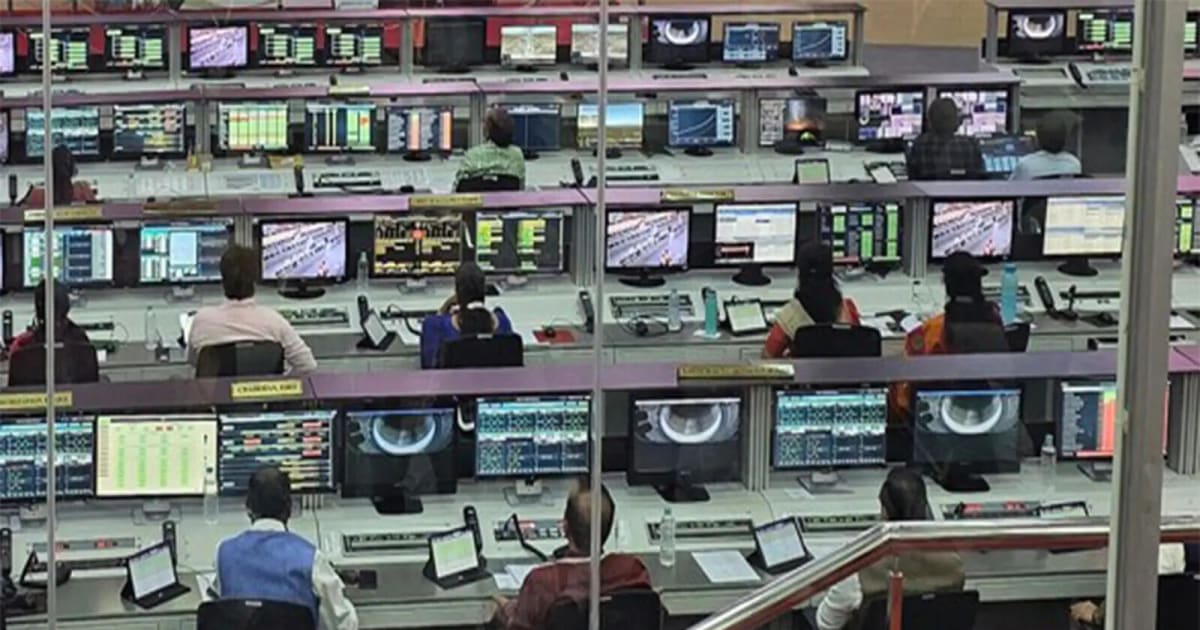
India is undergoing a massive digital transformation, with an 8.33 GW data center pipeline signaling a structural shift in infrastructure demand. This expansion is creating a multi-billion dollar tailwind for power, construction, and cooling equipment manufacturers. We analyze the market impact and provide a strategic playbook for navigating this AI-driven cycle.
The 8.33 GW Catalyst: Why India’s Digital Backbone is Scaling
The latest data from Knight Frank confirms a seismic shift in India’s industrial landscape: a projected 8.33 GW data center capacity expansion. This is not incremental growth; it is a five-fold increase that fundamentally alters the requirements for India’s power grid, real estate, and telecommunications.
For investors, the 'data center' label is often misconstrued as a software play. In reality, this is a heavy-infrastructure play. Every megawatt of compute power requires a corresponding investment in high-voltage transmission, localized cooling systems, and robust fiber-optic connectivity. This shift represents the most significant capital expenditure cycle in India since the mid-2000s road-building boom.
How will the 8.33 GW expansion reshape the Indian stock market?
Historically, infrastructure supercycles in India follow a predictable sequence: Power generation leads, followed by EPC (Engineering, Procurement, and Construction) firms, and finally, equipment manufacturers. When we look back at the 2022 power sector rally, the Nifty Energy index surged over 30% as capacity utilization rates improved. The current data center build-out is more intensive, requiring 24/7 baseload power, which favors players with integrated energy portfolios.
The market impact is threefold: First, Power Distribution Companies (DISCOMs) face unprecedented demand, forcing a transition to captive renewable sources. Second, EPC firms are seeing order books swell as data center construction requires specialized 'clean-room' engineering. Third, Equipment manufacturers are pivoting from residential HVAC to high-density precision cooling, which carries significantly higher EBITDA margins.
Stock-by-Stock Breakdown: The Winners of the Infrastructure Pivot
- NTPC (NSE: NTPC): As the nation’s largest power generator, NTPC is the primary beneficiary of the 'baseload requirement.' Their pivot toward green hydrogen and renewable energy integration makes them the preferred partner for hyperscalers who have strict carbon-neutral mandates.
- Larsen & Toubro (NSE: LT): The gold standard for infrastructure, L&T’s order book is increasingly skewed toward high-complexity data center builds. Their ability to manage EPC risks in a high-inflation environment gives them a competitive moat over smaller players.
- Tata Power (NSE: TATAPOWER): With their aggressive push into rooftop solar and smart grid management, they are uniquely positioned to provide the 'behind-the-meter' power solutions that data center operators desperately need to bypass grid instability.
- Schneider Electric India (NSE: SCHNEIDER): A pure-play on the infrastructure backbone. Their switchgear, power management, and cooling solutions are essential for the high-density racks required for AI-driven cloud services.
- Bharti Airtel (NSE: BHARTIARTL): Through their subsidiary Nxtra, Airtel is the only telecom giant with a truly integrated data center strategy. They capture value at both the connectivity level and the hosting level, providing a defensive hedge against pure infra volatility.
Expert Perspective: The Bull vs. Bear Debate
The bull case rests on the 'AI-first' migration of global cloud providers to India, citing lower operational costs and a massive talent pool. The bear case, however, focuses on the 'Grid Bottleneck' theory—the risk that India’s aging distribution infrastructure cannot scale fast enough, leading to massive project delays and cost overruns.
Bulls argue that the current P/E multiples (often trading at 30x-40x for top-tier infra players) are justified by the multi-year visibility of these projects. Conversely, skeptics point to the 2012-2015 infrastructure bust, where execution delays decimated returns. The difference today is the presence of deep-pocketed hyperscalers (AWS, Google, Microsoft) who act as anchor tenants, de-risking the projects significantly.
Actionable Investor Playbook
Investors should adopt a 'barbell strategy' to capture this growth:
- Core Exposure (60%): Allocate to established EPC and Power firms like L&T and NTPC. These stocks provide the stability needed to weather volatility while benefiting from long-cycle order inflows.
- Growth Exposure (40%): Target mid-cap equipment manufacturers like Havells India (NSE: HAVELLS), which are seeing a surge in demand for industrial-grade cabling and cooling systems.
- Time Horizon: This is a 3-5 year play. Investors should look for entry points during quarterly earnings-related pullbacks, focusing on stocks where the order-book-to-bill ratio is expanding.
Risk Matrix: What Could Derail the Momentum?
| Risk | Probability | Impact |
|---|---|---|
| Grid Bottlenecks | High | Severe |
| AI Tech Obsolescence | Medium | Moderate |
| Capital Intensity/Interest Rates | High | Moderate |
What to Watch Next
Keep a close eye on the upcoming Union Budget allocations for Green Energy Corridors and quarterly updates from the Ministry of Power regarding industrial power demand metrics. These data points act as the 'leading indicators' for the next leg of the rally. Furthermore, watch for the capital expenditure guidance provided by major hyperscalers in their global earnings calls, as this directly dictates the pace of the Indian rollout.
See NTPC's AI Score
Our algorithmic screener scores NTPC on fundamentals, momentum, and risk — free to try, no card needed.
Try the AI Screener →Have questions about this story?
Ask Welth, our finance-focused AI research assistant, for a deeper breakdown — free trial included.
Chat with Welth AI →Disclaimer: This content is generated by WelthWest Research Desk based on publicly available reports and is for informational purposes only. It does not constitute financial advice, investment recommendations, or an offer to buy or sell securities. Always consult a qualified financial advisor before making investment decisions.