Key Takeaway
India's ambitious semiconductor manufacturing journey has moved from policy to production with the launch of Suchi Semicon's Surat facility. This pivotal moment signals a significant boost for domestic electronics manufacturing, positioning Indian tech stocks for substantial long-term growth and potentially altering global supply chain dynamics.
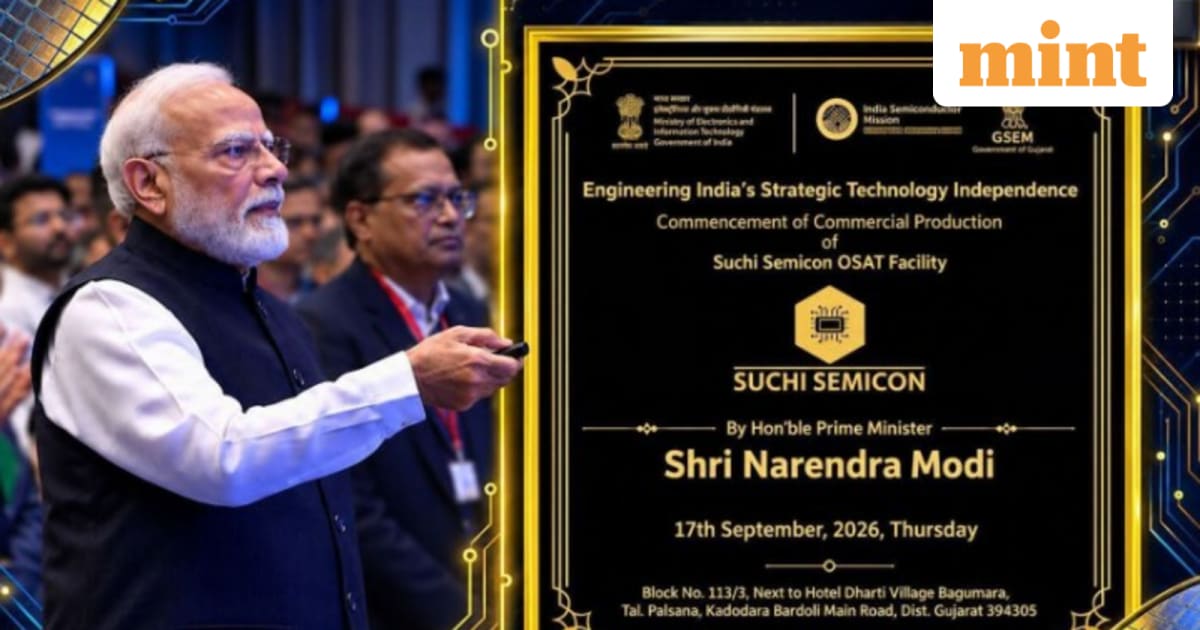
The inauguration of commercial chip production at Suchi Semicon's Surat plant by PM Modi marks a watershed moment for India's high-tech aspirations. This transition from policy to tangible output is set to ignite investor confidence in the 'Make in India' semiconductor initiative, driving potential FDI and strengthening India's global tech standing.
India's Semiconductor Leap: From Policy to Production in Surat
The landscape of Indian high-tech manufacturing has been fundamentally reshaped with the recent inauguration of commercial semiconductor production at Suchi Semicon's state-of-the-art facility in Surat, Gujarat. Prime Minister Narendra Modi's presence at this landmark event underscores the nation's unwavering commitment to establishing a robust domestic semiconductor ecosystem. This is not merely a symbolic gesture; it represents the crucial transition from ambitious policy pronouncements to tangible, operational reality, a shift that is poised to reverberate through the Indian stock market and global technology supply chains.
For years, India has been a net importer of semiconductor chips, a critical component underpinning virtually every modern electronic device. This reliance has exposed the nation to supply chain vulnerabilities and significant foreign exchange outflows. The 'Make in India' initiative, coupled with targeted Production Linked Incentives (PLI) schemes, has been meticulously designed to address this deficit. The operationalization of the Suchi Semicon plant validates these efforts, providing a much-needed shot in the arm for investor confidence. It demonstrates that complex, capital-intensive manufacturing, previously the domain of a select few global giants, is now achievable within India, paving the way for a new era of domestic technological prowess and economic self-reliance.
Why This Moment is Critical for the Indian Economy and Markets
The strategic importance of semiconductor manufacturing cannot be overstated. These tiny silicon chips are the brains of everything from smartphones and automobiles to advanced defense systems and artificial intelligence. India's ability to produce these components domestically signifies a monumental step towards technological sovereignty and a reduction in import dependence. This could lead to significant savings in foreign exchange, thereby bolstering the Indian Rupee in the long run. Moreover, it positions India as a more attractive destination for Foreign Direct Investment (FDI) in the electronics and technology sectors, potentially drawing in billions of dollars in new capital.
The ripple effect extends beyond mere production. A thriving domestic semiconductor industry will foster innovation in chip design and research and development (R&D), creating high-skilled jobs and a virtuous cycle of technological advancement. This development is happening at a time when global supply chains are being re-evaluated due to geopolitical tensions and the need for diversification. India, with its large domestic market, skilled workforce, and growing manufacturing capabilities, is strategically positioned to become a key player in this evolving global order. The successful execution of the Surat plant's operations will serve as a powerful testament to India's manufacturing capabilities, attracting further investment and accelerating the nation's journey towards becoming a global manufacturing hub.
Deep Market Impact Analysis: A Bullish Tailwind for Indian Tech Stocks
The inauguration of commercial chip production at Suchi Semicon is a significant catalyst, injecting a powerful bullish sentiment into India's technology and manufacturing sectors. This development directly addresses a long-standing critical gap in India's industrial fabric, transforming policy aspirations into tangible assets. For investors, this signifies a paradigm shift, moving beyond assembly and towards high-value, complex manufacturing. The potential for reduced import bills and increased export opportunities in high-tech goods presents a compelling long-term growth narrative for the Indian economy.
Historically, India's manufacturing prowess has been concentrated in sectors like automotive, textiles, and pharmaceuticals. The entry into semiconductor manufacturing, a notoriously capital-intensive and technology-driven industry, marks a significant elevation of India's industrial ambitions. This move is comparable to early-stage developments in other advanced economies that eventually led to significant wealth creation and technological leadership. The government's sustained policy support, including substantial PLI schemes, de-risks the initial capital outlay for companies and encourages private sector participation. This proactive approach is crucial for fostering a sustainable semiconductor ecosystem.
Connecting the Dots: How This Impacts the Broader Indian Stock Market
The direct impact will be felt most acutely within the technology and manufacturing sectors, but the indirect benefits could permeate across the broader market. A strong domestic electronics manufacturing base reduces reliance on imported components, which can lead to more stable pricing for finished goods and improved profit margins for Indian companies. This can translate into better financial performance, higher earnings, and consequently, attractive valuations for publicly listed entities.
The demand for semiconductor manufacturing equipment (SME) is expected to surge. Global players supplying sophisticated machinery, cleanroom technology, and testing equipment will see increased order books. Domestically, companies involved in Electronics Manufacturing Services (EMS) will benefit immensely as they integrate these locally produced chips into their assembly lines. Furthermore, the burgeoning chip design and R&D sector in India will gain further impetus, as closer proximity to manufacturing facilities fosters collaboration and accelerates product development cycles. Ancillary industries, such as those providing specialty chemicals, industrial gases, and precision engineering services, will also experience a demand uplift. Even India's powerhouse IT services sector stands to benefit, as they can leverage domestically manufactured chips for their own R&D projects and for integration into solutions for their global clientele.
The long-term implications for the Indian Rupee are also noteworthy. A significant reduction in the import of high-value electronic components could alleviate pressure on the currency, contributing to greater macroeconomic stability. While no direct 'losers' are immediately apparent in the short term, in the very long run, a robust domestic chip industry might gradually reduce the market share of global chip exporters to India, a subtle but significant shift in global trade dynamics.
Stock-by-Stock Breakdown: Identifying the Key Beneficiaries on NSE/BSE
The launch of commercial chip production in India creates a clear set of beneficiaries across the Indian stock market. These companies are strategically positioned to capitalize on the burgeoning domestic demand for semiconductors and the broader 'Make in India' push in high-tech manufacturing. Investors should closely monitor these entities as they are likely to be at the forefront of this transformative growth phase.
Direct Beneficiaries and Key Players to Watch
- Dixon Technologies (India) Ltd. (DIXON): As one of India's largest EMS companies, Dixon is a prime beneficiary. Its extensive manufacturing capabilities across various electronic product categories, from consumer electronics to home appliances and mobile phones, will see a direct advantage from the availability of locally sourced semiconductor components. This reduces lead times, supply chain risks, and potentially improves cost efficiencies. Dixon's market capitalization stands at approximately ₹65,000 crore, with a P/E ratio of around 60, reflecting strong investor confidence in its growth trajectory.
- Amber Enterprises India Ltd. (AMBER): Similar to Dixon, Amber Enterprises is a significant player in the EMS space, with a strong focus on air conditioners and other consumer durables. The integration of domestically produced chips will streamline its manufacturing processes and enhance its competitive edge. Amber has a market cap of around ₹12,000 crore and a P/E of approximately 55.
- Kaynes Technology India Ltd. (KAYNES): Kaynes is actively involved in integrated electronics manufacturing services, including IoT devices, industrial automation, and automotive electronics. Its diversified portfolio makes it well-positioned to leverage the availability of local semiconductor capabilities for a wide range of applications. Kaynes, a relatively newer entrant, has a market cap of roughly ₹18,000 crore with a P/E of around 70, indicating high growth expectations.
- Syrma SGS Technology Ltd. (SYRMA): Syrma SGS is another prominent EMS provider with a focus on PCB assembly, IoT devices, and consumer electronics. The company's ability to incorporate locally manufactured chips will bolster its supply chain resilience and cost competitiveness. Syrma has a market cap of approximately ₹15,000 crore and a P/E of about 50.
Ancillary and Design Sector Impact
- Bharat Electronics Ltd. (BEL): While primarily a defense electronics manufacturer, BEL's vast experience and government backing make it a potential strategic player in the broader semiconductor ecosystem, especially for defense-grade components. Its market cap is around ₹1.1 lakh crore, with a P/E of roughly 35.
- HCL Technologies Ltd. (HCLTECH) & Tata Elxsi Ltd. (TATAELXSI): These IT services and design companies are poised to benefit from the increased demand for chip design and R&D services. As India builds its semiconductor manufacturing capabilities, there will be a corresponding need for skilled engineers to design next-generation chips. Their expertise in embedded systems, AI, and IoT will be highly sought after. HCLTech has a market cap of roughly ₹3.3 lakh crore and a P/E of around 25. Tata Elxsi, a pure-play design services company, has a market cap of about ₹45,000 crore and a P/E of over 70, highlighting its premium valuation driven by innovation.
These companies represent a spectrum of direct and indirect beneficiaries. The success of the Suchi Semicon plant will act as a strong validation for the entire ecosystem, encouraging further investment and capacity expansion, which will, in turn, drive revenue and profitability for these listed entities.
Expert Perspective: Bulls vs. Bears on India's Semiconductor Future
The launch of commercial chip production at Suchi Semicon has ignited a robust debate among market participants, with clear bullish and bearish viewpoints emerging.
Bullish Argument: Proponents of the semiconductor initiative highlight the transformative potential for India's economy. They point to the strategic imperative of reducing import dependence, fostering indigenous innovation, and capturing a significant share of the global semiconductor market. The government's commitment, coupled with substantial incentives, de-risks the investment and creates a fertile ground for growth. They envision India becoming a critical node in global supply chains, attracting substantial FDI and creating high-value employment. The success of the Surat plant is seen as the first domino, paving the way for a comprehensive semiconductor ecosystem that will drive economic growth for decades.
Bearish Counter-Argument: Skeptics, while acknowledging the ambition, raise concerns about the immense challenges ahead. They emphasize the incredibly high capital expenditure required, the intense global competition from established players with decades of experience, and the rapid pace of technological obsolescence in the semiconductor industry. Execution risks, including talent acquisition and retention, ensuring consistent quality, and navigating complex geopolitical landscapes, are significant hurdles. They caution that the path to profitability will be long and arduous, with no guarantee of success. Furthermore, they might argue that the current valuations of some beneficiary stocks already price in an optimistic future, leaving little room for error.
While the bulls see a revolutionary shift, the bears provide a necessary dose of realism, emphasizing the steep climb ahead. The ultimate outcome will likely depend on the effective management of these risks and sustained, strategic execution by both government and private players.
Actionable Investor Playbook: Navigating the Semiconductor Wave
The inauguration of India's first commercial chip production facility presents a compelling opportunity for investors looking to capitalize on the nation's high-tech manufacturing ambitions. However, navigating this nascent yet rapidly evolving sector requires a strategic approach.
Recommended Strategy for Investors
- Buy and Hold for Long-Term Growth: The semiconductor story in India is a marathon, not a sprint. Companies like Dixon Technologies, Amber Enterprises, Kaynes Technology, and Syrma SGS Technology, which are directly involved in electronics manufacturing, are strong candidates for a buy-and-hold strategy. Investors should look for entry points during market dips or consolidation phases, aiming for a time horizon of 5-10 years to fully realize the potential of this sector.
- Focus on Diversified EMS Players: Prioritize EMS companies with diversified product portfolios and strong execution capabilities. Their ability to integrate local chips across various segments (consumer electronics, automotive, industrial) will be key to sustained revenue growth.
- Monitor Ancillary and Design Services: While direct beneficiaries offer immediate upside, companies like BEL, HCL Technologies, and Tata Elxsi represent the supporting ecosystem. Their growth may be more gradual but equally significant as the semiconductor industry matures. Investors can consider these for long-term diversification within the technology sector.
- Avoid Short-Term Speculation: Given the capital-intensive nature and long gestation periods, short-term trading in this sector is highly speculative and not recommended for most investors. Focus on fundamental strength and long-term growth prospects.
- Sectoral Allocation: Consider increasing allocation to the Technology and Manufacturing sectors within your portfolio, reflecting the strategic importance of semiconductor manufacturing to India's economic future.
The current market sentiment is undeniably bullish, but investors must maintain a pragmatic approach, understanding that the journey will involve overcoming significant hurdles. A disciplined investment approach, focusing on quality companies with strong fundamentals and a clear vision for leveraging the domestic semiconductor ecosystem, will be crucial for success.
Risk Matrix: Understanding the Headwinds in Semiconductor Manufacturing
While the outlook for India's semiconductor manufacturing sector is promising, it is imperative to acknowledge and assess the inherent risks that could impede its progress and profitability.
- Execution Challenges (Probability: High): The complexity of setting up and running a semiconductor fabrication plant is immense. Challenges include securing a consistent supply of high-purity raw materials, maintaining stringent quality control, attracting and retaining highly skilled engineering talent, and managing intricate supply chains. Any misstep in execution can lead to significant delays and cost overruns, impacting the viability of the venture.
- High Capital Expenditure & Funding (Probability: Medium-High): Semiconductor fabrication facilities require billions of dollars in upfront investment. While government incentives are substantial, securing the remaining capital from private investors and financial institutions can be challenging, especially in a competitive global market. Sustained profitability is crucial to service this debt and generate returns, making funding a persistent concern.
- Intense Global Competition (Probability: High): The global semiconductor industry is dominated by a few established giants in countries like Taiwan, South Korea, and the United States. These players have decades of experience, advanced technological know-how, and economies of scale that are difficult to match. New entrants like India face an uphill battle to compete on price, technology, and market share.
- Geopolitical Shifts & Technological Obsolescence (Probability: Medium): The semiconductor industry is highly sensitive to geopolitical developments, with trade restrictions and international relations playing a significant role. Furthermore, the rapid pace of technological advancement means that manufacturing processes and chip designs can become obsolete quickly. Companies must invest continuously in R&D to stay relevant, which adds to the already high cost structure.
A thorough understanding of these risks is vital for investors to make informed decisions and to temper expectations regarding the speed and scale of returns from this sector.
What to Watch Next: Upcoming Catalysts for India's Chip Story
The inauguration of commercial chip production is just the beginning of India's semiconductor journey. Several key developments in the coming months and years will shape the trajectory of this industry and influence market sentiment.
- Further Investment Announcements: Keep a close watch on further announcements of new semiconductor fabrication plants, assembly, testing, marking, and packaging (ATMP) facilities, and advanced packaging units. The government's target is to attract significant investment, and follow-on announcements from other major players will be crucial indicators of industry momentum.
- Progress of Other PLI Applicants: Several other companies have applied for government incentives to set up semiconductor manufacturing units. Updates on their progress, including land acquisition, technological partnerships, and commencement of construction, will be critical.
- Chip Design and R&D Milestones: Look for news on new chip designs being developed by Indian companies and R&D breakthroughs. Increased collaboration between design firms and manufacturers will be a positive sign.
- Global Technology Partnerships: Any new partnerships or joint ventures with established global semiconductor players will lend credibility and accelerate technological transfer.
- Government Policy Updates: Stay attuned to any refinements or expansions of the existing PLI schemes and other policy initiatives aimed at fostering the semiconductor ecosystem.
- Quarterly Earnings Reports: The financial results of companies like Dixon Technologies, Amber Enterprises, Kaynes Technology, and Syrma SGS Technology will provide concrete data on revenue growth, profitability, and order book expansion, directly reflecting the impact of the growing domestic chip ecosystem.
The narrative around India's semiconductor ambitions is now firmly in the execution phase. The coming quarters will be critical in demonstrating the sustained viability and growth potential of this strategically vital sector.
See Dixon Technologies (India) Ltd.'s AI Score
Our algorithmic screener scores Dixon Technologies (India) Ltd. on fundamentals, momentum, and risk — free to try, no card needed.
Try the AI Screener →Have questions about this story?
Ask Welth, our finance-focused AI research assistant, for a deeper breakdown — free trial included.
Chat with Welth AI →Disclaimer: This content is generated by WelthWest Research Desk based on publicly available reports and is for informational purposes only. It does not constitute financial advice, investment recommendations, or an offer to buy or sell securities. Always consult a qualified financial advisor before making investment decisions.