Key Takeaway
The government’s shift toward mandatory 30-day LPG strategic stockpiling signifies a pivot from 'just-in-time' efficiency to 'just-in-case' energy security, inevitably squeezing OMCs' margins while bolstering the infrastructure play.
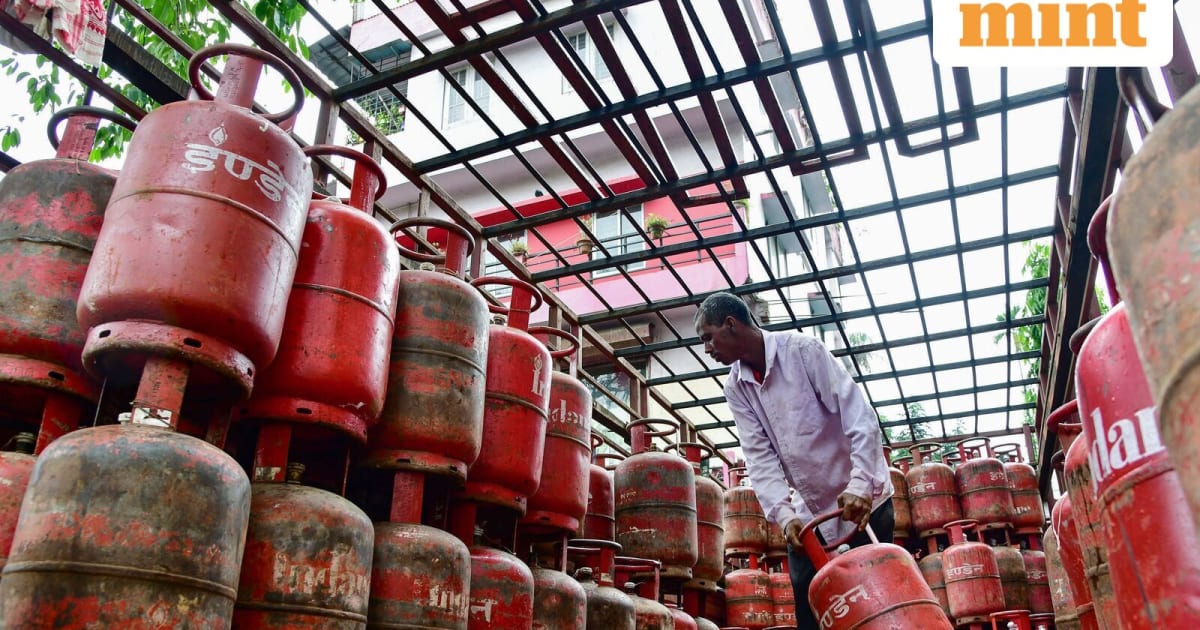
As West Asian tensions threaten the Strait of Hormuz, New Delhi has directed Oil Marketing Companies to hold a 30-day LPG buffer. This investigative report breaks down the cost implications for OMCs, the potential for sector-wide volatility, and the hidden opportunities in energy logistics.
The Strategic Pivot: India’s Energy Security in a Volatile Era
In a decisive move to insulate the domestic economy from West Asian supply chain volatility, the Indian government has issued a mandate requiring Oil Marketing Companies (OMCs) to maintain a 30-day strategic reserve of Liquefied Petroleum Gas (LPG). This directive marks a fundamental shift in India’s energy policy, moving away from lean inventory management toward a defensive posture necessitated by the fragility of the Strait of Hormuz—the world’s most critical maritime oil chokepoint.
For investors, this is more than a logistics update; it is a structural change in the cost of doing business for energy retailers. With India importing a significant portion of its LPG requirements, the mandate to hold higher inventory levels translates to increased working capital requirements and heightened exposure to price volatility at the point of procurement.
Why Is the Strait of Hormuz a Critical Variable for Indian Markets?
The Strait of Hormuz facilitates the passage of approximately 20-30% of the world’s total oil consumption. Any escalation in regional hostilities acts as a direct tax on India’s Current Account Deficit (CAD). Historically, when geopolitical friction spikes in this corridor, Brent crude and LPG contract prices often decouple from fundamentals, driven by a 'risk premium' that can inflate import bills by 10-15% in a single quarter.
How does this mandate impact the broader Nifty Energy index? The immediate effect is a compression of operating margins for OMCs. By forcing a 30-day inventory lock, the government is essentially requiring these firms to carry 'dead capital' that would otherwise be deployed in refining optimization or dividend distribution.
Stock-by-Stock Breakdown: Winners and Losers
The divergence in market performance will be dictated by balance sheet strength and infrastructure capacity.
- IOCL (Indian Oil Corporation): As the market leader, IOCL faces the largest absolute hit to working capital. With a market cap exceeding ₹2.4 trillion, the cost of financing an additional 30 days of inventory is significant. However, their massive storage footprint provides a moat that smaller players lack.
- BPCL (Bharat Petroleum) & HPCL (Hindustan Petroleum): These firms are more sensitive to margin compression. Given their reliance on retail fuel sales, the inability to pass through sudden inventory valuation losses could weigh heavily on their P/E ratios, which currently hover in the 6x-9x range.
- ONGC & OIL (Oil India): These upstream giants are the clear winners. As the government prioritizes domestic energy security, these companies are likely to see accelerated exploration and production (E&P) incentives. Any increase in global energy prices due to supply fears directly inflates their net realization per barrel.
- Energy Infrastructure Plays: Companies involved in midstream storage and pipeline management are poised to benefit. The mandate creates a structural demand for expanded storage facilities, favoring firms with robust terminal infrastructure.
Expert Perspective: The Contrarian View
The Bear Case: Analysts arguing for a bearish outlook point to the 'fiscal subsidy trap.' If global prices sustain high levels due to the reserve build-up, the government may be forced to intervene in retail pricing to prevent inflation, effectively turning OMCs into a social safety net, which historically destroys shareholder value.
The Bull Case: Bulls argue that this mandate is a long-term hedge. By ensuring supply continuity, the government prevents the kind of demand-side panic that causes retail shortages. A stable, albeit slightly more expensive, supply chain is preferable to the catastrophic economic impact of a fuel outage.
Actionable Investor Playbook
Navigating this environment requires a sector-specific tactical approach:
- Reduce Beta in OMCs: If you are overweight in OMCs, consider trimming positions to reflect the margin pressure expected in the next two quarters.
- Rotate to Upstream: Increase exposure to upstream players like ONGC. They offer a natural hedge against the exact same geopolitical risks that hurt the OMCs.
- Monitor Working Capital Ratios: Watch the quarterly filings of BPCL and HPCL closely. A sharp rise in short-term debt to fund these reserves will be a red flag for margin health.
Risk Matrix: Evaluating the Threats
| Risk Factor | Impact | Probability |
|---|---|---|
| Escalation in Strait of Hormuz | High | Moderate |
| Widening Current Account Deficit | Medium | High |
| Govt. Intervention in Retail Pricing | High | Moderate |
What to Watch Next
Keep a close watch on the Ministry of Petroleum’s monthly data releases regarding import volumes. The critical catalyst will be the Brent Crude price benchmark; if it breaches the $90/bbl threshold, the pressure on the government to subsidize the reserve build-up will reach a breaking point, potentially triggering a Nifty-wide correction in the energy sector.
See IOCL's AI Score
Our algorithmic screener scores IOCL on fundamentals, momentum, and risk — free to try, no card needed.
Try the AI Screener →Have questions about this story?
Ask Welth, our finance-focused AI research assistant, for a deeper breakdown — free trial included.
Chat with Welth AI →Disclaimer: This content is generated by WelthWest Research Desk based on publicly available reports and is for informational purposes only. It does not constitute financial advice, investment recommendations, or an offer to buy or sell securities. Always consult a qualified financial advisor before making investment decisions.