Key Takeaway
Mandatory local procurement would create an artificial 'walled garden' for Indian chip designers, effectively de-risking the DLI ecosystem. Investors should pivot toward domestic EMS players that stand to capture the downstream manufacturing surge.
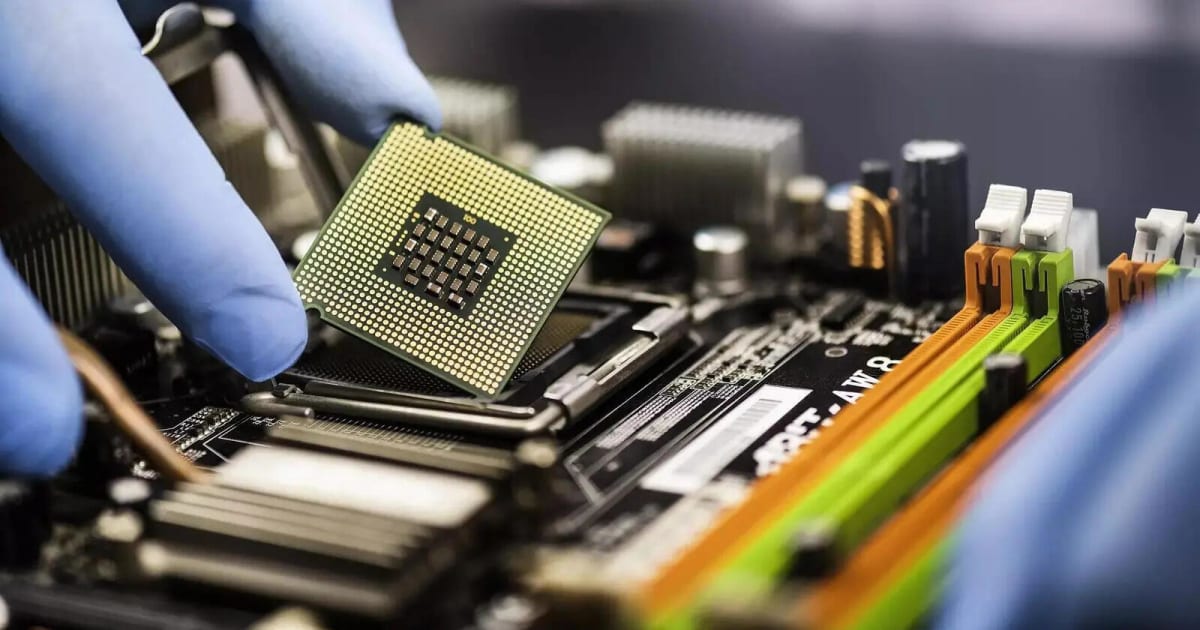
As India seeks to pivot from a design-hub to a chip-manufacturing powerhouse, the government is considering aggressive procurement mandates. This shift threatens to disrupt the dominance of global giants like Qualcomm while providing a massive tailwind for domestic semiconductor startups and EMS firms.
The Great Pivot: Why India is Moving from 'Design' to 'Adopt'
For the past three years, the Indian government’s Design-Linked Incentive (DLI) scheme has been the primary engine for the semiconductor sector. It has successfully birthed a generation of fabless chip design firms. However, a glaring structural gap remains: these startups are designing chips that the domestic market is hesitant to adopt. The transition from 'design-led' to 'market-led' is the final frontier in India’s semiconductor self-reliance journey.
The proposed government-mandated procurement policy is a strategic attempt to force-feed the supply chain. By requiring public sector units (PSUs) and government-linked projects to prioritize indigenous silicon, India is effectively creating a captive market. This is not merely an industrial policy; it is a fundamental shift in the risk-reward profile for domestic technology firms.
How will mandatory procurement reshape the Indian electronics sector?
Mandatory procurement acts as a force multiplier for domestic semiconductor design firms. Historically, the Indian market has been tethered to global incumbents—Qualcomm, MediaTek, and Intel—due to their proven track records and massive economies of scale. When India attempted a similar localization push in the defense sector via the 'Atmanirbhar' initiatives, we saw defense stocks like HAL and Bharat Electronics rally significantly over 18-24 months. We anticipate a similar, albeit more nuanced, sector-wide rerating in the electronics space.
Stock-by-Stock Breakdown: Who Wins the Silicon Bet?
1. Dixon Technologies (NSE: DIXON)
As the undisputed leader in Electronics Manufacturing Services (EMS), Dixon is the primary beneficiary of any local chip integration. If government mandates force local chip adoption, Dixon’s assembly lines will be the first to integrate these components into consumer electronics. With a P/E ratio hovering near 120x, the market is already pricing in massive growth; however, local chip integration provides a margin-expansion catalyst that analysts have yet to fully quantify.
2. Kaynes Technology (NSE: KAYNES)
Kaynes offers high-end printed circuit board (PCB) assembly and box-build services. Their strategic focus on industrial and automotive electronics makes them a prime candidate for utilizing domestically designed chips. Unlike commodity manufacturers, Kaynes’ ability to handle complex silicon integration positions them as a 'quality' play in this policy shift.
3. Cyient DLM (NSE: CYIENTDLM)
Cyient DLM’s strength lies in its exposure to the aerospace and defense sectors—areas where government procurement mandates are most easily enforced. By integrating local chips into defense-grade hardware, they insulate themselves from global price wars and benefit from the government's 'Buy Indian' policy.
4. Tata Elxsi (NSE: TATAELXSI)
As a powerhouse in embedded systems and product design, Tata Elxsi is the essential partner for startups trying to move their designs into production. They act as the bridge between the chip design and the final electronic product. A mandate will increase demand for their design-verification services, directly impacting their high-margin engineering revenue streams.
5. HCL Technologies (NSE: HCLTECH)
HCL serves as the mature, diversified play. With significant investments in semiconductor engineering services, they are uniquely positioned to assist global clients in navigating the new Indian regulatory landscape. They are the 'picks and shovels' provider in this gold rush.
The Contrarian View: Bulls vs. Bears
The bull case is simple: Sovereignty. By controlling the chip supply chain, India reduces its vulnerability to geopolitical shocks and currency volatility. The bear case, however, is grounded in economic reality: forced adoption risks 'technological atrophy.' If Indian-designed chips are significantly more expensive or less power-efficient than global alternatives, the downstream manufacturing sector—which relies on thin margins—could lose its global competitiveness.
Actionable Investor Playbook
- Short-to-Medium Term (6-18 months): Focus on EMS players like Dixon and Kaynes. The surge in domestic procurement will reflect in their order books long before the chip designers achieve profitability.
- Long-Term (3-5 years): Watch for the IPOs of the DLI-backed fabless startups. These firms will be the 'unicorns' of the next cycle, provided they clear the hurdle of commercial mass-production.
- Entry Strategy: Use broad market corrections to accumulate positions. The semiconductor sector is prone to high volatility; look for entry points during quarterly earnings dips when guidance on 'local content' integration is provided.
Risk Matrix
| Risk Factor | Probability | Impact |
|---|---|---|
| Policy Dilution | Medium | High |
| Quality/Cost Gap | High | Medium |
| Geopolitical Trade Retaliation | Low | Very High |
What to watch next: Catalysts for 2024-2025
Investors must monitor the upcoming Ministry of Electronics and Information Technology (MeitY) procurement guidelines, expected in Q3 2024. Furthermore, watch for the pilot project results involving the India Semiconductor Mission (ISM) and its collaboration with domestic PSUs. Any announcement regarding 'minimum local content' thresholds for government tenders will be the single largest signal for a sector-wide breakout.
See Dixon Technologies's AI Score
Our algorithmic screener scores Dixon Technologies on fundamentals, momentum, and risk — free to try, no card needed.
Try the AI Screener →Have questions about this story?
Ask Welth, our finance-focused AI research assistant, for a deeper breakdown — free trial included.
Chat with Welth AI →Disclaimer: This content is generated by WelthWest Research Desk based on publicly available reports and is for informational purposes only. It does not constitute financial advice, investment recommendations, or an offer to buy or sell securities. Always consult a qualified financial advisor before making investment decisions.