Key Takeaway
India's strategic move to exempt high-tech chip and AI firms from BIS certification is a seismic shift, poised to unlock billions in foreign direct investment. This regulatory pivot accelerates 'Make in India' in critical tech, promising significant upside for domestic electronics manufacturers and IT service providers, while fundamentally reshaping India's global tech supply chain position.
India is making an aggressive play for global tech dominance, easing regulatory burdens for semiconductor and AI giants. This unprecedented move aims to attract massive foreign investment, bolstering domestic manufacturing and creating high-value jobs. Our deep dive reveals which Indian stocks stand to gain most, the market's bullish sentiment, and the critical risks investors must navigate in this evolving landscape.
India's High-Tech Gambit: BIS Exemptions Spark a New Era for Chip & AI Investment
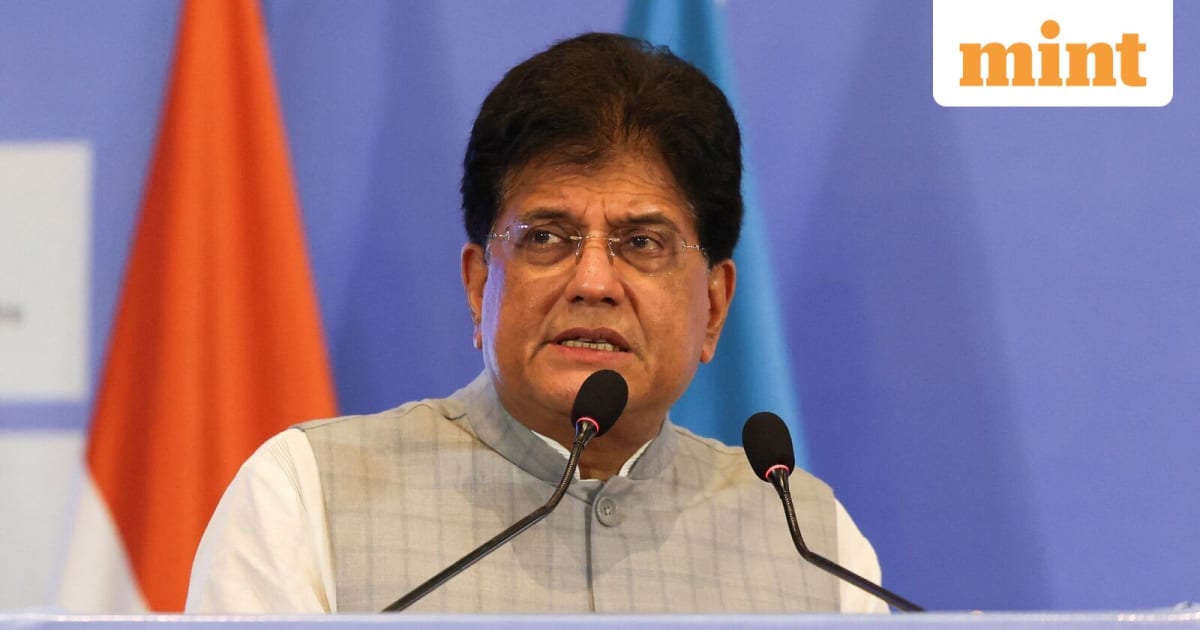
The Indian government, through a decisive pronouncement by Commerce and Industry Minister Piyush Goyal, has signaled a profound shift in its approach to attracting advanced technology investment. By offering blanket exemptions from mandatory Bureau of Indian Standards (BIS) certification for high-tech chipmakers and artificial intelligence (AI) firms, New Delhi is not merely easing a bureaucratic hurdle; it is rolling out an unprecedented red carpet for global tech titans. This strategic maneuver, deeply embedded within the 'Make in India' initiative, aims to fundamentally reposition India in the global semiconductor and AI supply chains, sectors deemed critical for national security and economic prosperity. The implications for the Indian stock market, particularly for domestic electronics manufacturing services (EMS) providers and specialized IT companies, are nothing short of transformative.
Historically, regulatory compliance, including the often-onerous BIS certification process, has been cited as a significant impediment by foreign companies considering establishing manufacturing bases in India. The complexity, time, and cost associated with obtaining these certifications for highly specialized, rapidly evolving products like advanced semiconductors and AI-integrated components created a barrier to entry. By removing this friction, India is directly addressing a core pain point, making itself a dramatically more attractive destination for capital-intensive, cutting-edge technology investments. This policy isn't just about attracting assembly; it's about fostering an ecosystem for design, fabrication, and sophisticated AI development within Indian borders, promising a ripple effect across the nation's industrial and technological landscape.
How Will BIS Exemptions Reshape India's Semiconductor & AI Landscape?
The immediate impact of this policy pivot is a significant de-risking for foreign direct investment (FDI) in India's high-tech manufacturing sector. Global semiconductor giants, currently evaluating multi-billion dollar fabrication (fab) and assembly, testing, marking, and packaging (ATMP) facilities, will find India's regulatory environment suddenly far more competitive against established hubs like Taiwan, South Korea, and even emerging ones like Vietnam. The 'Make in India' vision, often perceived as a challenge in high-tech due to infrastructure and regulatory hurdles, gains substantial credibility and momentum with this move. For instance, a typical BIS certification process can take months, delaying product launches and increasing operational costs. Eliminating this for highly specialized components means faster time-to-market and reduced initial investment burdens, crucial factors for companies operating on razor-thin margins and rapid innovation cycles.
The sector-level breakdown reveals a bullish sentiment, particularly for companies poised to benefit from increased domestic demand and partnerships. The electronics manufacturing services (EMS) sector stands at the forefront, as foreign chip and AI firms will inevitably seek local partners for assembly, integration, and even co-development. This surge in demand for sophisticated manufacturing capabilities will drive revenue growth and capacity expansion for well-positioned Indian firms. Furthermore, ancillary industries supplying specialized chemicals, industrial gases, precision machinery, and testing equipment will experience a secondary boom. Even Indian IT services companies, often focused on software exports, could see increased domestic demand for AI integration services, data analytics, and specialized engineering support as a local high-tech ecosystem flourishes.
To contextualize the potential market reaction, consider historical parallels. When the Production Linked Incentive (PLI) scheme for electronics manufacturing was introduced in 2020, it catalyzed significant investment and boosted the market capitalization of key EMS players. For example, Dixon Technologies saw its stock price surge over 300% in the subsequent two years, driven by optimism around increased localization. While the BIS exemption is a regulatory rather than a direct financial incentive, its impact on reducing operational friction for high-value manufacturing could be equally, if not more, profound, potentially attracting a new tier of technology not previously targeted by PLI alone.
Which Indian Stocks Are Poised to Benefit from India's Tech Policy Shift?
The strategic exemption from BIS certification is a clear catalyst for several Indian listed companies, particularly those deeply embedded in the electronics manufacturing and technology services value chain. Investors should pay close attention to the following NSE/BSE tickers:
- Dixon Technologies (India) Ltd. (NSE: DIXON): As India's largest electronics manufacturing services (EMS) provider, Dixon is a direct beneficiary. With a market capitalization exceeding INR 50,000 crores and a TTM P/E ratio around 120x (reflecting high growth expectations), Dixon is already a bellwether for 'Make in India' in electronics. Increased foreign investment in chip and AI manufacturing will translate into higher demand for Dixon's assembly, integration, and testing services. They are well-positioned to secure contracts from new entrants looking to localize production, leveraging their established infrastructure and client base.
- Amber Enterprises India Ltd. (NSE: AMBER): While primarily focused on HVAC and consumer durables, Amber has diversified into electronics manufacturing components and has a strong R&D focus. With a market cap of approximately INR 13,000 crores and a P/E around 80x, Amber's capabilities in precision manufacturing and component sourcing could see an uptick. As global chip and AI firms seek local partners for various parts of their supply chain, Amber's expertise in sheet metal fabrication, plastic molding, and motor manufacturing for electronics could find new avenues.
- Kaynes Technology India Ltd. (NSE: KAYNES): A prominent player in electronics system design and manufacturing (ESDM), Kaynes is a high-growth company with a market cap around INR 18,000 crores and a P/E over 150x. Their specialized capabilities in printed circuit board assembly (PCBA), box build, and testing for various sectors, including industrial and automotive, make them an ideal partner for sophisticated chip and AI component integration. A surge in domestic high-tech manufacturing will directly boost their order book and capacity utilization.
- Syrma SGS Technology Ltd. (NSE: SYRMA): Syrma SGS, with a market cap of approximately INR 10,000 crores and a P/E of about 70x, offers a wide range of ESDM services, from design to prototyping and high-volume manufacturing. Their focus on precision manufacturing and diverse product portfolio positions them well to capitalize on the incoming wave of high-tech investment. They are likely to see increased demand for their specialized manufacturing services as foreign firms seek to establish a local presence for advanced components.
- Tata Elxsi Ltd. (NSE: TATAELXSI): While not an EMS provider, Tata Elxsi, a design and technology services company with a market cap of around INR 45,000 crores and a P/E of 60x, is a critical enabler for AI innovation. As more AI firms set up shop in India, the demand for embedded software development, AI engineering, and product design services will surge. Tata Elxsi's deep expertise in automotive, broadcast, and medical device AI solutions positions it uniquely to support these new entrants, driving demand for high-value R&D and engineering services.
- L&T Technology Services Ltd. (NSE: LTTS): Similarly, LTTS, with a market cap of INR 50,000 crores and a P/E of roughly 40x, offers a broad spectrum of engineering R&D (ER&D) services. The influx of chip and AI firms will create a significant demand for product development, hardware engineering, embedded systems, and digital twin solutions. LTTS's strong presence in industrial, telecom, and medical sectors, where AI integration is rapidly expanding, makes it a prime candidate for partnerships and service contracts from new foreign entities.
These companies represent a cross-section of the Indian tech ecosystem, from pure-play manufacturing to high-end design and engineering services, all poised to benefit from the policy's ripple effects.
Expert Perspectives: Bulls vs. Bears on India's High-Tech Future
The consensus among market participants leans bullish, but a nuanced understanding requires considering both optimistic and cautious viewpoints.
The Bulls argue: This policy is a game-changer, removing a critical non-tariff barrier that historically deterred high-value manufacturing. They point to India's vast domestic market, skilled engineering talent pool, and supportive government policies (like PLI) as irresistible magnets for global capital. The sheer scale of potential investment in semiconductor fabs, each costing billions of dollars, could fundamentally alter India's GDP growth trajectory and create hundreds of thousands of high-skill jobs. They believe the policy will accelerate India's journey from a service-centric economy to a manufacturing powerhouse, particularly in strategic technologies. The long-term vision of India as a global tech hub, not just a back office, becomes more tangible with such bold regulatory reforms.
The Bears, however, offer a dose of caution: While acknowledging the positive intent, they emphasize the significant implementation challenges. Attracting chip fabs requires more than just regulatory ease; it demands uninterrupted power supply, vast quantities of ultra-pure water, robust logistics infrastructure, and a deep ecosystem of suppliers. They argue that while the BIS exemption is a necessary step, it's not sufficient. Geopolitical shifts, global trade wars, and the cyclical nature of the semiconductor industry could still divert investments. Moreover, the actual speed of foreign investment inflow remains a key risk. Some bears also suggest that the benefits might disproportionately accrue to a few large players, leaving smaller Indian firms struggling with increased competition or inability to scale up to global standards quickly enough. The 'protectionist regime' argument is largely muted here, as India has historically lacked a significant domestic high-tech manufacturing base to protect in these specific sectors.
Actionable Investor Playbook: Navigating the High-Tech Wave
For investors looking to capitalize on this significant policy shift, a multi-pronged strategy is advisable:
- Long-Term Accumulation in EMS Leaders: Companies like Dixon Technologies, Kaynes Technology, and Syrma SGS are prime candidates for long-term accumulation. Entry points could be opportunistic dips, but given the structural tailwinds, a staggered investment approach over 12-24 months is prudent. These companies are likely to benefit from multi-year order book growth.
- Strategic Bet on AI Enablers: Tata Elxsi and L&T Technology Services offer exposure to the high-value AI design and engineering segment. These firms stand to gain from increased R&D spending by new entrants. Consider these for a slightly longer time horizon (3-5 years) as the AI ecosystem matures in India.
- Watchlist for Ancillary Industries: Keep a close watch on companies involved in industrial gases, specialized chemicals, and precision tooling. While direct listed plays might be fewer, their growth will signal the deepening of the high-tech manufacturing base.
- Monitor FDI Announcements: The real catalyst will be concrete announcements of major chip and AI firms setting up facilities. These will likely trigger sharp upward movements in related Indian stocks.
- Diversify Within the Theme: Avoid over-concentration in a single stock. A basket approach across 3-4 key beneficiaries will mitigate company-specific risks.
The time horizon for significant returns on these investments is likely medium to long-term (2-5 years), as large-scale manufacturing projects take time to conceptualize, build, and ramp up production. However, initial positive market reactions could be seen within 6-12 months as investment intentions solidify.
Risk Matrix: Potential Headwinds for India's Tech Ambitions
While the outlook is largely positive, investors must be cognizant of the following risks:
- Implementation Challenges (Medium Probability): While the policy is clear, the actual speed of bureaucratic approvals beyond BIS, land acquisition, environmental clearances, and infrastructure development can still pose hurdles. Delays in setting up mega-projects could dampen investor enthusiasm.
- Global Supply Chain Dynamics & Geopolitical Shifts (Medium Probability): The semiconductor industry is highly globalized and susceptible to geopolitical tensions, trade wars, and global demand fluctuations. A downturn in global tech demand or significant shifts in US-China tech policy could impact investment flows into India.
- Talent Gap (Low to Medium Probability): While India has a large engineering talent pool, specialized skills required for advanced chip manufacturing (e.g., lithography, cleanroom operations) and cutting-edge AI research are scarce. A significant skills gap could slow down the ramp-up of new facilities.
- Competition from Other Nations (Medium Probability): Other nations are also aggressively vying for chip and AI investments through their own incentive packages and regulatory reforms. India needs to maintain its competitive edge beyond this initial policy reform.
What to Watch Next: Catalysts for Continued Momentum
The narrative around India's high-tech manufacturing ambition will continue to evolve. Investors should closely monitor several key indicators:
- Major FDI Announcements: The most significant catalyst will be formal announcements from global semiconductor or AI giants detailing their investment plans, facility locations, and timelines in India. Keep an eye on news from companies like Micron, Intel, TSMC, and NVIDIA regarding their India strategies.
- Government Policy Follow-ups: Watch for further government initiatives to support the high-tech sector, such as additional PLI schemes, infrastructure development packages specifically for chip/AI parks, or reforms in labor laws.
- Quarterly Earnings of Beneficiary Stocks: Scrutinize the order books, revenue guidance, and capital expenditure plans of companies like Dixon, Kaynes, and Syrma in their upcoming quarterly earnings calls. Look for any specific mentions of new high-tech contracts or partnerships.
- India Semiconductor Mission Updates: The India Semiconductor Mission (ISM) is the nodal agency for driving this agenda. Regular updates from the ISM regarding progress on fab proposals and ecosystem development will be crucial.
- Global Semiconductor Industry Reports: Keep an eye on reports from industry bodies like the Semiconductor Industry Association (SIA) or Gartner for global demand and supply trends, which will influence investment decisions.
This BIS exemption marks a pivotal moment for India's ambition to become a global high-tech manufacturing hub. For astute investors, it presents a compelling opportunity to participate in a structural transformation that could redefine India's economic future.
See Dixon Technologies (India) Ltd.'s AI Score
Our algorithmic screener scores Dixon Technologies (India) Ltd. on fundamentals, momentum, and risk — free to try, no card needed.
Try the AI Screener →Have questions about this story?
Ask Welth, our finance-focused AI research assistant, for a deeper breakdown — free trial included.
Chat with Welth AI →Disclaimer: This content is generated by WelthWest Research Desk based on publicly available reports and is for informational purposes only. It does not constitute financial advice, investment recommendations, or an offer to buy or sell securities. Always consult a qualified financial advisor before making investment decisions.