Key Takeaway
As India’s trade balance pivots on moderating energy costs and a manufacturing boom, investors should pivot toward downstream OMCs and high-growth EMS firms while hedging against geopolitical supply-chain volatility.
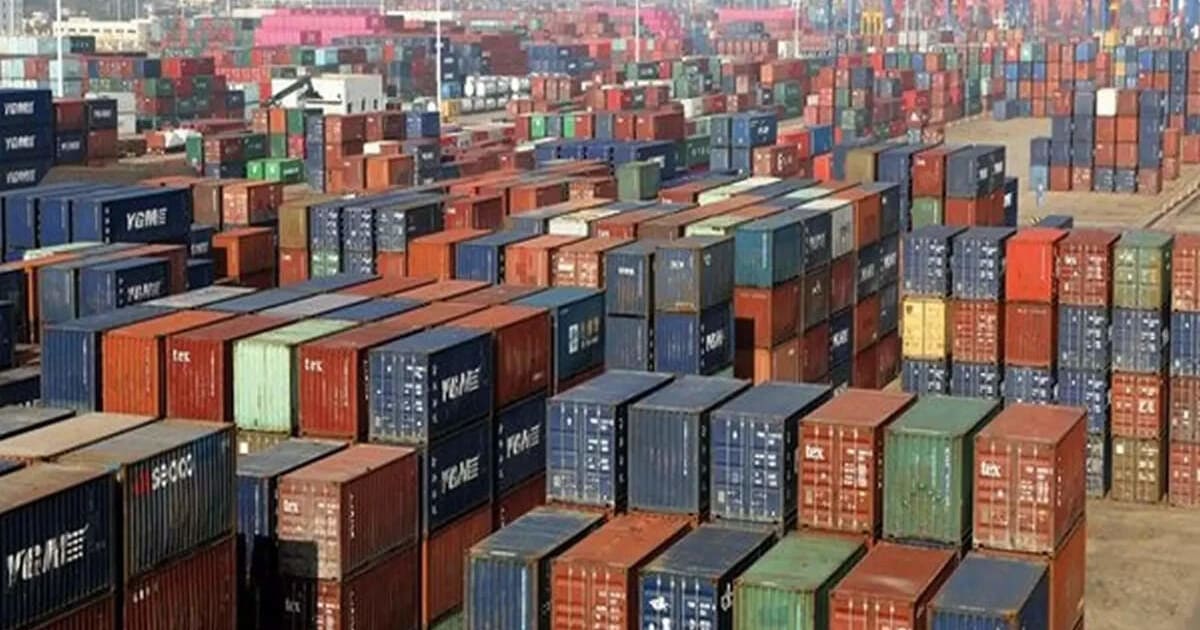
India's trade deficit is undergoing a structural transformation driven by a surge in high-value engineering exports and a cooling energy import bill. This research note breaks down the winners and losers in the NSE/BSE landscape, offering a tactical roadmap for navigating the current macroeconomic transition.
The Macro Pivot: Decoding India’s Trade Deficit Dynamics
For the Indian economy, the trade deficit has long been the 'Achilles' heel'—a persistent structural drag that dictates the volatility of the Rupee (INR) and, by extension, the RBI’s interest rate trajectory. Recent data indicating a narrowing trade deficit, despite a headline figure of $28.21 billion, signals a sophisticated shift in India’s trade composition. We are no longer merely an agrarian or services-led exporter; the structural integration of India into the global value chain through electronics and engineering goods is finally offsetting the perennial burden of energy imports.
How Do Changing Oil Prices Impact the Indian Stock Market?
Energy remains the single largest variable in India’s import bill. Historically, when crude oil prices cross the $85/bbl threshold, the INR faces significant depreciation pressure, leading to imported inflation. However, the current stabilization of crude prices provides a dual benefit: it improves the fiscal health of Oil Marketing Companies (OMCs) and lowers the input costs for the broader manufacturing sector.
Last time we observed a similar convergence of stabilizing energy prices and manufacturing momentum—specifically in late 2022—the Nifty 50 demonstrated a 12% upside over the subsequent two quarters as investor confidence returned to domestic cyclicals. We are currently seeing echoes of this trend, with the 'China Plus One' strategy acting as a structural tailwind for Indian manufacturing.
Sectoral Winners and Losers: A Deep Dive
The market is currently bifurcating based on exposure to import-heavy manufacturing versus export-led value addition. Electronics Manufacturing Services (EMS) and Engineering Goods are the clear winners, benefiting from government-backed PLI (Production Linked Incentive) schemes and global supply chain diversification.
The OMC Advantage
Oil Marketing Companies are the primary beneficiaries of the current pricing environment. By managing their marketing margins better when crude prices are stable, companies like IOCL and BPCL can expand their EBITDA margins significantly. For instance, BPCL’s recent quarterly performance showed the resilience of its gross refining margins (GRMs) even during periods of moderate volatility.
The EMS Boom
Companies like Dixon Technologies are capitalizing on the shift toward domestic assembly. With the Indian government’s focus on import substitution, firms with high local value-addition are seeing their P/E ratios expand, reflecting long-term earnings visibility despite current market valuations.
Stock-by-Stock Breakdown
- IOCL (Indian Oil Corporation): Trading at a P/E of ~7x, IOCL offers a compelling value proposition. As energy costs stabilize, the marketing margin expansion directly impacts its bottom line, making it a defensive play in a volatile market.
- BPCL (Bharat Petroleum): With a strong emphasis on refining efficiency, BPCL stands to gain as the trade deficit narrows, easing the pressure on the Rupee and reducing forex losses.
- Dixon Technologies: A leader in the EMS space. With a high revenue growth trajectory (CAGR > 25%), Dixon is the primary proxy for India’s electronics manufacturing growth.
- L&T (Larsen & Toubro): As the bellwether for engineering and infrastructure, L&T benefits from the surge in industrial capex. Its order book provides a hedge against short-term trade fluctuations.
- ONGC (Oil and Natural Gas Corporation): The primary loser in a low-price environment. As an upstream player, ONGC’s net realizations are capped when global oil prices moderate, making it a 'sell' or 'avoid' for investors seeking growth in this cycle.
Expert Perspective: The Bull vs. Bear Debate
The Bull Case: Proponents argue that India is in the early innings of a manufacturing super-cycle. As engineering exports reach record highs, the structural trade deficit will shrink, leading to a stronger Rupee and lower cost of capital, which will trigger a massive re-rating of domestic manufacturing stocks.
The Bear Case: Skeptics point to the 'import dependency' trap. They argue that as we manufacture more electronics, we are simply importing more high-value components, meaning the trade deficit may prove stickier than anticipated. Furthermore, any flare-up in Middle Eastern geopolitical tensions could send Brent crude back above $95, instantly reversing the current tailwinds.
Actionable Investor Playbook
Investors should adopt a barbell strategy:
- Buy: High-growth EMS players (Dixon, Amber) on any 5-7% dips. These are long-term structural stories.
- Hold: OMCs (IOCL, BPCL) for dividend yields and defensive stability.
- Watch: Import-heavy manufacturing sectors that lack pricing power. If the INR dips sharply, these companies will see margin compression.
Time Horizon: 18-24 months. This is not a short-term trade; it is a structural play on India’s manufacturing maturity.
Risk Matrix
| Risk Factor | Probability | Impact |
|---|---|---|
| Geopolitical Oil Spike | Medium | High |
| Global Demand Slowdown | Medium | Medium |
| INR Depreciation | Low-Medium | High |
What to Watch Next
Investors must monitor the upcoming RBI Monetary Policy Committee (MPC) meeting and the monthly merchandise trade data release. Specifically, watch the 'non-oil, non-gold' import data; if this figure continues to rise, it confirms that domestic industrial demand remains robust despite export headwinds.
See IOCL's AI Score
Our algorithmic screener scores IOCL on fundamentals, momentum, and risk — free to try, no card needed.
Try the AI Screener →Have questions about this story?
Ask Welth, our finance-focused AI research assistant, for a deeper breakdown — free trial included.
Chat with Welth AI →Disclaimer: This content is generated by WelthWest Research Desk based on publicly available reports and is for informational purposes only. It does not constitute financial advice, investment recommendations, or an offer to buy or sell securities. Always consult a qualified financial advisor before making investment decisions.