Key Takeaway
Persistent weakness in India's services sector signals underlying demand fragility, potentially dampening corporate earnings and investor sentiment towards domestic cyclicals. Investors should strategically re-evaluate exposure to consumer discretionary and hospitality stocks.
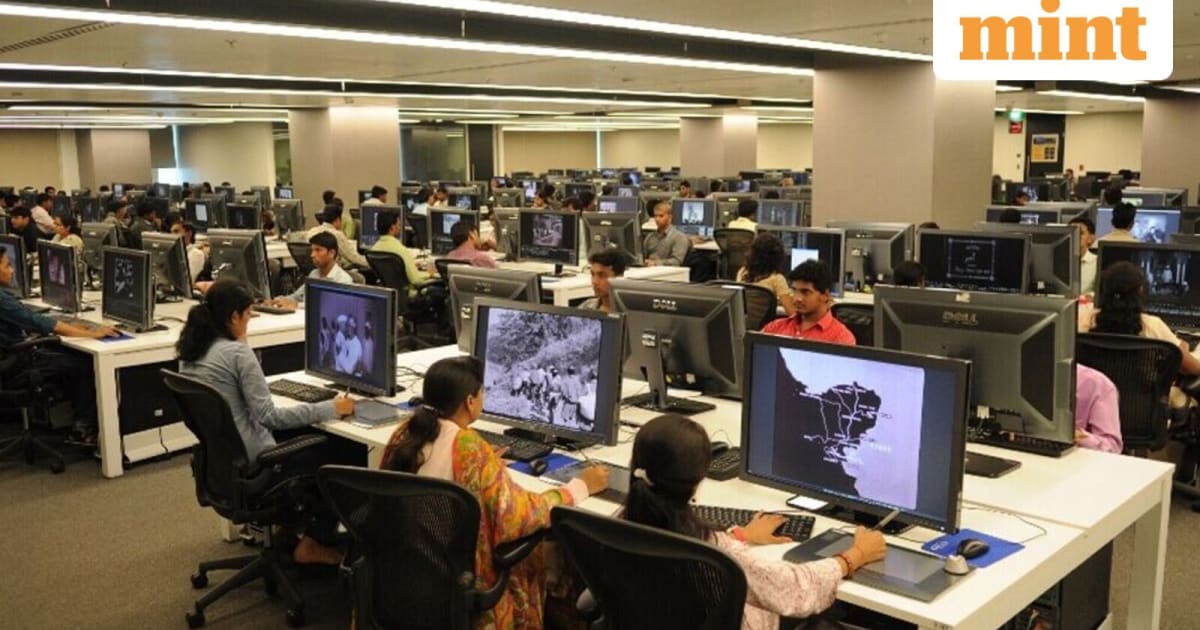
India's crucial services sector shows muted growth, nearing a four-year low, raising red flags about underlying demand. Despite increased hiring, this subdued expansion could signal headwinds for corporate profitability. WelthWest Research Desk dives deep into the implications for the Indian stock market, pinpointing specific sectors and stocks at risk.
India's Services Sector Growth Stalls: A Canary in the Coal Mine for Demand?
India's services sector, a cornerstone of its economic narrative, registered a marginal acceleration in August, yet its underlying growth trajectory remains disconcertingly close to a four-year low. This subdued expansion, despite a simultaneous uptick in hiring activity, is not merely a statistical blip; it represents a critical indicator of nascent demand concerns that could ripple across corporate earnings and investor sentiment. At WelthWest Research Desk, our deep dive reveals that while headline figures might suggest stability, a closer inspection uncovers a nuanced picture with significant implications for the Indian equity market, particularly for sectors reliant on robust domestic consumption.
The latest Purchasing Managers' Index (PMI) data, while showing a slight tick-up, masks a persistent weakness in new business inflows. This divergence – firms hiring more while new orders remain sluggish – suggests a potential mismatch between capacity expansion and actual demand. This scenario, if prolonged, could lead to overcapacity, pricing pressures, and ultimately, a squeeze on profit margins. The broader economic context sees a composite PMI that, while stable, conceals a notable deceleration in manufacturing activity, painting a mixed economic landscape that demands a granular, data-driven assessment from investors.
Why Does Subdued Services Growth Matter for Indian Equities Now?
The services sector contributes over 50% to India's Gross Value Added (GVA), making its health paramount to overall economic vitality. A sustained period of weak expansion here directly translates into slower revenue growth for a vast swathe of companies, from consumer-facing businesses to logistics providers. What makes this particularly pertinent now is the backdrop of moderating inflation and the Reserve Bank of India's (RBI) cautious stance on interest rates. While easing cost pressures might offer some respite, the ability of firms to pass on these costs to consumers without impacting demand becomes a critical factor. If demand remains soft, firms will struggle to maintain pricing power, directly hitting profitability.
Historically, periods of decelerating services growth have often preceded a cooling off in consumer discretionary spending. For instance, a similar trend observed in late 2019 and early 2020, pre-pandemic, saw a noticeable slowdown in earnings growth for companies in the retail and hospitality space. While the current environment differs, the underlying demand dynamics bear watching. The market, currently priced for robust domestic growth, may be underestimating the impact of this services sector sluggishness, potentially leading to a re-rating of certain segments.
Deep Market Impact Analysis: Unpacking the Ripple Effect on NSE/BSE
The ramifications of a muted services sector are far-reaching across the Indian stock market. Our analysis indicates a disproportionate impact on sectors highly sensitive to domestic consumption and discretionary spending. Unlike manufacturing, which can often cushion domestic demand shocks with export orders, many services firms are almost entirely reliant on the Indian consumer and business environment.
Consider the Nifty 50's performance. While the broader index might remain resilient due to heavyweights in financial services and IT, the underlying sector rotation could be significant. The Nifty Consumer Discretionary index, for example, could face headwinds. A sustained slowdown in services growth, particularly in areas like travel, leisure, and personal services, directly translates to lower foot traffic and reduced spending. This can trigger a downward revision in earnings estimates for companies operating in these domains.
Historically, during periods where the services PMI dipped below its long-term average (which it is currently approaching), the Nifty Midcap 100 and Smallcap 100 indices, often more sensitive to domestic cyclical trends, have experienced sharper corrections or underperformance compared to the Nifty 50. The last time services growth showed such sustained weakness (excluding pandemic shocks) was in Q4 2018 to Q1 2019, where the Nifty Consumer Durables index saw a ~15% correction, and the Nifty Realty index experienced a ~10% decline over six months, primarily due to demand concerns and liquidity tightening.
The current scenario, with modest cost pressures but potential demand fragility, creates a challenging environment. Companies that have high operating leverage and depend on volume growth will be particularly vulnerable. This includes sectors like retail, hospitality, quick-service restaurants (QSRs), and certain logistics players whose fortunes are tied to the movement of consumer goods.
Which Indian Stocks Will Be Most Affected by Services Sector Weakness?
The subdued services growth is likely to create distinct winners and losers on the NSE/BSE. Our analysis identifies several key stocks and their sector peers that warrant close attention:
- Trent Ltd. (NSE: TRENT): As a prominent player in the retail segment with brands like Westside and Zudio, Trent's performance is highly sensitive to discretionary consumer spending. A slowdown in services-driven income growth directly impacts consumer wallets, potentially leading to reduced footfall and lower average transaction values. Trent's current market cap stands at approximately ₹1.2 trillion, with a P/E ratio often commanding a premium due to its growth trajectory. Persistent demand weakness could put pressure on its valuation. Sector peers like Avenue Supermarts (NSE: DMART) and Future Retail (NSE: FRETAIL), though operating on different models, also face similar systemic risks from a cautious consumer.
- Indian Hotels Company Ltd. (NSE: INDHOTEL): A bellwether for the hospitality sector, INDHOTEL's revenue streams from room nights, F&B, and MICE (Meetings, Incentives, Conferences, and Exhibitions) are directly correlated with travel, tourism, and business activity. Subdued services growth, especially in business services, can impact corporate travel, while general economic uncertainty might temper leisure travel. With a market cap of around ₹600 billion, INDHOTEL's forward bookings and average room rates (ARRs) will be crucial indicators. Other hospitality players like Lemon Tree Hotels (NSE: LEMONTREE) and EIH Ltd. (NSE: EIH) face identical demand-side challenges.
- Blue Dart Express Ltd. (NSE: BLUEDART): As a leading logistics and express delivery service provider, Blue Dart's volumes are a proxy for e-commerce activity and business-to-business (B2B) services. A slowdown in the broader services sector implies reduced movement of goods, impacting parcel volumes and freight revenues. While e-commerce remains a growth driver, overall economic sluggishness can temper its expansion. Blue Dart's market cap is approximately ₹150 billion. Logistics peers such as Mahindra Logistics (NSE: MAHINDRALOG) and Allcargo Logistics (NSE: ALLCARGO) are similarly exposed to the overall health of goods and services movement.
- Jubilant FoodWorks Ltd. (NSE: JUBLFOOD): Operating the Domino's Pizza franchise in India, Jubilant FoodWorks is a classic consumer discretionary play. Its sales are highly sensitive to disposable incomes and consumer sentiment towards out-of-home dining. A services sector slowdown, particularly if it impacts urban employment and income growth, could lead to consumers cutting back on non-essential spending like ordering pizzas. JUBLFOOD, with a market cap of about ₹350 billion, has seen its P/E multiple fluctuate based on same-store sales growth (SSSG). A sustained dip in SSSG would be a major concern. Other QSR chains like Devyani International (NSE: DEVYANI) and Restaurant Brands Asia (NSE: RBA) face similar demand headwinds.
Expert Perspective: Bulls vs. Bears on India's Services Outlook
The current services sector data presents a fertile ground for divergent expert opinions:
The Bears' Argument: Pessimists will highlight the persistent weakness in new order inflows as a leading indicator of broader economic deceleration. They might argue that the slight acceleration in August is a 'dead cat bounce' rather than a fundamental turnaround. The increased hiring, in their view, could signal over-optimism by firms, leading to future cost rationalization if demand doesn't materialize. They would point to the global economic slowdown and tightening financial conditions as external headwinds exacerbating domestic demand issues. For the stock market, bears foresee a period of earnings downgrades for consumer cyclicals, leading to a de-rating of their currently elevated valuations. They would advocate for a defensive posture, favoring sectors with stable earnings like pharmaceuticals or utilities.
The Bulls' Argument: Optimists, conversely, would emphasize the resilience demonstrated by the Indian economy, noting that even subdued growth is still positive expansion. They might argue that the modest cost pressures reported by firms offer a buffer for profitability, and that any demand weakness is cyclical and temporary, not structural. The hiring uptick, for bulls, signifies confidence in future demand, even if current orders are slightly soft. They would also highlight the government's capex push and rural demand recovery as potential offsets. For the stock market, bulls would suggest that any dips in consumer discretionary stocks due to this data represent buying opportunities, betting on India's long-term consumption story and demographic tailwinds. They might point to the strength of digital adoption and formalization as structural drivers that will eventually overcome temporary slowdowns.
Actionable Investor Playbook: Navigating the Services Sector Headwinds
Given the nuanced outlook, a strategic and agile investor playbook is essential for navigating the current market environment. Our recommendations are designed to help investors position their portfolios for potential volatility while capturing long-term growth opportunities.
- SELL/REDUCE Exposure: Consider reducing exposure to high-beta consumer discretionary stocks, particularly those with high valuations and direct exposure to discretionary spending. This includes segments like premium retail, multiplexes, and fine dining. Companies with significant operating leverage and sensitivity to volume growth will be most impacted by demand softness.
- WATCH/HOLD: Maintain a watchful stance on mid-tier hospitality and logistics companies. While impacted, their long-term growth story remains intact. Use any significant corrections as potential entry points, but await clearer signs of demand recovery before committing substantial capital. Monitor key metrics like average room rates (ARRs) for hotels and freight volumes for logistics.
- BUY/ACCUMULATE: Focus on defensive sectors and companies with stable cash flows, strong balance sheets, and less direct reliance on discretionary consumer spending. This includes certain pharmaceutical companies, IT services (benefiting from global rather than purely domestic demand), and high-quality financial institutions with diversified revenue streams. Consider large-cap companies that can weather economic cycles better. Look for companies in the consumer staples sector with strong brands and pricing power, as these are more resilient during demand slowdowns.
Entry Points: For 'Watch/Hold' stocks, consider accumulating on dips of 10-15% from current levels, especially if accompanied by positive news flow regarding broader economic recovery or specific company-level initiatives. For 'Buy/Accumulate' stocks, systematic investment plans (SIPs) can be effective to average out costs over time.
Time Horizons: This strategy is geared towards a medium-term horizon (6-18 months), anticipating that any demand weakness will be cyclical rather than structural. Long-term investors (3-5+ years) might consider using current weakness as an opportunity to build positions in high-quality growth companies at more attractive valuations, provided their fundamental thesis remains intact.
Risk Matrix: Assessing Potential Headwinds
The path forward is fraught with several identifiable risks that investors must monitor closely:
- Continued Demand Weakness (Probability: Medium-High): If the services sector's subdued growth persists or deteriorates further, it could signal a more entrenched demand problem. This would lead to sustained pressure on corporate profitability, potentially triggering broader market corrections, especially in domestically oriented sectors. This risk is exacerbated if global growth falters, impacting export-oriented services.
- Inflationary Resurgence & RBI Tightening (Probability: Medium): While cost pressures are currently modest, any unforeseen surge in commodity prices or supply chain disruptions could reignite inflation. This might force the RBI to adopt a more hawkish stance, potentially dampening consumer and business sentiment further through higher borrowing costs, negatively impacting all cyclical stocks.
- Global Economic Slowdown (Probability: Medium): A significant slowdown or recession in major global economies could impact India indirectly through reduced trade, lower capital inflows, and diminished confidence. While India's domestic consumption story offers some insulation, it is not immune to global shocks, particularly in the IT and manufacturing export sectors.
- Earnings Downgrades & Valuation Compression (Probability: High): The most immediate risk is that analysts begin to downgrade earnings estimates for companies heavily reliant on domestic consumption, particularly consumer discretionary, retail, and hospitality. This could lead to a compression of P/E multiples, especially for stocks that have traded at a premium, resulting in sharper price corrections.
What to Watch Next: Catalysts and Data Releases
Investors should closely monitor the following upcoming catalysts and data releases to gauge the evolving situation:
- September Services PMI (Early October): The next services PMI release will be critical. A sustained rebound would alleviate some concerns, while further weakness would confirm the demand fragility. Pay close attention to the 'New Business' sub-component.
- RBI Monetary Policy Committee (MPC) Meeting (Upcoming Dates): The RBI's commentary on inflation, growth, and liquidity will provide crucial insights into the monetary policy trajectory. Any unexpected hawkishness or dovishness will significantly impact market sentiment and specific sectors.
- Quarterly Earnings Season (Mid-October Onwards): The Q2 FY24 earnings announcements will offer concrete data on corporate performance. Pay particular attention to revenue growth, profit margins, and management commentary from consumer discretionary, retail, and hospitality companies. Key metrics include same-store sales growth (SSSG) for retailers and QSRs, and average room rates (ARRs) and occupancy for hotels.
- Festival Season Sales Data (October-November): The upcoming festive season (Diwali, etc.) is a critical period for consumer spending. Early indicators and post-festival sales reports will be a strong gauge of consumer sentiment and demand strength. Strong sales could signal a demand revival, while muted numbers would confirm underlying weakness.
- Government Spending & Policy Announcements: Any new government initiatives aimed at boosting consumption or infrastructure spending could act as a catalyst for economic activity.
By meticulously tracking these indicators, investors can refine their strategies and adapt their portfolios to the evolving dynamics of India's services sector and its profound implications for the stock market.
Run a free AI Stock Screen
Our algorithmic screener scores any NSE/BSE stock on fundamentals, momentum, and risk — free to try, no card needed.
Try the AI Screener →Have questions about this story?
Ask Welth, our finance-focused AI research assistant, for a deeper breakdown — free trial included.
Chat with Welth AI →Disclaimer: This content is generated by WelthWest Research Desk based on publicly available reports and is for informational purposes only. It does not constitute financial advice, investment recommendations, or an offer to buy or sell securities. Always consult a qualified financial advisor before making investment decisions.