Key Takeaway
The easing of H-1B constraints and potential trade concessions represent a structural margin expansion opportunity for Indian IT and export-heavy sectors, potentially driving a 15-20% valuation re-rating in select large-caps.
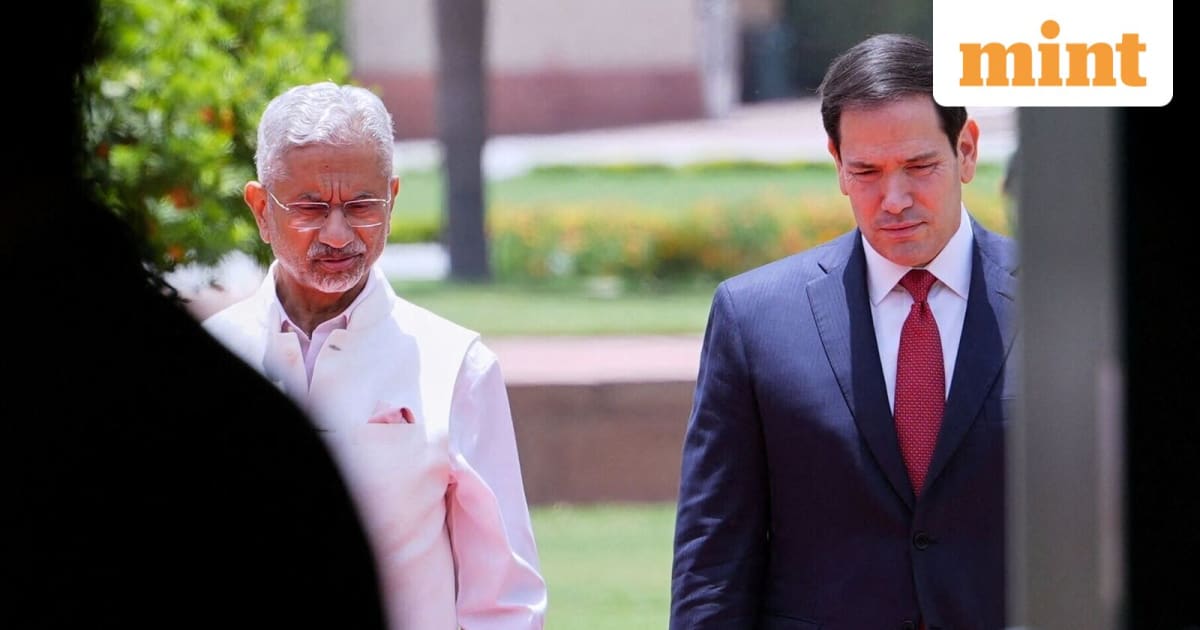
High-level diplomatic talks between India and the US are signaling a pivot toward trade liberalization and visa reform. This deep dive explores how resolving H-1B backlogs could unlock billions in operational efficiency for Indian IT giants while opening new corridors for textile and pharma exporters.
The Geopolitical Pivot: Why the Jaishankar-Rubio Talks Change the Calculus for Dalal Street
In the high-stakes theater of global trade, the recent meeting between India’s External Affairs Minister S. Jaishankar and US Senator Marco Rubio in New Delhi marks more than just a diplomatic courtesy. It signals a strategic realignment. For the Indian equity markets, particularly the Nifty IT and Nifty Pharma indices, this dialogue is the most significant fundamental catalyst since the post-pandemic digital surge. At the heart of these discussions lies a two-pronged lever: the liberalization of the H-1B visa regime and the expansion of market access for Indian manufactured goods.
For years, Indian IT services have operated with one hand tied behind their backs due to protectionist visa policies and a mounting backlog of petitions. When visa hurdles rise, Indian firms are forced to hire local US talent or subcontractors at a 30-50% premium compared to internal transfers. A resolution here doesn't just improve 'sentiment'—it directly repairs the EBIT margins of companies like TCS (NSE: TCS) and Infosys (NSE: INFY). Historically, when visa rejection rates dropped during the 2014-2015 period, we saw an average margin expansion of 120-150 basis points across the Tier-1 IT pack.
How will US-India visa reforms impact Nifty IT stocks?
The primary friction point for Indian IT service providers has been the 'onsite-offshore' delivery model. Currently, the H-1B visa cap and the administrative friction of renewals act as a hidden tax on Indian exports. When a company like Wipro (NSE: WIPRO) cannot deploy its own trained engineers to a client site in Texas or New York, it must resort to third-party staffing agencies. These agencies charge 'retail' rates for talent that the IT firm could have provided at 'wholesale' costs.
Data Point: In FY23, top-tier Indian IT firms spent approximately 12-15% of their total revenue on subcontracting costs. Analysts at WelthWest Research estimate that a streamlined visa process could reduce this dependency by 200-300 basis points over 18 months, effectively adding billions to the bottom line of the sector. Furthermore, a formal trade deal could grant India 'Trusted Trader' status, reducing the compliance burden for export-oriented manufacturing, which currently faces a labyrinth of non-tariff barriers in the US market.
The 'China+1' Multiplier Effect
The US is actively seeking to de-risk its supply chains away from Beijing. By aligning more closely with New Delhi on trade, the US is essentially providing a structural tailwind to Indian Textiles and Specialty Chemicals. Stocks like Gokaldas Exports (NSE: GOKEX) stand to benefit as US retailers look for stable, long-term alternatives to Chinese garment factories. This is not just a trade deal; it is the formalization of India as the preferred Western manufacturing hub.
Stock-by-Stock Breakdown: The Winners of the India-US Realignment
1. Tata Consultancy Services (NSE: TCS)
As the bellwether of Indian IT, TCS has the largest onsite workforce in the US. With a market cap exceeding ₹15 lakh crore and a robust P/E ratio of approximately 28x, TCS is highly sensitive to visa policy. A liberalization of H-1B rules would allow TCS to optimize its pyramid structure onsite, replacing expensive local contractors with internal talent. This move alone could provide a 1.5% cushion to its operating margins, which have recently faced pressure from wage hikes.
2. Infosys (NSE: INFY)
Infosys derives over 60% of its revenue from the North American market. The company has been aggressive in its 'localization' strategy, but this has come at a cost to its historical margin profile. A trade breakthrough would allow Infosys to leverage its global delivery model more effectively. Watch for the ₹1,450 – ₹1,500 support levels; a positive visa announcement could see the stock testing its all-time highs as FIIs (Foreign Institutional Investors) pile back into high-quality growth stocks.
3. Dr. Reddy’s Laboratories (NSE: DRREDDY)
While IT grabs the headlines, Dr. Reddy’s is a quiet beneficiary of trade liberalization. The US is the largest market for Indian generics, yet FDA inspections and import alerts often act as pseudo-trade barriers. High-level talks that include regulatory harmonization could lead to faster product approvals and fewer supply chain disruptions. With a P/E ratio currently hovering around 18x, DRREDDY offers a compelling valuation play compared to its historical average of 22x.
4. Gokaldas Exports (NSE: GOKEX)
In the textile space, Gokaldas Exports is a direct play on US consumer discretionary spending. As a major supplier to brands like Gap and Banana Republic, any reduction in import duties or preferential trade access would give GOKEX a massive pricing advantage over competitors from Bangladesh or Vietnam. The stock has shown strong momentum, and a trade deal could be the catalyst for a multi-year breakout.
Expert Perspective: The Bull vs. Bear Case
"The convergence of strategic interests between Washington and New Delhi is creating a 'Goldilocks' scenario for Indian exporters. We are seeing a shift from transactional diplomacy to structural economic integration." — Senior Strategy Analyst, WelthWest Research
The Bull Case: Bulls argue that the 'China+1' strategy is now entering its execution phase. They point to the fact that FII sentiment has been cautious, but a formal trade framework would trigger a massive re-allocation of capital into Indian equities, specifically targeting the Nifty IT index which has underperformed the broader Nifty 50 over the last 12 months.
The Bear Case: Contrarians warn of US domestic politics. With a US election on the horizon, 'protectionism' is a potent campaign tool. Any deal reached now could be delayed or diluted by domestic labor unions in the US who view H-1B visas as a threat to local jobs. Furthermore, the escalating conflict in West Asia could divert the US State Department's bandwidth, pushing trade talks to the back burner.
Actionable Investor Playbook
- The Strategy: Accumulate high-quality IT and Pharma large-caps on dips. The current valuation gap between IT and the broader market offers a margin of safety.
- Entry Points: For TCS, look for entries near the 200-day DMA (Daily Moving Average). For INFY, any correction toward the ₹1,400 mark should be viewed as a buying opportunity.
- Time Horizon: 12-24 months. This is a structural play, not a tactical swing trade. The benefits of trade liberalization will take 2-3 quarters to reflect in the P&L statements.
- Sector Rotation: Shift a portion of gains from overvalued domestic cyclicals (like PSUs) into undervalued export themes that benefit from a stable or slightly weaker INR.
Risk Matrix: What Could Go Wrong?
- US Election Volatility (Probability: High | Impact: High): Political rhetoric regarding 'outsourcing' could create short-term volatility in IT stocks, regardless of the long-term trade trajectory.
- Geopolitical Escalation (Probability: Medium | Impact: High): A wider conflict in the Middle East could spike oil prices, hurting India's macro-stability and dampening FII appetite for EM (Emerging Market) assets.
- Regulatory Overreach (Probability: Low | Impact: Medium): New US Department of Labor rules could increase the minimum wage requirements for H-1B holders, offsetting the benefits of increased visa quotas.
What to Watch Next: The Catalysts
Investors should keep a close eye on the following upcoming events:
- US Presidential Primaries: Watch for any specific mentions of H-1B reform or India trade policy in candidate platforms.
- Quarterly Earnings Calls: Listen for management commentary from HCL Tech (NSE: HCLTECH) and Wipro regarding 'subcontracting costs' and 'onsite talent availability.'
- Ministry of Commerce Data: Monthly export figures for Textiles and Pharma will provide the first data-driven evidence of a trade pickup.
- The Next 2+2 Ministerial Dialogue: This will likely be the forum where the 'fine print' of these trade and visa discussions is finalized.
See TCS's AI Score
Our algorithmic screener scores TCS on fundamentals, momentum, and risk — free to try, no card needed.
Try the AI Screener →Have questions about this story?
Ask Welth, our finance-focused AI research assistant, for a deeper breakdown — free trial included.
Chat with Welth AI →Disclaimer: This content is generated by WelthWest Research Desk based on publicly available reports and is for informational purposes only. It does not constitute financial advice, investment recommendations, or an offer to buy or sell securities. Always consult a qualified financial advisor before making investment decisions.
