Key Takeaway
The era of uniform banking growth is over; Q4 results reveal a structural divergence where operational efficiency and deposit-gathering capability now trump mere scale. Investors must pivot from 'buy the sector' to 'selectively accumulate leaders' as NIM pressure resets valuations.
The Indian banking sector, the bedrock of the Nifty 50, has hit a transition point. As HDFC Bank struggles with liquidity integration and ICICI Bank thrives on retail dominance, we analyze the shifting landscape of Indian private banks and why institutional capital is rotating within the sector.
The Great Banking Reset: Why Q4 Earnings Matter More Than Ever
The Indian banking sector, which commands nearly 35% of the Nifty 50 index weightage, has entered a period of profound volatility. The Q4 earnings season has shattered the narrative of uniform sector growth, replacing it with a nuanced story of winners and losers. For the institutional investor, this isn't just about quarterly profit figures—it is a signal of shifting structural advantages in a high-interest-rate environment.
Historically, when bank earnings diverge this sharply—reminiscent of the 2022 credit cycle transition—the Nifty 50 tends to enter a period of consolidation. The core issue remains the Net Interest Margin (NIM) compression, a byproduct of high deposit costs and the RBI’s prolonged hawkish stance. As liquidity tightens, the banks that can maintain their Cost of Funds (CoF) are winning the capital allocation race.
How will RBI rate policy impact Indian bank stocks?
The Reserve Bank of India’s (RBI) 'higher-for-longer' interest rate policy is the primary macro-headwind. While high rates theoretically help banks by widening the spread between lending and borrowing, the reality in Q4 has been the opposite. Banks are forced to offer higher deposit rates to retain retail customers, which is eating directly into their margins.
If the RBI pivots to a rate cut in late 2024, the banks with high CASA (Current Account Savings Account) ratios—led by ICICI Bank—will see immediate margin expansion. Conversely, banks currently struggling with liquidity, such as HDFC Bank, face a longer lead time to reprice their liability side. This is why we are seeing a rotation of institutional capital out of laggards and into agile, retail-focused private lenders.
Stock-by-Stock Breakdown: The Winners and The Laggards
- ICICIBANK (ICICI Bank): Emerging as the gold standard for efficiency. With a P/E ratio hovering near 18x, the bank has demonstrated superior asset quality and a robust digital ecosystem that keeps operating costs low. Its ability to grow advances while maintaining NIMs is the primary reason for its recent outperformance.
- HDFCBANK (HDFC Bank): The post-merger integration remains a work in progress. With a valuation that has corrected significantly, the market is pricing in the drag from the mortgage portfolio. Investors are wary of the sluggish deposit growth, which currently acts as a ceiling on the stock’s price movement.
- JIOFIN (Jio Financial Services): Currently a 'show-me' story. Despite the massive parent-company backing, the Q4 performance reflects the challenges of scaling a non-banking financial company (NBFC) in a competitive lending market. It is currently trading on future potential rather than current yield, leading to the recent 3% pullback.
- YESBANK (Yes Bank): The contrarian play. Its 3% jump post-results suggests that the market is finally pricing in the completion of its turnaround phase. With a cleaner balance sheet, the focus is shifting from survival to growth, though it remains a high-beta stock for retail traders.
The Analyst's Perspective: Bulls vs. Bears
The current market sentiment is neutral, but the underlying data is screaming for differentiation. Bulls argue that the sector is undervalued given the 12-15% credit growth projections for FY25. Bears, however, point to the 'Unsecured Retail' time bomb—the rising delinquency rates in credit cards and personal loans that could lead to a spike in NPAs by Q2 2025.
The bull case relies on India’s structural economic growth; the bear case relies on the fragility of the consumer balance sheet. We believe the truth lies in the middle: the sector will perform, but the returns will be highly concentrated in the top-tier private banks.
Actionable Investor Playbook: Navigating the Volatility
For investors looking to optimize their portfolio, we suggest the following approach:
- Reduce Beta: Trim positions in laggard NBFCs that are sensitive to rising borrowing costs.
- Accumulate Leaders: Use dips in ICICIBANK as an entry point. The bank’s ability to defend its NIMs makes it a defensive compounder in this cycle.
- Watch the CASA Ratio: In your quarterly portfolio review, prioritize banks with a CASA ratio above 40%. This is your primary hedge against sustained high deposit costs.
- Time Horizon: Maintain a 12-18 month horizon. The banking sector requires patience as the market digests the current NIM compression reality.
Risk Matrix
| Risk Factor | Probability | Impact |
|---|---|---|
| Unsecured Retail Stress | High | High |
| Deposit Cost Inflation | Medium | High |
| Regulatory Liquidity Tightening | Medium | Medium |
What to Watch Next
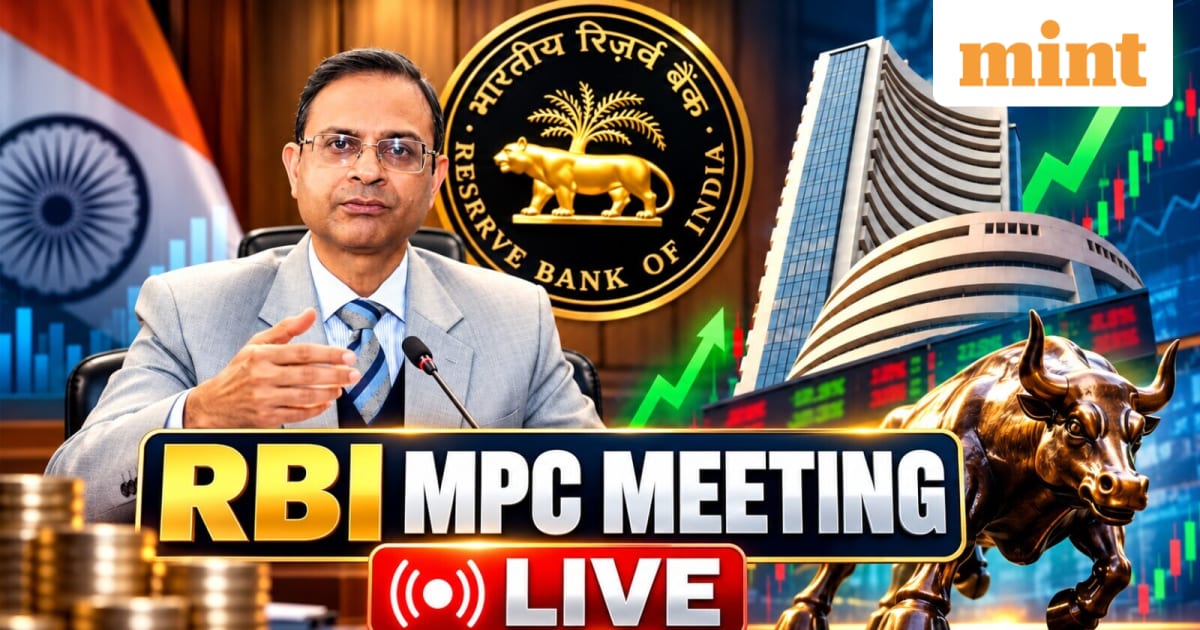
The next major catalyst is the upcoming RBI Monetary Policy Committee (MPC) meeting. Watch for commentary on 'liquidity management'—any signal of easing will provide the fuel for a mid-cap banking rally. Additionally, keep an eye on the monthly credit growth data released by the RBI; a sustained growth rate above 14% will invalidate the 'slowdown' narrative that has plagued HDFCBANK and other large-cap lenders throughout this quarter.
See ICICIBANK's AI Score
Our algorithmic screener scores ICICIBANK on fundamentals, momentum, and risk — free to try, no card needed.
Try the AI Screener →Have questions about this story?
Ask Welth, our finance-focused AI research assistant, for a deeper breakdown — free trial included.
Chat with Welth AI →Disclaimer: This content is generated by WelthWest Research Desk based on publicly available reports and is for informational purposes only. It does not constitute financial advice, investment recommendations, or an offer to buy or sell securities. Always consult a qualified financial advisor before making investment decisions.