Key Takeaway
The ₹88,678 crore market cap expansion signals a structural rotation into high-quality private banking and energy, leveraging cooling crude prices to offset localized fatigue in IT and Telecom sectors.
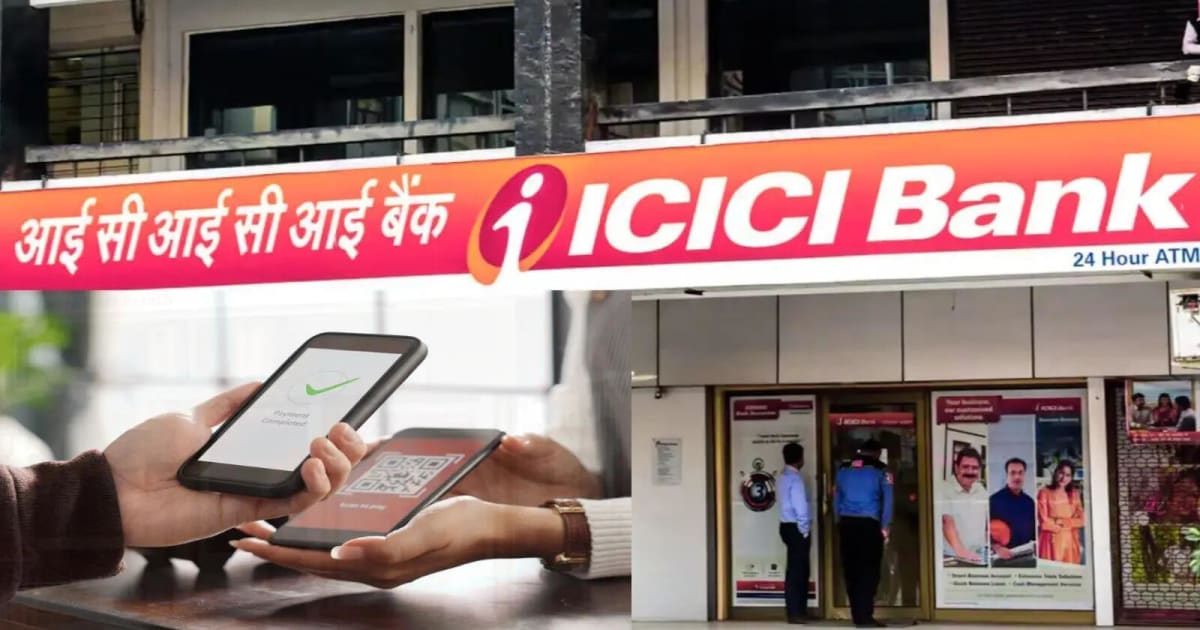
India's blue-chip landscape witnessed a massive valuation boost this week, with six of the top ten most valued companies adding over ₹88,000 crore to their cumulative market capitalization. Led by a resurgence in private sector banking giants like ICICI Bank and HDFC Bank, this rally highlights a shift in investor sentiment toward domestic cyclicals amidst stabilizing global macro indicators.
The Great Valuation Pivot: Why India’s Top Heavyweights are Surging
The Indian equity markets are witnessing a sophisticated internal rotation. While the headline indices might appear stable, the underlying mechanics reveal a massive injection of capital into a select group of market leaders. This week, the cumulative market capitalization of six of India’s top ten most valued firms expanded by a staggering ₹88,678.22 crore. This isn't merely a retail-driven sentiment boost; it is a calculated institutional pivot toward sectors that benefit from a stabilizing macroeconomic environment.
The primary driver? A resurgent private banking sector. ICICI Bank (ICICIBANK) emerged as the undisputed leader, adding approximately ₹40,000 crore to its valuation alone. This surge comes at a critical juncture where the Indian market is grappling with high valuations in mid-cap and small-cap spaces, prompting a flight to quality among large-cap stocks. Historically, when the Nifty 50 experiences this level of concentration in gains among its top ten constituents, it often precedes a broader breakout or a period of sustained outperformance against emerging market peers.
Why does this matter now? We are seeing a rare alignment of domestic and international tailwinds. Crude oil prices, which have a direct inverse correlation with Indian corporate margins, have stabilized near the $75-80 per barrel range. For a country that imports over 80% of its oil, this easing provides the necessary fiscal room for the Reserve Bank of India (RBI) to maintain its stance without immediate pressure, thereby supporting the credit growth narrative that fuels bank stocks.
Deep Market Impact: Connecting the Dots Across the NSE and BSE
The ₹88,678 crore gain is more than just a headline number; it represents a fundamental shift in the Nifty Bank and Nifty 50 dynamics. To understand the gravity of this movement, we must look at the historical context. The last time we saw such a concentrated surge in private banking m-cap was in late 2022, following which the Nifty Bank index rallied nearly 12% in the subsequent quarter. We are seeing a repeat of that pattern, driven by robust Net Interest Margins (NIMs) and improving asset quality across the board.
However, the story is not uniform across all sectors. While the banking and energy sectors added value, the IT Services and Telecom sectors faced localized selling pressure. This divergence suggests that investors are moving away from 'growth-at-any-price' (common in IT) toward 'growth-at-reasonable-price' (GARP), which currently characterizes the banking sector. The Price-to-Earnings (P/E) ratios of several private banks are still trading near their 5-year averages, despite record profits, making them attractive targets for Foreign Institutional Investors (FIIs).
"The current market structure is favoring the 'Heavyweight Carry Trade.' Investors are using the stability of Reliance and the growth of ICICI to hedge against the volatility seen in the broader mid-cap indices." — Senior Portfolio Manager at WelthWest Research.
How will RBI rate decisions affect bank stocks?
One of the most frequent queries from our subscribers involves the impact of the RBI's monetary policy on these gains. While higher interest rates generally allow banks to charge more for loans, they also increase the cost of deposits. The current surge in HDFC Bank (HDFCBANK) and ICICI Bank suggests that the market is pricing in a 'Goldilocks' scenario—where rates remain high enough to maintain healthy NIMs but not so high that they stifle credit demand. If the RBI signals a pivot toward rate cuts in the coming quarters, we could see a further expansion in P/E multiples for these banks as the cost of funds decreases faster than loan yields.
Stock-by-Stock Breakdown: The Movers and Shakers
To navigate this rally, investors must look at the specific tickers driving the momentum and those dragging the anchor.
- ICICI Bank (NSE: ICICIBANK): The star of the week. With a valuation increase that dominated the top-10 list, ICICI continues to demonstrate superior execution in its retail and SME segments. Its P/B (Price-to-Book) ratio remains competitive compared to its 10-year peak, suggesting further room for upside if credit growth stays above 15% CAGR.
- HDFC Bank (NSE: HDFCBANK): Following its historic merger, the stock had been a laggard. However, the recent m-cap addition indicates that institutional investors are finally gaining confidence in the post-merger synergy and deposit mobilization strategy. It remains a core 'Buy' for long-term portfolios looking for index-beating returns.
- Reliance Industries (NSE: RELIANCE): As the energy giant benefits from stabilizing global refining margins and the continued expansion of its retail and Jio segments, its contribution to the ₹88k crore gain was pivotal. RIL acts as the market's stabilizer; when RIL moves, the Nifty follows.
- Bharti Airtel (NSE: BHARTIARTL): In the 'Loser' column this week, Airtel saw its valuation contract. This is likely a result of profit booking after a massive run-up over the last six months and concerns over the upcoming 5G CAPEX cycle weighing on short-term free cash flow.
- TCS (NSE: TCS): The IT bellwether faced headwinds as global macro uncertainty in the US and Europe continues to delay discretionary spending. TCS remains a defensive play, but it currently lacks the growth triggers found in the financial sector.
- LIC (NSE: LICI): The insurance giant faced selling pressure, reflecting a broader trend in the life insurance sector where regulatory changes and slowing premium growth are keeping valuations suppressed.
Expert Perspective: The Bull vs. Bear Debate
The market is currently divided on whether this large-cap rally is sustainable.
The Bull Case: Bulls argue that the Indian banking sector is in its best shape in a decade. With Gross NPAs (Non-Performing Assets) at multi-year lows and a capital adequacy ratio well above regulatory requirements, banks like ICICI and HDFC are ready to fund India's next infrastructure cycle. They believe the ₹88,678 crore gain is just the beginning of a multi-year re-rating of Indian financials.
The Bear Case: Contrarians point toward the "valuation gap." They argue that while banks are doing well, the overall Nifty 50 P/E is still above its historical mean. Any external shock—such as a sudden spike in Brent crude back to $100 or a geopolitical escalation in the Middle East—could lead to a rapid unwinding of these gains as FIIs move to 'risk-off' mode.
Actionable Investor Playbook: How to Position Your Portfolio
Based on our data-driven analysis at WelthWest Research, here is the recommended strategy for the current market environment:
- Focus on Large-Cap Financials: Given the m-cap surge, the momentum is clearly with the giants. Investors should consider increasing weightage in ICICI Bank and HDFC Bank on minor dips. Entry points for ICICI Bank are attractive near its 50-day Moving Average.
- Reduce Exposure to High-Beta Mid-caps: As the market pivots to quality, the overextended mid-cap and small-cap stocks are vulnerable. Rebalancing toward the top-10 firms provides a safety net.
- Watch the Oil-Rupee Correlation: If crude stays below $80, sectors like Paints, Tyres, and Aviation will likely follow the banking rally. Keep tickers like Asian Paints and InterGlobe Aviation (INDIGO) on your watchlist.
- Time Horizon: This is a 12-18 month play. The structural improvement in bank balance sheets is a slow-burn narrative that rewards patient capital.
Risk Matrix: What Could Go Wrong?
Every investment thesis has its vulnerabilities. Here are the primary risks to this large-cap rally:
- Crude Oil Volatility (Probability: Medium-High): A 10% spike in oil prices can shave 2-3% off the Nifty almost instantly due to inflation concerns.
- Geopolitical Escalation (Probability: Medium): Renewed conflicts in energy-producing regions could disrupt the supply chain and trigger capital flight from emerging markets like India.
- Rural Demand Sluggishness (Probability: Low-Medium): While the top-10 firms are doing well, a lag in rural consumption could eventually impact the credit growth of the very banks leading this rally.
What to Watch Next: Catalysts on the Horizon
The next 30 to 60 days will be crucial for confirming this trend. Investors should keep a close eye on:
- Quarterly Earnings Reports: Specifically, look for the 'Credit-to-Deposit' (C/D) ratios of HDFC and ICICI. Any strain here could stall the rally.
- FII Flow Data: Consistent net buying by foreign institutions in the banking sector will be the ultimate validation of this m-cap expansion.
- US Fed Commentary: Any signal of a rate cut in the US will weaken the Dollar Index, which is historically bullish for Indian large-caps.
In conclusion, the addition of ₹88,678 crore to the top-10 firms is not an isolated event. It is a signal of a maturing market where quality, liquidity, and earnings visibility are being prioritized over speculative growth. For the discerning investor, this rotation offers a clear roadmap: follow the banks, watch the oil, and stick with the leaders.
See ICICI Bank's AI Score
Our algorithmic screener scores ICICI Bank on fundamentals, momentum, and risk — free to try, no card needed.
Try the AI Screener →Have questions about this story?
Ask Welth, our finance-focused AI research assistant, for a deeper breakdown — free trial included.
Chat with Welth AI →Disclaimer: This content is generated by WelthWest Research Desk based on publicly available reports and is for informational purposes only. It does not constitute financial advice, investment recommendations, or an offer to buy or sell securities. Always consult a qualified financial advisor before making investment decisions.
