Key Takeaway
While geographically distant, the recent Indonesian earthquakes introduce a subtle, yet critical, risk to Indian markets through potential disruptions in Southeast Asian supply chains and commodity flows. Investors should monitor shipping logistics and commodity-sensitive sectors for indirect volatility, rather than direct impact.
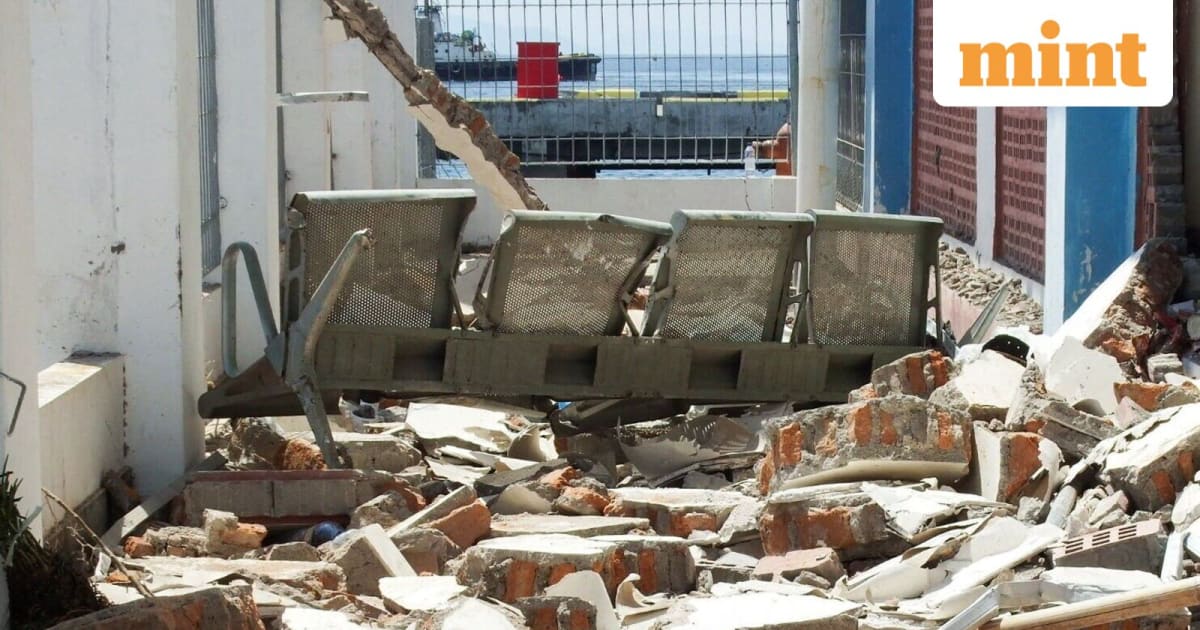
A series of powerful earthquakes have struck Indonesia, raising immediate humanitarian concerns. For Indian investors, the focus shifts to potential ripple effects on regional supply chains, particularly for critical commodities and manufacturing components. This deep dive dissects the indirect market implications, offering actionable insights for navigating potential volatility.
Indonesia Earthquakes: Unpacking the Indirect Impact on Indian Supply Chains and Commodity Prices
A recent succession of powerful earthquakes, including a 7.7-magnitude tremor, has rocked Indonesia, causing fatalities and widespread infrastructure damage. While the immediate humanitarian crisis is paramount, the WelthWest Research Desk delves beyond the headlines to analyze the nuanced, indirect implications for the Indian economy and its stock markets. Geographically distant, these seismic events in Southeast Asia possess the potential to subtly recalibrate global supply chain dynamics, particularly concerning maritime logistics and key commodity flows that are vital to India's import-export ecosystem.
The core event, a series of significant seismic activities in a pivotal regional trading hub, demands a deeper examination of its 'so what' for Indian investors. Unlike direct financial contagion, the impact here is primarily through second-order effects: potential friction in the arteries of global trade and shifts in commodity market equilibrium. Understanding these pathways is crucial for investors seeking to fortify their portfolios against unforeseen regional disruptions and capitalize on potential shifts in market sentiment.
How Will Indonesian Earthquakes Affect Global Supply Chains & India's Economy?
The immediate aftermath of a natural disaster of this magnitude often creates localized bottlenecks. However, Indonesia's strategic position in Southeast Asia, bordering critical shipping lanes like the Malacca Strait, means localized disruptions can quickly cascade into regional, and even global, logistical challenges. For India, a nation deeply integrated into global trade, this translates into potential risks for both inbound raw materials and outbound manufactured goods.
Historically, significant disruptions in Southeast Asian maritime routes, such as the 2004 tsunami or localized port strikes, have demonstrated the fragility of tightly coupled global supply networks. While the current scale of damage appears localized, any prolonged disruption to Indonesian ports or key regional transshipment hubs could lead to increased shipping costs, longer transit times, and potential delays for Indian industries reliant on components or raw materials sourced from or through the region. For instance, India imports a significant volume of coal, palm oil, and various electronic components from Southeast Asia. A 5-10% increase in freight costs, even if temporary, can erode margins for Indian importers and manufacturers, ultimately impacting consumer prices.
The global insurance market will undoubtedly bear the direct financial burden of the Indonesian quakes. While Indian general insurance companies have limited direct exposure to Indonesian property and casualty risks, large global reinsurers, to whom Indian insurers often cede a portion of their risks, will see their payouts increase. This might, in the long term, contribute to a hardening of global reinsurance rates, indirectly affecting premium costs for Indian insurers, though this impact is likely to be marginal in the short to medium term.
Deep Market Impact Analysis: Connecting Seismic Shifts to Indian Equities
The primary impact on the Indian stock market is expected to be indirect and sector-specific, rather than a broad market sell-off. The Nifty 50 and Sensex are unlikely to see significant direct volatility unless the damage escalates dramatically to affect major global trade arteries. However, a closer look reveals potential sensitivities within specific sectors.
Shipping and Logistics: This sector stands at the forefront of potential indirect impact. If Indonesian ports experience prolonged closures or operational inefficiencies, shipping lines will face rerouting challenges, increased fuel consumption, and potential demurrage charges. Conversely, a surge in demand for alternative shipping routes or expedited services could temporarily benefit some operators. Historical data from localized disruptions, such as the 2021 Suez Canal blockage, showed global container shipping rates (like the Shanghai Containerized Freight Index - SCFI) spiking by over 20% in subsequent weeks. While the Indonesian event is smaller in scale, it underscores the sensitivity of shipping costs to regional disruptions.
Commodity-Dependent Industries: India is a net importer of several key commodities, many of which transit through or are sourced from Southeast Asia. Palm oil, a staple for India's food industry, is predominantly sourced from Indonesia and Malaysia. Any disruption to Indonesian palm oil production or export logistics could lead to price spikes. Similarly, coal, nickel, and tin – critical for India's energy and manufacturing sectors – could see price volatility if Indonesian mining operations or export infrastructure are affected. For example, a 15% increase in global coking coal prices following Australian flood disruptions in 2022 directly impacted the margins of Indian steel producers.
Manufacturing and Exports: Indian manufacturers relying on just-in-time inventory systems for components sourced from Southeast Asia could face production delays. Conversely, Indian exporters might experience increased lead times or higher freight costs for shipments destined for or transiting through the affected region, potentially impacting their competitiveness.
Stock-by-Stock Breakdown: Indian Equities in the Crosshairs
While no Indian stock will see a direct 'winner' or 'loser' label from the Indonesian quakes, certain companies are more exposed to the indirect ripple effects. Investors should monitor these tickers closely:
- Adani Ports and Special Economic Zone Ltd (NSE: ADANIPORTS): As India's largest port operator with a market capitalization of over INR 3.2 lakh crore and a P/E ratio around 30x, Adani Ports' fortunes are tied to global trade flows. While its operations are domestic, any significant rerouting of international shipping away from or towards Indian ports due to Southeast Asian disruptions could impact its cargo volumes and tariffs. A slowdown in regional trade could marginally affect its throughput, though its diversified cargo mix provides some resilience. Sector peers include Gujarat Pipavav Port (NSE: GPPL) and Container Corporation of India (NSE: CONCOR), which also stand to experience similar, albeit smaller, indirect effects on their logistics operations.
- Great Eastern Shipping Company Ltd (NSE: GESHIP): A prominent player in India's shipping sector, GESHIP operates a fleet of crude oil tankers, product tankers, and dry bulk carriers. Its revenue streams are directly linked to global freight rates. If regional disruptions cause a temporary surge in demand for specific routes or vessel types, GESHIP could see short-term benefits. Conversely, prolonged trade slowdowns could negatively impact charter rates. With a market cap of approximately INR 13,000 crore and a P/E of around 6x, it's a proxy for global shipping dynamics.
- Tata Steel Ltd (NSE: TATASTEEL): As one of India's largest steel producers, Tata Steel (market cap ~INR 1.8 lakh crore, P/E ~15x) is a significant consumer of imported coking coal and iron ore. While its primary sources are diversified, any global commodity price spikes, particularly in coking coal due to broader supply chain fears or redirected demand, could impact its raw material costs and, consequently, its profitability. A 5% increase in coking coal prices can reduce Tata Steel's EBITDA by roughly 1-2%. Peers like Jindal Steel & Power (NSE: JSWSTEEL) and Steel Authority of India (NSE: SAIL) face similar sensitivities.
- Godrej Agrovet Ltd (NSE: GODREJAGRO): This company is a major player in the Indian animal feed and palm oil segments. India imports over 60% of its edible oil requirements, with palm oil being a dominant component, primarily from Indonesia and Malaysia. Any disruption to Indonesian palm oil exports could lead to price volatility, directly impacting Godrej Agrovet's raw material costs for its edible oil division and potentially increasing consumer prices. The company's market cap is around INR 10,000 crore.
- Maruti Suzuki India Ltd (NSE: MARUTI): While seemingly unrelated, large-scale manufacturers like Maruti (market cap ~INR 3.4 lakh crore, P/E ~32x) rely on intricate global supply chains for various components, including microchips and other electronic parts often sourced from or through Southeast Asia. Even minor delays or increased logistics costs for these components could disrupt production schedules or marginally increase input costs, affecting margins. This indirect impact is subtle but pervasive across many manufacturing giants.
Expert Perspective: Bulls vs. Bears on Regional Disasters
The contrarian view often emerges in such scenarios. Bulls would argue that modern supply chains are remarkably resilient and diversified. They would point to the localized nature of the current damage, emphasizing that major international shipping lanes remain unaffected. Furthermore, they might highlight that global commodity markets often react more to perceived scarcity than actual, sustained supply disruptions, and any price spikes would be transient. India's strategic reserves and diverse sourcing options for key commodities provide a buffer, mitigating the immediate shock. They might also suggest that any minor logistical hiccups could be absorbed by existing buffer stocks and flexible procurement strategies of large Indian conglomerates.
Bears, on the other hand, would emphasize the 'butterfly effect' – how a seemingly localized event in a critical region can trigger unforeseen cascading failures. They would argue that global supply chains, already strained by recent geopolitical events and post-pandemic demand surges, are operating with thinner margins for error. Even minor disruptions to port operations or regional transportation networks could exacerbate existing backlogs, leading to disproportionate increases in freight costs and commodity prices. They would also highlight the risk of 'phantom demand' as companies rush to secure alternative supplies, further inflating prices temporarily. The potential for aftershocks or secondary infrastructure failures, while not yet confirmed, adds another layer of uncertainty.
Actionable Investor Playbook: Navigating Indirect Volatility
For savvy investors, this event presents a 'watch and wait' scenario with targeted monitoring rather than panic selling or aggressive buying. The time horizon for any material impact on Indian equities is likely medium-term (3-6 months), allowing for strategic positioning.
- Watch: Closely monitor global shipping indices (e.g., Baltic Dry Index, SCFI) for any sustained upward pressure. Track commodity prices, particularly for palm oil, coking coal, and nickel. Observe official statements from Indonesian port authorities regarding operational status and recovery timelines.
- Consider Buying (on dips): Companies with strong balance sheets, diversified supply chains, and pricing power that can absorb minor input cost fluctuations. Logistics companies that could benefit from rerouting or increased demand for expedited services, if disruptions become significant.
- Consider Selling (on rallies): Companies with high reliance on single-source components from the affected region or those with razor-thin margins highly sensitive to input cost increases, especially if commodity prices spike without a clear path to normalization.
- Entry Points: For 'watch' stocks, consider entry points if there's an overreaction in the market, creating a temporary undervaluation based on short-term fear rather than fundamental damage.
Risk Matrix: Assessing Probabilities for Indian Markets
Understanding the potential risks and their likelihood is key to informed decision-making:
- Escalation of Damage to Major Shipping Lanes (e.g., Malacca Strait): Probability - Low. Current reports suggest localized damage. A direct impact on major international shipping lanes would require an unprecedented scale of seismic activity or infrastructure failure, which is not currently indicated.
- Prolonged Closure of Key Indonesian Ports: Probability - Medium-Low. While immediate closures are possible, modern port infrastructure often has contingency plans. Prolonged closures (beyond 2-3 weeks) would significantly impact regional trade and commodity flows.
- Significant Commodity Price Volatility (e.g., Palm Oil, Coal): Probability - Medium. Markets are susceptible to speculative trading and panic buying in the face of supply uncertainty. Even short-term disruptions can trigger price spikes, impacting Indian importers.
- Indirect Impact on Indian Manufacturing Supply Chains: Probability - Medium. Many Indian manufacturers rely on a complex web of global suppliers. Even minor delays in receiving components from Southeast Asia can disrupt production schedules and increase costs, though often manageable for larger players.
What to Watch Next: Catalysts for Market Movement
The unfolding situation in Indonesia will be shaped by several upcoming catalysts and data releases:
- Official Damage Assessments: Detailed reports from Indonesian authorities on infrastructure damage, particularly to ports, roads, and key industrial zones.
- Shipping Industry Updates: Statements from major shipping lines (e.g., Maersk, MSC) regarding rerouting, delays, and projected impact on freight rates.
- Commodity Market Futures: Daily movements in futures contracts for palm oil, coal, and other regional commodities will signal market sentiment regarding future supply.
- Reconstruction Aid and International Response: The speed and scale of international aid and reconstruction efforts will influence recovery timelines and mitigate long-term economic impact.
- Economic Data from Indonesia: Any revised forecasts for Indonesian GDP or trade balances from institutions like the World Bank or IMF could signal broader regional economic health.
The Indonesian earthquakes serve as a potent reminder of the interconnectedness of the global economy. For Indian investors, the focus must remain on the subtle, indirect pathways through which such events can influence domestic markets. Diligent monitoring and a nuanced understanding of these dynamics will be crucial for navigating the weeks and months ahead.
Run a free AI Stock Screen
Our algorithmic screener scores any NSE/BSE stock on fundamentals, momentum, and risk — free to try, no card needed.
Try the AI Screener →Have questions about this story?
Ask Welth, our finance-focused AI research assistant, for a deeper breakdown — free trial included.
Chat with Welth AI →Disclaimer: This content is generated by WelthWest Research Desk based on publicly available reports and is for informational purposes only. It does not constitute financial advice, investment recommendations, or an offer to buy or sell securities. Always consult a qualified financial advisor before making investment decisions.