Key Takeaway
The Intel-Apple partnership signifies a structural pivot toward US domestic chip sovereignty. For Indian investors, this decoupling creates a high-stakes environment where EMS margins face cost-inflation risks, while domestic semiconductor incentives gain strategic urgency.
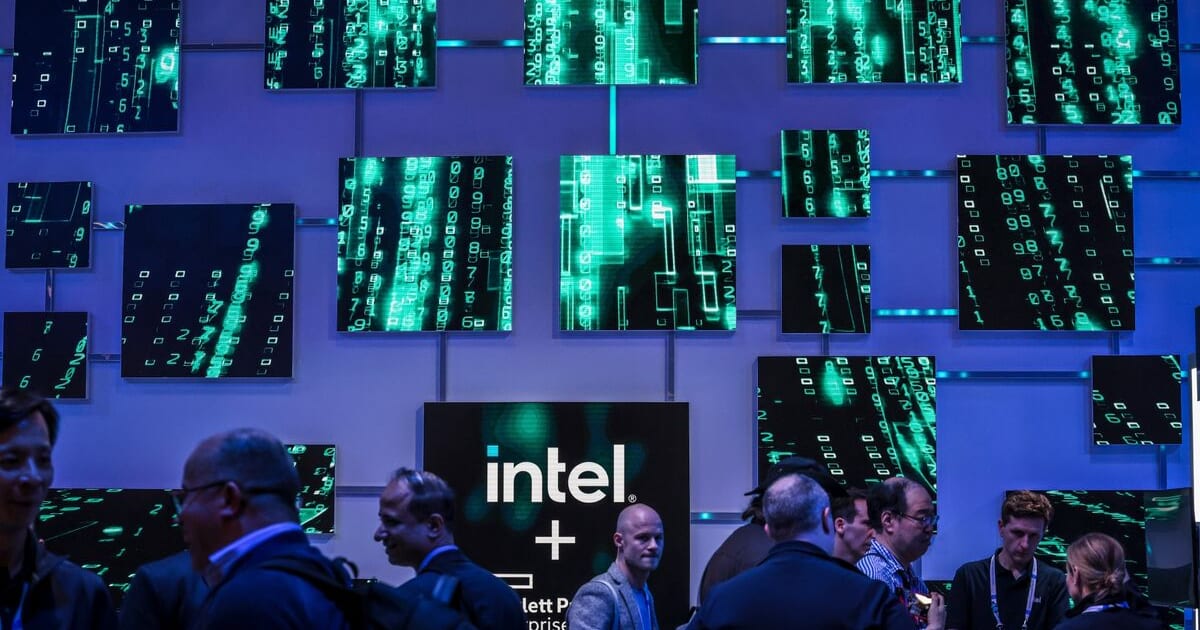
Intel and Apple have finalized a landmark agreement to manufacture chips domestically in the US, challenging the long-standing dominance of TSMC. This move threatens to destabilize global supply chains that Indian electronics manufacturers currently rely on. We analyze the long-term implications for the Indian IT hardware sector and specific NSE-listed EMS players.
The Reshoring Paradigm: Why the Intel-Apple Deal Changes Everything
The semiconductor industry is undergoing its most significant structural shift since the invention of the integrated circuit. The recent announcement that Intel and Apple have finalized a domestic manufacturing agreement in the United States marks the end of the 'global efficiency at any cost' era. For decades, the semiconductor supply chain has been defined by a hub-and-spoke model, with Taiwan Semiconductor Manufacturing Company (TSMC) serving as the primary foundry for the world's most sophisticated silicon.
By moving high-end production back to US soil, this partnership isn't just a corporate procurement change; it is a geopolitical statement. It forces a recalibration of the global electronics value chain. As the US prioritizes 'chip sovereignty,' the downstream impact on India—a nation attempting to pivot from a consumption hub to an electronics manufacturing powerhouse—is profound.
How will the Intel-Apple deal affect the Indian semiconductor supply chain?
For Indian EMS (Electronics Manufacturing Services) companies, the primary concern is not direct competition, but rather supply chain inflation. The current Indian electronics manufacturing ecosystem relies heavily on established, cost-optimized supply chains centered in East and Southeast Asia. If the US aggressively pulls manufacturing capacity, the resulting 'bifurcation' of the chip market could lead to a two-tier pricing structure: cheaper, legacy-node chips for the rest of the world and premium, high-cost, 'sovereign' chips for the US market.
Historically, when supply chains fracture—as witnessed during the 2022 global chip shortage—the Nifty IT index experienced significant volatility, shedding nearly 20% of its valuation over a six-month period as input costs soared. If US protectionism forces a global scramble for non-US foundry capacity, Indian firms may face severe procurement bottlenecks, compressing margins for companies that operate on thin assembly-level spreads.
Stock-by-Stock Breakdown: Winners and Losers on the NSE
The impact of this shift will be felt unevenly across the Indian equity landscape. Here is how the sector leaders are positioned:
- Dixon Technologies (DIXON): As a leader in consumer electronics assembly, Dixon is highly sensitive to component pricing. While they have strong domestic ties, any sustained increase in chip costs could pressure their EBITDA margins, which currently hover in the 3.5%–4.5% range. Investors should watch their import-to-local sourcing ratio closely.
- Kaynes Technology (KAYNES): Kaynes is more deeply integrated into the printed circuit board (PCB) and design-led manufacturing space. This makes them a potential beneficiary if India accelerates its own semiconductor mission, but they remain vulnerable to the initial shock of global supply chain re-routing.
- Amber Enterprises (AMBER): Primarily focused on HVAC and consumer durables, Amber is less exposed to the high-end silicon crunch. However, the indirect impact of rising inflation on their supply chain could temper their recent P/E expansion, which has been driven by strong domestic demand.
- HCL Technologies (HCLTECH): As an IT services giant, HCL is on the other side of the equation. If US clients increase their R&D spend to adapt to new domestic chip architectures, HCL’s engineering and R&D services division could see a significant uptick in demand.
Contrarian Perspective: The Bull vs. Bear Case
The Bear Argument: The bears contend that this deal is a inflationary catalyst. By forcing production into the US—a high-cost labor market—Intel and Apple are effectively killing the cost-efficiency that made consumer electronics affordable. Indian EMS firms, which rely on low-cost inputs, will see their competitive edge eroded as they pay a premium for US-manufactured silicon.
The Bull Argument: The bulls argue that this is the catalyst India needs to stop being a mere 'assembler' and start being a 'manufacturer.' If the US creates a closed loop, the rest of the world—led by India—will be forced to invest in its own independent foundries. This could bring massive FDI into the Indian semiconductor space, potentially turning companies like Kaynes or Dixon into essential nodes in a new, India-centric supply chain.
Actionable Investor Playbook
Investors should adopt a 'wait and watch' approach to pure-play assembly firms until the supply chain pricing stabilizes. The following strategy is recommended for the next 6-12 months:
- Monitor Margin Compression: Track the quarterly earnings reports of DIXON and KAYNES for commentary on 'component procurement costs.' If these figures rise by more than 5% YoY, it indicates a structural margin headwind.
- Shift Toward R&D Services: Increase exposure to IT firms like HCLTECH or Tata Elxsi that provide the software/firmware layer for new silicon designs. They benefit from the complexity of the shift rather than suffering from the cost of the hardware.
- Watch for Government Policy: Any expansion of the PLI (Production Linked Incentive) scheme specifically for semiconductor design will be the most bullish indicator for the sector.
Risk Matrix
| Risk Factor | Probability | Impact |
|---|---|---|
| Supply Chain Cost Inflation | High | High |
| Global Protectionist Trade War | Medium | High |
| Delayed Indian Semiconductor Capacity | High | Medium |
What to Watch Next: Catalysts for the Coming Quarter
The immediate next step is the Intel quarterly earnings call, where management will likely provide guidance on the scale and timeline of the Apple partnership. Simultaneously, investors should keep a close eye on the Indian Commerce Ministry’s updates regarding the next phase of the Semiconductor Mission. Any announcement of new fabrication plant (fab) incentives in India will be a direct counter-move to the Intel-Apple deal and a major signal for long-term growth in the Indian IT hardware sector.
See Dixon Technologies's AI Score
Our algorithmic screener scores Dixon Technologies on fundamentals, momentum, and risk — free to try, no card needed.
Try the AI Screener →Have questions about this story?
Ask Welth, our finance-focused AI research assistant, for a deeper breakdown — free trial included.
Chat with Welth AI →Disclaimer: This content is generated by WelthWest Research Desk based on publicly available reports and is for informational purposes only. It does not constitute financial advice, investment recommendations, or an offer to buy or sell securities. Always consult a qualified financial advisor before making investment decisions.
