Key Takeaway
A potential Iranian supply reintegration could slash India’s import bill, acting as a massive tailwind for OMCs and aviation while cooling domestic inflation. Investors should prepare for a rotation out of energy-heavy hedges into consumption-linked sectors.
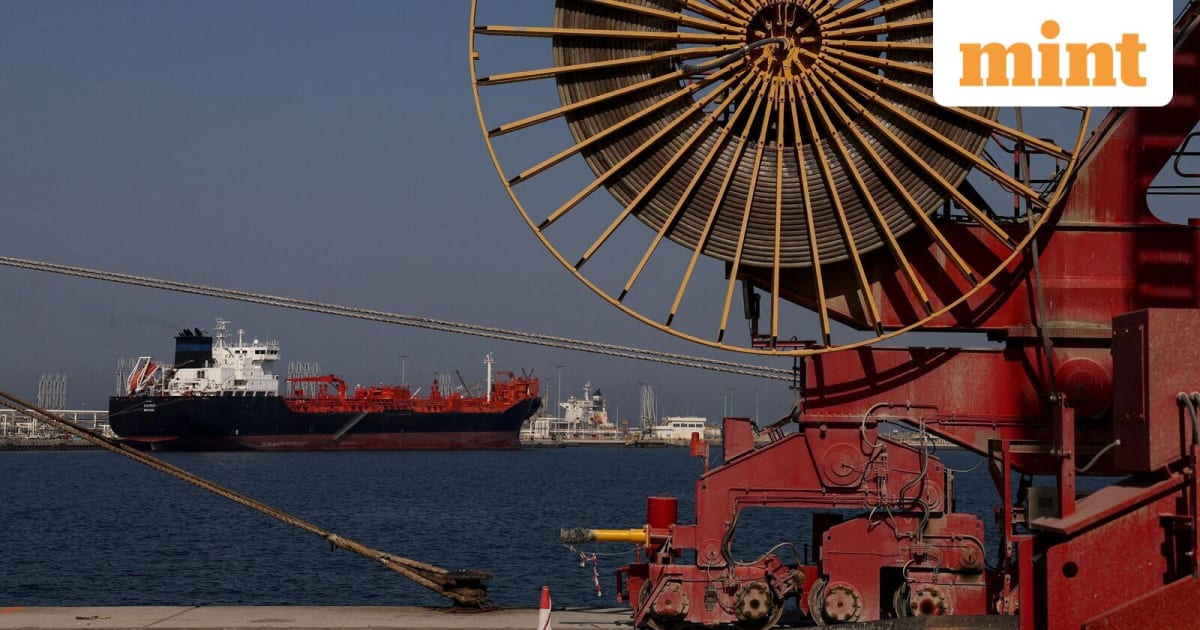
Iran’s ultimatum for the release of $24 billion in frozen assets represents a pivot point for global energy markets. For the Indian economy, this signals a potential cooling of crude prices, drastically improving the Current Account Deficit (CAD) and offering a significant margin expansion opportunity for downstream oil companies and transport-heavy industries.
The Geopolitical Pivot: Iran's $24 Billion Ultimatum
In a move that has sent shockwaves through energy trading desks from Singapore to London, Tehran has formally linked a potential peace deal to the release of $24 billion in frozen assets. This is not merely a diplomatic standoff; it is a fundamental shift in the global crude supply equation. For India, the world’s third-largest oil importer, this development is the most significant macroeconomic variable of the decade.
Historically, the geopolitical risk premium—a surcharge built into oil prices due to regional instability—has often added $5 to $10 per barrel to Brent Crude. Should these negotiations lead to a formal de-escalation, the return of Iranian barrels to the global market would create a structural supply surplus, forcing a downward correction in energy prices.
How Will the $24B Asset Release Impact Indian Stock Markets?
The correlation between the Indian Nifty 50 and Brent Crude is inverse and profound. When oil prices surge, India’s fiscal deficit widens, the rupee depreciates, and the Reserve Bank of India (RBI) is often forced into hawkish monetary policy. Conversely, a cooling in oil prices acts as a direct stimulus for corporate India.
The Downstream Bonanza: OMCs and Transport
For Oil Marketing Companies (OMCs), lower crude costs translate into higher Gross Refining Margins (GRMs). Historically, when crude prices dropped by 10% in 2022, OMCs saw a 15-20% expansion in EBITDA margins within two quarters. The current scenario favors companies with high leverage to domestic consumption, as lower fuel costs act as a proxy tax cut for the Indian consumer.
Sector-Level Breakdown
- Aviation: Fuel accounts for ~40% of an airline's operating cost. A sustained decline in crude would be a massive earnings tailwind.
- Paint & Tyres: These industries rely heavily on crude-based derivatives (titanium dioxide, synthetic rubber). Lower prices provide immediate margin relief.
- Upstream Energy: Companies like ONGC and Oil India face a 'sell' signal as their realization prices are pegged to global crude benchmarks.
Stock-by-Stock Breakdown: The Winners and Losers
Investors must navigate this shift by rebalancing portfolios to favor companies that benefit from lower input costs.
The Winners (Long Positions)
- BPCL (Bharat Petroleum Corp Ltd): With a market cap of ~₹1.3 lakh crore, BPCL is a pure-play bet on refining. Lower crude prices allow for better inventory valuation and margin expansion.
- IOCL (Indian Oil Corporation): As India’s largest refiner, IOCL stands to gain the most from improved GRMs. Watch for a P/E compression as earnings outlooks improve.
- InterGlobe Aviation (IndiGo): The market leader in domestic aviation. A $10/bbl drop in oil prices could potentially add ₹1,200-1,500 crore to their annual bottom line.
- Asian Paints: Crude volatility is their biggest headwind. A normalization in oil prices allows for sustainable double-digit margin growth.
The Losers (Short/Avoid Positions)
- ONGC: Their revenue is directly tied to the net realization price of crude. A drop in global oil prices directly hits their top-line and EBITDA.
- Defense Stocks: Companies like HAL and BEL often rally on geopolitical tensions. A 'peace dividend' reduces the urgency for aggressive defense spending, potentially cooling these high-valuation stocks.
Expert Perspectives: Bulls vs. Bears
The Bull Case: Proponents argue that the release of $24 billion will force a 'regime change' in oil pricing. If supply increases, India’s CAD will narrow, potentially leading to a stronger Rupee and a rally in banking stocks due to lower inflationary pressure.
The Bear Case: Skeptics point to the high probability of negotiation failure. If the US rejects the terms, the resulting supply chain disruption could push Brent toward $100/bbl, triggering an inflationary spike that would be disastrous for the Indian market.
Actionable Investor Playbook
Investors should adopt a 'Barbell Strategy' to navigate this uncertainty:
- Accumulate OMCs: If crude trades below $75/bbl, prioritize BPCL and IOCL. These are defensive plays that turn into growth plays during energy price corrections.
- Hedge with Gold: If the deal appears to be failing, increase exposure to gold as a safe-haven asset, as it remains the ultimate hedge against geopolitical military escalation.
- Monitor Aviation: Keep a close watch on InterGlobe Aviation’s quarterly fuel surcharges. A reduction in these surcharges is the first sign of margin expansion.
Risk Matrix
| Risk Factor | Probability | Impact |
|---|---|---|
| Negotiation Collapse | Medium | High |
| OPEC+ Production Cuts | High | Medium |
| Global Recession | Low | High |
What to Watch Next
The next 30 days are critical. Keep a close eye on the G7 meeting outcomes and any official statements from the US Treasury regarding the frozen assets. Additionally, monitor the monthly EIA Short-Term Energy Outlook; any upward revision in non-OPEC supply, combined with a potential Iranian deal, would be a definitive signal to go long on Indian consumer-linked equities.
See BPCL's AI Score
Our algorithmic screener scores BPCL on fundamentals, momentum, and risk — free to try, no card needed.
Try the AI Screener →Have questions about this story?
Ask Welth, our finance-focused AI research assistant, for a deeper breakdown — free trial included.
Chat with Welth AI →Disclaimer: This content is generated by WelthWest Research Desk based on publicly available reports and is for informational purposes only. It does not constitute financial advice, investment recommendations, or an offer to buy or sell securities. Always consult a qualified financial advisor before making investment decisions.
