Key Takeaway
The reported missile incident near the Strait of Hormuz injects immediate volatility into global energy markets, with Indian oil marketing companies and defence PSUs poised for significant price action. Investors must brace for potential inflation and currency headwinds.
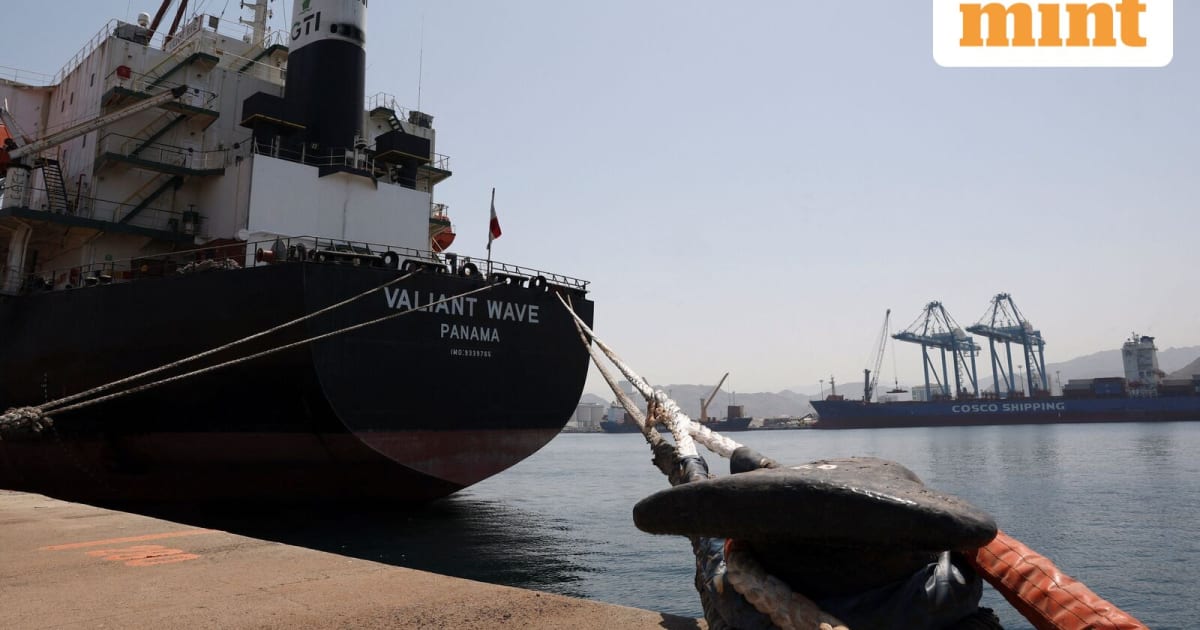
A dramatic escalation in the Strait of Hormuz, with Iran claiming a missile strike on US naval units, has sent shockwaves through global oil markets. This analysis dissects the profound implications for India's economy and stock market, identifying key winners and losers amidst heightened geopolitical risk.
Iran-US Naval Clash: Oil Prices Surge, Indian Stocks Reel
The strategic Strait of Hormuz, a vital artery for global energy trade, has once again become the epicenter of geopolitical tension following claims by Iran of a missile strike targeting U.S. naval assets in its vicinity. This development, occurring in the wake of an alleged U.S. tanker attack, injects a potent cocktail of fear and uncertainty into international markets, with immediate and significant repercussions for India, a nation heavily reliant on imported crude oil.
Why This Geopolitical Flare-Up Matters NOW for India
The Strait of Hormuz accounts for approximately 30% of global seaborne oil trade, making it an indispensable chokepoint. Any perceived or actual disruption to the flow of crude oil through this narrow waterway has a cascading effect, driving up global benchmark prices like Brent and WTI. For India, which imports over 80% of its crude oil requirements, this translates directly into a higher import bill. A sustained surge in oil prices can exacerbate India's current account deficit, weaken the Indian Rupee against major currencies, and fuel inflationary pressures across the economy, impacting everything from transportation costs to consumer goods pricing. The heightened geopolitical risk also invariably leads to increased volatility in global equity markets, as investors flee to safer assets, potentially triggering broad-based sell-offs in emerging markets like India.
Deep Market Impact Analysis: How Indian Equities Will React
The immediate sentiment across Indian stock markets is overwhelmingly bearish. The Energy sector, particularly oil marketing companies (OMCs) and exploration and production (E&P) firms, will bear the brunt of the negative impact. Conversely, the Defence sector, often a beneficiary of geopolitical instability, is likely to see increased investor interest. The historical precedent of oil price shocks offers a grim outlook. During the 2022 energy crisis, fueled by the Russia-Ukraine conflict, the Nifty Energy index saw significant fluctuations, and a similar pattern is anticipated here. For instance, a sustained $10 per barrel increase in crude oil prices can add upwards of $15-20 billion to India's annual import bill, a substantial drag on economic growth. This event is likely to push the overall market sentiment towards risk aversion, impacting sectors reliant on discretionary spending and those with high import costs.
Sector-Level Breakdown:
- Energy: This sector will be under intense scrutiny. Upstream companies (E&P) might see a temporary boost in revenue due to higher crude prices, but their profitability is often linked to government-regulated prices or long-term contracts. Downstream OMCs, however, face a dual challenge: rising crude acquisition costs and potential government intervention to control retail fuel prices, squeezing their margins.
- Defence: Companies involved in naval equipment, shipbuilding, and defense manufacturing are poised to benefit from increased government spending on national security and a heightened focus on maritime defense capabilities.
- Shipping: Increased insurance premiums for vessels traversing the Strait of Hormuz, coupled with the potential for route diversions or outright closures, will significantly impact the profitability of shipping companies.
- Consumer Discretionary: Rising inflation, driven by higher fuel costs, will likely erode consumer purchasing power, leading to reduced spending on non-essential goods and services.
How Will Rising Oil Prices Affect Indian Defence Stocks?
The conventional wisdom suggests that geopolitical tensions are a tailwind for the defence sector. As regional instability escalates and the perceived threat to vital trade routes increases, governments tend to bolster their defense budgets and enhance their naval capabilities. For Indian defence Public Sector Undertakings (PSUs) and private players, this could translate into increased orders for naval vessels, surveillance equipment, and potentially offensive weapon systems. Companies like Bharat Electronics Limited (BEL) and Hindustan Aeronautics Limited (HAL), which have strong order books and a track record of executing government contracts, are expected to be key beneficiaries. The increased focus on maritime security, particularly in the Indian Ocean Region, further bolsters the outlook for these companies.
Stock-by-Stock Breakdown: Key NSE/BSE Movers
The fallout from the Strait of Hormuz incident will disproportionately affect certain Indian equities. Investors should closely monitor the following:
- Oil and Natural Gas Corporation (ONGC) (NSE: ONGC): As India's largest crude oil producer, ONGC’s revenues will likely see an uptick due to higher crude prices. However, its profitability can be constrained by production costs and government policies. Its current market cap stands at approximately ₹2.5 lakh crore, with a P/E ratio of around 12. Any sustained oil price rally could push its stock price higher, but increased operational risks in the region could also weigh on sentiment.
- Indian Oil Corporation Ltd (IOCL) (NSE: IOCL): This integrated oil major, involved in refining and marketing, faces margin compression. While higher crude prices boost refinery output value, the inability to pass on these costs fully to consumers in the form of higher petrol and diesel prices will hit its downstream segment. IOCL's market cap is around ₹1.2 lakh crore with a P/E of approximately 9. Its stock performance will be a barometer for the broader OMC sector's challenges.
- Bharat Petroleum Corporation Ltd (BPCL) (NSE: BPCL): Similar to IOCL, BPCL will grapple with the widening gap between crude acquisition costs and controlled retail fuel prices. Its market cap hovers around ₹70,000 crore with a P/E of roughly 10. The stock is highly sensitive to crude price movements and government pricing policies.
- Hindustan Petroleum Corporation Ltd (HPCL) (NSE: HPCL): Completing the trio of major OMCs, HPCL (market cap ~₹45,000 crore, P/E ~11) will also experience margin pressures. Investors will watch for any signs of government intervention or adjustments to fuel pricing mechanisms that could alleviate some of the cost burden.
- Bharat Electronics Limited (BEL) (NSE: BEL): A leading defence PSU, BEL (market cap ~₹90,000 crore, P/E ~35) is a clear beneficiary. Increased defence spending, particularly on electronic warfare systems, radar, and communication equipment, will likely translate into a robust order book and sustained revenue growth. Its high P/E reflects strong investor confidence in its growth prospects amidst rising geopolitical tensions.
- Hindustan Aeronautics Limited (HAL) (NSE: HAL): Another defence behemoth (market cap ~₹1.2 lakh crore, P/E ~45), HAL manufactures aircraft and helicopters. A heightened focus on air power and maritime surveillance will boost demand for its products and services, further solidifying its position.
- Shipping Corporation of India (SCI) (NSE: SCI): As a major player in India's maritime transport sector (market cap ~₹4,500 crore, P/E ~20), SCI will face increased operational costs due to higher insurance premiums and potential disruptions. However, a surge in oil prices could also lead to increased demand for shipping services if supply chains are rerouted or if charter rates rise significantly.
Expert Perspective: Bulls vs. Bears on the Hormuz Tension
Bulls argue: The current geopolitical flare-up, while concerning, is unlikely to result in a sustained, large-scale conflict that would permanently cripple oil supplies. They point to the historical resilience of global energy markets and the diplomatic efforts that typically de-escalate such situations. Furthermore, they highlight the potential for increased defence spending to act as a stimulus for specific sectors, creating pockets of opportunity within an otherwise volatile market. They might also argue that any dip in energy stocks presents a buying opportunity for the long term, given the inelastic demand for oil.
Bears counter: The risk of miscalculation and escalation in a highly sensitive region like the Strait of Hormuz is significant. A sustained disruption, even for a few weeks, could trigger a severe energy crisis, pushing oil prices to unprecedented levels and triggering global stagflation. They emphasize that the interconnectedness of global markets means that regional instability can rapidly translate into widespread economic downturns, impacting not just energy but also consumer spending and financial markets. The current P/E ratios of some defence stocks, while justified by growth, might also be vulnerable to broader market corrections if the geopolitical situation deteriorates severely.
Actionable Investor Playbook: Navigating the Storm
Given the heightened uncertainty, a cautious yet strategic approach is warranted:
- Short-Term (1-3 months):
- Sell/Reduce Exposure: Consumer discretionary stocks, airlines, and companies with significant exposure to imported raw materials or derivatives of crude oil.
- Buy/Increase Exposure: Select defence PSUs like BEL and HAL, provided entry points are attractive (e.g., post-consolidation). Consider gold ETFs or physical gold as a safe-haven asset.
- Watch Closely: Oil Marketing Companies (IOCL, BPCL, HPCL). Their performance will depend heavily on government policy regarding fuel pricing. A significant dip could present a trading opportunity, but the fundamental risk of margin squeeze remains high.
- Long-Term (6-12+ months):
- Accumulate Defence Stocks: The long-term outlook for the Indian defence sector remains robust, driven by government 'Make in India' initiatives and increasing geopolitical threats.
- Re-evaluate Energy Exposure: While OMCs face short-term headwinds, their long-term relevance remains. Investors with a high-risk appetite might consider accumulating ONGC on significant dips, betting on sustained high crude prices.
- Diversification: Ensure a well-diversified portfolio across sectors and asset classes to mitigate idiosyncratic risks.
Entry Points: For defence stocks, look for dips of 5-10% from recent highs, especially if the broader market experiences a sell-off. For oil producers like ONGC, consider entry points around ₹180-190. For OMCs, wait for clarity on pricing policies or significant oversold conditions.
Risk Matrix: Probability Assessment of Key Threats
- Sustained Oil Supply Disruption: Probability: Medium (30%). A prolonged closure or significant reduction in output from the Strait of Hormuz would trigger a global energy crisis.
- Broader Regional Conflict Escalation: Probability: Low-Medium (25%). The conflict spilling over into neighboring oil-producing nations would have catastrophic economic consequences.
- Severe Currency Devaluation: Probability: Medium (40%). A widening current account deficit and capital flight could lead to significant depreciation of the Indian Rupee.
- Global Recessionary Impact: Probability: Medium (35%). Persistent high energy prices and geopolitical uncertainty could tip the global economy into a recession.
What to Watch Next: Upcoming Catalysts
Investors should closely monitor the following:
- Official Statements: Statements from Iran, the US, and other major global powers regarding de-escalation or further actions.
- Oil Price Movements: Daily fluctuations in Brent and WTI crude prices will be a primary indicator of market sentiment.
- Shipping Insurance Rates: Any significant increase in war-risk insurance premiums for vessels in the Persian Gulf will signal rising concerns.
- Government Policy Announcements: Potential government measures in India to cushion the impact of higher oil prices, such as strategic reserve releases or adjustments to fuel taxes.
- Economic Data Releases: Inflation figures (CPI, WPI) and trade balance data for India will provide a clearer picture of the economic impact.
The geopolitical landscape is dynamic, and the situation near the Strait of Hormuz demands constant vigilance. For Indian investors, understanding the intricate links between global energy security, geopolitical stability, and domestic market performance is paramount to navigating this period of heightened risk and potential opportunity.
See ONGC's AI Score
Our algorithmic screener scores ONGC on fundamentals, momentum, and risk — free to try, no card needed.
Try the AI Screener →Have questions about this story?
Ask Welth, our finance-focused AI research assistant, for a deeper breakdown — free trial included.
Chat with Welth AI →Disclaimer: This content is generated by WelthWest Research Desk based on publicly available reports and is for informational purposes only. It does not constitute financial advice, investment recommendations, or an offer to buy or sell securities. Always consult a qualified financial advisor before making investment decisions.
