Key Takeaway
The Israel-Lebanon framework deal acts as a 'geopolitical deflationary shock.' For India, this translates to a lower import bill, expanded OMC margins, and a potential pivot in RBI rate policy.
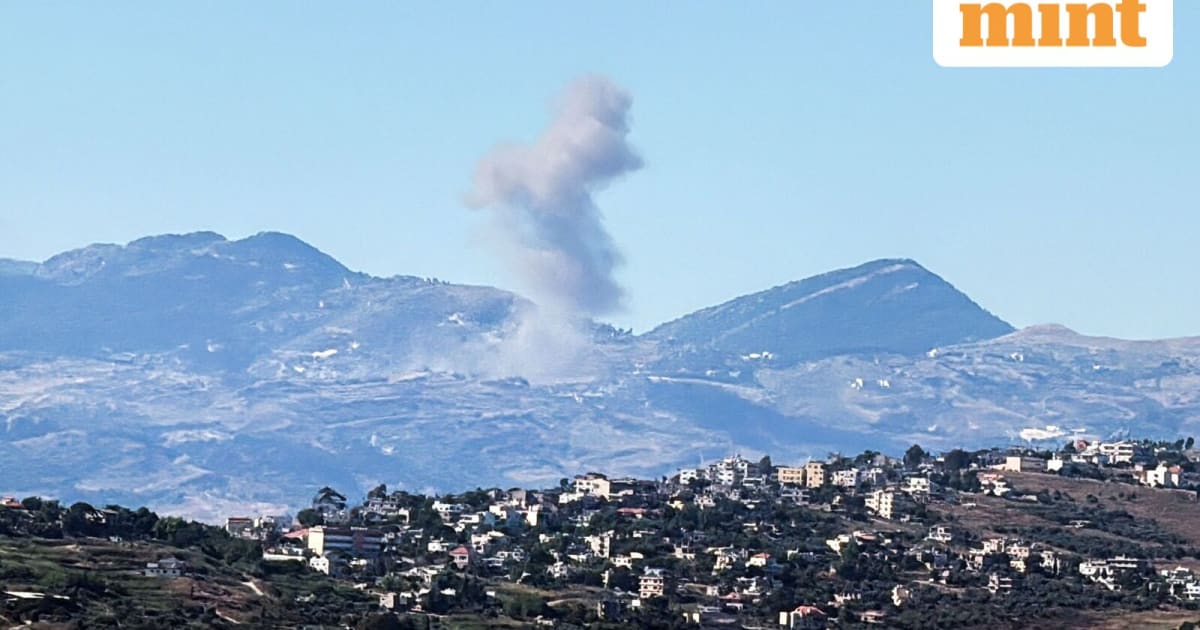
The Middle East de-escalation is a macroeconomic game-changer for India. With crude oil prices poised for a structural correction, we analyze the ripple effects across the Nifty 50, identifying the key winners and structural risks in this new market landscape.
The Middle East Pivot: Why Geopolitical Stability is the New Bull Market Catalyst
For the Indian equity markets, the correlation between Middle Eastern stability and the Current Account Deficit (CAD) is arguably the most critical macro-lever. The recent framework deal between Israel and Lebanon is not merely a diplomatic milestone; it is a fundamental shift in the global energy risk premium. By mitigating the threat of a wider regional conflagration, the 'war risk' premium embedded in Brent crude futures—often estimated at $5–$8 per barrel—is now subject to immediate repricing.
Historically, when the geopolitical risk premium evaporates, the Indian Rupee (INR) gains stability, and the Reserve Bank of India (RBI) finds the necessary cushion to pivot its monetary stance. As a nation that imports over 85% of its crude requirements, India serves as the primary beneficiary of a cooling energy market.
How will the Israel-Lebanon peace deal impact Indian stock markets?
The transmission mechanism from a peace deal to your portfolio is direct: lower crude prices improve the gross refining margins (GRMs) of Oil Marketing Companies (OMCs) and act as a massive cost-tailor for input-heavy sectors like Aviation and Paints. In 2022, when crude spiked to $120+ per barrel, Indian OMCs saw their margins compressed to near-zero levels, dragging the Nifty Energy index down by over 15% in a single quarter. Conversely, a stable crude environment allows for margin expansion that flows directly to the bottom line.
The Sectoral Domino Effect
- OMCs (IOCL, BPCL, HPCL): These companies benefit from 'inventory gains' stabilization and higher marketing margins on petrol and diesel.
- Aviation (InterGlobe Aviation): Fuel accounts for 35-40% of airline operating costs. A 10% drop in crude prices typically translates to a 3-4% expansion in EBITDAR margins for IndiGo.
- Paints and Chemicals (Asian Paints): Crude derivatives are the primary raw materials. Lower prices provide a significant boost to gross margins, which have been under pressure due to persistent inflation.
Stock-by-Stock Breakdown: Winners and Losers
1. IOCL (Indian Oil Corporation): As the market leader in refining, IOCL is the primary proxy for energy de-escalation. With a current P/E ratio hovering near historical averages, a sustained dip in crude allows the company to optimize its inventory cycle. Target: Watch for a recovery in GRMs above the $8/bbl threshold.
2. InterGlobe Aviation (IndiGo): The undisputed king of Indian skies. With a massive fleet expansion plan, lower ATF (Aviation Turbine Fuel) prices are the single greatest tailwind for their FY26 profitability forecasts.
3. Asian Paints: Often considered a 'bond proxy' in the consumer space, their margin profile is highly sensitive to Brent crude. A move below $75/bbl is the 'sweet spot' for their stock price, potentially triggering a rerating.
4. ONGC (Oil and Natural Gas Corporation): The contrarian loser. As an upstream producer, ONGC’s realization prices are tethered to global benchmarks. A sharp drop in crude will likely lead to lower net realizations, compressing their earnings per share (EPS).
Expert Perspective: The Bull vs. Bear Debate
The Bulls argue that this peace deal marks the end of the 'inflationary era' in energy, allowing the RBI to cut rates by 25-50 bps in the coming quarters, which would trigger a massive inflow of FII liquidity into Indian financials and consumer cyclicals.
The Bears, however, highlight the fragility of the agreement. They point to the disarmament clauses in the Lebanon framework as a 'paper tiger.' Should Hezbollah reject the terms or should skirmishes resume, the market will experience a 'snap-back' effect, where oil prices could spike above $90/bbl within 72 hours, leading to a sharp reversal in the aforementioned stocks.
Actionable Investor Playbook
For the disciplined investor, the strategy should be centered on asymmetric risk-reward:
- Accumulate: Look for entry points in OMCs during minor market dips, focusing on a 6-12 month time horizon.
- Watch: Monitor the Brent Crude forward curve. If the spread between spot and 6-month futures narrows, it confirms the market's belief in long-term stability.
- Hedge: Maintain a small allocation to Gold or defensive sectors like IT, as these act as a hedge against the 'fragility risk' mentioned above.
Risk Matrix: Assessing the 'Peace' Premium
| Risk Factor | Probability | Impact |
|---|---|---|
| Hezbollah Disarmament Failure | High | Severe (Oil Spike) |
| Global Economic Slowdown (Demand Side) | Medium | Moderate (Oil Price Drop) |
| OPEC+ Production Cuts | Low | Medium (Price Floor) |
What to Watch Next: Catalysts for Q3 and Q4
Investors must keep a close eye on the OPEC+ ministerial meeting in Vienna, where production quotas will be adjusted based on this new geopolitical reality. Additionally, watch the RBI Monetary Policy Committee (MPC) minutes; any shift in the central bank's tone regarding 'imported inflation' will be the primary signal that the peace deal is successfully filtering through to the domestic economy.
See IOCL's AI Score
Our algorithmic screener scores IOCL on fundamentals, momentum, and risk — free to try, no card needed.
Try the AI Screener →Have questions about this story?
Ask Welth, our finance-focused AI research assistant, for a deeper breakdown — free trial included.
Chat with Welth AI →Disclaimer: This content is generated by WelthWest Research Desk based on publicly available reports and is for informational purposes only. It does not constitute financial advice, investment recommendations, or an offer to buy or sell securities. Always consult a qualified financial advisor before making investment decisions.
