Key Takeaway
While the headline political friction appears localized, investors must recalibrate the 'geopolitical risk premium' for PSU behemoths like NHPC and IRCON, which carry significant operational exposure to the Jammu and Kashmir region.
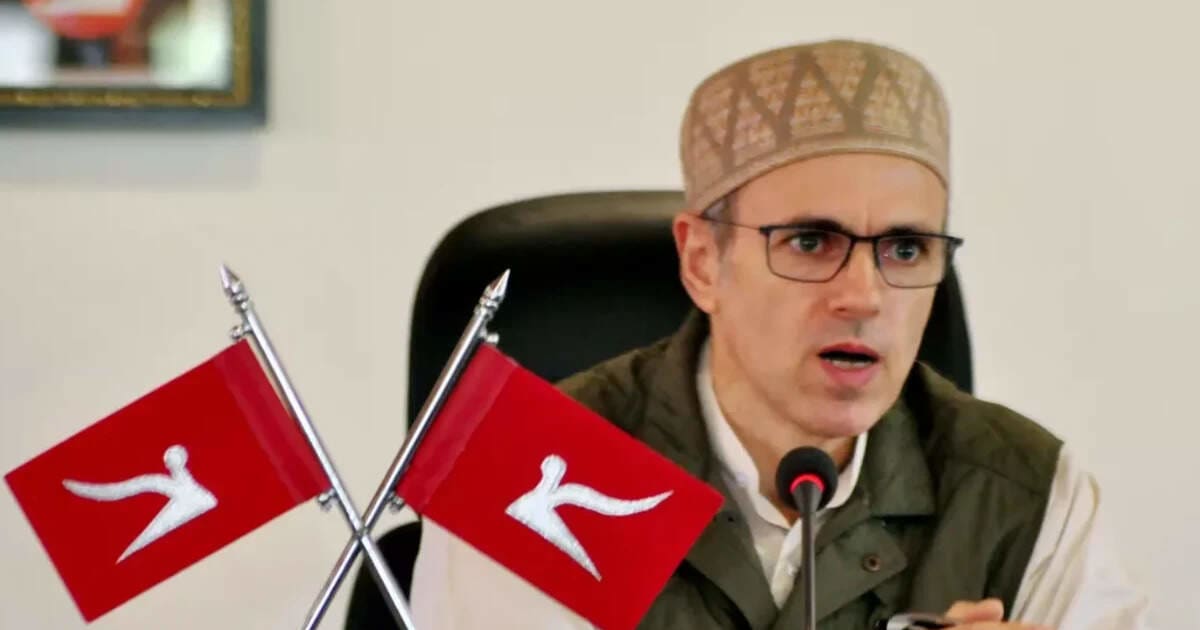
Jammu and Kashmir Chief Minister Omar Abdullah’s decision to move statehood protests to the national capital introduces a new layer of administrative friction between the Centre and the Union Territory. This deep dive explores the potential for localized civil unrest to disrupt billion-dollar infrastructure projects and the specific NSE/BSE tickers most vulnerable to shifting regional sentiments.
The Delhi Stand-Off: Why Omar Abdullah’s Protest Matters to Dalal Street
On July 20, the political landscape of Northern India is set for a high-decibel confrontation. Jammu and Kashmir Chief Minister Omar Abdullah has announced a strategic shift in his administration's demand for the restoration of statehood, moving the theater of protest from the streets of Srinagar to the heart of New Delhi. For the uninitiated, this might seem like standard political maneuvering. However, for the institutional investor and the sharp-eyed financial analyst at WelthWest Research Desk, this signals a potential recalibration of the 'internal security risk premium' for Indian equities.
Since the abrogation of Article 370 in August 2019, Jammu and Kashmir (J&K) has undergone a massive economic transformation, underpinned by over ₹28,400 crore in industrial incentives and a surge in centrally-funded infrastructure projects. The current friction between the newly elected regional government and the Central government creates a 'governance gap.' When the administrative machinery of a sensitive border region clashes with its primary funding source (the Centre), the execution timelines for mega-projects—ranging from hydroelectric dams to strategic railway links—come under the scanner.
How will J&K statehood protests affect NHPC and IRCON share prices?
The primary concern for the Indian stock market (NSE/BSE) is not the protest itself, but the potential for localized civil unrest or administrative bottlenecks that follow. Historical data suggests that during periods of heightened political uncertainty in the Valley, project execution speeds for Central Public Sector Enterprises (CPSEs) can drop by 15-20% due to labor migration and logistical lockdowns. For companies like NHPC (NSE: NHPC) and IRCON International (NSE: IRCON), J&K is not just a territory; it is a critical revenue hub.
Deep Market Impact Analysis: Connecting Politics to Portfolios
The Indian market currently operates at a high valuation (Nifty 50 P/E hovering around 22-23x). In such a scenario, any news that threatens the stability of a strategic region acts as a catalyst for profit booking. We categorize the impact into three distinct buckets: Operational Risk, Sentiment Risk, and Fiscal Risk.
- Operational Risk: J&K hosts some of India’s most ambitious engineering feats. The Udhampur-Srinagar-Baramulla Rail Link (USBRL) is a multi-billion dollar project. Any disruption in the local administration's cooperation with central agencies can lead to cost overruns.
- Sentiment Risk: The 'Kashmir Premium' has historically weighed down the valuations of J&K Bank (NSE: JKBANK). While the bank has cleaned up its balance sheet significantly (Gross NPA falling from double digits to ~4-5% in recent quarters), political volatility often triggers a knee-jerk sell-off in regional banking stocks.
- Fiscal Risk: If the demand for statehood leads to a prolonged standoff, the flow of central grants—which currently fund nearly 70% of the UT's budget—could face bureaucratic hurdles, affecting local vendors and contractors.
"The market hates uncertainty more than bad news. A clear timeline for statehood is manageable; a prolonged, friction-heavy protest movement in the capital is a variable that hasn't been priced into regional infrastructure stocks yet." — Senior Analyst, WelthWest Research
Stock-by-Stock Breakdown: The J&K Exposure Matrix
1. NHPC Ltd (NSE: NHPC)
Market Cap: ~₹1,00,000 Crore | P/E Ratio: ~19x
NHPC is the largest hydropower developer in India, and J&K is its crown jewel. Projects like the Kishanganga (330 MW), Salal (690 MW), and the upcoming Ratle Hydroelectric Project are vital. A significant portion of NHPC’s generation capacity is located in J&K. While the power purchase agreements (PPAs) are secure, the physical security of the assets and the ease of conducting O&M (Operations & Maintenance) are sensitive to local political stability. If protests escalate, NHPC might see a temporary spike in its risk-adjusted discount rate.
2. IRCON International (NSE: IRCON)
Market Cap: ~₹22,000 Crore | P/E Ratio: ~24x
IRCON is the lead executor for the most challenging stretches of the Kashmir railway project. With an order book that is heavily weighted toward strategic infrastructure, IRCON is a direct proxy for J&K’s integration with the rest of India. Historically, when regional tensions rise, IRCON’s execution speed in the Northern Railway zone faces headwinds. Investors should watch for any commentary regarding project delays in their quarterly earnings calls.
3. Jammu & Kashmir Bank (NSE: JKBANK)
Market Cap: ~₹11,000 Crore | P/E Ratio: ~6.5x
JK Bank remains the most sensitive ticker to this news. Despite a stellar turnaround under new management, the bank's stock price often correlates with the 'peace dividend' in the valley. The bank’s credit growth is intrinsically linked to the local economy's health—tourism, apple trade, and handicrafts. A political standoff in Delhi could dampen local business sentiment, leading to a slowdown in credit off-take in the MSME sector.
4. Lemon Tree Hotels (NSE: LEMONTREE)
Market Cap: ~₹10,500 Crore | P/E Ratio: ~65x
Tourism in J&K hit a record 2 crore visitors in 2023. Lemon Tree and its peers like EIH (Oberoi) have been eyeing expansion in Srinagar and Gulmarg. Hospitality stocks are 'sentiment-first' assets. Even if the protests are 800km away in Delhi, the negative media cycles surrounding J&K political instability can lead to cancellations in the high-end luxury travel segment, impacting RevPAR (Revenue Per Available Room) projections for the upcoming winter season.
Expert Perspective: The Bull vs. Bear Case
The Bear View: Bears argue that the 'honeymoon period' for J&K's economic integration is reaching a plateau. They point to the fact that any political friction at the top level filters down to the ground as administrative non-cooperation. For a stock like NHPC, which already trades at a premium compared to its 5-year average P/E, any regional instability is a valid reason for a 10-15% correction.
The Bull View: Contrarians believe this is a 'buying the dip' opportunity. They argue that the Central government’s commitment to J&K’s infrastructure is irreversible regardless of who sits in the CM’s chair. The demand for statehood is a sign of a returning democratic process, which, in the long run, is bullish for the region’s stability and institutional investment. They see the Delhi protests as a release valve for political pressure rather than a precursor to unrest.
Is J&K Bank a buy during political uncertainty?
From a valuation standpoint, J&K Bank is trading at a significant discount to its private-sector peers. However, the 'political discount' is real. Savvy investors often wait for the RSI (Relative Strength Index) to hit oversold territory (below 30) during such news cycles before building a position, targeting a long-term recovery as the statehood transition eventually formalizes.
Actionable Investor Playbook: Navigating the Volatility
- For NHPC & IRCON: Maintain a 'Hold' stance. Do not panic sell on protest headlines, but defer new lump-sum investments until the July 20 event passes. Look for entry points near the 200-day Moving Average if the stock price dips due to sentiment.
- For Tourism/Hospitality: Monitor the 'Srinagar Airport' traffic data. If tourist inflow remains steady despite the Delhi protests, use any dip in Lemon Tree or Taj (IHCL) as a tactical buying opportunity.
- Time Horizon: This is a short-to-medium-term (3-6 months) volatility event. The long-term structural story of J&K’s infrastructure development remains intact.
Risk Matrix: Assessing the Downside
| Risk Factor | Probability | Market Impact |
|---|---|---|
| Localized Civil Unrest | Medium (30%) | High (Short-term volatility in regional stocks) | Central Funding Delays | Low (10%) | Severe (Long-term impact on IRCON/NHPC) | Negative Global Media Coverage | High (70%) | Moderate (Affects FII sentiment toward 'sensitive' sectors) |
What to Watch Next: Upcoming Catalysts
Investors should keep a close eye on the following dates and data points:
- July 20: The actual protest in Delhi. Watch for the scale of mobilization and the Centre's response.
- Quarterly Earnings (Q1FY25): Listen to the management commentary of JK Bank and NHPC regarding regional operational hurdles.
- Ministry of Home Affairs (MHA) Statements: Any hint of a timeline for statehood restoration will be a massive bullish trigger for the entire regional basket.
- Hydro-power Generation Data: Monthly reports from the Central Electricity Authority (CEA) to see if operational efficiency in J&K plants is being maintained.
In conclusion, while the Omar Abdullah-led protests are a political development, their ripples will be felt in the trading terminals of Mumbai. By shifting the focus to Delhi, the CM has elevated the stakes. For investors, the strategy is simple: separate the political noise from the fundamental earnings power of the companies involved, but never ignore the 'geopolitical discount' that J&K-linked stocks must inevitably carry.
See NHPC's AI Score
Our algorithmic screener scores NHPC on fundamentals, momentum, and risk — free to try, no card needed.
Try the AI Screener →Have questions about this story?
Ask Welth, our finance-focused AI research assistant, for a deeper breakdown — free trial included.
Chat with Welth AI →Disclaimer: This content is generated by WelthWest Research Desk based on publicly available reports and is for informational purposes only. It does not constitute financial advice, investment recommendations, or an offer to buy or sell securities. Always consult a qualified financial advisor before making investment decisions.