Key Takeaway
JPMorgan’s institutional pivot to tokenized funds marks the transition of blockchain from speculative asset to the core plumbing of global finance. For Indian investors, this isn't a crypto play—it's a massive structural tailwind for the BFSI verticals of Tier-1 IT services firms.
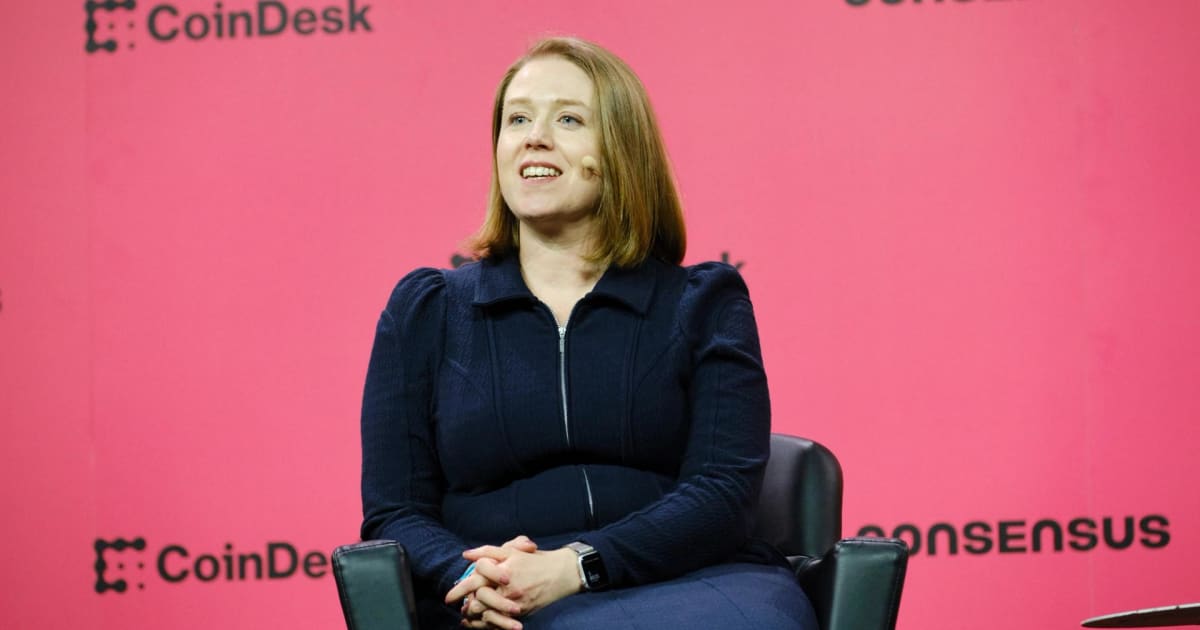
JPMorgan has officially entered the race to tokenize traditional financial assets, filing for a new tokenized fund that validates the Real World Asset (RWA) thesis. This move is set to trigger a multi-billion dollar tech-spend cycle as global banks rush to modernize legacy infrastructure. We analyze why Indian IT stocks like TCS and Infosys are the primary 'picks and shovels' play for this digital gold rush.
The Institutional Rubicon: Why JPMorgan’s Tokenized Fund Changes Everything
The financial world just witnessed a definitive 'crossing of the Rubicon.' JPMorgan Chase, a behemoth with over $3.8 trillion in assets under management, has filed to launch a new tokenized fund. This isn't a pilot program or a sandbox experiment; it is the commercialization of blockchain technology at the highest echelons of Wall Street. By moving traditional investment vehicles onto a distributed ledger, JPMorgan is signaling that the 'Tokenization of Everything' has begun.
To understand why this matters now, one must look at the inefficiency of current market plumbing. In the traditional system, clearing and settlement (T+1 or T+2) involve a web of intermediaries, manual reconciliations, and trapped liquidity. Tokenization allows for atomic settlement—where the transfer of the asset and the payment happen simultaneously and instantaneously. BlackRock CEO Larry Fink previously called tokenization 'the next generation for markets,' and JPMorgan’s latest filing is the first major structural brick in that wall.
For the Indian market, the implications are profound. India does not just export software; it exports the operational backbone of global banking. As Wall Street shifts to blockchain, the trillion-dollar question is: who will build the bridges between legacy COBOL systems and the new Ethereum-based or private EVM (Ethereum Virtual Machine) ledgers? The answer lies in the corridors of Mumbai, Bengaluru, and Pune.
Deep Market Impact: Connecting Wall Street’s Blockchain to Dalal Street’s Balance Sheets
When global banks transition to tokenization, they don't do it alone. They rely on their strategic partners—the Indian IT services sector. Historically, the BFSI (Banking, Financial Services, and Insurance) vertical contributes between 25% and 40% of the total revenue for companies like TCS (NSE: TCS) and Infosys (NSE: INFY).
We are currently seeing a 'Legacy Modernization 2.0' cycle. The first cycle was moving from on-premise servers to the Cloud. This new cycle is moving from centralized databases to tokenized ledgers. According to a report by BCG and ADDX, the tokenization of global illiquid assets is projected to be a $16 trillion business by 2030. Even if Indian IT captures a mere 1% of the technology spend required to facilitate this, it represents a $160 billion incremental revenue opportunity over the next decade.
In 2022, when the first major institutional tokenization pilots were announced, the Nifty IT index saw a significant re-rating as investors front-ran the expected digital transformation spend. Today, with JPMorgan providing a concrete product launch, the 'Proof of Concept' phase is over. We are entering the 'Implementation Phase,' which is significantly more lucrative for service providers.
How will the tokenization of assets affect Indian IT services revenue?
Asset tokenization requires a complete overhaul of the middle and back-office operations of a bank. This includes integrating smart contracts into compliance engines, building secure digital custody solutions, and ensuring cross-chain interoperability. These are high-margin, complex consulting projects. Unlike commoditized application maintenance, blockchain integration requires specialized architecture skills that command a 20-30% premium in billing rates. For an investor, this means not just revenue growth, but margin expansion for the IT majors.
Stock-by-Stock Breakdown: The Winners of the Tokenization Era
1. Tata Consultancy Services (NSE: TCS)
TCS is perhaps the best-positioned company globally to benefit from this shift. Their proprietary 'Quartz' blockchain solution is already being used by several central banks and exchanges for cross-border settlements. With a market cap exceeding ₹15 Lakh Crore and a robust P/E ratio of ~28x, TCS is the 'safe harbor' for blockchain exposure. Their deep integration with JPMorgan's existing systems makes them the natural choice for scaling this tokenized fund infrastructure.
2. Infosys (NSE: INFY)
Infosys has been aggressively building its 'Blockchain-as-a-Service' (BaaS) platform. Their focus is on the interoperability layer—ensuring that a tokenized fund on one ledger can communicate with a payment system on another. With a current P/E of ~25x and a dividend yield that attracts value investors, Infosys offers a growth-at-reasonable-price (GARP) play on the tokenization trend. Watch for their 'Topaz' AI-driven blockchain analytics to gain traction.
3. Wipro (NSE: WIPRO)
Under its 'Lab45' initiative, Wipro has been filing patents related to decentralized identity and secure asset transfer. While Wipro has lagged behind TCS in recent quarters, its lower valuation (P/E ~22x) makes it a tactical turnaround play. If the tokenization trend accelerates, Wipro’s specialized consulting wing, Capco, which focuses exclusively on financial services, will be a significant revenue driver.
4. Tech Mahindra (NSE: TECHM)
Tech Mahindra has a unique niche in the convergence of 5G and blockchain. As tokenized assets require real-time, high-speed data validation, TechM’s expertise in telecom infrastructure gives it an edge in building the 'Edge Computing' layer for blockchain networks. Their 'Blockchain Center of Excellence' in Hyderabad is already working on RWA (Real World Asset) projects for European banks.
5. LTIMindtree (NSE: LTIM)
As a mid-to-large cap challenger, LTIMindtree is more agile than the 'Big Three.' They have demonstrated a high win rate in digital transformation deals. Their exposure to the 'Buy-Side' (asset managers and hedge funds) makes them a direct beneficiary as more funds follow JPMorgan’s lead into tokenization.
Expert Perspective: The Bull vs. Bear Case
"The tokenization of funds is the final nail in the coffin for traditional T+2 settlement. It turns static assets into programmable code, unlocking liquidity that has been trapped for decades." — Bullish View
The Bulls argue that we are at the start of a multi-year 'Supercycle' in IT spending. They point to the fact that tokenization reduces operational costs for banks by up to 40%, making the ROI on these IT projects undeniable even in a high-interest-rate environment.
The Bears, however, caution against over-optimism. They point to the 'Regulatory Patchwork' across different countries. If the SEC in the US, the SEBI in India, and the ESMA in Europe cannot agree on a unified standard for digital assets, the adoption will be fragmented and slow. Furthermore, the 'Cybersecurity' risk of smart contracts remains a concern; a single bug in a multi-billion dollar tokenized fund could set the industry back by years.
Actionable Investor Playbook
- For Conservative Investors: Accumulate TCS and Infosys on dips. These companies provide 3-4% dividend yields and have the balance sheets to acquire smaller blockchain startups to maintain their lead.
- For Aggressive Investors: Look at LTIMindtree or Mphasis. These firms have a higher concentration of BFSI revenue and will show more significant 'earnings surprises' if the tokenization trend accelerates.
- Entry Points: The Nifty IT index has recently faced resistance. Look for entry points when the index nears its 200-day moving average, as institutional accumulation usually happens at these levels.
- Time Horizon: This is a 3-5 year structural play. Do not expect 'multibagger' returns in three months; expect steady compounding driven by earnings growth.
Risk Matrix: What Could Go Wrong?
Investors must remain cognizant of the hurdles that could derail this thesis:
- Regulatory Friction (High Probability): Central banks may view private bank-led tokenization as a threat to Central Bank Digital Currencies (CBDCs), leading to restrictive legislation.
- Interoperability Deadlocks (Medium Probability): If JPMorgan uses one blockchain and Goldman Sachs uses another, and they can't 'talk' to each other, the efficiency gains are lost.
- Cybersecurity Vulnerabilities (Low Probability, High Impact): A major hack of an institutional ledger would lead to an immediate flight back to legacy systems.
What to watch next?
Keep a close eye on the RBI’s upcoming whitepaper on digital assets and the SEC’s response to JPMorgan’s filing. Additionally, the quarterly earnings calls of TCS and Infosys in the coming months will be critical. Listen for keywords like 'RWA,' 'Distributed Ledger,' and 'Modernization Spend' in the management commentary. If these terms move from the 'Innovation' section to the 'Core Revenue' section, the rally is officially on.
See TCS's AI Score
Our algorithmic screener scores TCS on fundamentals, momentum, and risk — free to try, no card needed.
Try the AI Screener →Have questions about this story?
Ask Welth, our finance-focused AI research assistant, for a deeper breakdown — free trial included.
Chat with Welth AI →Disclaimer: This content is generated by WelthWest Research Desk based on publicly available reports and is for informational purposes only. It does not constitute financial advice, investment recommendations, or an offer to buy or sell securities. Always consult a qualified financial advisor before making investment decisions.
