Key Takeaway
The stalled FIT21 bill creates a 'regulatory vacuum' that prevents institutional capital from flowing into the Web3 ecosystem, directly threatening the high-margin Blockchain-as-a-Service (BaaS) pipelines of Indian IT majors like Tech Mahindra and TCS.
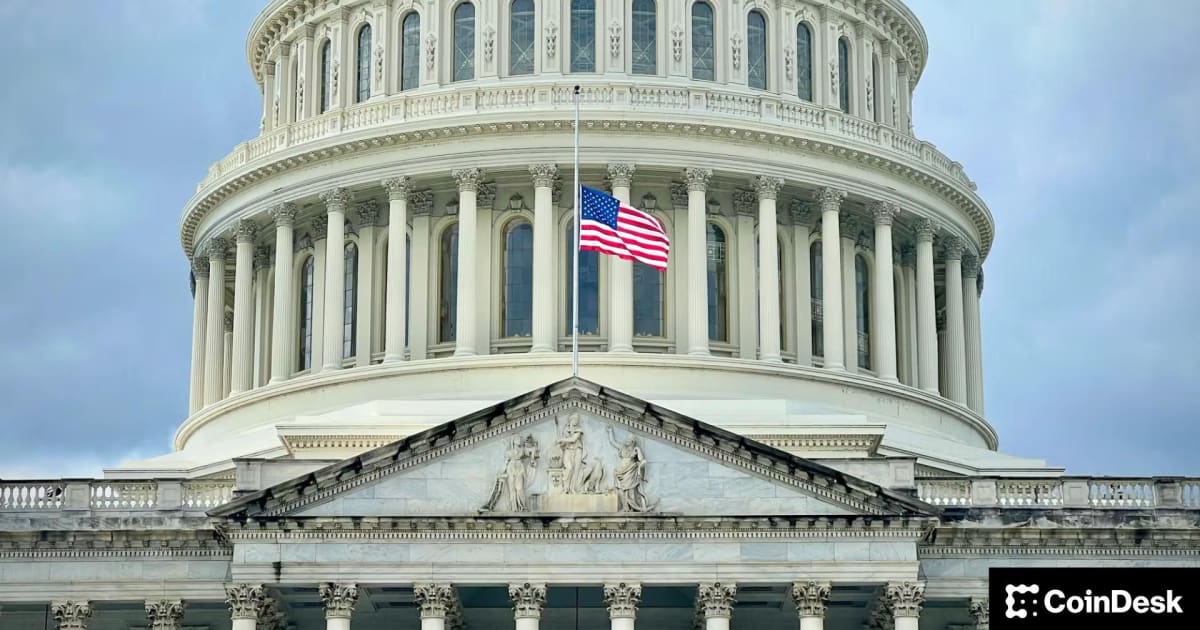
JPMorgan's latest alert regarding the Financial Innovation and Technology for the 21st Century Act (FIT21) suggests a closing window for legislative clarity in 2024. This delay doesn't just affect US exchanges; it creates a ripple effect that stalls Indian regulatory frameworks and jeopardizes billions in projected digital transformation revenue for the Nifty IT sector.
The Closing Window: Why JPMorgan’s FIT21 Warning is a Global Red Flag
In a recent communique that has sent ripples through both Wall Street and Dalal Street, JPMorgan analysts have sounded the alarm on the Financial Innovation and Technology for the 21st Century Act (FIT21). The bill, which aims to provide a clear regulatory roadmap for digital assets by defining the jurisdictional boundaries between the Securities and Exchange Commission (SEC) and the Commodity Futures Trading Commission (CFTC), is facing a 'closing legislative window' as the US election cycle nears its crescendo.
For the uninitiated, FIT21 is not just another piece of crypto legislation. It is the definitive attempt to move the industry away from 'regulation by enforcement' toward a structured framework. JPMorgan’s bearish outlook stems from the reality that without a floor vote soon, the bill risks being relegated to the legislative graveyard of the current Congress. Why does this matter now? Because the institutional 'wall of money'—the trillions in pension funds and corporate treasuries—remains locked behind a door that only regulatory clarity can open.
How will the US FIT21 bill delay affect Indian crypto regulations?
Historically, Indian regulators, specifically the Reserve Bank of India (RBI) and SEBI, have adopted a 'fast follower' approach to complex financial instruments. When the US SEC approved Bitcoin ETFs, it catalyzed a shift in the tone of Indian policy discussions. Conversely, a stalemate in Washington provides the RBI with the perfect justification to maintain its conservative, 'wait-and-watch' stance.
This paralysis is particularly damaging for India's Web3 and Blockchain-as-a-Service (BaaS) sector. According to NASSCOM, India accounts for nearly 11% of the global Web3 talent pool. However, without a domestic framework that mirrors international standards, this talent is increasingly migrating to Dubai and Singapore. A delay in FIT21 means a delay in the G20-led 'Global Framework for Crypto Assets,' effectively freezing the domestic policy pipeline for at least another 12 to 18 months.
Deep Market Impact: Connecting Washington Gridlock to the Nifty IT Index
While the immediate impact of the FIT21 delay is felt by US-based exchanges like Coinbase (COIN), the secondary impact on the Indian IT services sector is profound but often overlooked. Indian IT firms have pivoted heavily toward 'Digital Transformation 2.0,' where blockchain, smart contracts, and tokenization are key revenue drivers.
"Regulatory uncertainty in the US is the single biggest hurdle for our enterprise blockchain pilots moving into full-scale production," notes a senior lead at a Tier-1 Indian IT firm.
In 2022, when the 'crypto winter' coincided with the collapse of FTX, the Nifty IT index saw a drawdown of nearly 25%. While the current situation is not a crash, it represents a growth ceiling. Institutional clients in the BFSI (Banking, Financial Services, and Insurance) vertical—which contributes roughly 30-40% of revenue for firms like TCS and Infosys—are hesitant to sign multi-year blockchain contracts if the underlying asset class remains in a legal gray zone.
Which Indian stocks are most sensitive to crypto regulatory shifts?
The impact is not uniform across the sector. We have identified four key NSE-listed stocks that are directly in the line of fire due to their heavy investment in blockchain intellectual property (IP).
- Tata Consultancy Services (TCS) [NSE: TCS]: TCS has developed 'Quartz,' a sophisticated blockchain platform used for cross-border settlements and corporate actions. With a Market Cap of ~₹15.2 Lakh Crore and a P/E of 30.5, TCS is the bellwether. A delay in FIT21 slows down the adoption of Quartz by US-based Tier-1 banks, potentially impacting the 'incremental revenue' growth that justifies its premium valuation.
- Tech Mahindra [NSE: TECHM]: TechM is arguably the most aggressive Indian firm in the Web3 space. They have launched a 'Metaverse-as-a-Service' and have over 60+ active blockchain projects. With a P/E of around 45x, the stock is priced for high growth. Regulatory gridlock acts as a direct headwind to their 2025-26 revenue targets in the digital engineering space.
- Infosys [NSE: INFY]: Infosys has integrated blockchain into its 'Finacle' core banking solution. As US banks wait for FIT21 to clarify how they can hold digital assets, the rollout of these blockchain-enabled banking modules is being deferred, affecting Infosys's high-margin software licensing revenue.
- Wipro [NSE: WIPRO]: Wipro focuses on supply chain and provenance blockchain solutions. While less sensitive to 'crypto' prices, they are highly sensitive to the 'legal definition' of digital tokens used in supply chain finance.
Expert Perspective: The Bull vs. Bear Case
The Bear Case: Analysts at WelthWest argue that 'Regulation by Enforcement' will continue to bleed the industry. This will lead to a 'de-risking' phase where US enterprises pull back on R&D spend for blockchain, directly hitting the order books of Indian IT exporters. We expect a 200-300 basis point compression in the growth of the 'Digital' segment for these firms if FIT21 fails to pass this year.
The Bull Case (Contrarian): Some argue that a delay in the US gives India a 'sovereign window' to lead. If the RBI moves forward with the Digital Rupee (CBDC) and creates a sandbox for private blockchains, Indian IT firms could pivot to domestic and Middle Eastern markets, reducing their dependence on US legislative cycles. However, this requires a level of regulatory agility that has yet to be demonstrated.
Actionable Investor Playbook: Navigating the Uncertainty
Given the bearish sentiment surrounding the legislative timeline, investors should adopt a defensive posture regarding 'pure-play' blockchain exposure.
- For Short-term Traders: Watch the ₹3,800 level on TCS and the ₹1,400 level on Infosys. If these supports break on high volume following negative news from the US House Financial Services Committee, it may signal a broader sector-wide de-rating.
- For Long-term Investors: The 'Blockchain-as-a-Service' theme is not dead; it is delayed. Use periods of regulatory-induced volatility to accumulate Tech Mahindra and TCS. The focus should be on firms with high Operating Profit Margins (OPM) that can weather a slowdown in new contract signings.
- The 'DeFi' Hedge: As centralized, regulated entities face hurdles, Decentralized Finance (DeFi) protocols may see increased usage. While not directly tradable on the NSE, investors can look at companies like HCLTech which have a more diversified, non-BFSI revenue base.
Risk Matrix: Assessing the FIT21 Fallout
| Risk Factor | Probability | Impact on NSE Stocks |
|---|---|---|
| FIT21 Bill Expiry (No Vote) | High (70%) | Negative; 2-4% correction in IT stocks. |
| SEC Intensifies 'Regulation by Enforcement' | Moderate (50%) | Very Negative; Increased volatility in BFSI-heavy IT firms. |
| RBI Maintains Status Quo on Crypto | High (80%) | Neutral; Stagnation in domestic Web3 growth. |
| Rapid Adoption of CBDCs globally | Low (20%) | Positive; Massive new revenue stream for TCS/Infosys. |
What to watch next: Key Catalysts for Q3 2024
Investors should keep a close eye on the following dates and events:
- US House Floor Calendar: Any announcement of a floor vote for FIT21 before the August recess.
- RBI Monetary Policy Committee (MPC) Minutes: Look for any shift in language regarding 'Digital Assets' or 'Stablecoins.'
- Nifty IT Q1 Earnings Calls: Specifically, management commentary on 'Digital Transformation' and 'Emerging Tech' pipelines.
- G20 Finance Ministers Meeting: Progress on the unified crypto regulatory roadmap.
The warning from JPMorgan is a sobering reminder that innovation is often at the mercy of bureaucracy. For the Indian investor, the message is clear: the road to a blockchain-powered future is currently blocked by a legislative bottleneck in Washington, and the impact will be felt right here in our portfolios.
See TCS's AI Score
Our algorithmic screener scores TCS on fundamentals, momentum, and risk — free to try, no card needed.
Try the AI Screener →Have questions about this story?
Ask Welth, our finance-focused AI research assistant, for a deeper breakdown — free trial included.
Chat with Welth AI →Disclaimer: This content is generated by WelthWest Research Desk based on publicly available reports and is for informational purposes only. It does not constitute financial advice, investment recommendations, or an offer to buy or sell securities. Always consult a qualified financial advisor before making investment decisions.