Key Takeaway
The staggering $40 billion valuation target for Kalshi signals a monumental shift in global finance towards event-based derivatives, potentially disrupting traditional exchanges and creating new investment frontiers. For Indian investors, this trend highlights the untapped potential and regulatory hurdles for alternative asset classes, demanding a re-evaluation of long-term strategies for exchange operators and fintech innovators.

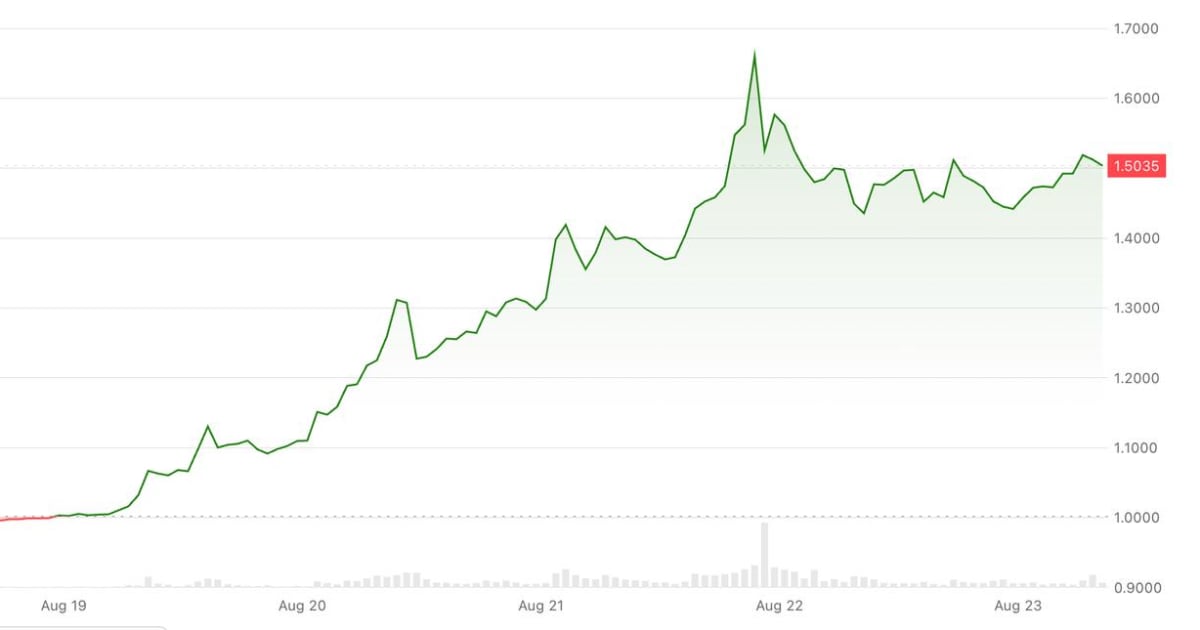
Prediction market giant Kalshi is targeting an ambitious $40 billion valuation, underscoring the explosive growth and professionalization of event-based derivative trading. This seismic shift could redefine risk management and investment strategies globally, exerting pressure on traditional financial exchanges. While India's regulatory landscape presents unique challenges, the global embrace of these novel instruments necessitates a deep dive into their potential impact on Indian markets and listed equities.
Kalshi's $40 Billion Ambition: A Watershed Moment for Global Derivatives and Indian Markets
The financial world is abuzz with the news that Kalshi, a leading regulated prediction market platform, is aiming for an eye-watering $40 billion valuation. This isn't merely another unicorn story; it's a profound signal of the professionalization and mainstreaming of event-based derivative trading. For decades, prediction markets lingered on the fringes, often associated with speculative betting. However, Kalshi's audacious target, backed by significant venture capital interest, heralds a new era where the ability to trade on future outcomes—from economic indicators to geopolitical events—is becoming a legitimate, sophisticated financial instrument. This paradigm shift has far-reaching implications, particularly for evolving markets like India, which are consistently seeking innovative pathways for growth and risk management.
The timing of Kalshi's aggressive push is no coincidence. The global financial ecosystem is experiencing an unprecedented demand for alternative asset classes and more granular hedging tools. Traditional equity and commodity derivatives, while robust, often fail to capture the nuances of complex, real-world events that drive market volatility. Event-based derivatives offer a unique solution, allowing participants to directly price and hedge against specific non-financial outcomes. This surge in interest is catalyzed by advancements in blockchain technology, which provides the transparency and immutability crucial for such markets, and a growing regulatory acceptance in select jurisdictions. For Indian investors, understanding this global trend is paramount, as it foreshadows potential future innovations and competitive pressures on domestic financial infrastructure.
How Will Event-Based Derivatives Impact India's Financial Landscape?
India's financial markets, characterized by their robust derivatives segment and rapid technological adoption, stand at a critical juncture. The National Stock Exchange (NSE) alone recorded an average daily turnover of over INR 300 trillion (approximately $3.6 trillion) in equity derivatives in the fiscal year 2023-24, making it one of the world's largest. This immense liquidity and investor appetite demonstrate India's readiness for sophisticated financial products. However, the regulatory framework remains a formidable barrier for platforms like Kalshi.
The primary hurdle lies in the classification of prediction markets. Indian regulators, particularly SEBI and the RBI, tend to view such platforms with caution, often categorizing them closer to gambling than legitimate financial derivatives. This conservative stance, while aimed at investor protection, inadvertently limits innovation and access to potentially valuable hedging instruments. Should this regulatory stance evolve, perhaps drawing parallels to how commodity derivatives were initially viewed before becoming mainstream, India could unlock a massive new market segment. The last major structural shift in Indian derivatives occurred with the introduction of equity futures and options in the early 2000s, which dramatically boosted market participation and liquidity. A similar liberalisation for event-based derivatives could trigger an analogous, if not more profound, transformation.
The professionalization of prediction markets by entities like Kalshi, targeting institutional-grade investors and robust regulatory compliance in their operating geographies, provides a template for how such instruments could eventually integrate into regulated financial systems. If India were to embrace a regulated framework for event-based derivatives, it could significantly enhance price discovery for a myriad of factors impacting the economy, from election outcomes to monsoon predictions, offering sophisticated hedging mechanisms for businesses and investors alike. This would not only attract global capital but also foster domestic innovation in financial technology, impacting listed exchanges and associated service providers.
Stock-by-Stock Breakdown: Indian Equities in the Crosshairs
The rise of event-based derivatives, even if currently nascent in India, presents both existential threats and potential opportunities for key players in the Indian financial market. Investors must consider the long-term strategic implications for these listed entities.
- BSE Ltd. (BSE.NS): As India's oldest stock exchange, BSE has a market capitalization of approximately INR 13,500 Crores and a trailing P/E ratio around 45x. While BSE has successfully diversified its revenue streams, including its STAR MF platform, its core revenue still relies on transaction fees from equity and derivatives trading. If a significant portion of speculative or hedging capital were to eventually migrate to event-based platforms—either domestic or globally accessible—it could challenge BSE's market share and revenue growth. Conversely, if BSE were to proactively explore partnerships or develop its own regulated event-based derivative products, it could open up entirely new revenue avenues, mirroring its expansion into commodity derivatives through its subsidiary, Indian Clearing Corporation Ltd.
- Multi Commodity Exchange of India Ltd. (MCX.NS): MCX, with a market capitalization of roughly INR 18,000 Crores and a P/E ratio exceeding 60x, is India's premier commodity derivatives exchange. Its business is highly sensitive to trading volumes and the introduction of new, relevant contracts. Event-based derivatives could directly compete with traditional commodity futures if they offer more precise ways to hedge against specific supply chain disruptions, geopolitical events affecting commodity prices, or even weather patterns. For example, a contract on 'monsoon rainfall exceeding X millimeters in Y region' could be a more direct hedge for agricultural businesses than a broad commodity future. MCX could either face erosion of its niche or, strategically, explore the possibility of launching its own regulated event-based contracts related to commodity-specific outcomes.
- Central Depository Services (India) Ltd. (CDSL.NS): CDSL, with a market capitalization of approximately INR 21,000 Crores and a P/E around 55x, serves as a crucial backbone for the Indian securities market, providing depository services. While not directly involved in trading, any expansion of tradable assets in India would necessitate depository services for settlement and custody. If event-based derivatives were to gain regulatory approval and scale, CDSL could see an increase in demat accounts and transaction volumes, albeit indirectly. The challenge would be adapting its infrastructure to potentially novel asset classes and settlement mechanisms, which might differ from traditional equities or derivatives.
- Indian Fintech Sector (Broader Impact): While specific listed fintechs directly benefiting from prediction markets are scarce given the regulatory environment, the sector as a whole could be a significant winner if regulations ease. Companies involved in payment processing (e.g., through banking partners like HDFC Bank or ICICI Bank), data analytics, or blockchain infrastructure could see increased demand. For instance, an IT services giant like Tata Consultancy Services (TCS.NS) or Infosys (INFY.NS) could potentially develop the underlying technology platforms for such exchanges, leveraging their expertise in financial services and blockchain. This represents a long-term opportunity, contingent on regulatory shifts.
Expert Perspective: Bulls vs. Bears on Prediction Markets
"The professionalization of prediction markets by players like Kalshi isn't just about making a bet; it's about making markets more efficient. They're a powerful tool for aggregating dispersed information and achieving superior price discovery for complex, non-financial events. This is the next frontier of derivatives, offering new avenues for risk transfer and capital allocation that traditional instruments simply can't replicate." - Bullish Analyst, WelthWest Research Desk
Bulls argue that the multi-billion dollar valuation targets reflect the immense, untapped potential of event-based derivatives. They see these markets as democratizing access to sophisticated risk management, allowing even small businesses to hedge against specific, impactful events. The transparency and efficiency offered by well-designed prediction markets, especially those leveraging blockchain, could lead to more accurate forecasts and better resource allocation across industries. They point to the vast sums wagered in traditional sports betting and political forecasting, arguing that by bringing this activity into a regulated financial framework, it transforms from gambling into a legitimate investment class, generating significant transaction revenues.
"While the concept is intriguing, the regulatory and ethical minefield surrounding prediction markets is formidable. The line between speculation and gambling is often blurred, and the potential for market manipulation, especially for niche events, remains a significant concern. Until robust, globally harmonized regulatory frameworks are in place, their widespread adoption and impact on established financial markets will be limited, particularly in cautious jurisdictions like India." - Bearish Analyst, WelthWest Research Desk
Bears, on the other hand, emphasize the significant regulatory risks. Many jurisdictions, including India, are wary of products that could be perceived as gambling, potentially leading to outright bans or severe restrictions. The potential for market manipulation in event-based outcomes, where a small group could influence the underlying event or the market's perception of it, is a critical integrity issue. Furthermore, scaling these markets beyond niche events to achieve the liquidity seen in traditional derivatives poses a significant challenge. The ethical implications of trading on sensitive events, such as disease outbreaks or election results, also raise questions about their societal utility versus potential harm.
Actionable Investor Playbook: Navigating the Future of Derivatives
For Indian investors, the immediate impact of Kalshi's valuation on domestic stocks is indirect but signals a long-term trend worth monitoring. This is a story with a multi-year time horizon, requiring strategic patience.
- Watch Closely:
- Regulatory Developments: Monitor SEBI and RBI pronouncements on 'novel financial products,' 'digital assets,' and 'gaming vs. investing.' Any shift in stance towards event-based derivatives would be a major catalyst.
- Global Adoption & Regulation: Observe how major global economies (US, EU) regulate and integrate prediction markets. Successful models abroad could influence Indian policy.
- Technological Advances: Keep an eye on blockchain infrastructure developments that enhance security, transparency, and scalability of these platforms.
- Consider for Long-Term Portfolio:
- Traditional Exchanges (BSE, MCX): While facing potential long-term disruption, these entities also possess the infrastructure and regulatory expertise to adapt. A 'watch' rather than an immediate 'sell' is prudent. Their ability to innovate or partner could define their future resilience. Entry points below 40x P/E for BSE or 50x P/E for MCX might offer a better risk-reward for patient investors, assuming they can navigate future competitive landscapes.
- Enabling Technologies: Companies in the IT services sector (e.g., TCS, Infosys) that specialize in financial technology and blockchain solutions could be indirect beneficiaries if Indian financial institutions decide to build or integrate such platforms in the future.
- Avoid (for now): Direct exposure to any currently unregulated prediction market platforms operating in India due to high regulatory risks and potential legal ambiguities.
Risk Matrix: Assessing the Hurdles for Prediction Markets in India
The path for event-based derivatives in India is fraught with specific risks that investors must acknowledge:
- Regulatory Crackdown (Probability: High, Impact: High): The most significant risk. Indian authorities may categorize prediction markets as gambling, leading to outright bans or severe restrictions. This could stifle any domestic innovation and prevent global players from entering.
- Market Manipulation & Integrity Concerns (Probability: Medium, Impact: High): Ensuring the integrity of event outcomes and preventing manipulation is crucial. If public trust is eroded by perceived unfairness or insider trading on outcomes, the entire concept could be discredited.
- Limited Scalability & Liquidity (Probability: Medium, Impact: Medium): While Kalshi aims for a high valuation, achieving deep liquidity across a wide array of events, comparable to established financial derivatives, is a significant challenge. Niche markets may struggle to attract sufficient participants.
- Ethical & Societal Backlash (Probability: Medium, Impact: Medium): Trading on sensitive events (elections, natural disasters, public health crises) could provoke public outrage and lead to calls for stricter regulation, regardless of economic benefits.
What to Watch Next: Catalysts and Key Dates
The evolution of prediction markets and their potential impact on Indian finance will be shaped by several upcoming events and data points:
- Kalshi's Next Funding Round & IPO Plans: The success of Kalshi's $40 billion valuation target and any subsequent public listing will provide crucial validation for the sector and attract further institutional interest.
- Global Regulatory Precedents: Watch for definitive regulatory rulings or frameworks in major financial hubs like the US (CFTC, SEC) and the EU concerning the classification and oversight of event-based derivatives. These will serve as benchmarks for other nations.
- SEBI/RBI Consultations & White Papers: Any public consultations, working group reports, or white papers from Indian financial regulators regarding novel financial instruments, digital assets, or the 'gaming vs. investing' debate will be critical indicators of future policy direction.
- Technological Advancements in Blockchain: Continued innovation in scalable, secure, and interoperable blockchain platforms will enhance the feasibility and integrity of decentralized prediction markets, potentially influencing regulatory comfort.
- Industry Partnerships & Pilot Projects: Observe any strategic partnerships between traditional financial institutions and prediction market platforms globally. Should Indian exchanges or fintechs explore similar pilot projects (even in a sandbox environment), it would signal a significant shift.
The journey of prediction markets from niche curiosities to multi-billion dollar entities like Kalshi marks a significant inflection point in finance. While India's regulatory environment currently presents unique challenges, the global momentum behind event-based derivatives demands proactive consideration from investors and policymakers alike. The future of risk management and investment may well involve trading on outcomes far beyond traditional financial instruments, potentially reshaping the competitive landscape for Indian exchanges and opening new frontiers for fintech innovation.
See BSE (BSE.NS)'s AI Score
Our algorithmic screener scores BSE (BSE.NS) on fundamentals, momentum, and risk — free to try, no card needed.
Try the AI Screener →Have questions about this story?
Ask Welth, our finance-focused AI research assistant, for a deeper breakdown — free trial included.
Chat with Welth AI →Disclaimer: This content is generated by WelthWest Research Desk based on publicly available reports and is for informational purposes only. It does not constitute financial advice, investment recommendations, or an offer to buy or sell securities. Always consult a qualified financial advisor before making investment decisions.