Key Takeaway
The premature exit of Ashok Vaswani introduces a 'leadership vacuum' discount for Kotak Mahindra Bank, signaling a rocky transition from founder-led to professional management that could see the stock underperform peers like ICICI and HDFC for the next 18-24 months.
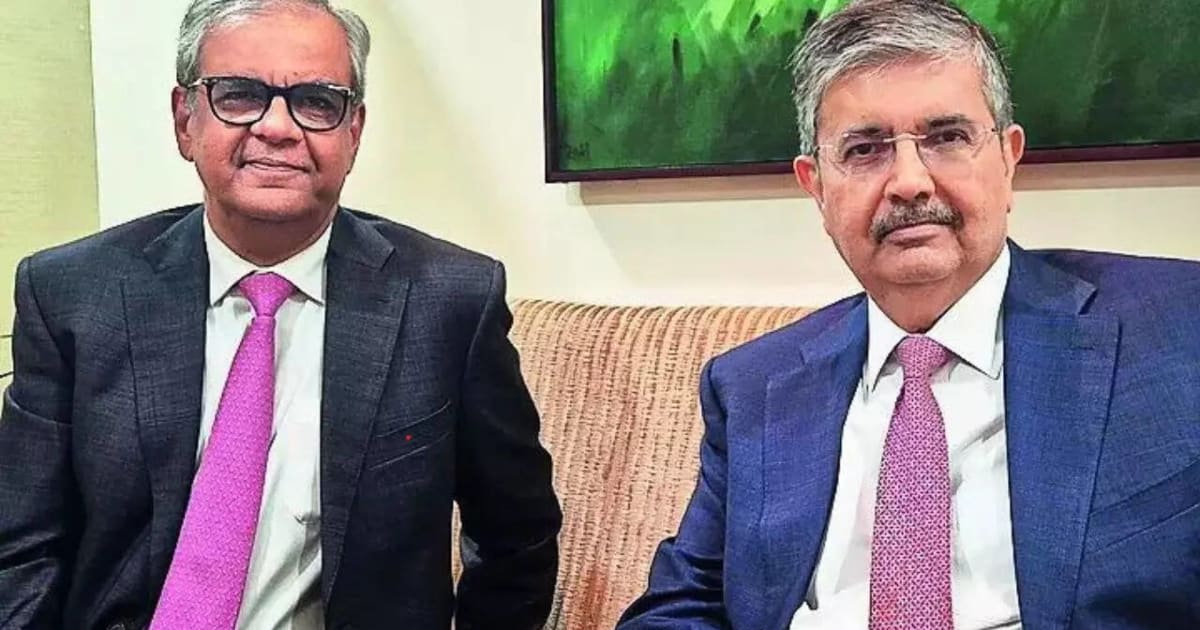
Kotak Mahindra Bank has announced that MD & CEO Ashok Vaswani will step down in December 2026 after just one term. This unexpected leadership churn at India's fourth-largest private lender raises critical questions about institutional stability and the bank's digital transformation roadmap. Investors should brace for heightened volatility as the bank searches for a successor amidst a tightening regulatory environment.
The Sudden Sunset of the Vaswani Era: A Strategic Setback for Kotak Mahindra Bank
In a move that has sent ripples through the Mumbai financial corridors, Kotak Mahindra Bank (NSE: KOTAKBANK) announced that its Managing Director and CEO, Ashok Vaswani, will vacate his position in December 2026. This announcement comes less than a year into his three-year term, creating an atmosphere of 'lame-duck' leadership at a time when the bank is navigating its most significant transition since its inception in 2003. For a bank that was synonymous with the iron-clad stability of its founder, Uday Kotak, this revolving door at the top floor is a narrative shift that the market was not prepared for.
The timing is particularly sensitive. Kotak Mahindra Bank is currently under the regulatory microscope, having recently dealt with Reserve Bank of India (RBI) restrictions on its digital onboarding processes. Vaswani, a veteran with deep international experience at Barclays and Citigroup, was brought in specifically to spearhead the bank's digital evolution and modernize its legacy tech stacks. His departure after only one term suggests either a misalignment of strategic vision with the board or a realization that the institutional inertia of a founder-led bank is harder to pivot than initially anticipated.
How will the CEO exit affect Kotak Mahindra Bank's stock price?
Historically, the Indian banking sector has rewarded stability and penalized leadership uncertainty. When a systemic bank like Kotak (Market Cap: ~₹3.5 Lakh Crore) announces a CEO exit without an immediate internal successor, the 'uncertainty premium' begins to erode the stock's valuation. We expect KOTAKBANK to face immediate de-rating pressure. Currently trading at a Price-to-Book (P/B) ratio of approximately 2.8x, the stock is already at a significant discount to its historical 5-year average of 3.5x. This news could push the valuation closer to the 2.2x - 2.4x range, levels typically reserved for banks with lower Return on Assets (RoA).
Comparing this to the HDFC-HDFC Bank merger or the transition at ICICI Bank from Chanda Kochhar to Sandeep Bakhshi, we see a pattern. Markets stay bearish until a credible, long-term successor is named. In the case of ICICI Bank (NSE: ICICIBANK), the stock remained range-bound for nearly 12 months during the leadership transition before embarking on its massive multi-year bull run. Kotak faces a similar 'waiting room' period. With the Nifty Bank index already facing headwinds from shrinking Net Interest Margins (NIMs), KOTAKBANK is likely to be an underperformer within the sectoral basket.
Deep Market Impact: The Erosion of the 'Kotak Premium'
For over two decades, Kotak Mahindra Bank commanded a valuation premium over its peers because of Uday Kotak’s conservative risk management and the bank’s high-quality CASA (Current Account Savings Account) ratio, which often hovered near 50-60%. However, the transition to a professional management structure is proving to be more friction-heavy than expected. The exit of Vaswani signals that the bank is still searching for its post-founder identity.
Institutional investors, particularly Foreign Institutional Investors (FIIs) who hold a significant stake in KOTAKBANK, hate management churn. In the last three quarters, FIIs have already been trimming their exposure to Indian private banks in favor of IT and defensive sectors. This leadership news provides a catalyst for further rotation out of Kotak and into 'cleaner' stories like ICICI Bank or Axis Bank. We anticipate a potential 5-8% relative underperformance of KOTAKBANK against the Nifty Bank index over the next two quarters.
Stock-by-Stock Breakdown: Winners and Losers
- Kotak Mahindra Bank (KOTAKBANK): The primary loser. Expect a 'lame-duck' period where strategic initiatives, particularly in the digital and credit card space, might slow down. Technical support sits at ₹1,650; a breach here could lead to a slide toward ₹1,520.
- ICICI Bank (ICICIBANK): A major winner. As the most stable and well-managed large-cap private bank currently, ICICI will likely be the primary recipient of institutional funds exiting Kotak. Its superior RoE of ~18% makes it a safer harbor.
- HDFC Bank (HDFCBANK): Neutral to Positive. While HDFC Bank has its own post-merger indigestion to deal with, its leadership stability under Sashidhar Jagdishan stands in stark contrast to Kotak’s current situation.
- Axis Bank (AXISBANK): Winner. Axis has successfully navigated its own leadership transition and the Citi acquisition. For investors looking for a high-growth private bank without the 'founder-exit' baggage, Axis is the logical alternative.
- IndusInd Bank (INDUSINDBANK): Neutral. While it competes for the same mid-market and retail segments, its own asset quality concerns keep it in a different bracket than the top-tier private lenders.
Can Kotak Mahindra Bank maintain its growth trajectory without Vaswani?
The bear case argues that Vaswani was the 'bridge' between the old-school banking model and the future of fintech. His exit might stall the bank's efforts to lower its cost-to-income ratio, which has been creeping up as the bank invests in technology. Without a clear captain for the digital ship, Kotak risks falling behind in the race for Gen-Z customers and high-velocity digital lending.
Conversely, the bull case—often championed by long-term value investors—suggests that Kotak’s middle management and institutional culture are strong enough to withstand a leadership change. They would argue that the 'Kotak way' of banking is ingrained in the DNA of the firm and that Uday Kotak’s presence as a Non-Executive Director ensures the ship remains on course. However, even the bulls must concede that a search for a new CEO in a competitive talent market will be expensive and time-consuming.
"Succession in a founder-led institution is not a single event, but a multi-year process. Kotak is currently in the 'valley of uncertainty' that every great institution must cross. The market's reaction is a reflection of the fear that the bridge to the future has just been shortened." — Senior Analyst, WelthWest Research
Actionable Investor Playbook: Navigating the KOTAKBANK Volatility
For Short-term Traders: The trend is clearly bearish. Any rallies toward the ₹1,850 - ₹1,900 zone should be viewed as selling opportunities. Look for shorting opportunities on the NSE using Put options if the stock breaks the immediate support of ₹1,720.
For Long-term Investors: Do not 'buy the dip' immediately. Wait for the bank to announce the search committee's progress or for a potential internal candidate to emerge. The ideal entry point for a long-term position would be in the ₹1,550 - ₹1,600 range, which offers a better margin of safety and aligns with historical valuation floors.
Sectoral Rotation: Shift weightage from KOTAKBANK to ICICIBANK and AXISBANK. The 'stability premium' is currently shifting toward banks with settled leadership teams and clear 3-year growth roadmaps.
Risk Matrix: Assessing the Downside
- Regulatory Overhang (High Probability, High Impact): If the RBI perceives the leadership churn as a sign of weak governance, it could extend the timeline for lifting restrictions on digital onboarding, severely impacting new customer acquisition.
- Talent Attrition (Medium Probability, Medium Impact): Senior executives who joined under Vaswani's vision may choose to exit, leading to a 'brain drain' in the technology and retail banking divisions.
- Execution Lag (High Probability, Medium Impact): Large-scale IT projects often lose momentum during leadership transitions, which could delay Kotak's goal of becoming a 'tech-first' bank.
What to watch next: Key Catalysts for KOTAKBANK
Investors should keep a close eye on the following dates and data points:
- Q3 FY25 Earnings Call: Management will be grilled on the reasons for Vaswani's exit. Listen for 'code words' regarding strategic shifts or board disagreements.
- Search Committee Formation: The speed and profile of the search committee will indicate how seriously the bank is looking for an external 'heavy hitter' versus an internal 'continuity candidate.'
- CASA Ratio Trends: Any significant drop in the CASA ratio would indicate that the leadership uncertainty is starting to affect depositor confidence, a major red flag for any bank.
- RBI Communication: Any updates from the regulator regarding the bank's digital audit will be more critical than ever, as a new CEO will need a clean slate to operate.
In conclusion, while Kotak Mahindra Bank remains a fundamentally strong institution with a robust balance sheet, the exit of Ashok Vaswani is a strategic 'speed bump' that cannot be ignored. The stock is likely to remain in a period of consolidation and underperformance until a clear, credible path for the next decade of leadership is established.
See KOTAKBANK's AI Score
Our algorithmic screener scores KOTAKBANK on fundamentals, momentum, and risk — free to try, no card needed.
Try the AI Screener →Have questions about this story?
Ask Welth, our finance-focused AI research assistant, for a deeper breakdown — free trial included.
Chat with Welth AI →Disclaimer: This content is generated by WelthWest Research Desk based on publicly available reports and is for informational purposes only. It does not constitute financial advice, investment recommendations, or an offer to buy or sell securities. Always consult a qualified financial advisor before making investment decisions.