Key Takeaway
Kotak Mahindra Bank’s acquisition of Deutsche Bank’s Indian retail franchise is a masterclass in inorganic growth, instantly cementing its dominance in the high-yield wealth management segment while forcing a re-rating of the mid-tier private banking space.
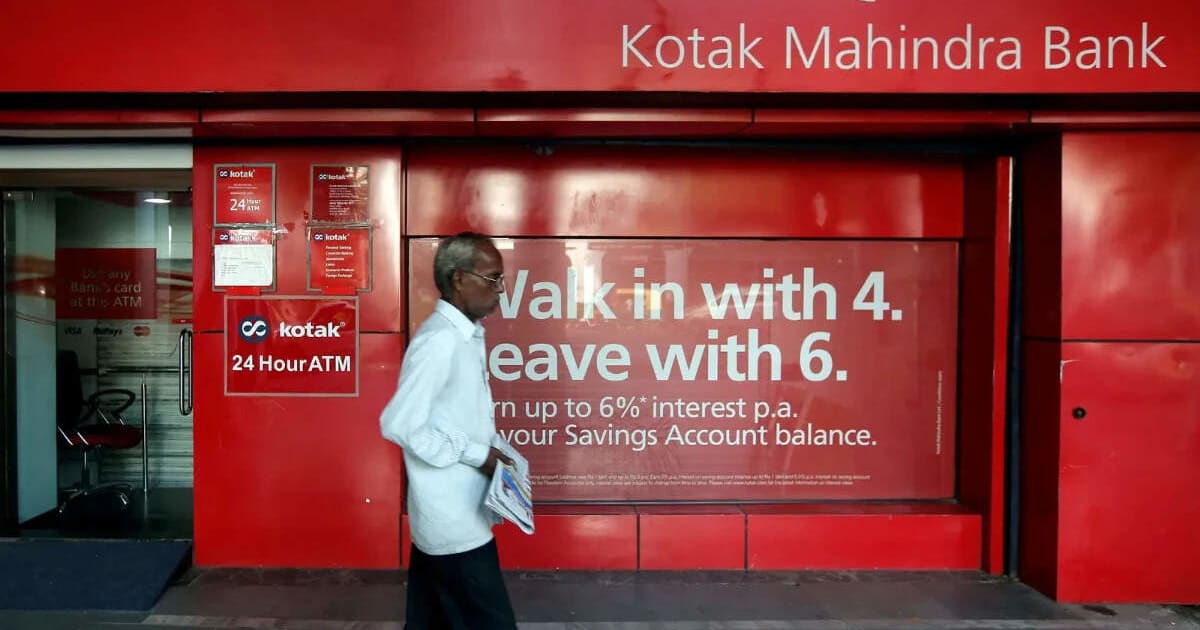
Kotak Mahindra Bank has effectively leapfrogged years of organic acquisition costs by absorbing Deutsche Bank’s elite Indian retail and wealth management portfolio. This strategic consolidation signals a permanent shift in the Indian banking landscape, where domestic giants are systematically absorbing the footprint of retreating global players.
The Strategic Pivot: Why Kotak’s Deutsche Acquisition Changes Everything
In a move that reverberates across the Dalal Street landscape, Kotak Mahindra Bank (KOTAKBANK) has finalized the acquisition of Deutsche Bank’s Indian retail and wealth management operations. This is not merely an asset purchase; it is a calculated strike at the heart of the ultra-high-net-worth individual (UHNI) market. By absorbing a sophisticated client base of approximately 1.5 lakh accounts, Kotak effectively bypasses the high customer acquisition costs (CAC) typically associated with scaling premium retail banking.
Historically, foreign banks in India have struggled with the regulatory overhead and the aggressive local competition posed by domestic private lenders. The retreat of European majors from the Indian retail space mirrors the exit of Citi India’s consumer business to Axis Bank. This consolidation trend suggests that the 'foreign bank premium'—once a hallmark of prestige—has been eclipsed by the superior digital infrastructure and localized product suites of India's top-tier private banks.
How will this acquisition impact the Indian banking sector valuation?
The acquisition is expected to be earnings-accretive within 18 to 24 months. By integrating Deutsche Bank’s high-margin wealth management book, Kotak’s fee-to-income ratio is poised for a structural uptick. In the current interest rate environment, where net interest margins (NIMs) are under pressure, the focus shifts toward non-interest income. The wealth management segment provides a hedge, offering a recurring fee stream that is less sensitive to the volatility of interest rate cycles.
When we look at the P/E ratios of major private lenders, Kotak has often traded at a premium due to its conservative risk management and high-quality book. This acquisition justifies that premium by expanding the bank's 'moat'—its ability to cross-sell insurance, brokerage, and asset management services to a captive, high-net-worth audience.
Stock-by-Stock Breakdown: Winners and Movers
- Kotak Mahindra Bank (KOTAKBANK): The primary beneficiary. Expect a short-term margin compression due to integration costs, followed by a long-term valuation rerating as the wealth book scales.
- Axis Bank (AXISBANK): As the previous major acquirer of foreign retail assets (Citi), Axis is now under pressure to prove that its integration is delivering superior ROE compared to Kotak’s new venture.
- HDFC Bank (HDFCBANK): The sector benchmark. HDFC remains the primary competitor for the same affluent client demographic; expect more aggressive product launches in their private banking vertical to counter Kotak’s expansion.
- ICICI Bank (ICICIBANK): Beneficiary of the sector-wide consolidation. As foreign banks exit, the 'big three' private banks are capturing the market share, leading to consolidated pricing power.
- Bajaj Finance (BAJFINANCE): While not a bank, this NBFC competes for the affluent SME segment. Kotak’s deeper penetration into this space could create a localized pricing war for SME lending.
The Expert Perspective: Bull vs. Bear
The Bull Case: Proponents argue that Kotak is buying 'quality at a discount.' The Deutsche Bank portfolio is characterized by low delinquency rates and high cross-sell potential. Furthermore, the operational leverage gained by scaling the existing infrastructure makes this a low-risk, high-reward integration compared to building from scratch.
The Bear Case: Critics point to the 'cultural friction' risk. Migrating high-net-worth clients—who are notoriously sensitive to service changes—from a global brand to a domestic bank is fraught with churn risk. Should the service transition be clunky, Kotak risks losing the very clients they paid a premium to acquire.
Actionable Investor Playbook: Navigating the Shift
Investors should adopt a 'Wait and Accumulate' strategy on KOTAKBANK. The stock may witness near-term volatility as the market digests the integration costs. Look for entry points at the 200-day moving average, typically a strong support level for large-cap banking stocks.
For the broader sector, keep a close watch on the Fee-to-Income ratio reported in the next two quarterly filings. If Kotak demonstrates a successful migration without a spike in the attrition rate of the acquired client base, it will serve as a massive catalyst for an upward revision in target prices.
Risk Matrix
| Risk Factor | Probability | Impact |
|---|---|---|
| Client Attrition | Medium | High |
| Integration Friction | Medium | Medium |
| Regulatory Scrutiny | Low | Medium |
| Macroeconomic Slowdown | High | Medium |
What to Watch Next
The critical data point to monitor is the Q3 Earnings Call, where management will likely provide guidance on the integration timeline and cost-to-income targets. Additionally, watch for RBI’s commentary on further foreign bank exits; if another major global player signals an exit, expect a 'Sector Consolidation' rally that will favor the top-tier domestic private banks across the board.
See KOTAKBANK's AI Score
Our algorithmic screener scores KOTAKBANK on fundamentals, momentum, and risk — free to try, no card needed.
Try the AI Screener →Have questions about this story?
Ask Welth, our finance-focused AI research assistant, for a deeper breakdown — free trial included.
Chat with Welth AI →Disclaimer: This content is generated by WelthWest Research Desk based on publicly available reports and is for informational purposes only. It does not constitute financial advice, investment recommendations, or an offer to buy or sell securities. Always consult a qualified financial advisor before making investment decisions.