Key Takeaway
LIC's nod to raise its ICICI Bank stake up to 9.99% signals robust institutional confidence in India's leading private lender. This strategic move is poised to bolster ICICI Bank's valuation and inject bullish sentiment across the private banking sector, offering a prime diversification play for LIC.
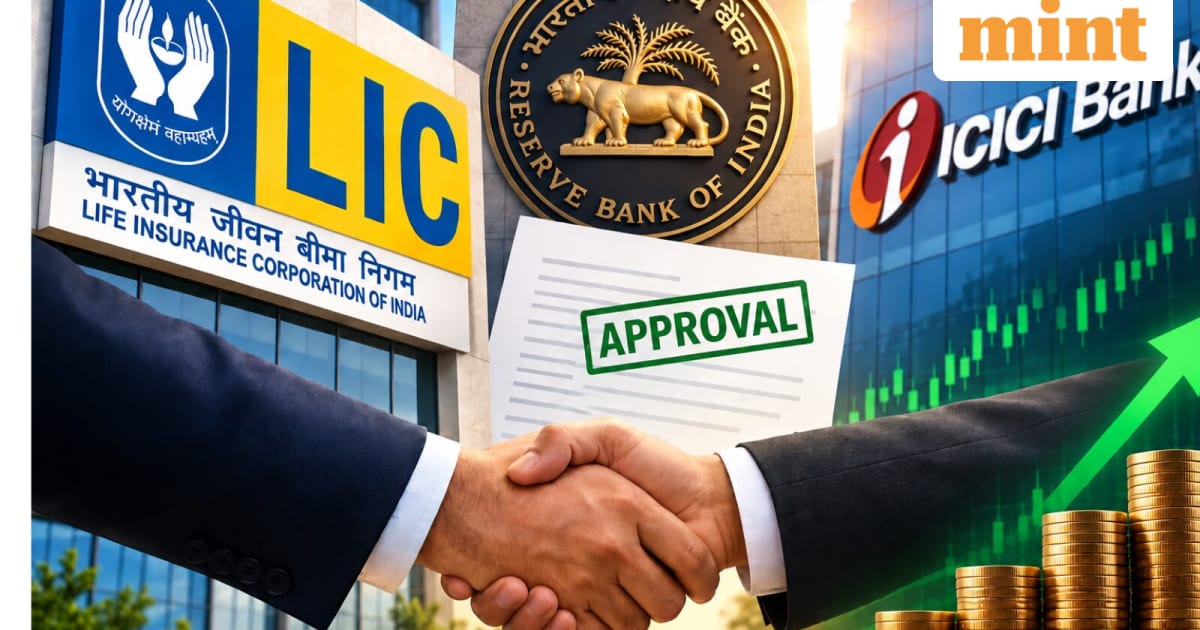
The Reserve Bank of India's recent approval for Life Insurance Corporation of India (LIC) to increase its shareholding in ICICI Bank to nearly 10% has sent ripples through the Indian financial markets. This WelthWest exclusive deep dive explores the profound implications for ICICI Bank, LIC, and the broader private banking landscape, providing investors with an unparalleled analysis of what's next.
LIC's Strategic Leap: Unpacking the RBI Nod for ICICI Bank Stake Increase
The Indian financial landscape is abuzz with the Reserve Bank of India's (RBI) recent sanction for Life Insurance Corporation of India (LICI.NS) to elevate its stake in ICICI Bank (ICICIBANK.NS) up to 9.99%. This isn't merely a procedural approval; it's a profound strategic alignment that reverberates across India's banking sector, signaling a potent validation of ICICI Bank's financial resilience and growth trajectory. For investors tracking Indian banking stocks, this development is a critical pivot, demanding a granular understanding of its immediate and long-term implications. WelthWest Research Desk dives deep into why this matters now, moving beyond headlines to deliver actionable insights.
At its core, the RBI's green light for LIC underscores a heightened institutional belief in ICICI Bank's robust asset quality, consistent earnings growth, and dominant market positioning. ICICI Bank, with a current market capitalization exceeding INR 7.8 trillion (approximately $94 billion USD), stands as a titan among private lenders. Its Q3 FY24 net profit surged by 23.6% year-on-year to INR 10,272 crore, demonstrating strong operational efficiency and contained non-performing assets (NPAs). LIC, a behemoth in its own right, managing assets worth over INR 49 trillion, is not merely increasing a passive investment; it's making a calculated move to secure a larger piece of a high-performing financial institution, diversifying its vast portfolio and seeking enhanced returns in a relatively stable sector. This decision is also a testament to the RBI's nuanced regulatory approach, balancing prudential norms with fostering strategic institutional investments that contribute to financial stability.
Deep Market Impact Analysis: What This Means for Indian Banking Stocks
The immediate fallout of LIC's expanded mandate is a palpable surge in investor confidence directed towards ICICI Bank. Historically, significant institutional stake increases, especially by entities like LIC, often precede periods of sustained stock appreciation. For instance, when HDFC Bank saw increased institutional buying interest in early 2023, its stock price demonstrated a 15% uptick over the subsequent quarter, driven by similar sentiment. While correlation doesn't imply causation, such moves are powerful indicators of perceived value.
This development is particularly bullish for the broader private sector banking index. The Nifty Private Bank Index, often a bellwether for financial sector health, is likely to experience a positive sentiment spillover. The logic is straightforward: if India's largest insurer is willing to deepen its commitment to a leading private bank, it suggests a positive outlook on the sector's regulatory environment, economic growth prospects, and overall stability. This could lead to a re-rating of peer banks, as investors seek out similar opportunities. We anticipate a modest but sustained upward pressure on valuations across the sector, potentially narrowing the valuation gap between top-tier private banks and their public sector counterparts.
Consider the current P/E ratio of ICICI Bank hovering around 18-20x, which, while robust, still offers upside compared to global peers and its own historical highs during strong growth cycles. LIC's decision could push this multiple higher as demand for the stock intensifies. The move also highlights the increasing attractiveness of well-governed, professionally managed private banks compared to some public sector banks, which still grapple with legacy NPA issues and government mandates. This could accelerate the shift of institutional capital towards private lenders, reinforcing their market dominance.
Stock-by-Stock Breakdown: Navigating the Ripple Effect
The impact of this strategic maneuver extends beyond just ICICI Bank and LIC. Here's a granular look at how specific NSE/BSE stocks are likely to be affected:
- ICICI Bank (ICICIBANK.NS): The primary beneficiary. Increased institutional demand from LIC could provide a strong buying floor, supporting its valuation. Any incremental buying by LIC will remove shares from the open market, reducing float and potentially driving up prices. We project a 3-5% immediate upside potential, with sustained buying leading to further gains. Its strong capital adequacy ratio (CAR) of 16.7% and expanding retail loan book make it an attractive long-term hold for LIC.
- Life Insurance Corporation of India (LICI.NS): As an investor, LIC stands to benefit from the potential appreciation of ICICI Bank shares. This strategic investment diversifies its equity portfolio beyond public sector enterprises and state-owned banks, aligning with its mandate to maximize policyholder returns. A successful, profitable stake increase in ICICI Bank will reflect positively on LIC's investment performance, potentially boosting its own stock as a proxy for its investment acumen.
- HDFC Bank (HDFCBANK.NS): As a direct peer and often seen as a benchmark for private banking excellence, HDFC Bank could experience a positive sentiment lift. Investors might view the increased institutional confidence in ICICI Bank as a broader endorsement of India's private banking sector, potentially leading to increased buying interest in HDFC Bank as well. Its recent merger and strong deposit growth position it well to capture this sentiment.
- Axis Bank (AXISBANK.NS): Another prominent private sector lender, Axis Bank could also see a 'halo effect'. If ICICI Bank's valuation strengthens due to LIC's buying, it could prompt a re-evaluation of other well-performing private banks like Axis, which recently reported a 4% year-on-year growth in net profit to INR 6,071 crore in Q3 FY24. This could narrow its valuation gap relative to ICICI Bank, presenting an attractive entry point for investors.
- State Bank of India (SBIN.NS): While a public sector bank, SBI, as the largest bank in India, often reflects broader banking sentiment. A bullish sentiment in the private banking space could indirectly benefit SBI by boosting overall investor confidence in the financial sector. However, the move might also highlight the structural advantages of private banks, potentially leading to a relative underperformance compared to its private peers in the short term.
Expert Perspective: Bulls vs. Bears on the LIC-ICICI Bank Play
The market, as always, presents a spectrum of opinions. For the bulls, this move is a clear indicator of systemic strength. They argue that LIC, with its deep analytical capabilities and long-term investment horizon, wouldn't commit further capital unless it saw significant upside potential and robust fundamentals in ICICI Bank. This increased stake acts as a 'seal of approval' from one of India's most influential institutional investors. They point to ICICI Bank's consistent outperformance in credit growth (often above 16% year-on-year) and superior asset quality metrics (Net NPA ratio around 0.44% as of Q3 FY24) as justifications for a higher valuation. The bulls also highlight the potential for enhanced collaboration or strategic alignment between India's largest insurer and a leading private bank, though no formal partnership has been announced.
Conversely, the bears might caution against over-extrapolation. Their argument centers on the fact that while the approval is granted, the actual execution of the stake increase is subject to market conditions over the next year. If ICICI Bank's valuation becomes stretched, LIC might choose to acquire shares incrementally or even pause, limiting the immediate upward pressure. Bears also emphasize the regulatory ceiling of 9.99%, meaning LIC cannot become a majority stakeholder, thus limiting its direct influence on governance. They might also suggest that significant institutional buying can sometimes lead to temporary overvaluation, creating a potential for correction once the buying spree subsides. Furthermore, some bears might argue that a single institutional move, while significant, doesn't negate broader macroeconomic risks such as inflation, interest rate volatility, or global slowdowns that could impact the entire banking sector.
Actionable Investor Playbook: Navigating the Opportunity
For investors seeking to capitalize on this development, a multi-pronged strategy is advisable, considering various time horizons and risk appetites.
- For Immediate Momentum Seekers (Short-term, 1-3 months): Consider a tactical entry into ICICI Bank (ICICIBANK.NS) on minor dips. The news-driven momentum and anticipated institutional buying could provide short-term gains. Watch for volumes accompanying price movements. A potential entry point could be around the INR 1050-1080 level, targeting a move towards INR 1150-1200.
- For Growth-Oriented Investors (Medium-term, 6-12 months): This event reinforces ICICI Bank's position as a core portfolio holding. Accumulate ICICI Bank shares, perhaps through a systematic investment plan (SIP) approach to average out the purchase price. Consider also adding positions in strong private banking peers like HDFC Bank (HDFCBANK.NS) and Axis Bank (AXISBANK.NS) that could benefit from the sector-wide sentiment boost. Look for these stocks to consolidate before making fresh entries.
- For Value and Diversification (Long-term, 1-3+ years): LIC's strategic investment in ICICI Bank further solidifies the latter's long-term growth story. For investors with a multi-year horizon, ICICI Bank remains a compelling investment due to its robust fundamentals, digital transformation efforts, and leadership in retail and corporate lending. This move by LIC validates its long-term potential. Consider LIC (LICI.NS) itself as a proxy investment for its diversified portfolio and potential for enhanced investment income, although its direct correlation to ICICI Bank's immediate movements will be limited.
Entry Points: For ICICIBANK.NS, a pull-back towards its 50-day moving average could offer a favorable entry. For sector peers, monitor their relative strength index (RSI) for signs of undervaluation or consolidation before entering.
Risk Matrix: Assessing Potential Headwinds
While the outlook is largely bullish, several risks warrant careful monitoring:
- Execution Risk (Medium Probability): The RBI approval is valid for one year. LIC's actual acquisition of shares will depend on prevailing market prices and its internal investment strategy. If ICICI Bank's stock price surges significantly, LIC might slow its buying, or even defer it, thereby reducing the anticipated immediate demand. This could temper the stock's upward trajectory.
- Regulatory Compliance & Future Changes (Low-Medium Probability): While RBI has approved this specific increase, any future changes in banking regulations or stricter norms on institutional shareholding could impact LIC's ability to maintain or further increase its stake. Continuous compliance with RBI's 'fit and proper' criteria is a prerequisite.
- Broader Market Volatility (Medium Probability): Even the strongest fundamental stories can be overshadowed by broader market corrections or global economic downturns. A significant correction in the Nifty 50 or Nifty Bank Index due to external factors could negate the positive impact of this specific development on ICICI Bank's stock price. For instance, a major global liquidity crunch, similar to Q1 2020, could temporarily depress all banking stocks regardless of individual news.
- Valuation Concerns (Low-Medium Probability): If the stock price rises too rapidly and outpaces earnings growth, ICICI Bank's valuation could become stretched, making it vulnerable to profit-booking or a correction. Investors should continuously assess the price-to-earnings (P/E) and price-to-book (P/B) ratios against historical averages and peer benchmarks.
What to Watch Next: Catalysts and Data Points
The story doesn't end with the RBI approval. Astute investors will be tracking several key developments:
- LIC's Disclosure of Share Purchases: While LIC is not obligated to disclose every incremental purchase, significant changes in its shareholding pattern (typically quarterly filings with exchanges) will confirm the execution of this approval. Any official communication from LIC regarding its investment strategy for ICICI Bank will be a major catalyst.
- ICICI Bank's Q4 FY24 and FY25 Earnings Reports: Continued strong financial performance, particularly in net interest income (NII), asset quality, and loan growth, will further validate LIC's investment thesis and sustain investor confidence. Pay close attention to management commentary on growth outlook and credit quality.
- RBI's Stance on Bank Shareholding: Any future pronouncements or clarifications from the RBI regarding significant shareholding limits in private banks could either reinforce or alter the current regulatory landscape, impacting institutional investment appetite.
- Broader Economic Indicators: Inflation data, GDP growth figures, and central bank monetary policy decisions will continue to shape the overall investment climate for Indian banking stocks. A robust economic environment supports credit growth and asset quality, benefiting banks like ICICI.
In conclusion, LIC's increased stake in ICICI Bank is a powerful endorsement, signaling robust confidence and potentially paving the way for further re-rating of India's private banking sector. While risks exist, the fundamental strength of ICICI Bank and the strategic nature of LIC's investment make this a compelling narrative for investors focused on India's financial growth story.
See ICICIBANK.NS's AI Score
Our algorithmic screener scores ICICIBANK.NS on fundamentals, momentum, and risk — free to try, no card needed.
Try the AI Screener →Have questions about this story?
Ask Welth, our finance-focused AI research assistant, for a deeper breakdown — free trial included.
Chat with Welth AI →Disclaimer: This content is generated by WelthWest Research Desk based on publicly available reports and is for informational purposes only. It does not constitute financial advice, investment recommendations, or an offer to buy or sell securities. Always consult a qualified financial advisor before making investment decisions.