Key Takeaway
The stagnation in global LNG trade signals a prolonged period of high energy costs for India, threatening margins in gas-dependent sectors while providing a tailwind for domestic upstream producers and renewables.
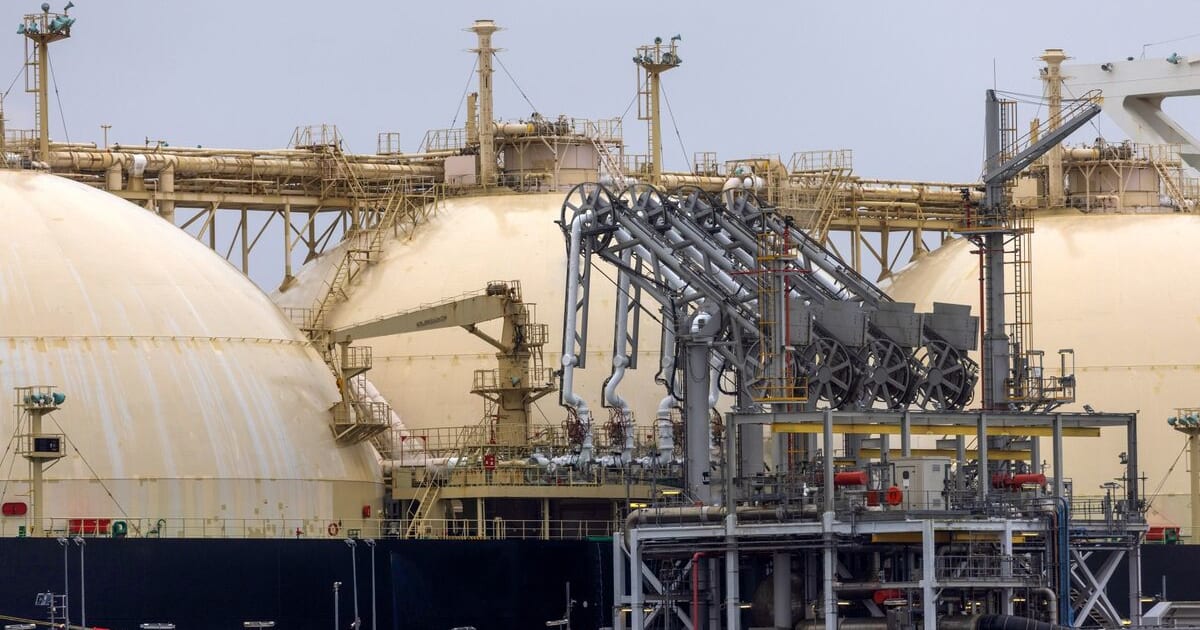
With global LNG supply chains choked by Middle Eastern geopolitical tensions, India faces a critical inflection point. This report analyzes how persistent supply constraints will reshape the landscape for gas-dependent industries and why domestic energy producers are emerging as the primary defensive play.
The LNG Impasse: A New Reality for India’s Energy Security
The global liquefied natural gas (LNG) market is hitting a structural ceiling. Recent industry data confirms that global trade growth is poised to remain flat through 2026, largely due to supply-side constraints in the Middle East and the persistent instability surrounding the Strait of Hormuz. For a nation like India, which imports nearly 50% of its gas requirements, this isn't merely a supply chain hiccup—it is a macroeconomic pressure test.
When global trade volumes stall, price volatility becomes the primary market mechanism for rationing. For India, this translates directly into a higher current account deficit (CAD) and persistent inflationary pressure. As the rupee faces headwinds against a strengthening dollar, the import bill for energy becomes a structural drag on corporate earnings across the Nifty 50 and Nifty Next 50 indices.
Why does the LNG supply stagnation matter for Indian investors right now?
The current market environment mirrors the pre-crisis volatility of 2022, when the Nifty Energy index saw extreme fluctuations following the onset of the Russia-Ukraine conflict. Back then, the surge in spot LNG prices forced a massive pivot in government policy, prioritizing domestic allocation over industrial consumption. Today, we are seeing a similar pattern: as global trade stagnates, the cost of marginal supply is rising, forcing gas-dependent sectors to absorb costs they can ill-afford to pass on to consumers.
Sector-Level Impact: Winners and Losers
The energy sector is not a monolith. The current supply-demand imbalance creates a clear bifurcation in the market. Upstream producers, whose realization prices are often linked to global benchmarks, stand to benefit from sustained high price floors. Conversely, downstream entities and gas distributors face a 'margin squeeze' scenario where input costs are non-negotiable, but retail pricing is often subject to regulatory or competitive caps.
The Downstream Squeeze: Why CGDs and Fertilizer Manufacturers are at Risk
City Gas Distribution (CGD) companies and fertilizer manufacturers are particularly vulnerable. Fertilizer firms rely on gas as both a fuel and a feedstock; higher gas prices without a corresponding increase in government subsidy support directly erode EBITDA margins. Similarly, CGD companies like IGL and MGL are caught between rising procurement costs and the need to maintain competitive pricing against CNG-alternative fuels.
Stock-by-Stock Breakdown: Navigating the NSE Energy Landscape
- ONGC (NSE: ONGC): As the primary domestic upstream player, ONGC is a beneficiary of high global energy prices. With a P/E ratio hovering around 8-9x, it remains a value play. Higher realizations on crude and gas production provide a buffer against inflation.
- OIL (Oil India Ltd): Similar to ONGC, OIL is well-positioned to benefit from the price floor created by global supply constraints. Its concentrated focus on domestic fields mitigates the risks of international supply chain disruption.
- GAIL (NSE: GAIL): GAIL occupies a complex position. While it benefits from its transmission infrastructure, its role as an LNG importer exposes it to the volatile spot market. Investors should monitor its long-term supply contracts, which provide some insulation but not total immunity.
- IGL & MGL (Indraprastha Gas & Mahanagar Gas): These stocks are the primary 'losers' in this scenario. Margin compression is the main risk as they struggle to pass on high input costs to price-sensitive retail commuters. Expect volatility in their quarterly earnings reports.
- Gujarat Gas (NSE: GUJGAS): With a high exposure to industrial customers, Gujarat Gas is sensitive to the volume-price trade-off. If industrial demand wanes due to high costs, their volume growth will face a significant headwind.
Expert Perspective: The Bull vs. Bear Case
The Bear Argument: The supply-side bottleneck in the Middle East is systemic. If conflict escalates further, we could see a 'price shock' that forces RBI to maintain higher interest rates for longer, hurting the broader equity market, not just the energy sector.
The Bull Argument: India’s aggressive push into renewables and the expansion of the domestic pipeline network will eventually decouple the economy from global spot-market volatility. High prices are the best cure for high prices—they incentivize faster domestic exploration and investment in green hydrogen.
Actionable Investor Playbook: The 2026 Strategy
Investors should adopt a defensive stance while rotating toward companies with strong domestic production profiles. The play here is 'Upstream Over Downstream.' Reduce exposure to CGDs that lack pricing power. Increase weighting in upstream producers that act as a hedge against the import bill. Monitor the 200-day moving averages of ONGC and OIL; these stocks are likely to show relative strength in a downward-trending market.
Risk Matrix: Assessing the Probability of Disruption
| Risk Factor | Probability | Impact |
|---|---|---|
| Strait of Hormuz Closure | Medium | High (Inflationary) |
| Rupee Depreciation (>85 USD/INR) | High | Medium (Earnings Drag) |
| Regulatory Price Caps on Gas | High | Medium (Margin Squeeze) |
What to Watch Next: Catalysts for the Coming Quarters
Watch for the upcoming Petroleum Planning and Analysis Cell (PPAC) data releases, which will provide the first concrete evidence of how the supply bottleneck is affecting industrial gas uptake. Additionally, the next MPC meeting minutes will be critical; if the RBI highlights 'imported inflation' as a primary concern, expect further volatility in energy-heavy indices. Finally, monitor the progress of the India-Middle East-Europe Economic Corridor (IMEC) as a long-term geopolitical hedge against traditional supply routes.
See ONGC's AI Score
Our algorithmic screener scores ONGC on fundamentals, momentum, and risk — free to try, no card needed.
Try the AI Screener →Have questions about this story?
Ask Welth, our finance-focused AI research assistant, for a deeper breakdown — free trial included.
Chat with Welth AI →Disclaimer: This content is generated by WelthWest Research Desk based on publicly available reports and is for informational purposes only. It does not constitute financial advice, investment recommendations, or an offer to buy or sell securities. Always consult a qualified financial advisor before making investment decisions.
