Key Takeaway
The era of 'easy money' is officially over as rising US Treasury yields tighten global liquidity. Investors must pivot from high-multiple growth stocks toward defensive, cash-generative assets to survive the looming Nifty correction.
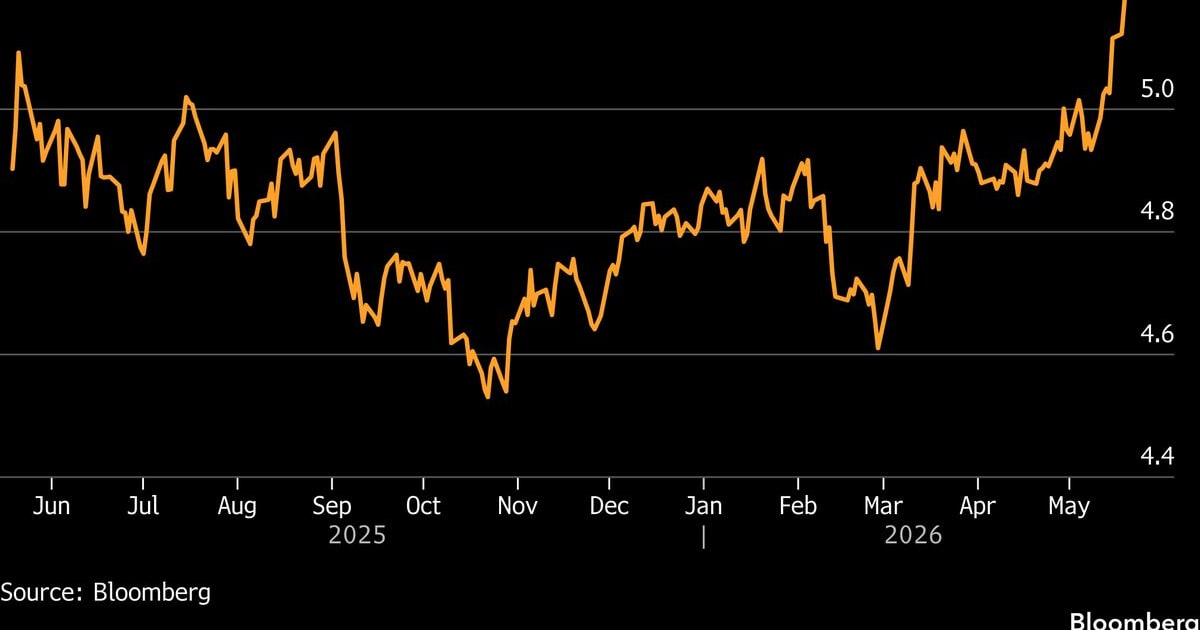
A global equity retreat triggered by stubborn inflation and soaring bond yields is rattling the Indian stock market. We analyze the structural shift in FII flows, the vulnerability of the IT sector, and the defensive rotation strategy required to protect capital in the current high-rate environment.
The Great Liquidity Squeeze: Why Your Portfolio is Feeling the Heat
The global equity landscape is currently undergoing a violent repricing event. As the US 10-year Treasury yield—the global benchmark for the 'risk-free' rate—climbs, the gravitational pull on equity valuations becomes inescapable. For the Indian market, this isn't merely an external observation; it is a direct threat to the liquidity that has fueled the Nifty 50's ascent over the past eighteen months.
When the cost of capital rises in the US, Foreign Institutional Investors (FIIs) recalibrate their risk-reward matrix. Emerging markets, once seen as growth engines, are now being viewed through the lens of currency risk and valuation compression. We are witnessing a classic 'flight to quality' that is putting the Indian rupee under pressure and forcing a rotation out of growth-heavy sectors.
How will rising US Treasury yields impact the Indian stock market?
The correlation between US bond yields and Indian equity performance is historically inverse. When yields exceed the 4.5% threshold, the discount rate applied to future cash flows in valuation models (DCF) rises, disproportionately punishing companies with long-duration earnings—specifically the Indian IT services sector. Historically, during the 2022 rate hike cycle, we observed a 12-15% drawdown in the Nifty IT index as FIIs liquidated positions to repatriate capital to dollar-denominated assets.
The current environment is exacerbated by sticky inflation prints, which suggest that the 'higher for longer' interest rate narrative is not just a temporary phenomenon but a structural reality. This forces the Reserve Bank of India (RBI) into a corner: follow global trends to defend the Rupee, or risk domestic growth stagnation.
Sector-Level Breakdown: The Winners and The Losers
Market cycles are defined by rotation. As growth stocks face a valuation haircut, capital is migrating toward sectors with high pricing power and tangible asset backing.
- The Losers (Growth & Tech): IT Services and high-beta growth stocks are suffering. With P/E ratios in the IT sector still hovering near 28x-30x, there is significant room for multiple contraction if revenue guidance remains muted.
- The Winners (Defensive & Value): Public Sector Banks (PSBs) and Energy are emerging as safe havens. PSBs benefit from higher Net Interest Margins (NIMs) in a high-rate environment, while Energy stocks provide a natural hedge against inflation-driven commodity price spikes.
Stock-by-Stock Deep Dive: Navigating the NSE Volatility
TCS (Tata Consultancy Services) & INFY (Infosys)
These bellwethers are the frontline of the current correction. With their heavy reliance on US discretionary spending, any slowdown in the North American economy acts as a direct headwind to their revenue growth. TCS, trading at a premium, faces the risk of multiple compression as institutional investors demand higher earnings yields to justify holding IT stocks over US Treasuries.
HCLTECH
While HCLTECH has shown resilience in engineering services, it remains tethered to the broader tech sentiment. A breach of the 200-day moving average could trigger technical selling, putting the stock in a vulnerable position for further consolidation.
HDFCBANK
As the largest private lender, HDFCBANK is a proxy for the Indian economy. While it benefits from credit growth, the current liquidity tightening increases its cost of funds. Investors should watch the NIM trajectory closely; any dip below 3.5% will likely lead to further institutional outflows.
RELIANCE (Reliance Industries)
RELIANCE offers a unique hedge. Its O2C (Oil-to-Chemicals) business captures the upside of rising commodity prices, while its retail and telecom arms provide domestic consumption stability. It remains the best defensive bet for large-cap portfolios.
Expert Perspective: The Bull-Bear Tug-of-War
The Bear Case: Macro-strategists argue that we are in the early stages of a 'valuation reset.' They point to the fact that the Nifty 50 is trading at a significant premium to its 10-year average P/E. If FIIs continue to net-sell, the lack of domestic retail liquidity to absorb the supply could lead to a 'gap-down' correction.
The Bull Case: Contrarians argue that India’s structural growth story—driven by Capex and domestic manufacturing—is decoupled from US macro data. They contend that the current dip is a 'buying opportunity' for long-term investors to enter blue-chip stocks at a 10-15% discount from their 52-week highs.
Actionable Investor Playbook
Investors must move from an 'aggressive growth' mindset to a 'capital preservation' strategy:
- Reduce Exposure to High-Beta: Trim positions in mid-cap IT and high-P/E growth stocks that cannot justify their valuations in a 7% bond yield environment.
- Increase Defensive Allocations: Gradually increase exposure to Public Sector Banks and Energy majors that offer dividend yields and low valuation multiples.
- Monitor Cash Positions: Keep 15-20% of your portfolio in cash or short-term liquid funds. This 'dry powder' is essential for capturing entry points during capitulation events.
Risk Matrix
| Risk Factor | Probability | Impact |
|---|---|---|
| Sustained US Inflation | High | High |
| FII Capitulation | Moderate | Extreme |
| Rupee Devaluation | Moderate | High |
What to Watch Next
The market will be laser-focused on the upcoming US CPI data and the subsequent FOMC meeting minutes. Any hawkish rhetoric from the Fed will act as a catalyst for further volatility. Locally, keep a close eye on the RBI’s liquidity management announcements and the quarterly credit growth data from major private lenders, as these will define the floor for the Nifty's next move.
See TCS's AI Score
Our algorithmic screener scores TCS on fundamentals, momentum, and risk — free to try, no card needed.
Try the AI Screener →Have questions about this story?
Ask Welth, our finance-focused AI research assistant, for a deeper breakdown — free trial included.
Chat with Welth AI →Disclaimer: This content is generated by WelthWest Research Desk based on publicly available reports and is for informational purposes only. It does not constitute financial advice, investment recommendations, or an offer to buy or sell securities. Always consult a qualified financial advisor before making investment decisions.