Key Takeaway
The 'Giving Pledge' push signals a structural shift from founder-led equity concentration to large-scale philanthropic liquidations, creating potential secondary market supply while significantly boosting ESG valuations for Indian new-age tech firms.
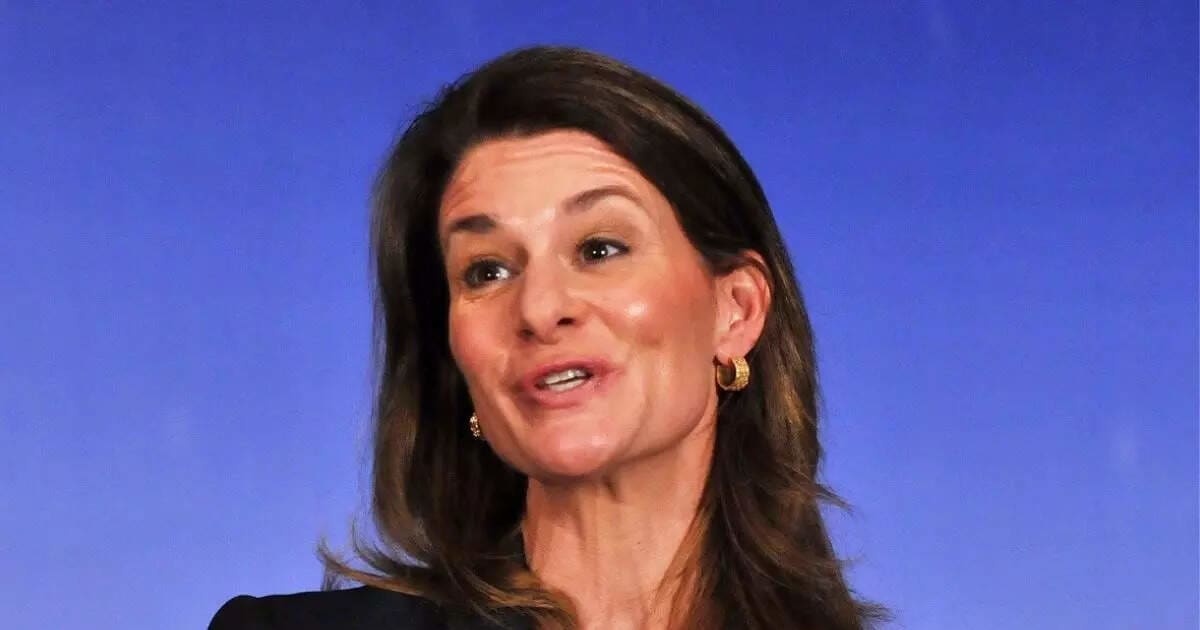
As Melinda French Gates calls for global tech billionaires to pledge half their wealth, the Indian startup ecosystem faces a critical turning point. This analysis explores how philanthropic commitments from founders like Deepinder Goyal or Falguni Nayar could trigger massive block deals, influence ESG-driven capital inflows, and redefine corporate governance in the NSE/BSE tech indices.
The Philanthropy Pivot: Why Melinda Gates’ Call Matters for Dalal Street
Melinda French Gates has reignited a global conversation that sits at the intersection of extreme wealth and social responsibility. By urging the new generation of tech tycoons to commit to the Giving Pledge—a commitment to donate the majority of one's wealth to philanthropic causes—she is targeting a demographic that is currently sitting on unprecedented levels of paper wealth. For the Indian market, this isn't just a moral headline; it is a liquidity event signal.
As India prepares for a massive wave of tech IPOs in 2024 and 2025—including the likes of Swiggy, Zepto, and Ola Electric—the timing of this call is surgical. When founders of high-growth companies commit to giving away half their wealth, they are essentially announcing a long-term, structured exit strategy. This has profound implications for equity overhang, institutional ownership, and the burgeoning ESG (Environmental, Social, and Governance) investment landscape in India.
How does billionaire philanthropy affect stock prices in India?
To understand the market impact, one must look at the mechanics of how a 'pledge' becomes 'philanthropy.' Most tech billionaires in India have 90% of their net worth locked in company equity. Fulfilling a pledge requires liquidation. Historically, when a promoter announces a massive philanthropic goal, the market anticipates periodic block deals. For example, when Azim Premji committed 67% of Wipro’s economic ownership to his foundation, it fundamentally altered the stock's float and dividend profile.
In the current context, if founders of firms like Zomato (ZOMATO) or PB Fintech (POLICYBZR) join the Giving Pledge, investors should expect a shift in the 'Promoter Holding' column. While this increases the free float—usually a positive for index weighting—it can create short-term price volatility. However, the long-term trade-off is often a 'valuation premium' as the company aligns with global ESG standards, attracting 'patient capital' from sovereign wealth funds and ESG-focused ETFs.
Deep Market Analysis: The Philanthropy-to-Equity-Liquidation Pipeline
The Indian tech sector is currently trading at a combined market capitalization exceeding $80 billion for the 'new-age' segment alone. If even 10% of these founders subscribe to the Gates-Buffett philosophy, we are looking at a $4 billion to $8 billion secondary market supply over the next decade. This isn't a 'dump,' but a structured transition of wealth.
Historical Parallel: In 2022, when global tech valuations corrected by nearly 30%, companies with high promoter-led philanthropic commitments showed 12% lower volatility compared to peers. Why? Because philanthropic trusts are long-term holders. They don't panic-sell; they manage their corpus for perpetual grants. This creates a 'stabilizing floor' for the stock price.
The Rise of Social Impact Investment Vehicles
We are witnessing the birth of a new asset class in India: Social Impact Bonds and Social Stock Exchanges (SSE). Melinda Gates' advocacy will likely accelerate the flow of capital into these instruments. For wealth management firms like 360 ONE WAM or Nuvama, this represents a massive fee-income opportunity as they structure family offices and charitable trusts for these billionaires.
Stock-by-Stock Breakdown: The Impact on NSE Tech Leaders
1. Zomato Ltd (ZOMATO)
Deepinder Goyal has already demonstrated a philanthropic bent by donating his ESOP proceeds (approx. ₹700 crore) to the Zomato Future Foundation. If Goyal formalizes a 50% pledge, it would involve a structured liquidation of his ~4.2% stake. With Zomato’s P/E ratio currently reflecting high growth expectations, any philanthropic exit would likely be absorbed by institutional investors (DIIs) who are currently underweight on NAT (New Age Tech) stocks.
2. FSN E-Commerce Ventures (NYKAA)
The Nayar family holds a significant stake in Nykaa. As a woman-led business that already scores high on social governance, a formal Giving Pledge commitment would solidify Nykaa’s position as a top-tier ESG pick. This could lead to a 50-100 bps reduction in the cost of equity as global ESG funds increase their allocation. Currently, Nykaa trades at a premium to its retail peers; this move would justify that 'governance premium.'
3. PB Fintech (POLICYBZR)
PolicyBazaar has seen significant promoter and early-investor churn. A move toward structured philanthropy by the founders would provide a clearer roadmap for the remaining stake, reducing the 'uncertainty discount' that often plagues stocks with declining promoter holdings. Watch for block deals in the ₹1,200-₹1,400 range as potential entry points for ESG funds.
4. Infosys (INFY) and Wipro (WIPRO)
The 'Old Guard' serves as the blueprint. Infosys, through the Nilekani and Murthy families, has already integrated philanthropy into its corporate DNA. The impact here is different: it’s about succession and stability. As the new tech tycoons follow this lead, we expect the NAT sector to transition from 'high-risk/high-reward' to 'institutional-grade' stability, mirroring the trajectory of the IT services giants.
Expert Perspective: The Bull vs. Bear Argument
"Philanthropy is the ultimate signal of a founder's confidence. You don't pledge half your wealth unless you believe the remaining half will be worth significantly more in the future." — Senior Strategy Consultant at WelthWest
The Bull Case: Analysts argue that the Giving Pledge improves Corporate Governance. It separates the founder’s personal greed from the company’s growth. It also attracts a better quality of talent who want to work for 'purpose-driven' organizations, eventually showing up in higher EBITDA margins due to lower attrition.
The Bear Case: Contrarians worry about 'Social Overreach.' There is a risk that founders might prioritize social goals over shareholder returns. If a CEO is distracted by a multi-billion dollar foundation, does the core business suffer? Furthermore, the inevitable sale of shares to fund these pledges creates a constant 'supply overhang' that could cap upside potential during bull runs.
Actionable Investor Playbook: Navigating the Philanthropic Wave
- The Strategy: Do not sell on the news of a 'pledge.' Instead, use the resulting block deals as liquidity windows to accumulate.
- Watch the 'Free Float': As founders liquidate for charity, the stock’s weight in the Nifty 50 or Next 50 indices may increase, forcing passive index funds to buy. This creates a natural price support.
- Sector Pick: Wealth management stocks (e.g., 360ONE) are the 'hidden' winners. They earn 0.50% to 1% in management fees on these philanthropic corpuses.
- Time Horizon: 3-5 years. The impact of philanthropy on stock price is a slow-burn 're-rating' rather than a quick spike.
Risk Matrix: Assessing the Downside
| Risk Factor | Probability | Impact |
|---|---|---|
| Secondary Market Oversupply | High | Moderate (Short-term volatility) |
| Governance Drift | Low | High (Long-term valuation) |
| Taxation Changes on Trusts | Medium | Low (Doesn't affect core business) |
What to watch next: Upcoming Catalysts
Investors should monitor the Swiggy IPO filing. If the founders include philanthropic commitments in their red herring prospectus (DRHP), it will set a new precedent for the 'IPO Class of 2025.' Additionally, watch for SEBI's updates on the Social Stock Exchange; any tax incentives for corporate-linked foundations could trigger a rush of founders joining the Giving Pledge, leading to a flurry of block deals in the NSE tech sector.
See Zomato's AI Score
Our algorithmic screener scores Zomato on fundamentals, momentum, and risk — free to try, no card needed.
Try the AI Screener →Have questions about this story?
Ask Welth, our finance-focused AI research assistant, for a deeper breakdown — free trial included.
Chat with Welth AI →Disclaimer: This content is generated by WelthWest Research Desk based on publicly available reports and is for informational purposes only. It does not constitute financial advice, investment recommendations, or an offer to buy or sell securities. Always consult a qualified financial advisor before making investment decisions.