Key Takeaway
India's 80% crude import dependency makes it a high-beta play on Middle Eastern volatility. Investors should prepare for margin compression in downstream sectors and pivot toward upstream energy producers to hedge against persistent inflation.
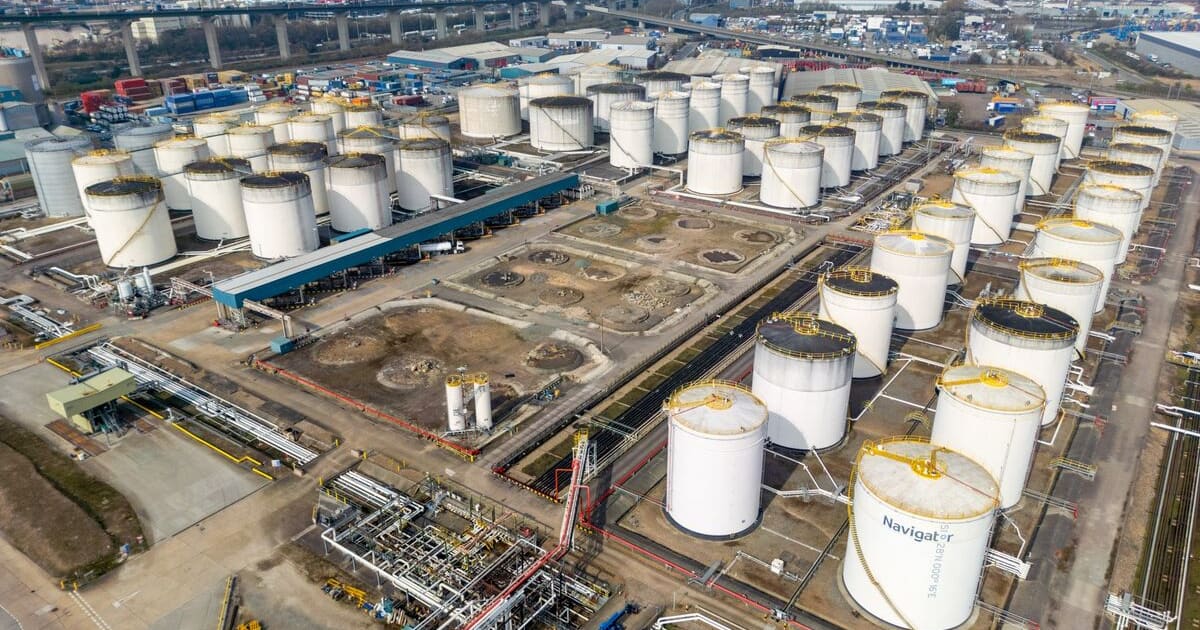
Geopolitical instability in the Middle East is driving crude oil prices to levels that threaten India's macroeconomic stability. This analysis examines the ripple effects on the Current Account Deficit, inflation, and specific NSE-listed stocks. We outline a defensive strategy to navigate the impending volatility.
The Geopolitical Oil Shock: A Macroeconomic Reality Check
The recent escalation in Middle Eastern tensions has sent shockwaves through global energy markets, forcing a re-evaluation of India’s economic trajectory. As a nation that imports over 80% of its crude requirements, India serves as a natural proxy for global oil volatility. When crude prices climb, the structural integrity of the Indian economy is tested through three primary channels: the Current Account Deficit (CAD), the weakening of the INR, and the subsequent 'cost-push' inflation that complicates the Reserve Bank of India’s (RBI) monetary policy.
Historically, when crude prices sustained levels above $85/barrel for more than a quarter, the Nifty 50 has shown a tendency to consolidate, with high-beta sectors like aviation and FMCG bearing the brunt of the correction. The current situation mirrors the volatility seen in early 2022, where supply-side fears led to a rapid spike in energy costs, forcing the RBI to pivot toward aggressive rate hikes. Investors must understand that this is not merely a commodity story; it is a fundamental shift in the cost of doing business for the entire Indian corporate landscape.
How will rising crude oil prices affect your Indian stock portfolio?
The impact of expensive oil is not uniform across the market. We observe a classic 'K-shaped' divergence in performance. Upstream producers benefit from higher realization prices, while downstream sectors—specifically those with limited pricing power—face severe margin erosion. For every $10 increase in the price of the Indian Basket of crude, India’s import bill swells by approximately $12–15 billion annually, creating a direct drag on the fiscal balance.
The Sectoral Winners and Losers
- Upstream Energy (The Hedge): Companies like ONGC (NSE: ONGC) and OIL (NSE: OIL) are primary beneficiaries. Their revenue realization is directly linked to global benchmarks, and they often see significant bottom-line expansion during supply-side shocks.
- Refineries & OMCs (The Margin Squeeze): IOCL (NSE: IOCL), BPCL (NSE: BPCL), and HPCL (NSE: HPCL) often find themselves in a precarious position. While they gain from inventory valuation, their inability to pass on full retail price hikes to consumers—due to political sensitivity—often leads to under-recoveries.
- Aviation & Logistics (The High-Beta Losers): InterGlobe Aviation (NSE: INDIGO) is heavily sensitive to Aviation Turbine Fuel (ATF) costs. With fuel accounting for nearly 40% of their operating expenses, sustained oil spikes lead to immediate earnings downgrades.
- Manufacturing (Paint & Tyre): Companies like Asian Paints (NSE: ASIANPAINT) rely on crude derivatives for raw materials. Higher oil prices translate into higher input costs, which, if not passed on to the consumer, will compress EBITDA margins.
Stock-by-Stock Analysis: Navigating the Volatility
1. Reliance Industries (NSE: RELIANCE): As a massive integrated player, Reliance serves as both a refiner and a consumer. While its O2C (Oil-to-Chemicals) segment faces margin volatility, the company’s diversified portfolio in retail and digital services provides a buffer that pure-play refineries lack. Its P/E ratio, currently hovering around 25x, reflects this premium.
2. ONGC (NSE: ONGC): With a market cap exceeding ₹3.5 lakh crore, ONGC remains the best defensive play. When oil prices rise, their net realization improves, leading to robust cash flow generation. Investors should look for entry points during broad market dips.
3. InterGlobe Aviation (NSE: INDIGO): The stock is a 'sell-on-rally' candidate in a high-oil environment. Despite strong passenger demand, the sensitivity of their margins to ATF prices makes them highly vulnerable to geopolitical news cycles.
4. Asian Paints (NSE: ASIANPAINT): Historically, Asian Paints has shown resilience due to its dominant market share, but sustained crude inflation puts a ceiling on its valuation multiples. Watch for signs of volume growth slowing as input costs rise.
The Expert Perspective: Bull vs. Bear Case
The Bullish Argument: Bulls argue that India’s domestic demand remains resilient and that the government’s shift toward green energy and ethanol blending is structurally reducing the country's oil intensity. They point to the strong balance sheets of Indian corporates as a reason to ignore short-term commodity noise.
The Bearish Argument: Bears emphasize the macro-linkage. They argue that if inflation remains sticky, the RBI will be forced to keep interest rates in the 'higher-for-longer' territory, which will inevitably lead to a compression of P/E multiples across the Nifty 50, particularly for growth-heavy stocks.
Actionable Investor Playbook
Investors should adopt a barbell strategy. Maintain exposure to high-quality upstream energy stocks as a hedge, while reducing weightings in aviation and discretionary consumer goods that lack pricing power.
- Accumulate: ONGC, OIL (Hedging against energy inflation).
- Reduce/Avoid: IndiGo, Paint manufacturers (Margin compression risks).
- Monitor: INR/USD exchange rate. A breach of 84.00 on the USD/INR pair would be a major warning sign for equity markets.
Risk Matrix
| Risk Factor | Probability | Impact |
|---|---|---|
| Sustained Oil Price > $95/bbl | Moderate | High (Inflationary) |
| INR Depreciation > 3% | High | Moderate (Import Bill) |
| RBI Rate Hike | Low | Very High (Equity Valuations) |
What to Watch Next
Keep a close eye on the OPEC+ production meeting outcomes and the RBI Monetary Policy Committee (MPC) minutes. Any signaling from the central bank regarding inflation targets will be the primary catalyst for the next leg of market movement. Additionally, watch the monthly Wholesale Price Index (WPI) data, as it will provide the first clear signal of how much of the energy inflation is being passed through to the Indian industrial sector.
See ONGC's AI Score
Our algorithmic screener scores ONGC on fundamentals, momentum, and risk — free to try, no card needed.
Try the AI Screener →Have questions about this story?
Ask Welth, our finance-focused AI research assistant, for a deeper breakdown — free trial included.
Chat with Welth AI →Disclaimer: This content is generated by WelthWest Research Desk based on publicly available reports and is for informational purposes only. It does not constitute financial advice, investment recommendations, or an offer to buy or sell securities. Always consult a qualified financial advisor before making investment decisions.
