Key Takeaway
Geopolitical friction in the Middle East is creating a 'supply-chain tax' on global growth. For Indian investors, this shift elevates inflation risks, favoring defensive energy and defense sectors over export-dependent manufacturers.
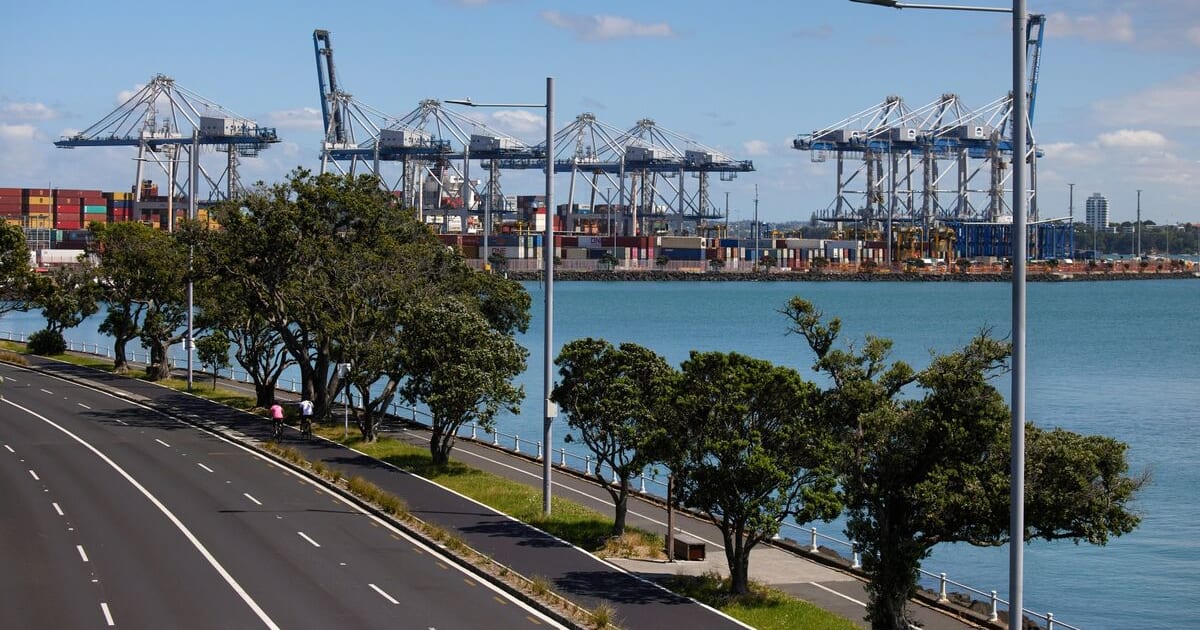
New Zealand's recent economic contraction highlights the fragility of global trade routes under Middle Eastern instability. We analyze the ripple effects on India's current account, sector-specific market performance, and actionable strategies for navigating this macro-volatility.
The Macro Warning: New Zealand as the Canary in the Coal Mine
For months, the global economic narrative focused on cooling inflation and the prospect of synchronized central bank pivots. However, the sudden deceleration in New Zealand’s economy—a nation that serves as a bellwether for small, open, trade-dependent markets—has shifted the focus toward the geopolitical 'supply-chain tax.' The recent escalation of tensions involving Iran has disrupted maritime logistics, effectively ending the period of post-pandemic economic momentum.
Why does a slowdown in the South Pacific matter to an Indian investor? Because New Zealand’s vulnerability to energy price volatility and shipping costs mirrors the structural risks facing India. As a net importer of crude oil, India’s economic engine is highly sensitive to the exact variables currently being squeezed by Middle Eastern instability: fuel costs, insurance premiums for cargo, and global demand destruction.
How will Middle East tensions impact the Indian stock market?
History offers a sobering precedent. During the 2022 energy price spikes following geopolitical flare-ups, the Nifty 50 experienced a compression in P/E ratios as investors priced in higher input costs for manufacturers. When crude oil (Brent) sustains levels above $85/barrel, India’s Current Account Deficit (CAD) widens, placing downward pressure on the Rupee and forcing the Reserve Bank of India (RBI) into a hawkish corner.
Current data suggests a bifurcated market reaction. While export-oriented manufacturing sectors—specifically textiles and auto-ancillaries—face margin erosion due to rising freight costs and transit delays, the energy and defense sectors have emerged as the primary beneficiaries of this 'war premium.'
The Sector-Level Breakdown
- Energy (Oil & Gas): Upstream producers benefit from higher realizations on crude oil, offsetting the broader market malaise.
- Defense: Heightened geopolitical risk increases sovereign spending on national security, providing a long-term tailwind for domestic manufacturers.
- Logistics & Aviation: These sectors are the immediate losers. Increased jet fuel (ATF) costs and insurance premiums for shipping through the Red Sea directly impact bottom lines.
Stock-by-Stock Analysis: Who Wins and Who Loses?
To navigate this environment, investors must look at the balance sheets of companies with high operational leverage to geopolitical stability.
The Winners
- ONGC (Oil & Natural Gas Corp): With a market cap exceeding ₹4 lakh crore, ONGC is the primary proxy for rising crude prices. As global benchmarks trend upward, their net realization per barrel improves, directly inflating EBITDA margins.
- OIL (Oil India Ltd): Similar to ONGC, OIL remains a beneficiary of the energy premium. Their aggressive exploration strategy provides a hedge against domestic fuel shortages.
- HAL (Hindustan Aeronautics Ltd) & BEL (Bharat Electronics Ltd): These two are the pillars of India's defense indigenization. As global tensions rise, the government’s commitment to defense capital expenditure (CapEx) becomes non-negotiable, insulating these stocks from broader market pullbacks.
The Losers
- RELIANCE (Reliance Industries Ltd): While a conglomerate, its O2C (Oil-to-Chemicals) segment faces pressure if refining margins compress due to volatile crude input costs and lower global demand for petrochemicals.
Expert Perspective: The Bull vs. Bear Case
The Bear Case: Bears argue that a sustained conflict will lead to 'stagflationary' pressures in India. If crude stays elevated, the RBI will be unable to cut rates, stifling the credit growth needed for corporate expansion. This could lead to a correction of 5-8% in the Nifty 50 as earnings estimates are revised downward.
The Bull Case: Bulls point to India’s robust domestic consumption and the 'China+1' manufacturing strategy. They argue that while external pressures exist, India’s macro-stability (high forex reserves) acts as a buffer that will allow the market to decouple from global geopolitical noise within two quarters.
Investor Playbook: Navigating the Volatility
Investors should adopt a 'barbell strategy' to mitigate risk while capturing growth:
- Increase Defensive Exposure: Allocate 15-20% of the portfolio to energy and defense stocks (HAL, ONGC) as a hedge against inflation.
- Trim Export-Heavy Manufacturing: Reduce exposure to companies heavily reliant on Red Sea shipping routes until freight indices show signs of stabilization.
- Monitor the RBI: Watch the next Monetary Policy Committee (MPC) meeting. A hawkish commentary regarding inflation will be the signal to move into cash or high-dividend-yielding stocks.
Risk Matrix
| Risk Factor | Probability | Impact |
|---|---|---|
| Sustained $100+ Crude Oil | Moderate | High (Inflationary) |
| Global Shipping Route Closure | Low | Very High (Supply Chain) |
| RBI Rate Hike | Low | Moderate (Liquidity) |
What to watch next?
The next 30 days are critical. Watch for the Brent Crude spot price; a breakout above $90/barrel will likely trigger a systemic sell-off in auto and FMCG stocks. Additionally, keep an eye on the US CPI data and the RBI’s stance on inflation, as these will dictate the liquidity environment for the Indian markets through the remainder of the fiscal year.
See ONGC's AI Score
Our algorithmic screener scores ONGC on fundamentals, momentum, and risk — free to try, no card needed.
Try the AI Screener →Have questions about this story?
Ask Welth, our finance-focused AI research assistant, for a deeper breakdown — free trial included.
Chat with Welth AI →Disclaimer: This content is generated by WelthWest Research Desk based on publicly available reports and is for informational purposes only. It does not constitute financial advice, investment recommendations, or an offer to buy or sell securities. Always consult a qualified financial advisor before making investment decisions.