Key Takeaway
India's revised foodgrain target and persistent monsoon deficit signal a potential slowdown in rural consumption and heightened food inflation. Investors should brace for headwinds in FMCG, agri-input, and rural-dependent auto sectors, prioritizing defensive plays and monitoring RBI's policy response.
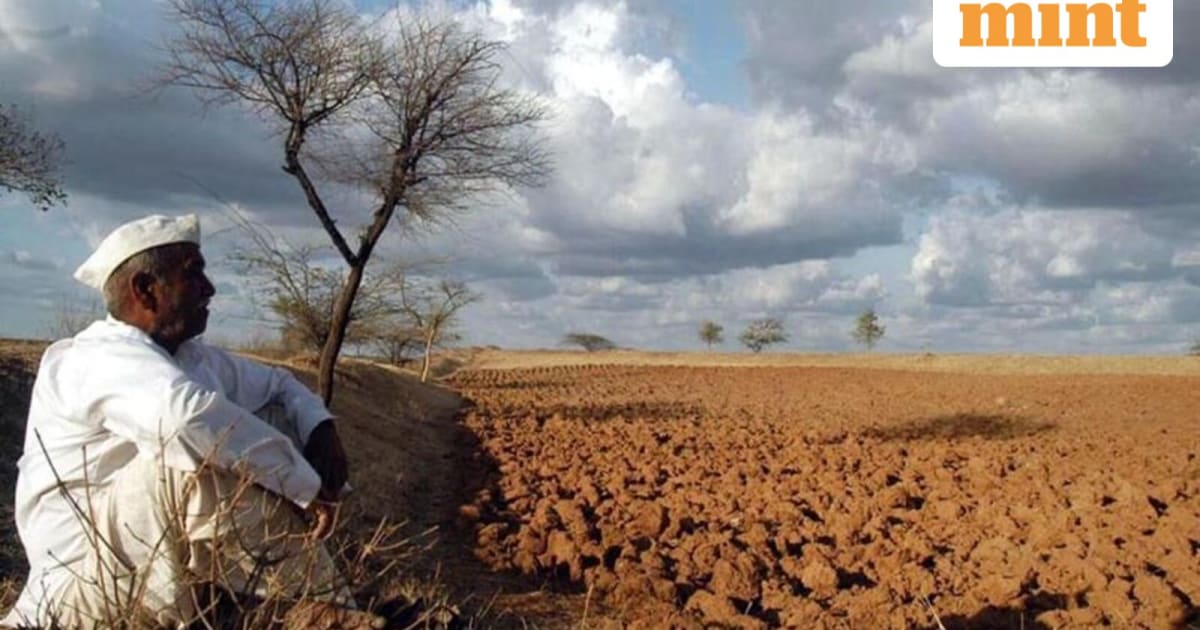
India's agricultural outlook has dimmed, with a reduced foodgrain target and widespread monsoon rain deficits. This critical development portends significant ripple effects across the Indian economy, particularly impacting rural demand and corporate profitability. Our deep dive reveals which sectors and specific stocks are most vulnerable, offering an actionable investor playbook for navigating this challenging environment.
Monsoon Meltdown: India's Foodgrain Target Cut & Deficient Rains Threaten Rural Stocks
The monsoon, often dubbed the real finance minister of India, is once again dictating the economic narrative. Recent revelations of a lower foodgrain target for the upcoming season, coupled with a persistent deficit in monsoon rainfall across key agricultural belts, cast a long shadow over India's rural economy. This isn't merely an agricultural update; it's a critical macroeconomic signal that demands immediate attention from investors. At WelthWest Research Desk, we dissect these developments, connecting the dots from rainfall patterns to corporate balance sheets and the broader Indian stock market.
The confluence of a proactive reduction in the foodgrain production target by agricultural authorities and the stark reality of deficient rainfall—particularly in critical sowing regions—creates a unique and challenging scenario. This dual pressure point signals an impending squeeze on agricultural output, which directly translates into reduced rural incomes. India's vast rural population, comprising over 65% of its total, is a significant engine of consumption. Any contraction in their purchasing power reverberates across sectors, from daily necessities to two-wheelers and consumer durables. Furthermore, a supply-side shock to foodgrains inherently carries the risk of escalating food inflation, potentially forcing the Reserve Bank of India (RBI) into a more hawkish stance, thereby impacting the broader cost of capital.
What is the Deep Market Impact of India's Lower Foodgrain Target?
The direct correlation between agricultural prosperity and the performance of specific Indian equity sectors is undeniable. Historical data consistently shows that years with sub-par monsoons or significant agricultural output shortfalls lead to discernible shifts in market sentiment and sector performance. For instance, during the 2022 monsoon season, which saw uneven rainfall distribution, the Nifty FMCG index underperformed the broader Nifty 50 by approximately 3% in the post-monsoon quarter, as rural demand showed signs of moderation. Similarly, tractor sales, a proxy for rural sentiment, witnessed a year-on-year decline in several months following periods of agricultural stress.
This time, the pre-emptive lower foodgrain target, rather than merely a reactive observation, indicates a more entrenched challenge. This proactive adjustment by the government suggests an acknowledgment of potential yield constraints, possibly due to erratic weather patterns or reduced acreage. When combined with the current rainfall deficit—which stands at approximately 8% below the long-period average nationally, but significantly higher in certain critical states like Bihar and Uttar Pradesh—the output risk becomes palpable. A 5% dip in overall foodgrain production could shave off an estimated 0.2-0.3 percentage points from India's GDP growth, primarily through the consumption channel.
The ripple effect on corporate earnings will be multi-faceted. FMCG companies, with their deep penetration into rural markets, will likely face a double whammy: reduced volume growth due to lower demand and potential margin compression if raw material (agricultural commodity) prices spike. Agri-input companies, supplying fertilizers and pesticides, could see demand contraction if farmers reduce sowing or opt for less intensive cultivation methods due to uncertain prospects. The rural auto segment, particularly two-wheelers and tractors, is highly sensitive to farm income, and consumer durable companies, especially those selling white goods, will also feel the pinch as discretionary spending tightens.
The broader market sentiment is already turning bearish on rural-centric stocks. Investors are increasingly concerned about the potential for a significant slowdown in consumer spending beyond urban centers. This shift could lead to a re-rating of these companies, moving their valuations from growth-oriented multiples to more conservative ones, reflecting the heightened risk.
Which Indian Stocks Are Most Affected by Monsoon Deficit and Foodgrain Shortfall?
The impact will not be uniform but will disproportionately affect companies with significant exposure to rural India. Here's a breakdown of specific NSE/BSE listed stocks and their sector peers:
- Hindustan Unilever Ltd (HUL) (NSE: HUL): As India's largest FMCG company with a market capitalization exceeding INR 6 lakh crore, HUL derives a substantial portion of its revenue from rural and semi-urban markets. Its extensive portfolio, from personal care to food products, makes it highly susceptible to shifts in rural purchasing power. A slowdown here could impact its volume growth, which has been a key driver for its premium valuation (current P/E ~60x). Competitors like Dabur India Ltd (NSE: DABUR) and Marico Ltd (NSE: MARICO), with their strong rural distribution networks and focus on value-for-money products, face similar headwinds.
- Mahindra & Mahindra Ltd (NSE: M&M): A dominant player in the tractor market, M&M's automotive segment is highly correlated with agricultural prosperity. A decline in farm income directly impacts tractor sales, which constitute a significant portion of its revenue. While its diversified portfolio provides some cushion, the rural slowdown could pressure its auto division's profitability. Escorts Kubota Ltd (NSE: ESCORTS), another major tractor manufacturer, would also experience direct negative impact.
- Bayer CropScience Ltd (NSE: BAYERCROP): As a leading agri-input company, Bayer CropScience sells pesticides, herbicides, and seeds. Reduced sowing acreage or lower input intensity by farmers due to uncertain returns would directly hit its sales volumes and profitability. This also applies to other fertilizer and pesticide manufacturers like Coromandel International Ltd (NSE: COROMANDEL) and PI Industries Ltd (NSE: PIIND).
- Hero MotoCorp Ltd (NSE: HEROMOTOCO): The largest two-wheeler manufacturer in India, Hero MotoCorp has a dominant presence in rural and semi-urban areas. Two-wheelers are often the first major discretionary purchase for rural households. A dip in rural incomes inevitably translates into slower sales growth for the company, impacting its top-line and potentially its P/E multiple (currently around 20x). Bajaj Auto Ltd (NSE: BAJAJ-AUTO), while having a more diversified export base, also has significant domestic rural exposure.
- Havells India Ltd (NSE: HAVELLS): While known for its FMEG (Fast Moving Electrical Goods) in both urban and rural areas, Havells' growth in categories like fans, lighting, and appliances has benefited from improving rural electrification and rising incomes. A rural slowdown could dampen demand for these discretionary items, impacting its growth trajectory.
The collective impact on these companies could lead to a moderation in their earnings growth estimates for the next two to three quarters, prompting analysts to revise their target prices downwards. Investors holding these stocks should closely monitor their rural sales data and management commentaries.
Expert Perspective: Bulls vs. Bears on India's Rural Outlook
The current agricultural situation has naturally led to a divergence in expert opinions:
The Bears' Argument: The bearish camp emphasizes the compounding effect of the lower foodgrain target and deficient rains. They argue that the government's pre-emptive target cut indicates a deeper underlying issue than just a typical monsoon variance. This, combined with already elevated food inflation, could trigger a vicious cycle. Lower rural incomes lead to reduced demand, which in turn squeezes corporate earnings and potentially prompts the RBI to maintain or even hike rates to combat inflation. "We haven't fully absorbed the impact of the last inflationary cycle," notes a senior economist at a Mumbai-based brokerage, "and a fresh supply shock could derail the nascent recovery in discretionary spending." They point to the potential for a significant earnings downgrade cycle for rural-focused companies, making current valuations look stretched.
The Bulls' Argument: Contrarian views, however, highlight India's resilience and the mitigating factors. Bulls argue that the government has robust buffer stocks of essential commodities, which can be deployed to manage price spikes. Furthermore, they emphasize the diversification of the rural economy beyond pure agriculture, with remittances and non-farm income streams providing some insulation. "While the monsoon is crucial, the Indian economy is far more diversified than it was a decade ago," states a veteran fund manager. "Government schemes for rural employment and infrastructure spending also provide a floor to rural incomes." They also suggest that any dip in these stocks could present a buying opportunity for long-term investors, assuming the challenges are temporary and the underlying growth story of India remains intact. They would watch for signs of a late surge in monsoon activity or proactive government interventions to support farmers.
Actionable Investor Playbook: Navigating Rural Headwinds
Given the unfolding scenario, a strategic recalibration of portfolios is prudent for investors exposed to the Indian market:
- SELL/REDUCE: Consider reducing exposure to high-beta, rural-dependent stocks in the FMCG, agri-input, and two-wheeler segments that currently trade at elevated P/E multiples. Companies with limited pricing power or high raw material costs are particularly vulnerable. Monitor for a breach of key technical support levels for stocks like HUL, M&M, and Hero MotoCorp.
- WATCH/HOLD: For investors with a long-term horizon, hold positions in well-managed companies with strong balance sheets that have diversified revenue streams (e.g., urban exposure, exports) or are market leaders capable of navigating downturns. Watch for clear signs of demand recovery or government intervention before considering fresh entry.
- BUY/ACCUMULATE: Focus on defensive sectors less impacted by rural demand, such as pharmaceuticals, IT services (export-oriented), and select financial institutions with limited direct rural credit exposure. Companies with strong pricing power and stable cash flows are preferred. Consider accumulating quality stocks on significant dips, especially if the broader market corrects due to inflation fears. Entry points could be identified when the Nifty FMCG index shows signs of bottoming out, potentially after a 10-15% correction from recent highs.
- TIME HORIZON: The immediate impact is likely to be felt over the next 2-3 quarters. For a recovery, a normal monsoon next year and sustained government support would be crucial. This is a medium-term concern, requiring patience and active monitoring.
Risk Matrix: Assessing the Downside Potential
- Surge in Food Inflation (High Probability, High Impact): The most immediate and significant risk. Lower output directly pressures food prices. If CPI inflation breaches the RBI's comfort zone (4-6%) persistently, it could lead to further rate hikes, stifling economic growth and consumer spending across the board.
- Dampened Rural Demand (High Probability, Medium-High Impact): Reduced farm incomes directly translate into lower spending on both essential and discretionary goods. This impacts a wide array of sectors, from FMCG to consumer durables and automobiles, potentially leading to lower corporate earnings and slower economic growth.
- RBI Policy Tightening (Medium Probability, High Impact): Should inflation become unanchored, the RBI will be compelled to act, potentially raising interest rates further or maintaining a hawkish stance for longer. This increases borrowing costs for businesses and consumers, impacting investment and overall economic activity.
- Global Commodity Price Volatility (Medium Probability, Medium Impact): While domestic factors are dominant, global crude oil or other commodity price spikes could exacerbate inflationary pressures, making it harder for the RBI to manage the situation and further eroding purchasing power.
What to Watch Next: Key Catalysts and Data Releases
Investors should closely monitor the following developments for further insights:
- Monsoon Progress: Weekly rainfall data from the India Meteorological Department (IMD) will be crucial, especially for the remaining sowing period for Kharif crops and the onset of Rabi sowing. A late surge could mitigate some damage.
- Agricultural Ministry Updates: Official estimates on crop acreage and production will provide clearer data on the extent of the shortfall. The first advance estimates of Kharif production, typically released in September, will be a key data point.
- Inflation Data: Monthly CPI inflation figures, particularly the food component, will indicate the immediate impact on prices. Any sustained rise above 6% will be a major concern.
- RBI Monetary Policy Committee (MPC) Meetings: The tone and decisions of the RBI in upcoming MPC meetings will signal their assessment of inflation risks and their stance on interest rates.
- Corporate Earnings Calls: Management commentary from rural-focused FMCG, auto, and agri-input companies during their quarterly earnings calls will offer direct insights into rural demand trends and their outlook for the coming quarters.
- Government Interventions: Any new government schemes or policy measures aimed at supporting farmers or managing food prices (e.g., export restrictions, import relaxations, or direct income support) could alter the outlook.
The current agricultural scenario is a significant variable impacting India's near-term economic trajectory and the performance of specific equity sectors. Proactive monitoring and a disciplined investment approach will be paramount for navigating these evolving market dynamics.
Run a free AI Stock Screen
Our algorithmic screener scores any NSE/BSE stock on fundamentals, momentum, and risk — free to try, no card needed.
Try the AI Screener →Have questions about this story?
Ask Welth, our finance-focused AI research assistant, for a deeper breakdown — free trial included.
Chat with Welth AI →Disclaimer: This content is generated by WelthWest Research Desk based on publicly available reports and is for informational purposes only. It does not constitute financial advice, investment recommendations, or an offer to buy or sell securities. Always consult a qualified financial advisor before making investment decisions.