Key Takeaway
As MSCI signals a potential downgrade for Indonesia due to transparency concerns, global passive capital is set to rotate into India. This 'substitution effect' offers a structural tailwind for Nifty 50 heavyweights.
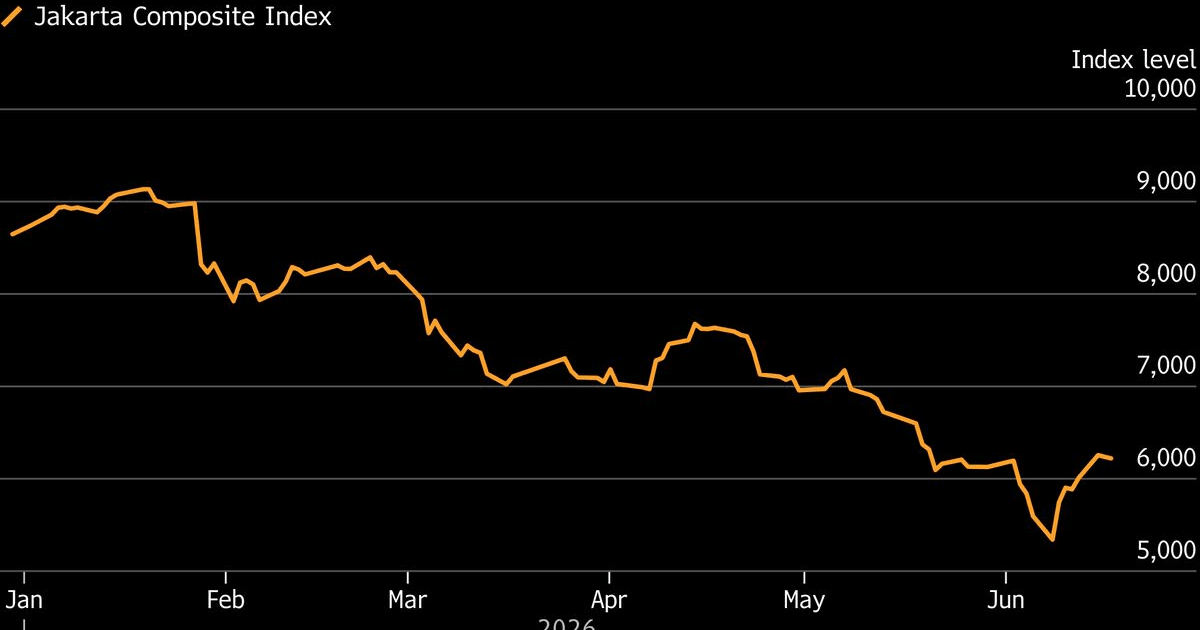
MSCI's warning on Indonesian market transparency is more than a regional footnote; it is a catalyst for a massive capital reallocation. We analyze why Indian financial and tech stocks are the primary beneficiaries of this emerging market pivot.
The MSCI Indonesia Warning: A Structural Shift for Emerging Markets
In the high-stakes world of global asset allocation, transparency is the primary currency. Recent signals from MSCI regarding Indonesia’s deteriorating market information flow have sent shockwaves through regional desks. For global passive funds—which track indices with mechanical precision—a downgrade is not merely a risk; it is a mandate for divestment.
At WelthWest, our analysis indicates that the potential reclassification of Indonesia will force a pivot in Emerging Market (EM) weightings. Because MSCI indices are designed to represent regional exposure, a reduction in Indonesian weight necessitates an increase elsewhere to maintain regional parity. India, with its deepening liquidity and robust regulatory framework, stands as the natural successor for this redirected capital.
How Will the MSCI Indonesia Downgrade Impact Indian Large-Cap Stocks?
The ‘substitution effect’ is a well-documented phenomenon in global macro strategy. When a constituent within an index faces a downgrade, the capital outflow is often redirected to the next most liquid market within the same geographical or thematic cluster. For Indonesia, that alternative is predominantly India.
Historical parallels are instructive. When MSCI adjusted weightings in 2022 to favor Indian equities, the Nifty 50 saw a sustained inflow of Foreign Institutional Investor (FII) capital that bolstered indices even during global volatility. We project that a similar shift today could inject billions into the Indian market, specifically targeting the top 50 companies that offer the liquidity required by institutional mandates.
The Financial Services Playbook
Financial services remain the primary vehicle for FIIs seeking to capture India’s growth. As Indonesian banks face potential liquidity tightening due to the MSCI signal, global managers will look to the Nifty Bank index for high-beta exposure. Companies like HDFCBANK and ICICIBANK, with their diversified loan books and strong balance sheets, are the primary destinations for this rotation.
Stock-by-Stock Breakdown: Where the Smart Money is Moving
- RELIANCE (RELIANCE.NS): As a proxy for the Indian economy, Reliance remains the default destination for passive flows. With a market cap exceeding ₹20 lakh crore, it provides the necessary depth for large-scale institutional entries.
- HDFCBANK (HDFCBANK.NS): Currently trading at a P/E ratio that reflects long-term compounding potential, HDFC Bank is the primary beneficiary of banking sector inflows. Expect institutional accumulation as FIIs hedge their regional EM exposure.
- ICICIBANK (ICICIBANK.NS): With a strong focus on asset quality and digital transformation, ICICI Bank provides the high-growth profile that global funds demand when rebalancing away from riskier, less transparent markets.
- INFY (INFY.NS) & TCS (TCS.NS): These IT giants serve as the defensive backbone of the Nifty 50. As global managers rotate out of Indonesian financials, they will likely balance their portfolios with the predictable cash flows offered by India’s IT sector.
Expert Perspective: The Bull vs. Bear Debate
"The MSCI signal is a lagging indicator of a deeper institutional discomfort with regional transparency. While the substitution effect is mathematically inevitable, the speed of execution will depend on whether global funds view this as a localized issue or a broader EM malaise." — Senior Analyst, WelthWest Research
The Bull Argument: The rotation is a structural upgrade. India’s market transparency, combined with a 7%+ GDP growth trajectory, makes it the only logical destination for displaced capital. The liquidity surge will compress P/E ratios and drive price-to-book valuations higher across the Nifty 50.
The Bear Argument: If the MSCI signal reflects a wider systemic risk regarding EM transparency, it could trigger a 'risk-off' sentiment. In such a scenario, capital may flee to developed markets (US/EU) rather than rotating into India, causing a temporary liquidity crunch even in high-quality Indian assets.
Actionable Investor Playbook
For the disciplined investor, the strategy is clear: focus on liquidity and institutional favorites. We recommend a staggered entry into Nifty 50 ETFs or direct exposure to financial heavyweights over the next 30-60 days. Avoid over-exposure to mid-caps that lack the institutional float to benefit from passive inflows.
Risk Matrix: Assessing the Potential for Market Volatility
| Risk Factor | Probability | Impact |
|---|---|---|
| Broad EM Sell-off | Moderate | High |
| Regulatory Delays in Rebalancing | Low | Medium |
| Currency Volatility (INR vs USD) | Moderate | Medium |
What to Watch Next: Catalysts for the Coming Month
Investors should monitor the upcoming MSCI semi-annual index review. Any official announcement regarding a downgrade timeline will serve as the starting gun for the reallocation. Furthermore, watch for the RBI’s upcoming policy committee meeting; a stable interest rate environment will be the final ingredient required to cement India’s status as the top destination for global liquidity.
See RELIANCE's AI Score
Our algorithmic screener scores RELIANCE on fundamentals, momentum, and risk — free to try, no card needed.
Try the AI Screener →Have questions about this story?
Ask Welth, our finance-focused AI research assistant, for a deeper breakdown — free trial included.
Chat with Welth AI →Disclaimer: This content is generated by WelthWest Research Desk based on publicly available reports and is for informational purposes only. It does not constitute financial advice, investment recommendations, or an offer to buy or sell securities. Always consult a qualified financial advisor before making investment decisions.