Key Takeaway
The 2% Nasdaq rebound signals a critical shift from fear to 'valuation hunting,' providing a much-needed valuation floor for Indian IT giants like TCS and Infosys while potentially stemming the tide of aggressive FII outflows.
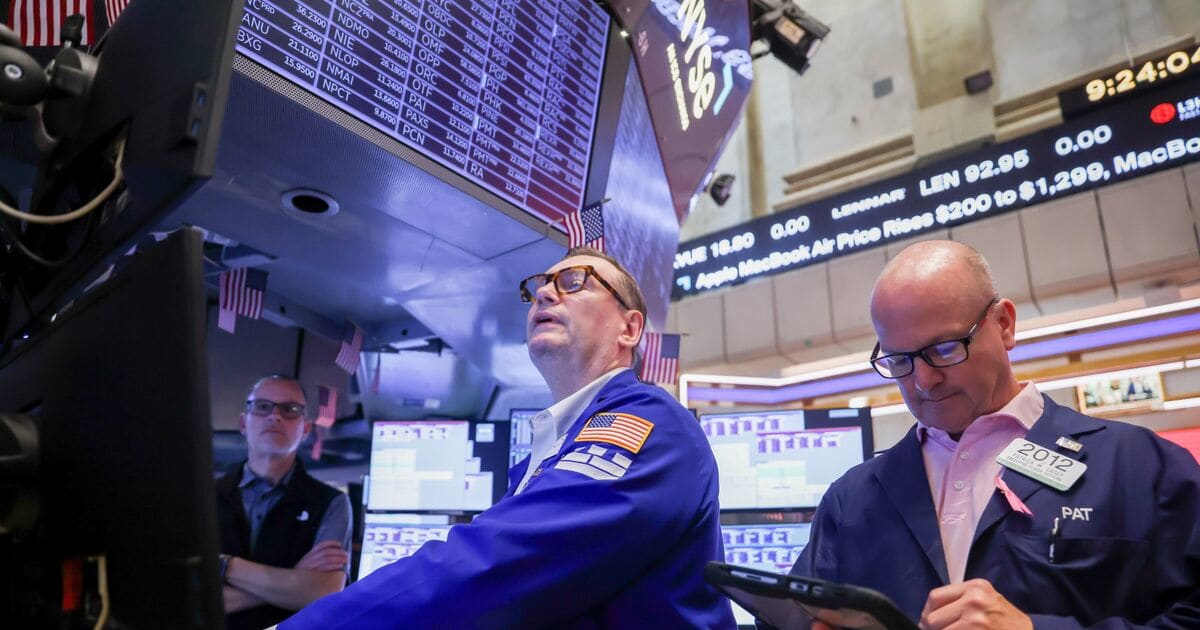
As dip buyers flood back into the Nasdaq 100, the ripple effects are being felt across the Atlantic and into the Dalal Street ecosystem. This deep dive explores why the US tech recovery is the primary catalyst for an Indian IT sector breakout, analyzing specific stock impacts for TCS, Wipro, and LTIMindtree.
The Great Tech Pivot: Why the Nasdaq Rebound is More Than Just a Dead Cat Bounce
The global technology landscape witnessed a decisive shift this week as the Nasdaq 100 surged by over 2%, driven by aggressive 'dip buying' from institutional players who viewed recent corrections as a generational entry point. For the Indian investor, this isn't just a headline from Wall Street; it is a fundamental leading indicator. The Indian IT services sector (represented by the Nifty IT Index) shares a 0.82 correlation coefficient with the Nasdaq 100 over a rolling 12-month period. When the Nasdaq sneezes, Indian IT catches a cold; when the Nasdaq rallies, Dalal Street finds its wings.
This rebound comes at a precarious time. Over the last quarter, the Nifty IT index has faced headwinds due to concerns over 'higher-for-longer' interest rates and a perceived slowdown in discretionary spending by Fortune 500 companies. However, the return of buyers to US tech suggests that the market has priced in the worst of the hawkish Fed stance. As valuations in the US stabilize, the relative attractiveness of Indian IT—with its robust margins and massive order books—becomes undeniable.
How does a Nasdaq rally affect the Nifty IT index?
The mechanics of this relationship are dual-faceted: Sentiment and Capital Flows. Firstly, Indian IT firms derive between 50% and 65% of their total revenue from the North American market. A bullish Nasdaq indicates that US corporations are likely to maintain or expand their digital transformation budgets. Secondly, Foreign Institutional Investors (FIIs) often view 'Tech' as a global basket. When risk appetite returns to Silicon Valley, it almost inevitably spills over into the high-quality, liquid IT stocks in India. Historical data shows that following a 2% or greater jump in the Nasdaq, the Nifty IT index typically outperforms the broader Nifty 50 by 150-200 basis points in the subsequent five trading sessions.
Deep Market Analysis: Connecting Wall Street to Dalal Street
To understand the depth of this impact, we must look at the Earnings Yield Gap. Currently, the Nifty IT index trades at a forward P/E of approximately 26x, which is slightly above its 10-year historical average of 22.5x. However, when compared to the Nasdaq 100's forward P/E of 28x, Indian IT stocks offer a more attractive risk-adjusted entry point, especially considering the superior Return on Equity (RoE) profiles of firms like TCS and HCLTech.
"The resurgence of dip-buying in the US is a signal that the 'valuation reset' is complete. For Indian IT, this provides a safety net, allowing domestic institutional investors (DIIs) to absorb any remaining FII selling pressure." — Senior Analyst, WelthWest Research
In 2022, when the Nasdaq faced a similar correction followed by a sharp 3% recovery in October, the Nifty IT index surged 8% over the following month. We are seeing a mirror image of that setup today. The stabilization of the US 10-year Treasury yield near the 4.2% mark is also acting as a tailwind, as IT stocks are essentially long-duration assets whose present value increases when the discount rate (yields) stops climbing.
Stock-by-Stock Breakdown: The Winners of the Tech Rebound
1. Tata Consultancy Services (TCS) - NSE: TCS
As the undisputed bellwether, TCS is the first port of call for FIIs returning to the Indian market. With a massive market capitalization exceeding ₹14 lakh crore and an operating margin consistently in the 24-26% range, TCS is a 'fortress' stock. The Nasdaq rally validates TCS's recent $10 billion+ TCV (Total Contract Value) wins, suggesting that client ramp-ups will proceed without delays. Key Metric: Watch for a break above the ₹4,100 resistance level.
2. Infosys (INFY) - NSE: INFY
Infosys is more sensitive to US discretionary spending than TCS, making it a high-beta play on a Nasdaq recovery. With its heavy focus on Cloud and Generative AI through 'Topaz,' Infosys stands to gain significantly as US tech sentiment improves. Currently trading at a forward P/E of 24x, it offers a slight discount to TCS, making it a favorite for 'growth at a reasonable price' (GARP) investors. Key Metric: ADR (American Depository Receipt) premiums often lead the domestic price discovery.
3. HCL Technologies (HCLTECH) - NSE: HCLTECH
HCLTech has carved a niche in ER&D (Engineering and R&D) services. As US semiconductor and hardware firms rally on the Nasdaq, HCLTech’s engineering division sees a direct sentiment boost. Moreover, its attractive dividend yield (nearly 3%) provides a floor that most other tech stocks lack. Key Metric: The stock's ability to hold the ₹1,450 support zone during volatility.
4. Wipro (WIPRO) - NSE: WIPRO
Wipro has been the laggard of the 'Big Four,' but a Nasdaq surge often triggers 'mean reversion' trades. With a new leadership structure and a focus on large deal wins, Wipro is a turnaround candidate. If the US tech rally sustains, Wipro’s valuation (the cheapest among the top tier) could see a sharp re-rating. Key Metric: Success in the Capco integration and consulting revenue growth.
5. LTIMindtree (LTIM) - NSE: LTIM
As a Tier-1 aspirant, LTIMindtree offers the growth of a mid-cap with the stability of a large-cap. Its exposure to the BFSI (Banking, Financial Services, and Insurance) sector in the US is significant. A bullish Nasdaq usually correlates with a stronger US financial sector, which directly translates to higher billing rates for LTIMindtree. Key Metric: Synergies from the L&T and Mindtree merger are now reflecting in 18%+ margins.
Expert Perspective: The Bull vs. Bear Case
The Bull Case: Optimists argue that we are at the start of an 'AI-led CAPEX cycle.' Much like the Y2K boom or the post-2008 digitisation wave, the current push for AI integration requires massive backend infrastructure—work that primarily flows to Indian IT firms. The Nasdaq rally is simply the market recognizing that the 'slowdown' was a temporary inventory correction in services.
The Bear Case: Contrarians warn that this is a 'relief rally' in a broader downtrend. They point to the inverted yield curve and potential recessionary pressures in Europe (a key secondary market for IT). If US inflation prints higher than expected in the coming weeks, the Nasdaq could easily give back these gains, dragging the Nifty IT index down with it.
Actionable Investor Playbook: How to Navigate the Rebound
- For Long-term Investors: Accumulate 'Quality Bluechips' (TCS, HCLTech) on any 2-3% dips. The focus should be on companies with high free cash flow and low debt.
- For Tactical Traders: Use the Nifty IT ETF or sectoral mutual funds to play the broad recovery. A 2% Nasdaq jump often leads to a 'gap up' opening in India; avoid chasing the first 15 minutes, wait for a mid-day consolidation.
- Sector Rotation: As money moves into IT, defensive sectors like FMCG (Hindustan Unilever) or Pharma (Sun Pharma) might see a temporary stagnation. Rebalance accordingly.
- Time Horizon: 12-18 months. This is not a 'get rich quick' trade but a cyclical recovery play.
Risk Matrix: What Could Go Wrong?
- Interest Rate Volatility (Probability: High): If the Fed delays rate cuts into 2025, the Nasdaq will likely correct again, neutralizing the current gains for Indian IT.
- Currency Fluctuations (Probability: Medium): A strengthening Rupee against the USD can eat into the margins of IT exporters, though the RBI currently seems intent on maintaining a stable range.
- Earnings Miss (Probability: Low): Most Indian IT firms have already lowered their guidance. The risk of a further downward revision is low, but a 'miss' would be catastrophic for sentiment.
What to Watch Next: The Catalysts
Investors should keep a close eye on the US CPI (Consumer Price Index) data releases and the Federal Open Market Committee (FOMC) minutes. Any language suggesting a 'soft landing' for the US economy will be gasoline for the Indian IT fire. Additionally, monitor the quarterly commentary from US tech giants like Microsoft and Accenture; their guidance on 'outsourced services' is the ultimate roadmap for the Nifty IT index's trajectory over the next six months.
See TCS's AI Score
Our algorithmic screener scores TCS on fundamentals, momentum, and risk — free to try, no card needed.
Try the AI Screener →Have questions about this story?
Ask Welth, our finance-focused AI research assistant, for a deeper breakdown — free trial included.
Chat with Welth AI →Disclaimer: This content is generated by WelthWest Research Desk based on publicly available reports and is for informational purposes only. It does not constitute financial advice, investment recommendations, or an offer to buy or sell securities. Always consult a qualified financial advisor before making investment decisions.
