Key Takeaway
Netlist's meteoric rise, fueled by an AI-centric deal with Samsung, underscores the profound, albeit speculative, 'AI premium' in global markets. For Indian investors, this event is a potent signal for identifying domestic tech and semiconductor-related equities poised for significant re-rating, demanding a strategic re-evaluation of portfolios towards AI integration and hardware plays.
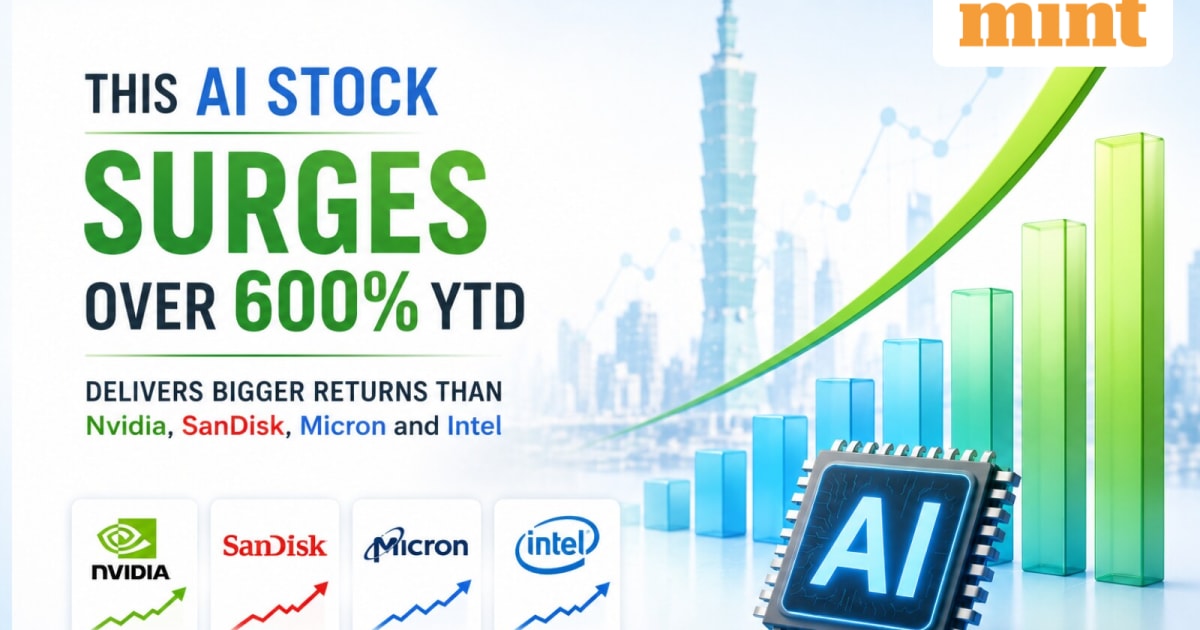
The recent 600%+ surge in Netlist, an American memory company, driven by an AI-related deal with Samsung, has sent ripples across global technology markets. This extraordinary performance, far outpacing established chip giants, highlights the intense investor appetite for AI hardware and memory solutions. For Indian investors, this phenomenon is not merely an overseas curiosity but a critical indicator of shifting capital flows and valuation benchmarks that could profoundly impact domestic tech and semiconductor-linked equities, signaling a potential for significant AI-driven growth and re-ratings.
Netlist's 600% AI Surge: What it Means for Indian Tech Stocks & Your Portfolio
The financial markets recently witnessed an extraordinary event: Netlist, a relatively smaller player in the memory sector, experienced an astonishing surge of over 600% year-to-date. This meteoric rise, dwarfing the returns of semiconductor behemoths like Nvidia, Micron, and Intel, was ignited by an AI-related deal with Samsung. At WelthWest Research Desk, we believe this is not just a fascinating outlier, but a profound bellwether for the global investment landscape, particularly for the burgeoning AI hardware and memory sector. For Indian investors, this event carries significant implications, signaling both immense opportunities and heightened risks within the domestic technology and semiconductor-related equities.
What happened and why it matters now: Netlist, a company specializing in high-performance memory solutions, saw its stock value explode following an announcement of a strategic partnership with Samsung, aimed at developing next-generation memory technologies crucial for AI applications. This partnership taps directly into the escalating demand for specialized, high-bandwidth memory (HBM) and other advanced memory solutions, which are foundational to the efficient operation of large language models (LLMs) and other AI workloads. The market's reaction was swift and decisive, reflecting an almost insatiable investor hunger for companies positioned at the forefront of AI infrastructure. This isn't merely about software; it's about the physical silicon and memory that power the AI revolution. The timing is critical as the global AI market is projected to grow at a CAGR of over 37% through 2030, with hardware spending forming a significant component of this expansion. Investors are actively seeking the 'picks and shovels' of the AI gold rush, and Netlist’s surge validates this thesis, placing memory and specialized hardware firmly in the spotlight.
How Will the Global AI Boom Reshape Indian Tech Valuations?
The Netlist phenomenon is more than just a stock-specific anomaly; it's a powerful signal reverberating across global capital markets, including India. The 'AI premium' is now an undeniable factor in valuations. Foreign Institutional Investors (FIIs) are increasingly scouting for companies globally that demonstrate strong linkages to AI growth, whether through direct hardware manufacturing, specialized software development, or strategic AI integration. This surge in AI-related valuations overseas will inevitably influence FII flows into Indian equities. Companies within the Indian technology sector that can articulate a clear, compelling AI strategy – be it in chip design, embedded systems, data analytics for AI, or AI-driven service delivery – are likely to attract significant investor interest and potentially command higher valuation multiples.
Historically, India's IT services sector has been valued primarily on traditional metrics like quarterly revenue growth, operating margins, and deal wins. However, the AI revolution is introducing new valuation paradigms. We are witnessing a shift where companies demonstrating superior R&D in AI, proprietary AI intellectual property, or significant revenue streams from AI-driven solutions are being re-rated. For instance, during the dot-com bubble of the late 1990s, any company with '.com' in its name saw inflated valuations. While not directly comparable, the current 'AI premium' shares a similar speculative fervor, albeit underpinned by more tangible technological advancements. Companies with strong embedded systems capabilities, like Tata Elxsi, which are crucial for edge AI, or those heavily invested in data engineering for AI, like Persistent Systems, are likely beneficiaries of this thematic re-rating.
The sector-level breakdown reveals a nuanced picture. While traditional IT services may see some uplift from AI-driven efficiency gains, the real beneficiaries are likely to be those deeper in the value chain – companies involved in semiconductor design services, specialized engineering R&D, and niche AI software development. The global semiconductor market, valued at over $500 billion, is projected to grow substantially, with AI chips and memory being the fastest-growing segments. Indian companies that are part of this supply chain, even indirectly through design services or IP development, will capture investor attention. This bullish sentiment is medium-term, driven by fundamental shifts in technology adoption, but also carries short-term speculative risks.
Which Indian Stocks Are Most Affected by the AI Memory Gold Rush?
The Netlist surge provides a crucial lens through which to examine specific Indian equities. While India lacks direct analogues to Netlist’s core memory manufacturing, several companies are strategically positioned to capitalize on the broader AI hardware and software ecosystem. Here's a stock-by-stock breakdown:
- Tata Elxsi (NSE: TATAELXSI): This company is a prime candidate. Known for its product engineering and design services, Tata Elxsi is deeply involved in embedded systems, automotive electronics, and broadcasting solutions – all areas where AI is becoming pervasive. Their expertise in designing complex systems, including those requiring high-performance memory interfaces, positions them to benefit from increased global demand for AI-driven product development. Currently trading at a P/E ratio significantly higher than its peers, reflecting its niche capabilities, further AI-led projects could justify sustained premium valuations. Its strong R&D focus on vision AI, autonomous systems, and digital twin technologies makes it a direct play on the 'AI hardware' theme, even if not manufacturing memory directly.
- Persistent Systems (NSE: PERSISTENT): While primarily a software services provider, Persistent Systems has been aggressively expanding its capabilities in data engineering, cloud, and AI/ML services. As AI applications become more sophisticated and data-intensive, the demand for robust data pipelines and AI model development services will skyrocket. Persistent's focus on hyperscalers and digital transformation projects with embedded AI components positions it to capture a significant share of this market. Their revenues from digital services, including AI, are a key growth driver, and a sustained global AI boom will directly translate into larger deal sizes and faster growth rates.
- L&T Technology Services (NSE: LTTS): As a pure-play engineering and R&D services company, LTTS is at the forefront of designing cutting-edge solutions for various industries, including semiconductors, industrial products, and medical devices. Their work often involves optimizing hardware and software for performance, including memory subsystems. With the global push towards AI-enabled devices and systems, LTTS is uniquely positioned to offer design and integration services for specialized AI hardware, leveraging their deep domain expertise. Increased R&D spending by global tech giants on AI hardware will directly benefit LTTS through higher project volumes and greater intellectual property development opportunities.
- HCLTech (NSE: HCLTECH): A major IT services player, HCLTech has been investing heavily in its digital and engineering services capabilities, including AI and analytics. While its sheer size means AI's impact might be diffused, its HCLTech DRYiCE platform offers AI-powered automation and orchestration solutions. Furthermore, its engineering and R&D services (ERS) segment, which includes semiconductor engineering, stands to gain from increased global investment in AI chip design and validation. Look for their deal wins and revenue contribution from AI-specific projects as key indicators.
- Infosys (NSE: INFY): As one of India's largest IT services companies, Infosys is actively integrating AI into its service offerings and internal operations. Its 'Topaz' AI platform is a significant initiative aimed at delivering AI-driven transformation for clients. While perhaps less directly exposed to the 'AI hardware' theme than Tata Elxsi or LTTS, Infosys's ability to scale AI solutions across its vast client base means that a sustained AI boom will translate into significant revenue growth from AI consulting, implementation, and managed services. Their large enterprise client base provides a fertile ground for AI adoption at scale.
These companies, while not manufacturing memory chips like Netlist, are integral to the broader AI ecosystem. Their capabilities in design, engineering, and software services are crucial for the deployment and optimization of AI hardware and applications, making them attractive to investors riding the AI wave.
Is the AI Premium Justified, or Are We Heading for a Bubble?
The Netlist surge has ignited a fierce debate among market participants: Is the 'AI premium' a reflection of genuinely transformative technology, or is it a speculative bubble reminiscent of past tech frenzies? Bulls argue that AI is fundamentally different. Unlike previous tech cycles, AI's impact is pervasive, touching every industry from healthcare to finance to manufacturing. The computational demands of AI, particularly for training and inference of LLMs, are unprecedented, creating a sustained demand for advanced hardware and specialized memory. They point to the exponential growth in data generation and processing needs, which only AI can address efficiently. The long-term growth trajectory of AI-driven industries, projected to add trillions to global GDP, justifies the current enthusiasm and high valuations for companies at the forefront.
Bears, however, caution against euphoria. They highlight the extreme volatility seen in stocks like Netlist, where a 600%+ gain in a short period suggests a significant speculative component. They argue that many companies are merely 'AI-washing' their existing products and services to capitalize on the trend, without offering truly differentiated or disruptive AI solutions. The high P/E ratios of many AI-linked stocks, often exceeding 50x or even 100x earnings, demand flawless execution and sustained hyper-growth, leaving little margin for error. Bears also point to the historical pattern of tech bubbles, where initial excitement often outpaces fundamental value, leading to sharp corrections. They would argue that while AI is transformative, the market might be overestimating the immediate revenue impact and underestimating the competitive landscape and technological obsolescence risks.
Ultimately, a balanced perspective recognizes both the transformative potential and the speculative risks. While AI is undoubtedly a game-changer, investors must exercise rigorous due diligence, differentiating between companies with genuine competitive advantages in AI and those merely riding the hype cycle.
Your Actionable Investor Playbook for the AI Era
Navigating the AI-driven market requires a strategic, disciplined approach. Here’s an actionable playbook for Indian investors:
- Buy/Accumulate: Focus on companies with demonstrable intellectual property in AI, strong R&D capabilities in embedded systems or semiconductor design, and a clear revenue pipeline from AI-driven projects. Tata Elxsi and L&T Technology Services, given their engineering R&D focus, fit this criterion for long-term growth. Consider accumulating on dips. Entry points: For Tata Elxsi, look for consolidation around its 50-day moving average. For LTTS, entry below its 200-day moving average could offer better risk-reward for long-term investors. Time horizon: 3-5 years for significant capital appreciation.
- Watch/Monitor: Companies with significant AI integration strategies but where AI's revenue contribution is still maturing. Persistent Systems and HCLTech fall into this category. Monitor their quarterly earnings calls for specific commentary on AI deal wins, revenue growth from AI services, and investments in AI talent and platforms. Watch for sustained growth in their digital and engineering segments.
- Avoid/Be Cautious: Highly speculative small-cap companies that merely claim 'AI' involvement without tangible products, services, or established client bases. Also, avoid companies whose valuations are solely driven by future AI promise without underlying fundamental strength.
- Diversify: While AI is exciting, maintain a diversified portfolio. Allocate a portion to AI-linked themes, but don't over-concentrate.
- Re-evaluate P/E Ratios: Understand that AI-linked companies might trade at higher P/E ratios due to growth potential. However, compare these to industry peers and historical averages to assess if the premium is justified. Focus on PEG (Price/Earnings to Growth) ratios for growth companies.
Risk Matrix: Navigating the Volatility of AI Investments
Investing in the AI theme, especially after events like Netlist's surge, comes with inherent risks. Understanding and assessing these risks is paramount for protecting capital.
- Risk of Speculative Bubble (Probability: Medium-High): The rapid and extreme surge in Netlist, coupled with high valuations across many AI-linked stocks, raises concerns about a speculative bubble. If investor sentiment shifts or if expected AI revenue growth doesn't materialize, a sharp correction is possible. This risk is particularly acute for smaller, less established players.
- Technological Obsolescence & Competition (Probability: Medium): The AI landscape is evolving at an unprecedented pace. Today's cutting-edge technology could be obsolete tomorrow. Companies that fail to innovate or face intense competition from larger, better-funded players could see their market share and profitability eroded. The 'winner-take-most' dynamic in AI could lead to consolidation.
- Regulatory Scrutiny & Geopolitical Risks (Probability: Medium): As AI becomes more powerful, regulatory bodies globally are increasing their scrutiny over data privacy, algorithmic bias, and ethical AI. New regulations could impact profitability or slow down adoption. Furthermore, geopolitical tensions, especially concerning semiconductor supply chains, pose risks to hardware-focused AI companies.
- Execution Risk (Probability: Medium): Even companies with strong AI strategies face significant execution risks. Developing and deploying complex AI solutions requires specialized talent, significant R&D investment, and successful integration with existing systems. Failure to execute on strategic initiatives or manage costs effectively could severely impact financial performance.
What to Watch Next: Catalysts for the AI Memory Sector and Indian Equities
The AI narrative is dynamic, with several upcoming catalysts and data releases that will shape market sentiment and potentially move specific stocks:
- Q2 and Q3 Earnings Reports (October-November 2024): Pay close attention to the commentary from major global semiconductor companies (Nvidia, Micron, Samsung) regarding AI chip and memory demand, order backlogs, and capital expenditure plans. For Indian IT and engineering services firms, look for specific disclosures on AI-driven revenue, deal wins, and pipeline growth.
- Major AI Conferences & Product Launches (Ongoing): Events like Nvidia's GTC, Google I/O, and Apple's WWDC often feature groundbreaking AI announcements, new hardware, and software platforms. These can create significant ripples across the supply chain, benefiting companies involved in design, integration, or services.
- Government Policies & Investments in AI (Ongoing): Global governments are increasingly investing in AI research, infrastructure, and talent development. Announcements of national AI strategies, grants for AI innovation, or initiatives to boost semiconductor manufacturing (e.g., India's Semicon India program) will be key drivers.
- Macroeconomic Indicators & FII Flows: Broader economic trends, interest rate decisions by central banks, and the direction of FII flows into emerging markets will continue to influence overall market sentiment, impacting even fundamentally strong AI-linked stocks. A sustained influx of FIIs, driven by global AI interest, could provide a significant tailwind for Indian tech.
The Netlist event serves as a stark reminder of the transformative power of AI and its profound implications for investment strategies. While the opportunities are immense, a cautious, data-driven approach, focusing on fundamental strength and genuine AI integration, will be crucial for navigating this exciting yet volatile landscape.
See Tata Elxsi's AI Score
Our algorithmic screener scores Tata Elxsi on fundamentals, momentum, and risk — free to try, no card needed.
Try the AI Screener →Have questions about this story?
Ask Welth, our finance-focused AI research assistant, for a deeper breakdown — free trial included.
Chat with Welth AI →Disclaimer: This content is generated by WelthWest Research Desk based on publicly available reports and is for informational purposes only. It does not constitute financial advice, investment recommendations, or an offer to buy or sell securities. Always consult a qualified financial advisor before making investment decisions.
