Key Takeaway
The NSE IPO is a structural re-rating event for the Indian financial ecosystem, likely to unlock ₹4.5 lakh crore in valuation and trigger a massive liquidity pivot toward exchange-linked stocks.
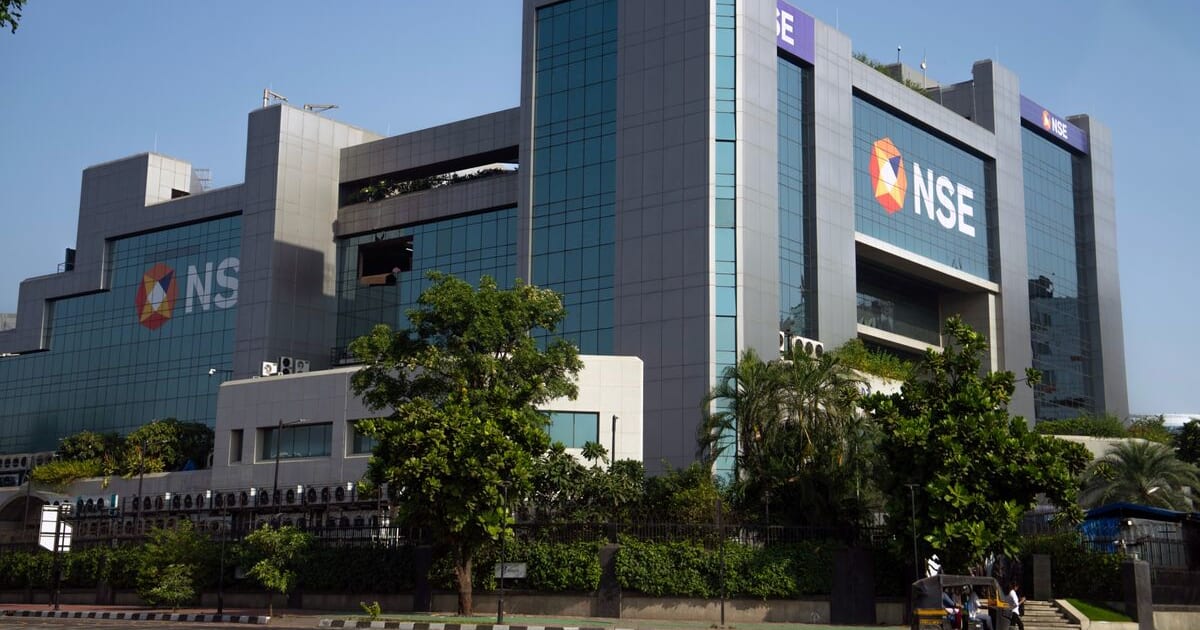
National Stock Exchange (NSE) has finally filed its draft papers for a landmark ₹30,000 crore IPO. This long-awaited listing marks the end of a decade-long regulatory struggle and promises to redefine valuation benchmarks for the entire Indian capital market infrastructure.
The Titan Awakens: Why the NSE IPO is a Watershed Moment for India
After nearly a decade of regulatory purgatory, the National Stock Exchange of India (NSE) has officially filed its Draft Red Herring Prospectus (DRHP) with SEBI for a massive ₹30,000 crore Initial Public Offering. This is not just another listing; it is the arrival of the world’s largest derivatives exchange by volume on the public boards. For institutional investors and retail participants alike, the NSE IPO represents a proxy play on the entire Indian economy's financialization.
The timing is surgical. India’s retail participation has exploded, with demat accounts crossing the 160 million mark in 2024. The NSE, which commands a near-monopoly in the equity derivatives segment with over 90% market share, is the primary beneficiary of this structural shift. By filing now, the exchange is capitalizing on a period of robust secondary market liquidity and a favorable regulatory environment that has finally seen the 'co-location' ghost of 2015 largely laid to rest.
How will the NSE IPO affect the Indian stock market liquidity?
A ₹30,000 crore IPO is a liquidity behemoth. When a listing of this magnitude hits the market, it creates a 'crowding out' effect. To participate in the NSE IPO, large domestic institutional investors (DIIs) and retail players often liquidate existing positions in mid-cap and small-cap stocks. Historical parallels can be drawn from the LIC IPO in 2022 (₹21,008 crore) and the Paytm IPO (₹18,300 crore). During the LIC subscription period, the Nifty Midcap 100 index saw heightened volatility as liquidity was diverted toward the primary market.
However, the long-term impact is overwhelmingly bullish. The NSE listing will likely attract billions in fresh Foreign Portfolio Investment (FPI). Currently, many global funds have mandates that restrict them from investing in unlisted entities. Once listed, NSE will likely see immediate inclusion in major indices like the MSCI Emerging Markets Index and the Nifty 50, forcing passive inflows that could exceed $1-2 billion within the first year of listing.
Deep Market Impact Analysis: The Valuation Benchmark
The core of the NSE story lies in its peerless financial metrics. Unlike traditional tech unicorns, the NSE is a cash-generating machine with operating margins exceeding 70%. In FY24, the exchange reported a net profit of over ₹8,300 crore. At a projected valuation of ₹4.5 lakh crore to ₹5 lakh crore, the NSE would be trading at a Price-to-Earnings (P/E) multiple of roughly 50x-55x, which is a premium compared to global peers like the CME Group or Deutsche Börse, but justified by India's growth trajectory.
"The NSE IPO isn't just about price discovery for the exchange itself; it's about the re-rating of the entire financial plumbing of India. From depositories to registrars, the floor has just been raised."
This valuation sets a new 'gold standard' for the sector. If NSE lists at 50x P/E, it forces a re-evaluation of BSE Ltd (BSE), which has historically traded at a discount. We expect a 'valuation catch-up' play across the sector, where the market begins to price in the 'platform' nature of these businesses—high entry barriers, zero inventory, and massive operating leverage.
Stock-by-Stock Breakdown: The Winners and Strategic Moves
1. BSE Ltd (NSE: BSE)
BSE is the most direct beneficiary of the NSE IPO. As the secondary exchange gains market share in the options segment (currently ~15-18% from near zero), the NSE listing provides a valuation ceiling. If NSE commands a 50x multiple, BSE—which has been growing its derivatives volume aggressively—looks undervalued at its current 40x trailing multiple. Expect tactical rotation into BSE as a 'cheaper' alternative to the premium NSE listing.
2. MCX (NSE: MCX)
The Multi Commodity Exchange of India (MCX) will see a sentiment boost. With its transition to a new technology platform now complete, MCX's margins are expected to expand. The NSE IPO highlights the scarcity value of exchange stocks in India. Investors who fail to get an allotment in the NSE IPO will likely park capital in MCX to maintain exposure to the 'market infrastructure' theme.
3. CDSL (NSE: CDSL)
Central Depository Services Ltd (CDSL) is the silent winner. Every new investor attracted to the market by the NSE IPO hype must open a demat account. CDSL, with its dominant share in new account openings, sees a direct correlation between market buzz and revenue growth. As NSE's listing increases the total addressable market (TAM) for equity culture, CDSL’s annuity-style income becomes even more attractive.
4. Life Insurance Corporation (NSE: LIC) and SBI (NSE: SBIN)
These are the 'hidden' winners. As major shareholders in the NSE, these institutions will be the primary sellers in the Offer for Sale (OFS). For LIC and SBI, the IPO represents a massive cash infusion and a significant bump in their book value. LIC, in particular, could see a one-time gain that significantly strengthens its solvency margins, potentially leading to a special dividend or higher participating fund payouts.
5. KFin Technologies (NSE: KFINTECH)
As a leading registrar and transfer agent (RTA), KFintech manages the backend of the IPO process and the subsequent investor servicing. The sheer scale of the NSE IPO will provide a significant quarterly revenue spike for the RTA involved, while highlighting the systemic importance of the backend infrastructure.
Expert Perspective: The Bull vs. Bear Debate
The Bull Case: Proponents argue that NSE is the ultimate 'toll booth' on the Indian economy. As long as India grows, trading volumes will rise. They point to the shift from physical assets (gold/real estate) to financial assets as a multi-decade tailwind. Bulls believe the NSE's operating leverage is so high that every incremental rupee of revenue translates almost entirely to profit.
The Bear Case (Contrarian View): The bears point to regulatory risk. SEBI has recently expressed concerns over the 'hyper-activity' in retail F&O (Futures & Options) trading. If the regulator introduces stringent measures to curb derivative volumes—such as increasing lot sizes or limiting weekly expiries—the NSE’s primary revenue engine could stall. Furthermore, the high valuation leaves little room for error; any governance lapse could lead to a sharp de-rating.
Actionable Investor Playbook: How to Position Your Portfolio
- The 'Pre-IPO' Accumulation: Investors should look at accumulating CDSL and BSE on any pre-IPO market jitters. These stocks often run up in anticipation of the sector leader's listing.
- The Liquidity Strategy: Keep a 10-15% cash buffer. The NSE IPO will likely see a subscription of over ₹1 lakh crore, which could temporarily suck the 'buy-on-dip' liquidity out of the broader market. This will create entry points in unrelated high-quality blue chips.
- The Allotment Game: Given the likely oversubscription, the NSE IPO is a 'lottery' for retail. A more strategic way to play the theme is through the Nippon India ETF Junior BeES or other mid-cap funds that will have significant weightage in the exchange-linked ecosystem.
- Time Horizon: This is a 3-5 year play. Do not look at the NSE IPO as a 'listing gain' flip only; it is a core portfolio compounder that should be held through market cycles.
Risk Matrix: What Could Go Wrong?
1. Regulatory Tightening (Probability: High | Impact: High): SEBI’s upcoming consultation papers on F&O trading could dampen the sentiment just as the IPO opens. Any move to restrict retail participation will directly hit NSE’s top line.
2. Governance Overhang (Probability: Low | Impact: Medium): While the co-location issue is in the rearview mirror, any new audit findings or legal hurdles regarding past management could delay the SEBI final observation letter.
3. Secondary Market Correction (Probability: Medium | Impact: High): If the global macro environment worsens (e.g., US recession fears), the appetite for a high-P/E listing like NSE could diminish, leading to a lower-than-expected listing price.
What to Watch Next: The Road to Listing
The next 90 days are crucial. Investors should track three specific catalysts: First, the SEBI Observation Letter, which will signal the final green light. Second, the Quarterly Earnings of BSE and MCX, which will serve as a proxy for the sector's health. Finally, watch the Grey Market Premium (GMP); while not a formal indicator, a rising GMP for NSE unlisted shares will signal the level of institutional 'FOMO' (Fear Of Missing Out) building up for the main event.
See BSE's AI Score
Our algorithmic screener scores BSE on fundamentals, momentum, and risk — free to try, no card needed.
Try the AI Screener →Have questions about this story?
Ask Welth, our finance-focused AI research assistant, for a deeper breakdown — free trial included.
Chat with Welth AI →Disclaimer: This content is generated by WelthWest Research Desk based on publicly available reports and is for informational purposes only. It does not constitute financial advice, investment recommendations, or an offer to buy or sell securities. Always consult a qualified financial advisor before making investment decisions.